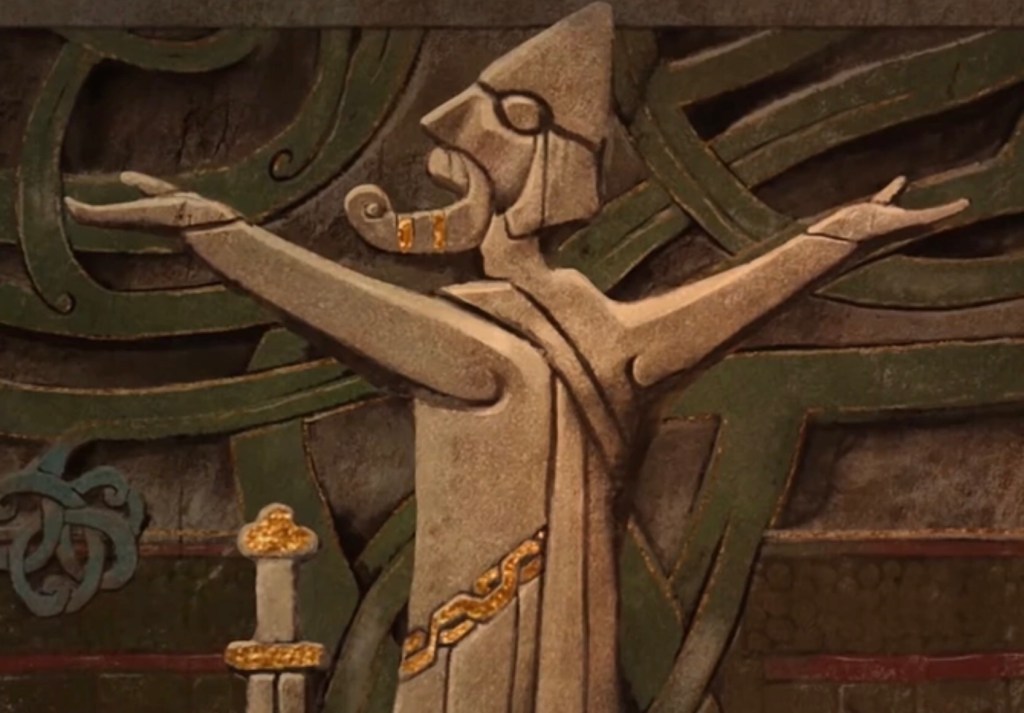
Freyr

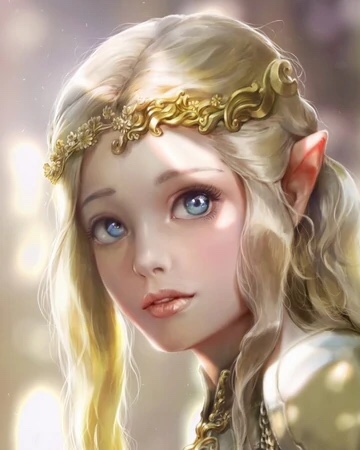
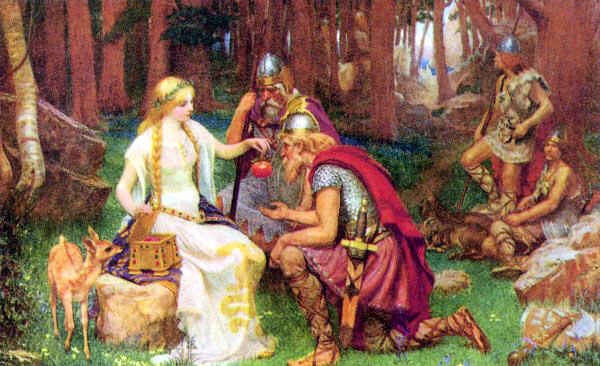
Freyr is the god of sun and rain, and the patron of bountiful harvests. He is both a god of peace and a brave warrior. He is also the ruler of the elves. Freyr is the most prominent and most beautiful of the male members of the Vanir, and is called ‘God of the World’. After the merging of the Aesir and the Vanir, Freyr was called ‘Lord of the Aesir’. Freyr was also called upon to grant a fertile marriage. He is married to the beautiful giantess Gerd, and is the son of Njord. His sister is Freya.

He rides a chariot pulled by the golden boar Gullinbursti which was made for him by the dwarves Brokk and Eitri. He owns the ship Skidbladnir (“wooden-bladed”), which always sails directly towards its target, and which can become so small that it can fit in Freyr’s pocket. He also possesses a sword that would by itself emerge from its sheath and spread a field with carnage whenever the owner desired it. Freyr’s shield bearer and servant is Skirnir, to whom he gave his sword, which Skirnir demanded as a reward for making Gerd his wife. On the day of Ragnarok he will battle without weapons (for he gave his sword away to Skirnir), and will be the first to be killed by the fire giant Surt.

The center of his cult was the city Uppsala in Sweden. In southern Sweden he was called Fricco.
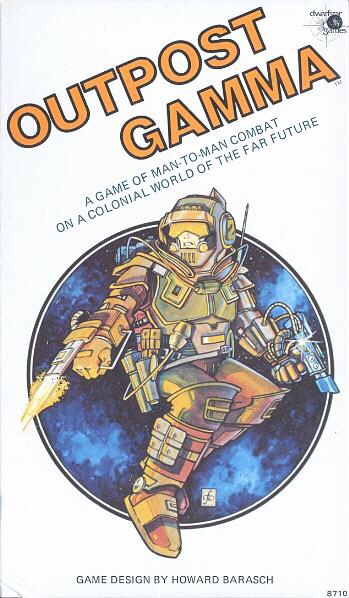
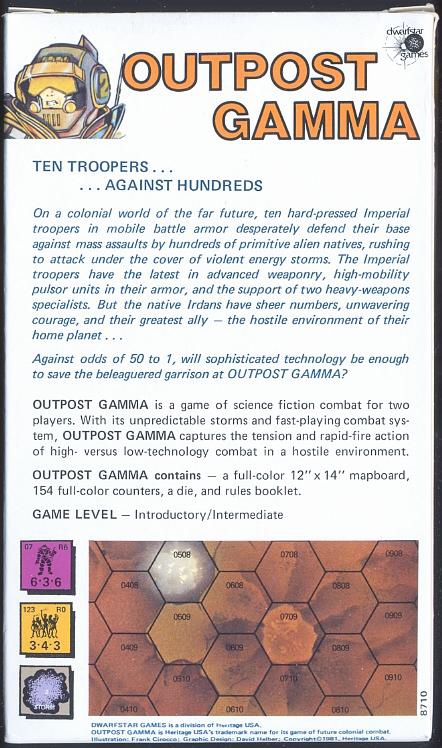
Outpost Gamma Microgame

Microgames were a phenomenon of especially the 1970’s and early 1980’s. Outpost Gamma was released by the long defunct Dwarfstar Heritage games in 1982.

Rorke’s Drift in space – ten Imperial troopers stand against hundreds of attackers.

TEN TROOPERS . . .
. . . AGAINST HUNDREDS

On a colonial world of the far future, ten hard-pressed Imperial troopers in mobile battle armor desperately defend their base against mass assaults by hundreds of primitive alien natives, rushing to attack under the cover of violent energy storms. The imperial troopers have the latest in advanced weaponry, high-mobility pulsor units in their armor, and the support of two heavy-weapons specialists. But the native Irdans have sheer numbers, unwavering courage, and their greatest ally — the hostile environment of their home planet . . .

Against odds of 50 to 1, will sophisticated technology be enough to save the beleaguered garrison at Outpost Gamma?

Outpost Gamma is a game of science fiction combat for two players. With its unpredictable storms and fast-playing combat system, Outpost Gamma captures the tension and rapid-fire action of high versus low-technology combat in a hostile environment. 

Outpost Gamma contains — a full-color 12″x 14″ mapboard, 154 full-color counters, a die, and rules booklet.

GAME LEVEL – Introductory/Intermediate

  • 2 Players
  • 120 Min Playing Time
  • Age: 12+

Bluebell (hyacinthoides non-scripta)

Bluebell (hyacinthoides non-scripta)

A native woodland plant that is potentially as dangerous as the foxglove since it contains glycosides called scillarens, which are similar to the glycosides in foxgloves. Like the snowdrop, the bulb can be mistaken for onions and eaten. Theoretically, it lowers the pulse rate and causes nausea, diarrhoea and vomiting and larger doses could cause cardiac arrhythmias, hypotension and electrolyte imbalance similar to the effects of digoxin in overdose. Folklore tells us that by wearing a wreath made of bluebell flowers, the wearer would be compelled to speak only the truth; the chemical that makes the plant poisonous was used in alchemy.

Magical propensities for speaking the truth; preventing nightmares; love spells; easing mourning.

Sources: By Wolfsbane & Mandrake Root

Elves

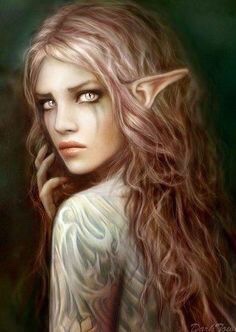
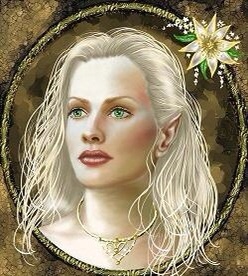
Elves are nature spirits who appear in various folklore and mythology around the world. The term Elf encompasses various beings that vary across cultures, but it is most commonly associated with early Germanic tribes, Britain, and Iceland, as well as in Teutonic and Norse mythology.

Initially, the term Elf included all varieties of Fae in Anglo-Saxon, but it eventually came to represent a specific type of Fae. Over time, many cultures accepted this shift in meaning as well. Elves are human-like Fae who can change their appearance freely.

Depending on the culture, folklore, or location, Elves can go by different names, including –

  • Schrat (German)
  • Grove folk or Elvor (Sweden)
  • Ellen or Elle Folk (Danish)
  • Spae-wives (Iceland)

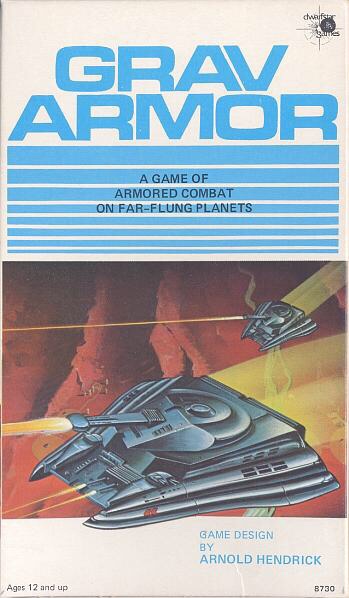
Grav Armor Microgame

Microgames were a phenomenon of especially the 1970’s and early 1980’s. Grav Armor was released by the long defunct Dwarfstar Heritage games in 1982.

High-speed, high casualty combat between streaking gravitic armored vehicles!

In the 31st century, the silence is deafening as the tanks sweep into action on noiseless gravitic drives. Heavy armored vehicles streak through the stratosphere at supersonic speeds, dropping into the battlezone to support power-armored infantry with their gatling lasers. Medium grav tanks skim the ground at 500 kph, hurling mag-bolts at concealed targets 50 km distant. Here and there, light grav-tanks leave their covering terrain to pop up into the air, discharging their deadly particle beams at the advancing troopers, their multi-barrel phalanx turrets spraying the air with small projectiles to foil incoming missiles.

This is the warfare of the future. This is Grav Armor!

Grav Armor is a fast-moving game of future armored warfare for 2 players. It realistically simulates the high-speed, high casualty combat between streaking gravitic vehicles, surface-effects craft, supersonic fighters, orbital dropships and power-suited infantry. The modular map sections allow scenarios to be played on radically different types of planets (earthlike, molten, frozen or airless).

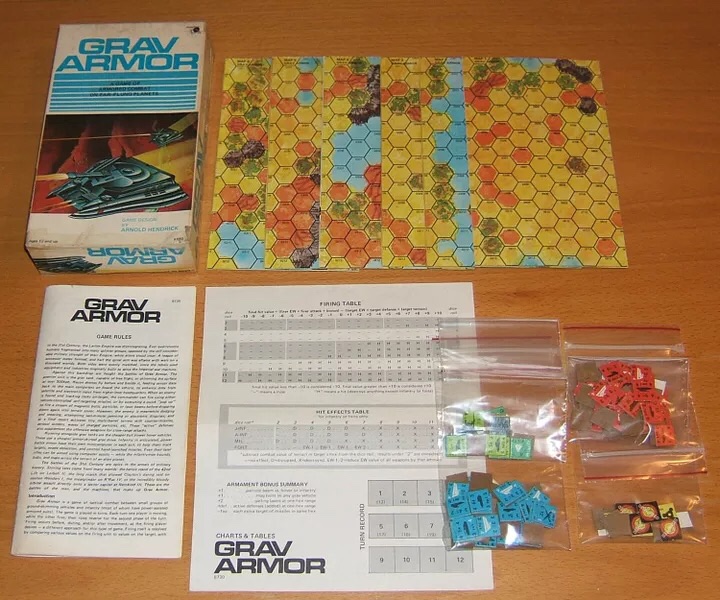
Grav Armor contains — Six 4″x7″ full-color map modules, 154 full-color counters, two dice, and complete rules booklet with 5 scenarios.

PLAY LEVEL – Introductory/Intermediate

  • 2–3 Players
  • 60 Min Playing Time
  • Age: 12+

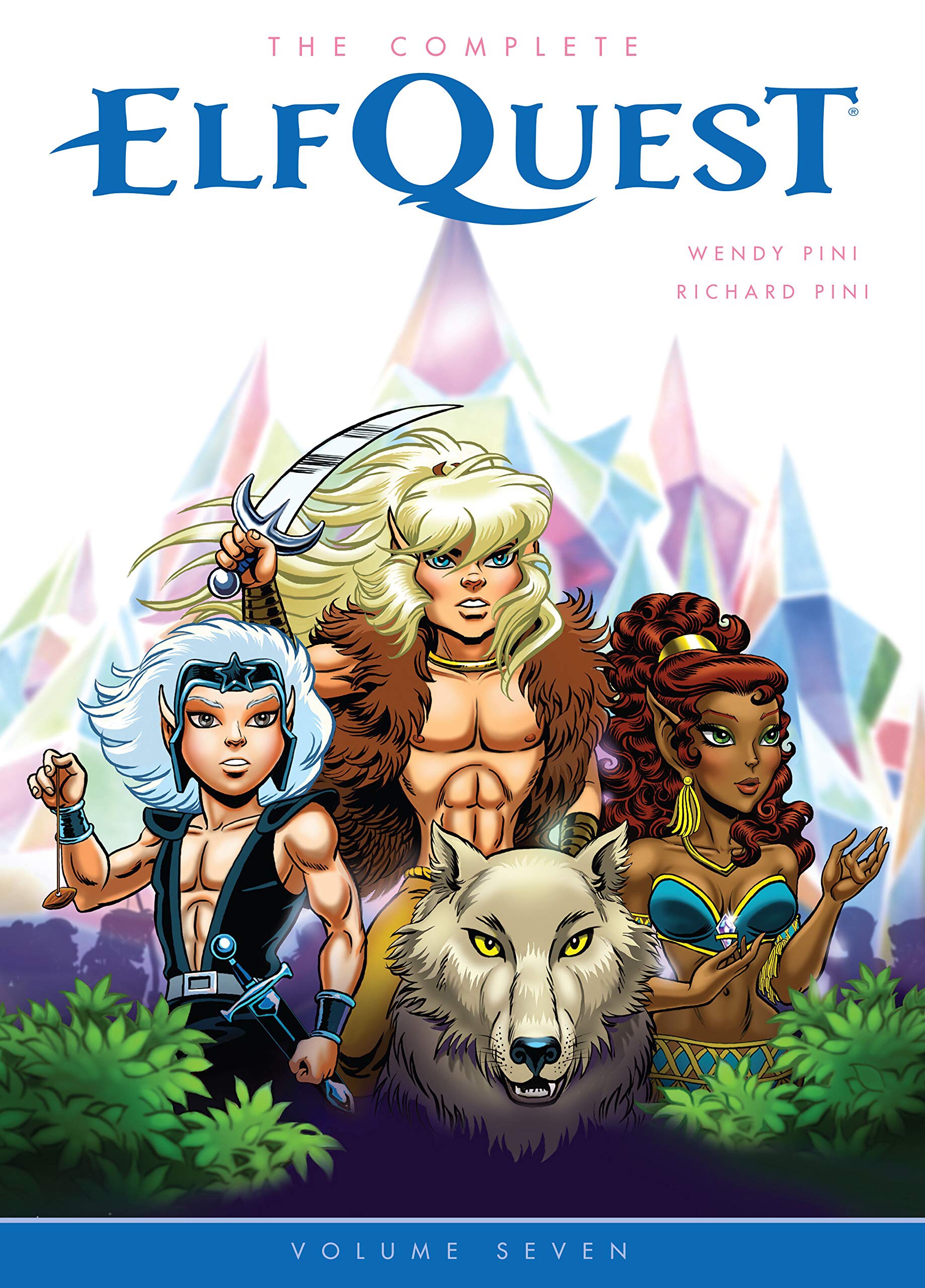
ElfQuest

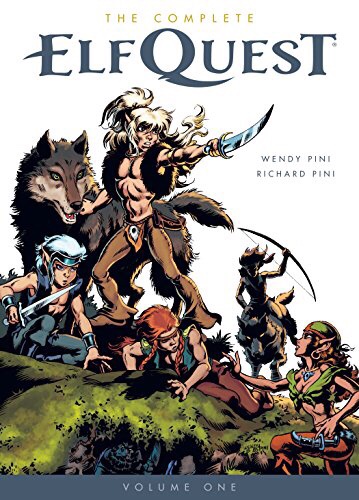
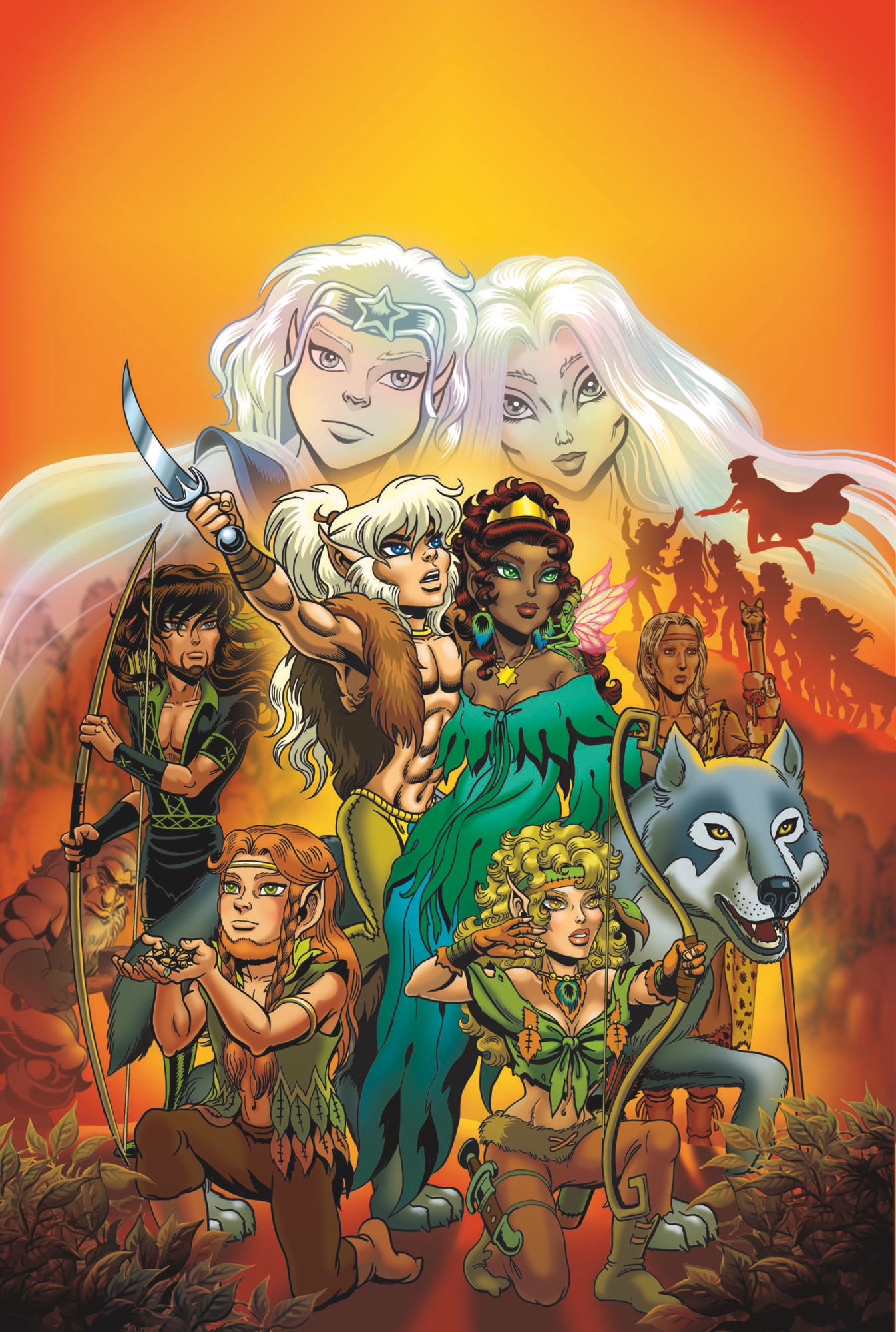
Elfquest is a comic book property created by Wendy and Richard Pini in 1978. It is a fantasy story about a community of elves and other fictional species who struggle to survive and coexist on a primitive Earth-like planet with two moons. Several published volumes of prose fiction also share the same setting. Elfquest was one of the first comic book series to have a planned conclusion. Over the years Elfquest has been self-published by the Pinis through their own company Warp Graphics, then Marvel Comics, then the Pinis again, more recently DC Comics and then Dark Horse Comics.

From an interview with Wendy a few years back, here’s a concise yet thorough, and still-relevant answer to what is Elfquest: ElfQuest is an ongoing heroic fantasy graphic novel series, with science fictional undertones, about a band of alien beings who look like elves trying to survive on a hostile world that is not their ancestors’ planet of origin. The storyline focuses on the elves’ struggle to remain true to their harmonious, nature-loving ways despite the encroachment into their territories of an ever-increasing human population. The art style of ElfQuest, whether mine or any of the other talented artists Warp Graphics has employed, is a combination of influences from classic fairytale illustration to Japanese anime or manga. Although our elfin cast of characters, like Cutter, Leetah, Skywise and Rayek, have a big-eyed, childlike appearance, their adventures take them psychologically, spiritually and physically to very dark, very grown-up places. It’s my firm belief, based on years of fan feedback, that anyone willing to fully explore the epic-sized world of ElfQuest will find their views of modern society mirrored, their prejudices challenged, and their understanding of relationships – of all kinds – forever changed.

Simone de Beauvoir: Socialist to Feminist

When Simone de Beauvoir wrote The Second Sex, she did not define herself as a feminist. She was a socialist and believed a socialist revolution would liberate women, but in the late 1960s, as feminism blossomed, she changed her mind. She told an interviewer in 1972 that the situation of women in France had not really changed over the last 20 years and that people on the left should join the women’s movement while waiting for socialism to arrive.

Defining herself as a feminist, but reluctant to join traditional reformist groups, de Beauvoir joined the radical Mouvement de Libération des Femmes (MLF)—the French women’s liberation movement. In 1971, when abortion was still illegal in France, de Beauvoir was one of more than 300 women who signed a pro-abortion manifesto, later known as the Manifesto of the 343, stating that she had had an abortion and demanding this right for all women.

Sources: Feminism (DK)

Tuatha dè Danann

Prevalent in ancient Celtic mythology is theTuatha dè Danann (pronounced Too-a Day Dah-nuhn), which means People of the Goddess Danu, and they are believed to be her children.

They are believed to have magically materialized from a cloud of mist from across the northern sea.

They brought with them from across the sea four deeply magical objects:

Lia Fail, the Stone of Destiny (also the Stone of Scone, upon which ancient Irish-and later, Scottish – kings were crowned);

the Invicible Spear of Lugh (which always hit its target mere moments after being thrown, and made Lugh unstoppable in battle);

the “Shining Sword” of Nuada (also called the Sword of Light), which could allegedly dispel truth from lies, enforce the law, dispense justice, and punish the enemies of Ireland;

and the Cauldron of Dagda, which not only continuously dispensed unlimited food and drink to the worthy, but was also capable of healing wounds and resurrecting dead warriors.”

D.R. McElroy – Superstitions A Handbook of Folklore, Myths, and Legends from Around the World

The Tuatha dè Danann were immortal and known for their magical abilities, as well as their power, charm, elegance, and cleverness. They were believed to have ruled Ireland four thousand years ago.

They’re described as beautiful and graceful, often have pale or golden skin, and some believe they have Greek origins.

They withdrew to the Otherworld underground beneath the Sidhe mounds when they were invaded and overpowered by the Milesians. Scholars believe the Milesians were most likely the first Gaels in Ireland and ancestors of the modern Irish.

It is thought they continue to practice their magic in the Otherworld. Their courts, towns, culture, and festivities have all been preserved. Humans might venture too far into this Otherworld if they found the secret entrance.

Atlas

Atlas was a second-generation Titan god, from a patrilineal perspective. He was the child of the first-generation Titan Iapetus and Clymene, a daughter of Iapetus’s brother Oceanus (an Oceanid). With his Oceanid aunt Pleione he sired the Pleiades, the Hyades (whose mother is also named as Aethra, another Oceanid), and Calypso. With Hesperis, daughter of the Evening Star Hesper, he produced the Hesperides. Atlas’s brothers were Prometheus, Epimetheus, and Menoetius.

The mythographer Hyginus reports that as a consequence of his leadership role in the power struggle between the Olympian gods and the Titans, Zeus punished him by placing the heavens on his shoulders. Atlas was said to live by the garden of the Hesperides, on the westernmost shores of the river Oceanus, in Libya, or in the distant North (or East), where the Hyperboreans resided.

Hercules enlisted Atlas’s assistance when he went to fetch the apples of the Hesperides: Hercules asked Atlas to retrieve the apples in exchange for giving Atlas a break from holding up the heavens by shouldering the burden himself. But Atlas, apples in hand, attempted to protract the reprieve from his onerous task by offering then to deliver the apples to Eurystheus, at whose behest Hercules was performing the task. Hercules tricked him into taking the heavens back by asking him to hold up the burden momentarily while he looked for a pillow to cushion his shoulders. Needless to say, Hercules did not resume the burden. Atlas also played a role in the saga of the hero Perseus. As retribution for not having offered him hospitality, Perseus, holding up Medusa’s severed head, transformed Atlas into the mountains that still bear his name.

Sources: Classical Mythology A to Z

Dragon Rage

Microgames were a phenomenon of especially the 1970’s and early 1980’s. Dragon Rage was released by the long defunct Dwarfstar Heritage games in 1982.

Dragon attacks! Destroy or defend in a game of aerial assault set in the Middle Ages.

A nervous sentry spies the twin specks in the sky. Soon he can make out the huge leathery wings and long necks.

“The Dragons! The Dragons have come!”

The great warhorn frantically calls across the city. Knights mount their horses, as archers rush to the walls. Many years has the city stood at the forest edge, withstanding the attacks of trolls, goblins, and sea serpents, but now will come the greatest test – for now is the hour of Dragon Rage…

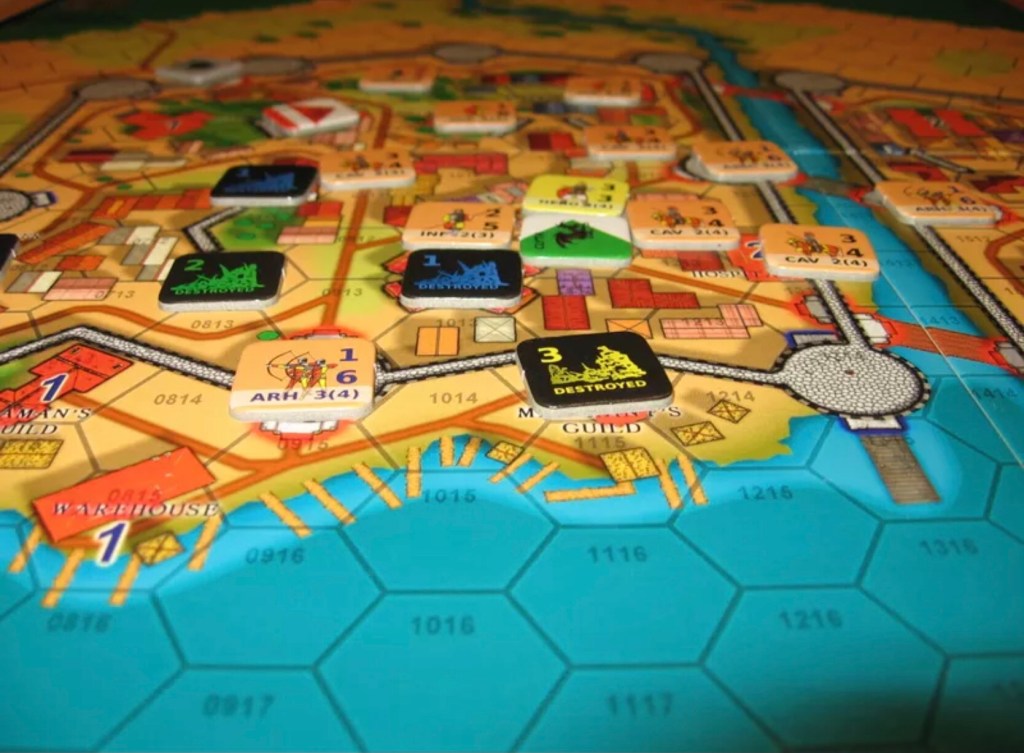
Dragon Rage is a game of mythical creatures attacking a walled medieval city. The game-board is a full color aerial view of the city and surrounding territory, and the counters include knights, infantry, heroes, wizards, dragons, ores, trolls, great birds, giants, and other mythical creatures and beasts. The game rules include six scenarios, and a table for creating your own games with different combinations of monsters and city defense forces.

Dragon Rage contains — A 12″x 14″ full color map/playing board, 154 full color counters, two dice, and a complete rules booklet with 6 scenarios.

* Dragon Rage was re-released by Flatline Games in 2010 which is also now out of print.

PLAY LEVEL – Introductory/Intermediate. Ages 12 and older.

  • 2 Players
  • 120 Min Playing Time
  • Age: 12+