The runic alphabet that was used during the Viking Age is called Younger Futhark. These runes can be found on hundreds of runestones throughout Scandinavia. This alphabet does not consist of many runes, and that is because the Norse language evolved a lot during the Iron Age, which meant that the runic alphabet was reduced from 24 to 16 runes.
Each rune has its own name and sound. Some of the runes are used to spell the same letter, for instance, the Týr rune is used for the letters “t” and “d”, and kaun is used for “g” and “k”.
The names on this list of the Younger Futhark runes have been taken from the website of The National Museum in Copenhagen. The names of the runes may vary slightly depending on the language and on which runologist has conducted the research.
Heka (magic) was already at the heart of Egyptian beliefs by 4000 BCE. Creator deities such as Nu (the watery abyss) were said to have used heka to bring the world into existence from primordial chaos. In doing so, they subdued the forces of chaos, but the forces constantly sought to return and could only be stopped by heka. For the ancient Egyptians, it was not just the gods that handled magic. Lesser supernatural beings, pharaohs, and the dead were thought to possess an element of heka, which they could channel through the use of spells to deflect the attention of malevolent spirits.
The ancient Egyptians also believed in another form of magic power called akhu, which was malign and closely associated with beings of the underworld. To protect against akhu magical practitioners such as priests, scribes in the “Houses of Life”—which held the manuscript collections of Egyptian temples—sunu (doctors), and sau (amulet-makers) employed heka spells, rituals, and magical objects. Indeed, faith in heka was so widespread that ancient Egyptians used it in all aspects of life from matters of state to the delivery of oracles and more mundane village affairs, such as love matches, protection during childbirth, and curing minor illnesses. As well as being an abstract force, there was a god called Heka who personified magic. Heka helped ensure the harmony of the cosmos and acted as a conduit through whom worshippers could seek divine favors. He had a female counterpart, Weret-hekau (Great of Magic), who was depicted in the form of a cobra. It is thought that the snake-headed staffs often used by ancient Egyptian magicians may have represented her.
Sources:A History of Magic, Witchcraft and the Occult
In Norse mythology, Fólkvangr (“field of the host” or “people-field” or “army-field”) is a meadow or field ruled over by the goddess Freyja where half of those that die in combat go upon death, whilst the other half go to the god Odin in Valhalla.
Others were also brought to Fólkvangr after their death; Egils Saga, for example, has a world-weary female character declare that she’ll never taste food again until she dines with Freya. Fólkvangr is attested in the Poetic Edda, compiled in the 13th century from earlier traditional sources, and the Prose Edda, written in the 13th century by Snorri Sturluson. According to the Prose Edda, within Fólkvangr is Freyja’s hall Sessrúmnir. Scholarly theories have been proposed about the implications of the location.
After each battle, Odinand Freyja would choose the einherjar who have proven themselves to be the most courageous fighters and divide them among themselves. The fallen Viking warriors will later be brought to either Folkvangr or Valhalla. The less fortunate ones, however, had no choice and would go to Hel. In the underworld, they would live eternally, but only merely continuing their ordinary lives on earth: eating, drinking, and sleeping.
There are not many differences when it comes to practicality and routine in these two dwelling places of the Gods. In fact, life in both of them equally would be an envy of any Viking warrior. In Folkvangr, as well as in Valhalla, warriors would fight amongst each other every day, making sure they will be prepared when the Ragnarok comes. Many of them would be injured, many of them slaughtered; however, in the evening, their wounds would heal, and they would be ready to feast.
Actually, the only real difference between Valhalla and Folkvangr lies in the way of entering them. Namely, those who die honorably are chosen between Odin and Freya to enter their respective realms. The ones chosen by Odin enter Valhalla, while those who are selected by Freya enter Folkvangr.
The history of the Jews in Poland dates back over a millennium. For centuries, Poland was home to the largest and most significant Jewish community in the world. Poland was the centre of Jewish culture thanks to a long period of statutory religious tolerance and social autonomy. This ended with the Partitions of Poland which began in 1772, in particular, with the discrimination and persecution of Jews in the Russian Empire. During World War II there was a nearly complete genocidal destruction of the Polish Jewish community by Nazi Germany, during the 1939–1945 German occupation of Poland and the ensuing Holocaust. Since the fall of Communism there has been a Jewish revival in Poland, characterized by the annual Jewish Culture Festival, new study programmes at Polish high schools and universities, the work of synagogues such as the Nozyk, and the Museum of the History of Polish Jews.
From the founding of the Kingdom of Poland in 1025 through to the early years of the Polish-Lithuanian Commonwealth created in 1569, Poland was the most tolerant country in Europe. Known as paradisus Iudaeorum (Latin for “Paradise for the Jews”), it became a shelter for persecuted and expelled European Jewish communities and the home to the world’s largest Jewish community of the time. According to some sources, about three-quarters of all Jews lived in Poland by the middle of the 16th century. With the weakening of the Commonwealth and growing religious strife (due to the Protestant Reformation and Catholic Counter-Reformation), Poland’s traditional tolerance began to wane from the 17th century onward. After the partitions of Poland in 1795 and the destruction of Poland as a sovereign state, Polish Jews were subject to the laws of the partitioning powers, the increasingly antisemitic Russian Empire, as well as Austro-Hungary and Kingdom of Prussia (later a part of the German Empire). Still, as Poland regained independence in the aftermath of World War I, it was the center of the European Jewish world with one of world’s largest Jewish communities of over 3 million. Antisemitism, however, from both the political establishment and from the general population, common throughout Europe, was a growing problem.
At the start of World War II, Poland was partitioned between Nazi Germany and the Soviet Union, Molotov–Ribbentrop Pact. The war resulted in the death of one-fifth of the Polish population, with 90% or about 3 million of Polish Jewry killed along with approximately 3 million Polish non-Jews. Examples of Polish gentile attitudes to German atrocities varied widely, from actively risking death in order to save Jewish lives, and passive refusal to inform on them; to indifference, blackmail, and in extreme cases, participation in pogroms such as the Jedwabne pogrom. Grouped by nationality, Poles represent the largest number of people who rescued Jews during the Holocaust.
In the postwar period, many of the approximately 200,000 Jewish survivors registered at Central Committee of Polish Jews or CKŻP (of whom 136,000 arrived from the Soviet Union) left the Communist People’s Republic of Poland for the nascent State of Israel and North or South America. Their departure was hastened by the destruction of Jewish institutions, post-war violence and the hostility of the Communist Party to both religion and private enterprise, but also because in 1946–1947 Poland was the only Eastern Bloc country to allow free Jewish aliyah to Israel without visas or exit permits. Britain demanded Poland to halt the exodus, but their pressure was largely unsuccessful. Most of the remaining Jews left Poland in late 1968 as the result of the Soviet-sponsored “anti-Zionist” campaign. After the fall of the Communist regime in 1989, the situation of Polish Jews became normalized and those who were Polish citizens before World War II were allowed to renew Polish citizenship. Religious institutions were revived, largely through the activities of Jewish foundations from the United States. The contemporary Polish Jewish community is estimated to have approximately 20,000 members, though the actual number of Jews, including those who are not actively connected to Judaism or Jewish culture, may be several times larger.
“I just couldn’t stand by and see people destroyed. I did what I could, what I had to do, what my conscience told me I must do…”
~ Oskar Schindler, Righteous Among the Nations.
Oskar Schindler was a German industrialist and a member of the Nazi Party who saved the lives of 1,200 Jews during the Holocaust by employing them in his enamelware and munitions factories near Krakow. These Jews were registered on what came to be known as “Schindler’s List”.
Thousands of descendants of “Schindler’s Jews” are alive today thanks to his brave actions.
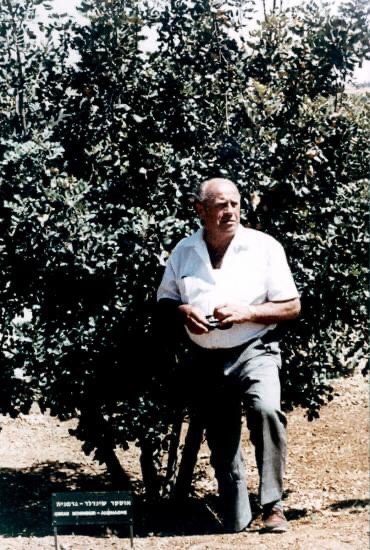
Oskar Schindler died on the 9th of October 1974 in Germany, and is buried in Jerusalem. Before his death, a tree was planted in his and Emilie’s honor in Yad Vashem’s Avenue of the Righteous. He is pictured standing next to his tree on Yad Vashem’s campus.
Oskar and Emilie Schindler are among the 27,000+ heroic non-Jews recognized by Yad Vashem as Righteous Among the Nations for risking their lives to rescue Jews during the Holocaust.
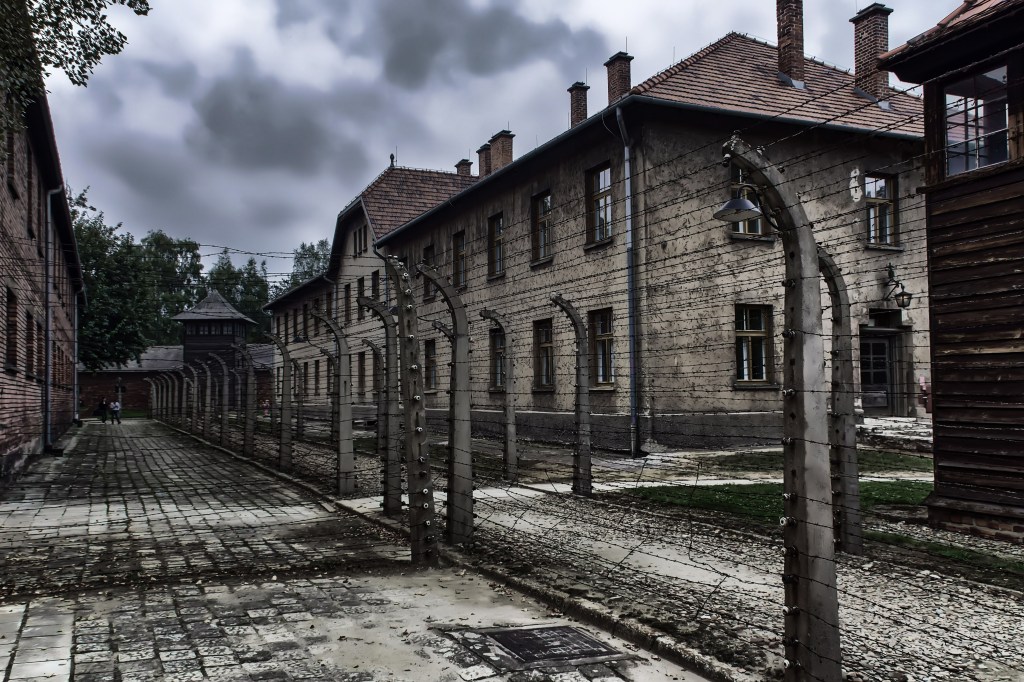
Theodor Eicke, an SS Lieutenant General, had established a structure for how to run a camp from his experience of running Dachau. The systems and buildings Eicke had developed at Dachau soon became the basic model by which all concentration camps would be established and managed.
The camps were split into five sections:
Commandants office This office oversaw the whole camp.
Political department This department was responsible for registration of prisoners, interrogations, the camp prison and crematoria.
Protective custody camp This section oversaw the prisoners complex. It was ruled by the infamous SS Death’s Head Units.
Administrative department This department was responsible for all administration for the camp, such as the maintenance of the camps own equipment and facilities.
Medical department This department was run by the camp physician, and provided medical care for the SS and prisoners – though the quality of this care varied greatly between the two.
In the protective custody camp, prisoners were also used as staff in the form of Kapos.
Kapos
Kapos were inmates of Nazi camps who were appointed as guards to oversee other prisoners in various tasks.
There were three main types of Kapos: work supervisors, block elders, and camp administrators.
Work supervisors oversaw prisoners at work, and were responsible for ensuring efficiency, making sure that no one escaped, and reporting delays.
Block elders supervised the barracks. Typically, there was one block elder per block, and they ensured all prisoners kept the barracks clean, made their beds, and got to roll call on time. They were also responsible for counting the prisoners (accounting for any that had died or were ill), and handing out food.
Camp administrators undertook various other jobs, such as supervising work in the kitchen, in the storeroom, or working as secretaries/interpreters.
Kapos had more authority than regular prisoners and were typically given preferential treatment, such as extra rations, not having to complete hard physical labour or more hygienic and larger sleeping spaces.
Whilst there were incentives to becoming a Kapo, there were also disadvantages. Kapos were under the direct authority of the SS, and had to report to them daily. Any failures meant they could quickly be removed from their post. In addition to this, their authority, especially in regards to punishing or informing on other fellow prisoners meant that they were often unpopular and disliked.
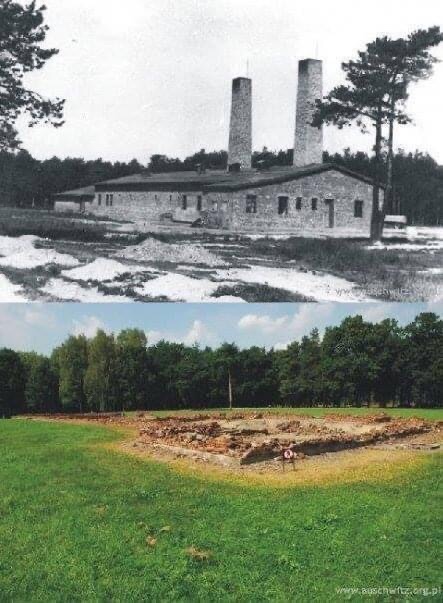
7 October 1944 | Jewish prisoners who were forced to work in the Sonderkommando at the German Nazi Auschwitz II-Birkenau camp organized a revolt – the biggest and most spectacular mutiny and escape attempt in the history of Auschwitz.
Prisoners set crematorium IV on fire, causing serious damage, and attacked the SS men in the vicinity. A group of prisoners from crematorium II (approximately 80) cut through the barbed wire fences enclosing of the crematorium as well as the adjacent women’s camp and fled in a southerly direction. SS units gave chase and caught up with them some 1.5 km from the crematorium.
Around 250 Jewish prisoners were killed during the revolt, including resistance leaders and organizers of the revolt, including Załmen Gradowski and Józef Deresiński. The SS lost three men killed and more than ten wounded.
Later, as the result of repressions, another 200 Sonderkommando prisoners were killed. The female prisoners who were employed in the Union factory and who had supplied the explosives, were publicly hanged in early January 1945.
On September 1, 1939 Nazi Germany invaded Poland. By September 8th they had reached the suburbs of Warsaw and began a siege. That siege continued until September 28th, 1939 when the Warsaw surrendered. The Nazis entered Warsaw on October 1st
After approximately a year of German occupation, during which time the Jews of Warsaw suffered through a reign of terror, arrests, Nazi-sanctioned beatings at the hands of Polish street gangs, kidnappings forced labor, theft and confiscation of property, and a long list of anti-Jewish decrees and laws, the Warsaw Ghetto was sealed off in November 1940.
In April 1940, the Judenrat was ordered to construct walls to prevent the movement of Jews into “Aryan” neighborhoods. After a few SS attempts to establish a Ghetto in the city, a decision was reached in the fall of that year, to confine the Jews in a Ghetto. On Yom Kippur, October 12th, 1940, the decision to establish a Ghetto was announced. According to German data, 113,000 Poles were removed from the area marked for the Ghetto, and 138,000 Jews, from all over the city, were transferred to the site.
On November 16th, the Ghetto in the Jewish neighborhood in the northern part of the city was sealed off. Thirty percent of the population of the city was squeezed into an area the size of 2.4% of the total city land mass. German statistics report six to seven people per room. In an area comprising 73 city streets, 450,000 people lived during the period of greatest population concentration in the Ghetto. Some of the residents had been transported from other parts of Poland, and later, people arrived from the Reich territories. With the move to the Ghetto, many lost their livelihoods. Survival depended on finding some way to make a living inside the Ghetto. About 9,000 Jews who worked in the “platzovki” [placowki – crews accompanied by guards] went out to the “Aryan” side to work.
In 1941, living conditions in the Ghetto became even more unbearable. Official German food allocations were set at 184 calories a day per person and the Judenrat, (the Jewish Council), under Adam Czerniakow, failed to meet both the needs of the Jews and the demands of the Germans. An intricate system of smuggling arose in the Ghetto. Organized Jewish underworld criminal gangs, working hand in hand with Poles, smuggled food and raw materials for underground industries into the Ghetto and also smuggled finished goods out to the “Aryan” side. At the same time, independent smugglers, mainly women and children, managed to bring in food for their starving families. The Germans used all the means at their disposal to combat the smuggling activity especially because smuggling entailed leaving the Ghetto and necessitated contact between Jews and Poles, who, despite their “racial inferiority” (in the opinion of the Germans), still belonged to the “Aryan” race. Starting in November 1941, Jews caught outside of the Ghetto were executed. As part of the campaign against smuggling, the Germans decreed that buildings found to be used by smugglers would no longer be part of the Ghetto. Fences, later replaced by walls, were erected even in the middle of streets.
In the winter of 1941, the situation became even more desperate as typhus epidemics caused many deaths. Until the summer of 1942, there was no systematic German policy regarding the murder of Jews. In essence, the German program was an assault on human dignity, aimed at humiliating and debasing the Jews. In light of this, the help people gave each other, and the struggle to maintain humane relationships in the Ghetto was remarkable. Public figures and Jewish businessmen representing the entire range of political affiliations joined together to form the Jewish Mutual Aid Society and in addition to welfare projects, they founded soup kitchens, developed a network of Building Committees, organized cultural affairs, and strove desperately to alleviate the hunger of thousands of starving children in the Ghetto. These activities and the determination of many to lead Jewish lives reflect the struggle to preserve basic human values, while fighting for survival.
On July 22, 1942, the Great Deportation began in the Ghetto. [Aktzia Action; the term used for the deportation to the death camps]. In the four escalating stages of the deportation approximately 265,000 Jews were sent to the death camp at Treblinka. About 50,000 received “life numbers” – official permission to live and work in order to support the German military effort. Another 10,000 “wild” Jews (without this German permit) managed to survive the Great Deportation. These survivors were concentrated in an area known as the Main Ghetto, around the German factories in which they worked.
On January 18,1943, the Germans initiated the second stage of the deportation, designed to dilute the Jewish population in the remaining Ghetto area. This provoked the first Jewish armed insurgence against the Nazis, carried out by members of the Jewish Fighting Organization. On April 19th 1943, Passover Seder night, the final deportation began and served as the spark that ignited the Warsaw Ghetto Uprising. In the Ghetto’s last months, 20,000 Jews found shelter on the Polish side of the city. Many were assisted by members of the Polish Underground movement, who formed the Council to Aid the Jews, known under its code name Zegota, The few thousand Jews who did not perish in the flames that devoured the Ghetto, or were not murdered during the German attempts to crush the Uprising, were sent to the Majdanek concentration camp, or to various other work camps.
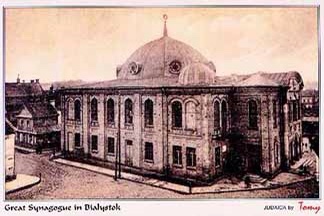
As a symbol of the suppression of the Uprising and the German victory over the insurgent Jews, the SS General Jurgen Stroop ordered the destruction of the Great Synagogue on Tlomacka St. on May 16th 1943, and in his report he wrote, “the Warsaw Ghetto is no more”.
The numerical value of bet is two, representing duality. Since it is the beginning of the word berachah (“blessing”) through which every food and drink is reconnected to its heavenly root, bet is also a link between the material world and the spiritual world of unity, reinforcing the truth that God is One.
Blessings open up our awareness of the bounty we receive and thereby open us up for receiving even more. As we stated earlier, the word ברכה – berachah (“blessing”) also means ברכה – bereichah (“large receptacle”). The more we bless God for the good we have received, the larger is the space we make that only He can fill.
Although we experience duality in this world—light and darkness, Yin and Yang, feminine and masculine, etc.—our spiritual work is to reach beyond the duality and reveal the source of Oneness hiding behind all duality. For example, our ultimate capacity for balancing Yin and Yang requires us to tap into pure essence, the deepest place in our souls that is beyond all time, space, and categories. As we shift our identity to pure essence, we may heal from all imbalances and fragmentation.
While Abraham is associated with the energy of alef, which unifies plurality, Isaac, in contrast, evokes the theme of bet, the perception of the deceptive plurality of creation and the need to overcome this deception. Although God’s creation is made of infinite variety and diversity, everything is endowed with His Spirit. Every event and situation is a manifestation of His will, even those which are most enigmatic.
The letter alef, besides being the first letter of the alphabet, also represents the number one, echad (אחד) in Hebrew. The numerical value of echad is thirteen, which is the numerical value of ahavah (אהבה), “love.” The letter alef represents both the oneness of God and His love for His creatures (the attribute of chesed, “goodness”).
Alef represents absolute unity within the plurality of Creation and is therefore the major symbol of Divinity. Many of the names of God begin with this letter: א-ל – El, אלוקים – Elokim, and אדנ-י – Ad-nai. In addition, there are many epithets used to describe God, such as אדיר – Adir (“glorious”) and אדון – Adon (“master”). The Zohar relates that before Creation, each letter of the alphabet came before God, requesting to be chosen to begin the process of creation. The letters presented themselves in reverse order: first was ת – tav, the last letter of the alphabet; next was ש – shin, the second-to-last letter of the alphabet; then ר – resh, and so on, up to ב – bet, second letter of the alphabet, which begins the word ברכה – berachah, “blessing”. Bet pleaded, “Let the world be created with me, so that all beings shall use me to bless God”. And God assented.
Then God asked the א – alef, the first letter of the alphabet, who had not yet uttered a word, why it was silent. The alef replied that in a world of plurality there was no place for her, since the numerical value of alef is one. God reassured alef, saying that even if the world would be created with Bet, alef would still be the queen of the alphabet. He said, “Have no fear, alef, you are one, and I am One. I want to create the world to have my spirit of oneness dwell there through the study of the Torah and the performance of mitzvot (the commandments). The first of the Ten Commandments will begin with alef, the first letter in the word אנכי – Anochi (“I”)—“I am the Lord your God.”
The perception of God’s oneness that alef represents is further suggested by the Hebrew word פלא (“wonder”), a permutation of the word alef: Discovering God as He is disguised in each detail of creation generates feelings of wonder and awe.







 Mark Bere Peterson’s Counterculture, Urban Legends, Paganism & Witchcraft