The 18 Levels of Hell in Chinese Mythology

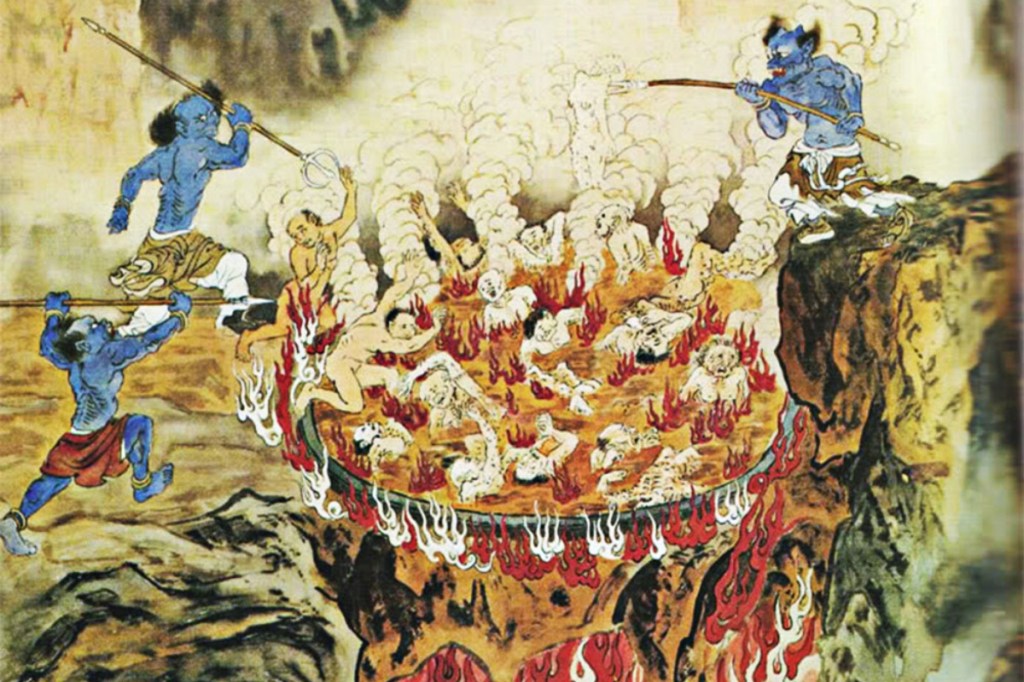
Buddhism and Taoism—the main religions of China—both have different interpretations of hell and how it is structured, but what they can both agree on is this: Sinners who accumulate bad karma during their lives have to atone for their sins after their death. Their souls are therefore taken into hell, a fiery place consisting of several layers, courts, or circles, each doling out a different punishment for specific sins.

A big difference between the Chinese hell and the concept of hell most known in Christianity is that in Chinese hell, souls are not necessarily condemned to eternal damnation. While broadly believed in Western culture that sinners have to suffer in hell until the second coming of Christ, the Chinese version of hell is more of a purgatory, where souls are able to eventually leave and be reincarnated back into the world once they have done their time.

  • Hell of Tongue-ripping, where those who gossip and spread trouble with their words will repeatedly have their tongues ripped out.
  • Hell of Scissors, where those who destroy someone else’s marriage will have their fingers repeatedly cut off.
  • Hell of Trees of Knives, where those who sow discord amongst family members will be repeatedly hung from trees made of sharp knives.
  • Hell of Mirrors of Retribution, where those who have managed to escape punishment for their crimes while alive will be repeatedly shown their true horrific selves.
  • Hell of Steamers, where hypocrites and troublemakers will repeatedly be steamed “alive.”
  • Hell of Copper Pillars, where arsonists will be repeatedly chained to red-hot pillars of copper.
  • Hell of the Mountain of Knives, where those who have killed for pleasure or without good reason will repeatedly be made to climb a mountain made of sharp blades sticking out of it.
  • Hell of the Mountain of Ice, where adulterers, deceivers of elders, and schemers will be repeatedly left out on a barren mountain of ice to freeze.
  • Hell of the Cauldrons of Oil, where rapists, thieves, abusers, and false accusers will be repeatedly fried in vats of boiling oil.
  • Hell of the Cattle Pit, where those who have abused animals will repeatedly be hurt by animals in turn.
  • Hell of the Crushing Boulder, where those who have abandoned or killed children will repeatedly be made to hold up heavy boulders, eventually being crushed by its weight.
  • Hell of Mortars and Pestles, where those who voluntarily waste food will repeatedly be force-fed hell fire by demons.
  • Hell of the Blood Pool, where those who disrespect others will be thrown in and submerged into a pool of blood.
  • Hell of the Wrongful Dead, where those who have commited suicide—considered deliberately going against the karmic course of the universe—will be force to repeatedly wander the realm without a way out, while being pelted constantly by the Winds of Sorrow and the Rains of Pain.
  • Hell of Dismemberment, where tomb raiders will have their bodies repeatedly be torn into pieces.
  • Hell of the Mountain of Fire, where thieves, robbers, and the corrupt will be repeatedly thrown into the fiery pits of an active volcano.
  • Hell of Mills, where those who have misused their power to oppress the weak will repeatedly be crushed in a stone mill.
  • Hell of Saws, where those who have engaged in unethical or unfair business practises, or exploited loopholes in the legal system, will be repeatedly sawn in half by demons with saws.

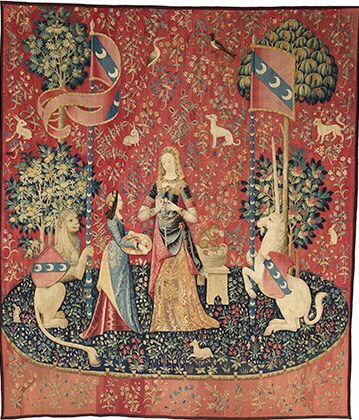
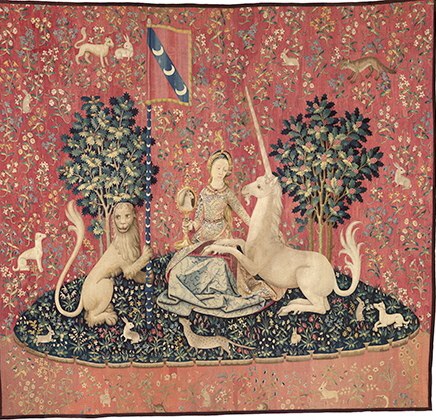
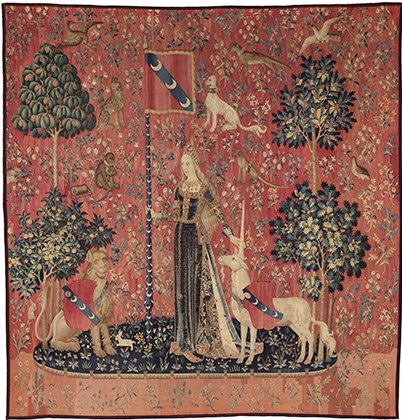
Cluny Museum: The Lady and the Unicorn Tapestries

Touch, taste, smell, hearing and sight. These six tapestries, woven in around 1500, represent the five senses against a detailed red background.

The remaining sixth sense, explained only by the inscription “À mon seul désir” (To my only desire), has inspired countless theories. Without excluding a possible meaning in the register of courtly love, it could be a reference to free will: the woman with her decorative headdress and refined clothing, renouncing temporal pleasures.

These “millefleurs” (“thousand flowers”) tapestries are characterized by an abundance of flora, including flowers, orange trees, pines, hollies and oaks, and are inhabited by a peaceable bestiary (a monkey, dogs, rabbits and a heron).  In this idyllic natural setting conducive to contemplation, the unicorn by turns a participant and a simple spectator. Accompanied by a lion, it sports the coat of arms of the Le Viste family in every scene.

The Lady and the Unicorn wall-hanging was acquired in 1882. It is now considered one of the great masterpieces of Western art.

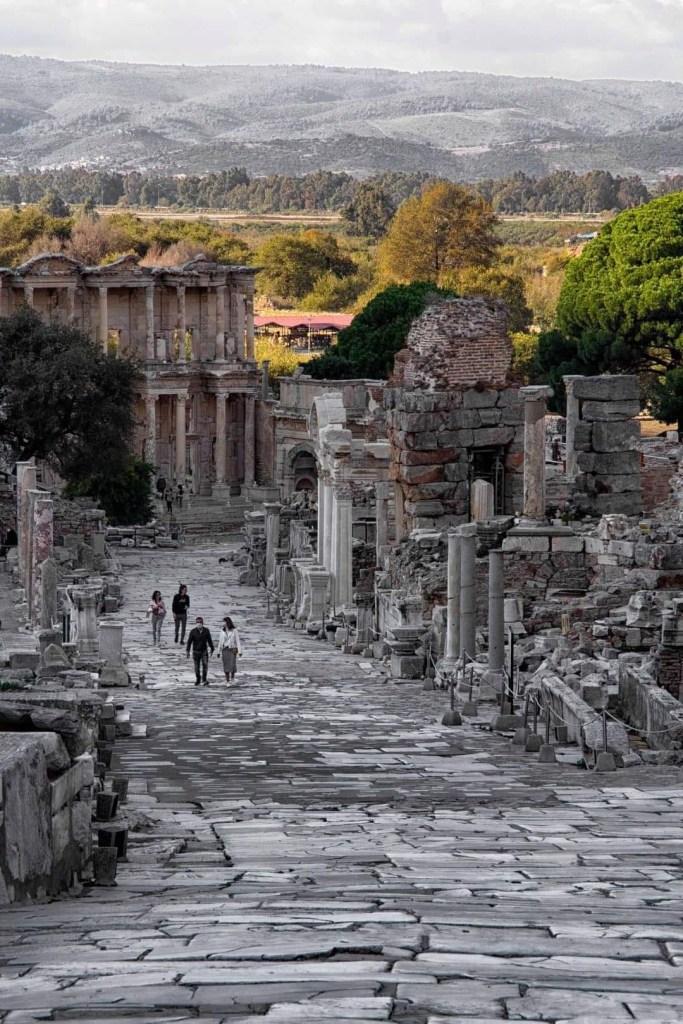
Ephesus: Roman Architectural Site

Ephesus:

Ephesus is one of the largest Roman archaeological sites in the eastern Mediterranean. The visible ruins still give some idea of the city’s original splendour, and the names associated with the ruins are evocative of its former life.

The Temple of Artemis, one of the Seven Wonders of the Ancient World, once stood 418′ by 239′ with over 100 marble pillars each 56′ high. The temple earned the city the title “Servant of the Goddess”. Pliny tells us that the magnificent structure took 120 years to build but is now represented only by one inconspicuous column, revealed during an archaeological excavation by the British Museum in the 1870s.

Women’s Equality Day

It’s Women’s Equality Day in the U.S., celebrating the adoption of the Nineteenth Amendment that guaranteed women the right to vote. That was in 1920—a hundred and one years ago today.

Secretary of State Bainbridge Colby certified the ratification of the Nineteenth Amendment and American women finally won full voting rights. While Tennessee became the 36th state to ratify the amendment on August 18th it was not until August 26th that the ratification became official. The right for women to vote was first proposed in 1848, but did not become law until 1920, 72 years later.

#WomensEqualityDay #WomenRightToVote #NineteenthAmendment

Classical Sabayon

4 egg yolks
1/4 cup plus 1 tbsp/65 g granulated sugar
1/3 cup/75 ml sweet fortified wine such as Marsala, Madeira, or port

Pour water to a depth of 1 to 2 in into a medium saucepan and place over medium heat. Rest a medium stainless-steel bowl in the pan over (not touching) the water. Put the egg yolks and sugar in the bowl and, using a whisk, begin beating together the yolks and sugar. After about 1 minute, add the wine and continue beating. As the bowl heats up, the yolks will begin to thicken. Beat vigorously, scraping around the bowl with a heat-resistant rubber spatula from time to time so that bits of yolk don’t get stuck and overcook. Beat until thick and frothy but not quite fluffy, about 8 to 10 minutes. It is ready when it forms a thick ribbon as it trails off the end of the whisk. Remove the bowl from the heat and beat for another 30 seconds or so to stabilize the sauce and let the bowl cool down. If possible, serve right away.

Hammurabi

In around 2000 bce, the Amorites (Westerners), a semi-nomadic people from Syria, swept across Mesopotamia, replacing local rulers with Amorite sheikh dynasties in many of the city-states. By the early 18th century bce, the three most powerful Amorite kings were pre-eminent Shamshi-Adad in the north, Rim-Sin in Larsa in the south, and Hammurabi in Babylon in the center. Over the course of his long reign, Hammurabi consolidated all of southern Mesopotamia into his kingdom and eventually extended his power as far up the Tigris as Nineveh, and as far up the Euphrates as Tuttul, on the junction with the river Balikh. He personally supervised the construction of many temples and other buildings.

The prelude to his code, a tribute to Hammurabi, and a long historical record of his conquests, boasts that his leadership was divinely sanctioned by the gods who passed control of humanity to Marduk (deity of Babylon), and so to its king. It also reveals he saw his role as the guarantor of a just and orderly society.

Dorothy Parker’s Birthday

Today in Literary History —> Happy Birthday to Dorothy Parker, American poet, satirist and critic best known for her wisecracks and sharp wit. Her writing graced the pages of Vogue, VanityFair, and The New Yorker, and she was a founding member of the Algonquin Round Table, a famous 20th century New York literary circle.

Following the breakup of the circle, Parker traveled to Hollywood to pursue screenwriting. Her successes there, including two Academy Award nominations, were curtailed when her involvement in left-wing politics led to a place on the Hollywood blacklist. Dismissive of her own talents, she deplored her reputation as a “wisecracker.” Nevertheless, both her literary output and reputation for sharp wit have endured. Born on this day in 1893…

FavoriteWriters #HappyBirthday #DorothyParker #AlgonquinRoundTable

Arles: A Van Gogh Getaway

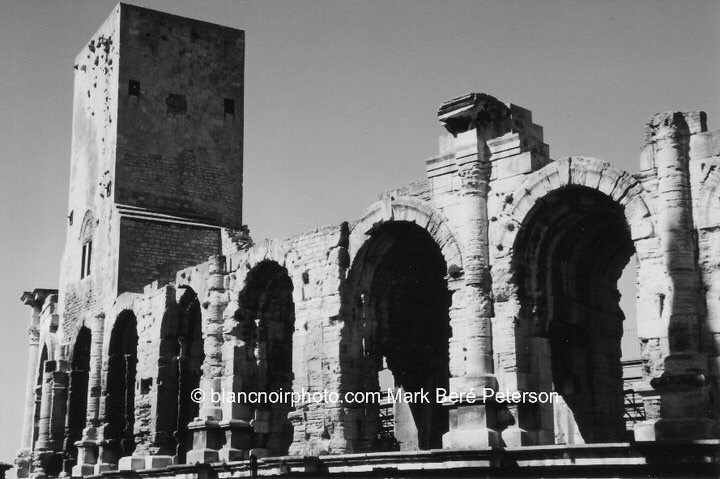
On the cusp of the Camargue National Park in the Provence-Alpes-Côte d’Azur region, Arles is a heady blast of Van Gogh nostalgia – the artist painted in excess of 200 works around this lovely Roman town. The stately amphitheatre, one of the largest in Roman times, is part of the reason for Arles’ Unesco World Heritage Site status. The twisting aluminium tower designed by Frank Gehry brings the city’s architecture bang up to date.

Lavender of Provence

Flowers bloom throughout the year in Provence, but none are more synonymous with the region than lavender, which turns acres of land purple. With more than 2,000 producers and roughly 25,000 people employed in the industry, working across 20,000 hectares, lavender is big business. You’ll want to visit between the last week of June and the beginning of August, just before the harvest begins, to see the flowers at their best.

Fresh Soy Milk Sheets (Nama Yuba)

2 cups soy milk, preferably rich (with a high soy-solid content) and freshly extracted
½ teaspoon wasabi paste
Soy sauce or Vegan Seasoned Soy Concentrate

Ideally, your stove top provides a low but steady source of cooking heat. Place a 7- or 8-inch shallow skillet or pan, preferably nonstick, over low heat for about 1 minute. Slowly pour the soy milk into the warm pan. It should be about ¼ inch deep. Adjust the heat to the lowest possible setting and allow the soy milk to heat undisturbed.

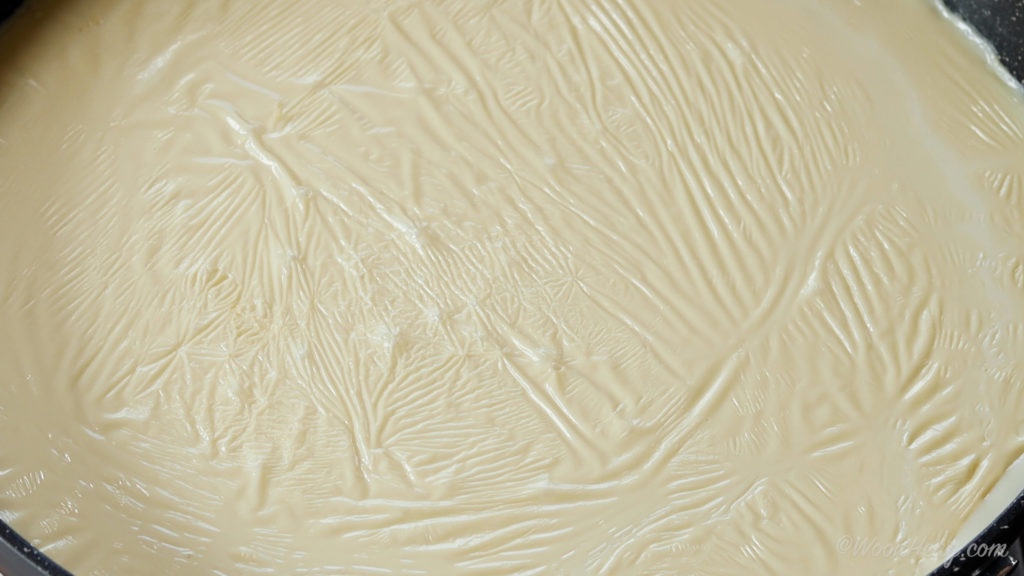
After several minutes, you will notice the surface of the soy milk beginning to thicken. At this point, the temperature of the soy milk will probably be 140°F. Using an uchiwa (Japanese fan) or a flat piece of cardboard (about 8 by 11 inches), gently fan the air above the pan to cause a drop in air temperature; this, in turn, will cool the surface of the warm soy milk. When the surface of the soy milk cools but the liquid beneath is still warm, wrinkles will form and the surface will thicken, making sheets of nama yuba.

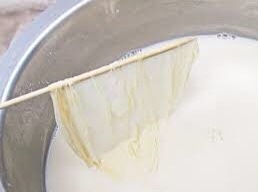
Using a thick chopstick (or wooden knitting needle), scoop under and lift up the sheet and drape it across a small serving plate. Choose a dark or brightly colored plate for a dramatic presentation. Continue to fan, scoop, and lift sheets, arranging 2 or 3 of them slightly overlapping each other on each plate. You should be able to pull at least 8 sheets, and possibly 12 or more, from 2 cups soy milk. The sheets will be wrinkled, not smooth.

Set a small mound of the wasabi on, or near, the fresh yuba. Pour a small amount of soy sauce into individual dipping bowls. Each diner dissolves wasabi to taste in his or her soy sauce before grasping a yuba sheet, dipping it in the sauce, and enjoying.

Sources: Kansha