Anxiety or Panic?

We, as humans, need anxiety. Why? Anxiety is information.

It tells us when we must freeze, flee, or fight and mobilizes our body to respond quickly, without thinking. Without anxiety, we would not be able to avoid real threats to our well-being.

However, we also feel anxiety about imagined threats that may or may not be meaningful or real. In a sense, our minds have evolved to be extra careful about threat detection. They are more likely to evaluate things as threats than not. This way we do not miss anything that might harm us.

Also, our minds do not have an “off button.” This means that sometimes anxiety becomes a problem because it doesn’t give us useful information and contributes to our distress and avoidance.

All humans experience anxiety when they experience stressful events, such as receiving an upsetting medical diagnosis. Public speaking, social events, relationship problems, stress on the job, and financial worries are also common triggers that make people feel anxious. However, sometimes life events can trigger anxiety disorders or panic disorder. So, what’s the difference?

Example 1:

Your social media feed is full of divisive political talk, there are risks of layoffs due to the decimated economy, and there seems to be no clear end in sight.

In the meantime, you have a project deadline tomorrow.

You feel stressed, squeezed, and overwhelmed. You feel tired and worried, unsure about what the future holds, whether you will get done what you need to do, whether you will help your child cope with it all.

Example 2:

It is the middle of the night, and you can’t go to sleep. Your thoughts are racing.

What if …? Your mind can’t stay away from the stream of catastrophic worries that keep circling. Your heart pounds. You’re exhausted. You look at the clock—it’s 3:15am.

Example 3:

You’re out with your friends at a restaurant, laughing at a joke one has just told.

All of a sudden, there’s a sensation of your blood rushing to your ears, and your heart rate accelerates. Your hands are clammy, and you wonder whether you’re having a heart attack.

Intense fear grips you, and you feel the urge to leave, to escape the situation. You get up without excusing yourself and run for the door.

Understanding the differences between naturally occurring anxiety, worry, and panic can help people take steps to address their feelings. Knowledge of these conditions can also help individuals recognize if their condition is serious enough to require treatment.

Example 1: A Normal Level of Anxiety

This describes an individual experiencing very natural, understandable anxiety around a challenging situation. Fear of an uncertain future, memories of a difficult past, threats (both real and perceived), and confusion about the world around us are all triggers for anxiety.

Example 2: A Concerning Level of Anxiety

The second example describes an individual experiencing worry and depending on the level of distress and functional impairment caused, may indicate that treatment for anxiety might be helpful.

Worry is a mental activity that, somewhat counterintuitively, functions as an anxiety avoidance strategy, though it’s one that doesn’t work very well. It’s hard to simply stop worrying.

Typically, when individuals find themselves stuck in a worry cycle, learning acceptance and mindfulness skills from acceptance-based behavior therapy can be useful.

Example 3: Panic

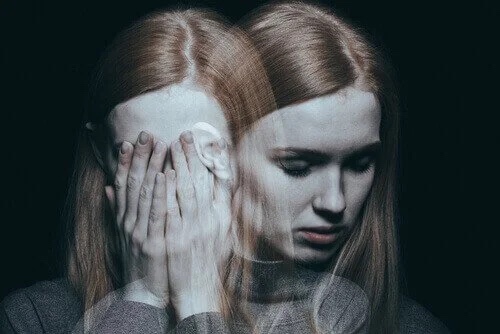
This is an individual experiencing a panic attack. Panic attacks are rarer and more severe than anxiety. They can come out of the blue, without warning or provocation.

People having panic attacks can experience shortness of breath, dizziness, nausea, and numbness. Some shake and sweat. Individuals struggling with panic often are very watchful for the physical sensations that might be harbingers of panic and avoid places where panic attacks may have occurred in the past. Sometimes those struggling with panic avoid leaving their homes at all.

The good news is that panic disorder is highly treatable with exposure therapy.

Sources: McLean Hospital

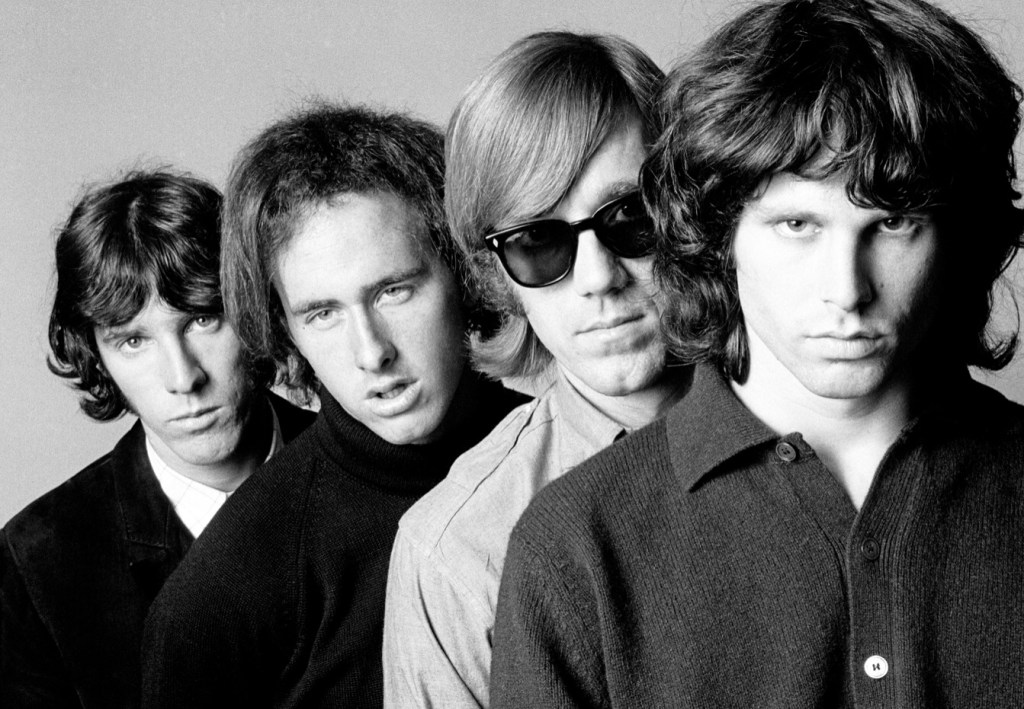
Break On Through (To the Other Side) – The Doors

You know the day destroys the night
Night divides the day
Tried to run
Tried to hide
Break on through to the other side

We chased our pleasures here
Dug our treasures there
Can you still recall
The time we cried?
Break on through to the other side

Everybody loves my baby

She get high, she get high

I found an island in your arms
A country in your eyes
Arms that chain
Eyes that lied
Break on through to the other side

Break on through to the other side

Made the scene from week to week
Day to day, hour to hour
The gate is straight
Deep and wide
Break on through to the other side
Break on through, break on through

Rosetta Stone Discovered

Today in Egyptian history —> On this day in 1799, French Captain Pierre-François Bouchard found the Rosetta Stone in an Egyptian village. The stone was inscribed with hieroglyphics, demotic script and Greek script in 196 BC but was lost during the Medieval period. After its rediscovery, it prompted widespread excitement as scientists raced to be the first to decipher the ancient text. It was eventually translated by Jean-François Champollion, a French scholar, in 1822!

The inscription, by the way, is about the divine status of Ptolemy V.

The Egyptians want it returned for their new Grand Egyptian Museum (opening later this year), but the British Museum says no as it’s the most visited artifact in the museum.

Dealing With Trauma Triggers

Most of us are aware of the larger trauma triggers. We can recognize some of the people, places, and things that harmed us, and do our best to avoid them all. For example, if our trauma had something to do with the beach we can avoid any area with sand or any sounds of the beach. We can sit down with our therapist and make a list of all of the things that we know trigger our trauma response or bring us back to those frightening events. But what about the unconscious triggers? The ones we don’t recognize, and often find upsetting us, pulling us into flashbacks and causing us to dissociate.

Box of Rain – Grateful Dead

First performance: October 9, 1972, at the Winterland Arena in San Francisco. Disappeared from the repertoire less than a year later, brought back on March 20, 1986, at the Coliseum in Hampton, Virginia. It remained in the repertoire thereafter—often sung in response to the chant “We Want Phil,” from Deadheads—and was the final song ever performed by the Grateful Dead, on July 9, 1995, at Soldier Field in Chicago, given as a second encore, following “Black Muddy River.”

Words by Robert Hunter
Music by Phil Lesh

Look out of any window
Any morning, any evening, any day
Maybe the sun is shining
Birds are winging, no rain is falling from a heavy sky
What do you want me to do
To do for you to see you through?
For this is all a dream we dreamed one afternoon long ago

Walk out of any doorway
Feel your way like the day before
Maybe you’ll find direction
Around some corner where it’s been waiting to meet you
What do you want me to do
To watch for you while you’re sleeping?
Then please don’t be surprised when you find me dreaming too

Look into any eyes
You find by you; you can see clear to another day
Maybe been seen before
Through other eyes on other days while going home
What do you want me to do
To do for you to see you through?
It’s all a dream we dreamed one afternoon long ago

Walk into splintered sunlight
Inch your way through dead dreams to another land
Maybe you’re tired and broken
Your tongue is twisted with words half spoken and thoughts unclear
What do you want me to do
To do for you, to see you through?
A box of rain will ease the pain and love will see you through

Just a box of rain, wind and water
Believe it if you need it, if you don’t just pass it on
Sun and shower, wind and rain
In and out the window like a moth before a flame

And it’s just a box of rain, I don’t know who put it there
Believe it if you need it or leave it if you dare
And it’s just a box of rain, or a ribbon for your hair
Such a long, long time to be gone and a short time to be there

Counterculture and Drug Use

Drug use is the contentious issue that lurks in any discussion of contemporary counterculture. What surprises here, perhaps, is the extent to which drug use prior to the twentieth century is not central to this exploration. Still, mind-affecting plants and chemicals do pop up across countercultural history.

In counterculture since the beats, so-called hard drugs—stimulants and narcotics like speed, heroin, and cocaine—have occasionally fostered fruitful creative frenzy or provided a context for narratives of hilarious morbidity and artful gloom. These drugs have been used with enjoyment and apparent impunity by some. But because of the syndromes of dissolution so often connected with their long-term use, such substances have generally undermined the project of embodying the countercultural impulse in effective action and sustainable modes of living. Counterculture by definition strives toward freedom, while drug addiction is a kind of slavery. In this sense, addictive drug use can ultimately be assessed as anathema to counterculture despite its widespread presence in recent countercultural episodes.

There is a vast history regarding the use of psychedelic (mind-manifesting) plants like psilocybin, peyote, and marijuana to obtain spiritual and religious visions and shamanic healing powers, allowing individuals and groups access to the numinous realm without the intercession of any religious authority.

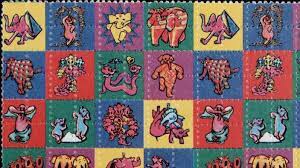
Altered states of consciousness can sometimes help people conceive alternative truths or open them up to multiple perspectives. In High Frontiers magazine, Bruce Eisner and Peter Stafford described the use of various mind-altering drugs as being “like changing the perceptual filters on your camera to give you a variety of pictures of reality.” Psychedelics like LSD, mescaline, and later Ecstasy, while certainly presenting some hazards, have fueled the countercultural drive by illuminating utopian visions, inspiring artistic departures, and exposing consensus reality. Even the dark side of the psychedelic experience has made its contribution, infusing the desire for radical change with electric urgency by rendering the horrors of modern life in the vivid, pulsing close-up images of a trip focused on harsh negative realities.

Within these contexts, the use of certain psychedelics, is presumed to be understood as an indicator of a particularly unrestrained example of counterculturalness. At the same time, this is not always the case for all individuals and cultures, historically or currently. Even the relatively drug-saturated countercultures of recent decades have given place to counterculturalists who had nothing to do with drugs.

At its best—again mostly, but not exclusively, with the psychedelics— counterculture drug exploration goes beyond the usual chemical quest for recreation, relief, or oblivion. Instead, it becomes a manifestation of counterculture’s great perennial embrace of new ideas, technologies, experiences, and modes of being. It is from this context that works like Aldous Huxley’s The Doors of Perception, Daniel Pinchbeck’s Breaking Open the Head.

Sources: Counterculture Through the Ages

International Women’s Day Origins

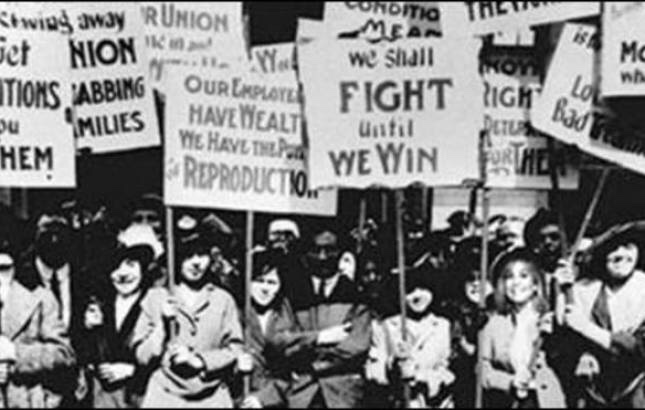
Celebrated annually on March 8, International Women’s Day is traced back to the US in 1907, when more than 15,000 female textile workers marched through New York City, demanding better working conditions and voting rights. In 1909, the Socialist Party of America declared a National Women’s Day, celebrated until 1913 on the last Sunday of February.

In 1910, about 100 women from 17 countries attended the Second International Conference of Women in Copenhagen, Denmark, at which Clara Zetkin proposed the establishment of International Women’s Day, on which women would highlight women’s issues. The following year, more than one million women and men attended International Women’s Day rallies worldwide. In Russia in 1917, women marked the day with a four-day strike for “peace and bread” that was a key event in the lead up to Russia’s October Revolution that year.

Sources: The Feminism Book (DK)

Mary Wollstonecraft: Emancipation From Domesticity

In 1792, with the publication of A Vindication of the Rights of Woman, Mary Wollstonecraft fired a powerful early salvo in the battle for female emancipation from domesticity. She wrote her feminist polemic in response to 18th-century Enlightenment thinkers, such as the philosopher Jean-Jacques Rousseau, who did not extend their ideas of liberalism to women. She criticizes the injustice and inconsistency of such men calling for freedom yet still subjugating women. She also rejects the contemporary perception that women were less rational.

“Who made man the exclusive judge?” she demands. Women, she writes, might be weaker physically, but are just as capable of rational thought as men.

Wollstonecraft maintains that women remained inferior because they were kept in the domestic sphere, forced to be men’s “toys and playthings.” Society taught them that looks, male opinion, and marriage were more important than intellectual and personal fulfilment. Sculpted by a gender stereotype that their mothers reinforced, girls were brought up to exploit their looks in order to find a man who would support and protect them.

Wollstonecraft was the first feminist to describe “marriage for support” as a form of prostitution— a shocking assertion for the time. A lack of means often compelled women to marry. Degraded by their dependency on male approval, they effectively became men’s slaves. She felt that such a restricted life, limited by domestic trivia, could also wreak psychological damage.

To restore women’s dignity, Wollstonecraft recommends “a revolution in female manners.” She believed women and men should be educated equally, even suggesting a coeducational system. Women, she believed, should be in the public sphere and should be trained for work outside the home, in areas such as medicine, midwifery, and business. She urges an end to the social distinction between the sexes and calls for equal rights for women to enable them to take control of their lives.
Mixed reactions

Vindication was well received, particularly in intellectual circles. A hostile press, however, described Wollstonecraft as a “hyena in petticoats” for both her book and her unorthodox lifestyle. The book was not reprinted until the mid-19th century, when it was admired by figures such as British suffragist Millicent Fawcett and American activist Lucretia Mott. Wollstonecraft’s advanced ideas would be echoed in the works of feminists from Barbara Bodichon to Simone de Beauvoir”

Sources: The Feminism Book (DK)

Pictures Of You – The Cure

The song was written in response to Robert Smith’s nostalgia, when he found a photo of his wife after a fire at his house. That photo was used for the cover of the song’s single.

Robert Smith explained this track in a 1989 interview with Music Box TV, “The idea you hold of someone isn’t really what that person is like. Sometimes you completely lose touch with what a person has turned into. You just want to hold onto what they were.”

I’ve been looking so long at these pictures of you
That I almost believe that they’re real
I’ve been living so long with my pictures of you
That I almost believe that the pictures are
All I can feel

Remembering you
Standing quiet in the rain
As I ran to your heart to be near
And we kissed as the sky fell in
Holding you close
How I always held close in your fear
Remembering you
Running soft through the night
You were bigger and brighter and wider than snow
And screamed at the make-believe
Screamed at the sky
And you finally found all your courage
To let it all go

Remembering you
Fallen into my arms
Crying for the death of your heart
You were stone white
So delicate
Lost in the cold
You were always so lost in the dark
Remembering you
How you used to be
Slow drowned
You were angels
So much more than everything
Hold for the last time then slip away quietly
Open my eyes
But I never see anything

If only I’d thought of the right words
I could have held on to your heart
If only I’d thought of the right words
I wouldn’t be breaking apart
All my pictures of you

Looking so long at these pictures of you
But I never hold on to your heart
Looking so long for the words to be true
But always just breaking apart
My pictures of you

There was nothing in the world
That I ever wanted more
Than to feel you deep in my heart
There was nothing in the world
That I ever wanted more
Than to never feel the breaking apart
All my pictures of you