Tzitzit

Tzitzit (tseet-tseet or TSIT-sis) are the strings, or fringes, tied to each of the four corners of a tallit, or prayer shawl. They are widely considered a reminder, not unlike a string around one’s finger, to think of God at all times.

Tzitzit fulfill the following commandment in Numbers 37, in the Torah portion called Parshat Shlah:

Speak to the Israelite people and instruct them to make for themselves fringes on the corners of their garments throughout the ages; let them attach a cord of blue to the fringe at each corner. That shall be your fringe; look at it and recall all the commandments of the LORD and observe them, so that you do not follow your heart and eyes in your lustful urge. Thus you shall be reminded to observe all My commandments and to be holy to your God.

The commandment to wear tzitzit is repeated in the V’ahavta section of the Shema prayer.

While traditional Jewish law says one must have these tzitzit on every four-cornered garment one wears, today most clothing doesn’t have corners. Instead, the tzitzit are on the prayer shawl and on a special small tallit , called a tallit katan, that some traditional Jews wear under their clothes. Some traditional Jews let the tzitzit from their tallit katan hang out, while others tuck them in.

The tzitzit are attached to the corners and knotted according to a specific pattern.

To learn how to tie tzitzit:

Ubuntu

An anthropologist showed a game to the children of an African tribe:

He placed a basket of delicious fruits near a tree trunk and told them: The first child to reach the tree will get the basket.

When he gave them the start signal, he was surprised that they were walking together, holding hands until they reached the tree and shared the fruit!

When he asked them why you did that when every one of you could get the basket only for him!

They answered with astonishment: Ubuntu.

“That is, how can one of us be happy while the rest are miserable?”

Ubuntu in their civilization means: (I am because we are).

That tribe knows the secret of happiness that has been lost in all societies that transcend them and which consider themselves civilized societies.

Tallit (Jewish Prayer Shawl)

The tallit (tall-EET) or tallis (TALL-us) is a large rectangular shawl made of wool, cotton or synthetic fibers. In each of the four corners of the shawl are strings tied in a particular pattern, called tzitzit. The origin of the tzitzit is biblical; the practice is prescribed in Numbers 15. The precept is to put these strings on the four corners of one’s garment — in ancient tradition, with a single strand of blue as well–as a reminder of the duties and obligations of a Jew. Since we no longer wear four-cornered garments, the tallit is worn specifically to fulfill the biblical precept.

Traditionally, men wear a tallit during morning services; in non-Orthodox synagogues, many women also wear a tallit. In some Orthodox congregations, only married men wear a tallit. One may see people gathering the tzitzit in their left hand and kissing them when the paragraph from the Torah referring to them is recited.

Most synagogues have prayer shawls available for visitors to use during services. However, many people prefer to purchase their own prayer shawl. A wide variety are sold at most Judaica stores and on the Internet.

Before putting on the prayer shawl, it is customary to say the following blessing:

Watch the video below for more on how to put on tallit:

Sources: Essential Judaism, myjewishlearning.com

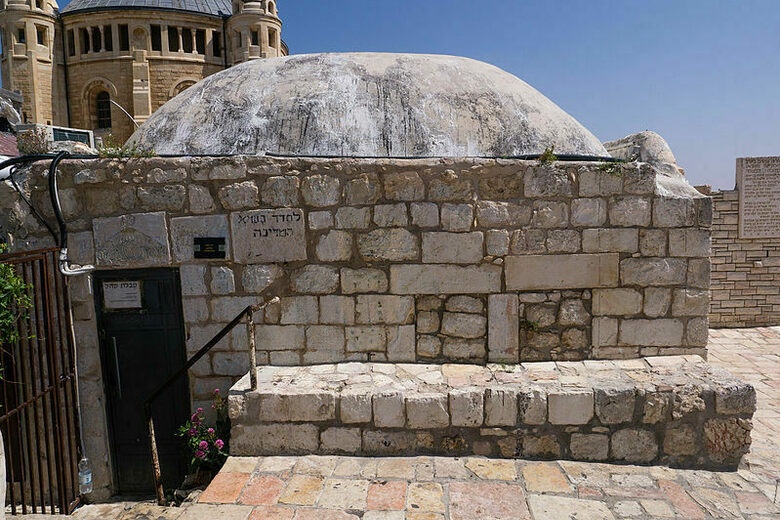
President’s Room (Jerusalem, Israel)

President’s Room (Jerusalem, Israel)

Just south of the Old City on Mount Zion is a building that houses two holy sites. On the ground floor is the Tomb of King David; upstairs is the Upper Room, or Cenacle—the location of the Last Supper.

Less conspicuous is the small domed chamber on the roof, known as the President’s Room. From 1948 to 1967, when Jordan controlled East Jerusalem, Jews were prevented from visiting sacred places in the Old City, such as the Western Wall and the Mount of Olives. During this time, Mount Zion was one of the closest vantage points for viewing the forbidden sites. The Ministry of Religious Affairs established the President’s Room so that Israel’s first head of state, Chaim Weizmann, could keep watch over the Western Wall.

Weizmann never used the room. But his successor, President Yitzhak Ben-Zvi, did. Three times a year, he would ascend the stairs to the dome and look toward the Temple Mount.

Source: Atlas Obscura

Zmeu

The Zmeu is from Moldavia. It is a vampire that can take the form of a flame and enter the room of a young woman or widow. Once it enters the room of the sleeping woman, the flame becomes a man and seduces them.

The Zmeu can have legs, arms, and appear completely normal. It’s main goal is to seduce and marry women. This vampiric creature has magical and destructive powers; he can fly and shapeshift. He also has supernatural strength.

Zedekiah’s Cave / Solomon’s Quarries (Jerusalem, Israel)

Zedekiah’s Cave/Solomon’s Quarries (Jerusalem, Israel)

Beneath the Muslim Quarter in Jerusalem’s Old City is an underground quarry that goes by two names: Zedekiah’s Cave and Solomon’s Quarries. The names reflect the two main legends that surround this 750-foot-long (228.6 m) collection of caverns.

The first story is that King Zedekiah fled through the cave to escape from attacking Babylonians around 587 BCE. At the time, the legend goes, the cave extended all the way to Jericho—a distance of about 13 miles (21 km). The Babylonians chased Zedekiah to Jericho, capturing and blinding him. The dripping water in the cave is thus known as Zedekiah’s Tears. The second story involves King Solomon, who is fabled to have used stones from the cave to build the First Temple in the 10th century BCE.

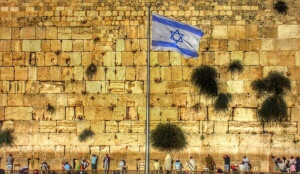
There is no archaeological evidence to support either premise. However, chisel markings on the walls suggest Zedekiah’s Cave was one of the quarries that supplied limestone for King Herod’s Second Temple and Temple Mount expansion. The stones of the Western Wall (also called the Wailing Wall)—Judaism’s most sacred prayer site—may indeed have come from this cave.

Source: Atlas Obscura

Seneca from “Natural Questions”

“The time will come when diligent research over long periods will bring to light things which now lie hidden. A single lifetime, even though entirely devoted to the sky, would not be enough for the investigation of so vast a subject…And so this knowledge will be unfolded only through long successive ages. There will come a time when our descendants will be amazed that we did not know things that are so plain to them…Many discoveries are reserved for ages still to come, when memory of us will have been effaced. Our universe is a sorry little affair unless it has in it something for every age to investigate…Nature does not reveal her mysteries once and for all.”

~ Seneca (4 BC – 65 AD), “Natural Questions”

#FavoriteQuotes #Seneca #Science

Nothingness in Existential Philosophy & Norse Mythology Concept of Ginnungagap

Nothingness in Existential Philosophy & Norse Mythology Concept of Ginnungagap

Several modern philosophers associated with existentialism, a movement that takes our experience of existence as the starting point of its philosophizing, have spoken of a similar schema using the more prosaic and impersonal language of philosophy and psychology. While the writings of luminaries such as Søren Kierkegaard, Martin Heidegger, and Jean-Paul Sartre differ considerably on these points, a fascination with negation and anxiety is a central focus of their work. In existentialist parlance, “nothingness” is that which negates oneself, one’s values, and/or one’s worldview – one’s “personal cosmos.” 

The ultimate nothingness is death, because it negates one absolutely (at least in the modern worldview – see Death and the Afterlife for Norse perspective on death), but any condition over which one cannot triumph is a hostile absence into which one’s yearnings, strivings, and beliefs vanish. This negation is the root of anxiety (or “angst” or “Being-toward-death”), the fear of what we might not be able to overcome, that which stands every chance of “getting us” in the end. This is one of the fundamental facts of life with which everyone who strives to live deliberately and authentically must grapple. In Heidegger’s words, “To be a particular being means to be immersed in nothingness.”[5] While these philosophers don’t necessarily identify nothingness with a physical void as the Norse did, the principle remains the same.

This primordial, annihilating chaos is ever-present; wherever there is darkness, wherever there is silence, wherever any wish or belief is negated, there is Ginnungagap.

Sources: Poetic Edda, Norsemythology.org