Bicycle Day

Happy Bicycle Day, which doesn’t celebrate bicycles but the effects of LSD:

On April 19, 1943, Albert Hofmann, a researcher at Sandoz Laboratories in Basel, Switzerland, purposely ingested .25 milligrams (250 micrograms) of LSD at his lab. He thought this would be the threshold dose—the lowest amount taken where there are still effects—when in reality the threshold dose for LSD is only 20 micrograms. But what does a bicycle have to do with the day?

Within an hour, Hofmann began to notice changes in his perception and senses. He decided that he should go home, so he hopped on his bicycle and began riding. Because the drug was already greatly affecting him, he had his laboratory assistant help guide him to his house. At times during his bicycle ride, he thought he was going insane, thought his neighbor was a witch and thought the LSD had poisoned him.

He later wrote in LSD: My Problem Child, “On the way home, my condition began to assume threatening forms. Everything in my field of vision wavered and was distorted as if seen in a curved mirror. I also had the sensation of being unable to move from the spot. Nevertheless, my assistant later told me that we had traveled very rapidly.”

Needless to say, his bicycle ride was quite a trip.

The Beatles and Astrid Kirchherr

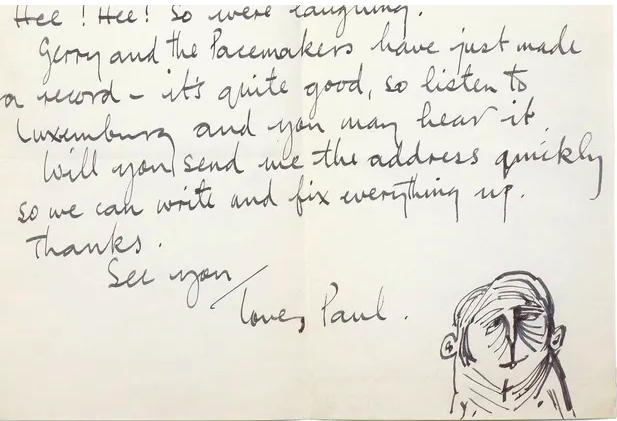
If you’re a Beatles fan, the Guardian has a good article on Astrid Kirchherr, once engaged to the ex-Beatle Stu Sutcliffe, and who photographed, mothered, and molded the style of the Beatles (i.e., suggesting their “mop top” haircuts) when they played in Hamburg before they were famous. She also received lots of letters from the Beatles, One is below, along with a photo of her with Ringo and John.

Kirchherr died in 2020, and the letters are up for auction.

Agnostic Atheism

Concept of the day:

Agnostic Atheism: as anyone fluent in the contemporary debate between atheists and theists knows, is common parlance among nonbelievers. Roughly, the idea here is that when one uses the term “atheist” they’re making reference to their belief, whereas when one uses the term “agnostic,” they’re making reference to their knowledge. In this way, so the argument goes, one can be an atheist in the sense that they don’t believe that God exists (or that they positively believe that God does not exist) but nevertheless be an agnostic in the sense that they don’t know, or claim to know, that God does not exist.

Further, there is an additional distinction that is made between soft (or weak) atheists and hard (or strong) atheists. On the one hand, soft atheists are those who claim only to lack belief in God. On the other hand, hard atheists are those who claim to know or believe that God does not exist.

Now, descriptively speaking, this taxonomy seems to correspond pretty closely to the way that many atheists now days construe their atheism. So, as far as semantics go, this seems correct. However, and I say this as an atheist, in terms of its philosophical rigor, this construal of atheism seems a bit lacking. To demonstrate this, try to imagine an atheist using the distinction between atheism and agnosticism, as well as the distinction between soft and hard atheism, with respect to any other conception of god apart from the standard, Western monotheistic conception. That would be peculiar, would it not? So, the question is why don’t we atheists bother to qualify our rejection of Zeus or Odin with the caveats of agnosticism and a mere lack of belief? And if we don’t need to do this, why, then, must we do this with respect to the god of Christianity?

Well, frankly, I don’t think we need to. The mere fact that I don’t know *for certain* that Zeus doesn’t exist does not mean that I have to be an agnostic with respect to his existence, any more than the fact that I can’t know for certain that I’m not just a brain in a vat means I have to be agnostic about whether or not I’m just a brain in a vat. In other words, the sort of certainty that agnostic atheists point to in order to distinguish between their atheism and their agnosticism is itself based on a rather sophomoric understanding of epistemology that is quickly done away with by the slightest of philosophical inquiry. I may not know for certain that God does not exist, but this is not at all to say that I’m not entirely rational in going ahead and affirming my belief in the nonexistence of God all the same. And I don’t have to call myself an agnostic while doing so.

Sources: Atheist Republic

#NotAttackingReligion #FreedomOfBelief #JustSomeClarification

The Beatles Monopolize Top 5 Billboard Hits

Today in music history —> On this date in 1964, the Fab Four monopolized the top five on the Billboard Hot 100, marking the only act ever to lock up the region in a week.

On the Billboard Hot 100 dated April 4, 1964, the Beatles made history as the only act ever to occupy the chart’s top five positions in a week.

With a 27-1 second-week blast to the top for “Can’t Buy Me Love,” the Fab Four locked up the chart’s entire top five:

No. 1, “Can’t Buy Me Love”

No. 2, “Twist and Shout”

No. 3, “She Loves You”

No. 4, “I Want to Hold Your Hand”

No. 5, “Please Please Me”

Turn On, Tune In, Drop Out.

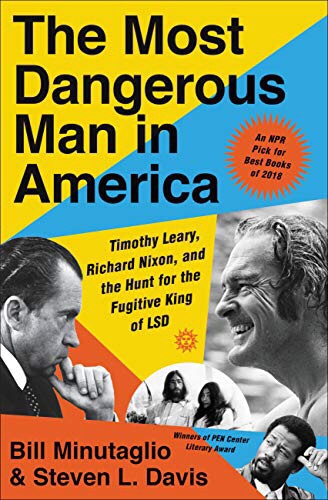
Timothy Leary was an American psychologist who became an iconic figure of the 1960s counterculture, coining possibly the most widely used catchphrase linked with that era: “Turn On, Tune In, Drop Out.”

However, the order in which Leary wished us to do these three things is slightly different. He felt that society was polluted by politics, and made up of sterile, generic communities that do not allow the depth of meaning needed by true individuals. The first thing he thought we should do is “Drop Out,” by which he meant that we should detach ourselves from artificial attachments and become self-reliant in thought and deed. Unfortunately, “Drop Out” has been misinterpreted as urging people to halt productivity, which was never his intention.

Next, Leary tells us to “Turn On,” or delve into our unconscious, and “find a sacrament which returns you to the temple of God, your own body.” This is a command to explore deeper layers of reality, as well as the many levels of experience and consciousness. Drugs were one way to do this, and Leary, a Harvard professor, began experimenting with the hallucinogenic drug LSD.

To “Tune In,” Leary asks us to return to society with a new vision, seeking fresh patterns of behavior that reflect our transformation, and to teach others our newfound ways.”

Agrimony

Diagnosis:

One of the most frequent health problems, especially when traveling is “diarrhea,” which affects up to 80 percent of people who go to high-risk countries (Africa, Asia, and Central and South America) where the sanitary conditions of water purification, and food preparation and preservation, are not very safe. In many cases, it is limited to mild cases of diarrhea lasting two or three days, but it can make traveling difficult. In other cases, diarrhea is accompanied by fever, nausea, vomiting, and even dehydration. Diarrhea is mostly due to drinking polluted water and consuming food with toxins.

Dosage:

For its tannin content, agrimony is considered an astringent that can be used to treat diarrhea. To stop serious persistent diarrhea, drink an infusion of agrimony that you prepare by mixing a teaspoon of the plant per cup of water. Boil it for two minutes, let it steep for fifteen minutes, and strain it. Drink three cups a day for three days to notice its effect.

Other Uses:

Precisely because of its richness in tannins it is also effective for gargling as a treatment for pharyngitis or tonsillitis. Externally, it is an excellent remedy against dermatitis because it relieves intense itching.

Source: Medicinal Plants at Home

Hunter S. Thompson Funeral

Thompson killed himself with a gun, and his funeral was a gala event:

On August 20, 2005, in a private funeral, Thompson’s ashes were fired from a cannon. This was accompanied by red, white, blue, and green fireworks—all to the tune of Norman Greenbaum’s “Spirit in the Sky” and Bob Dylan’s “Mr. Tambourine Man”. The cannon was placed atop a 153-foot (47 m) tower which had the shape of a double-thumbed fist clutching a peyote button, a symbol originally used in his 1970 campaign for sheriff of Pitkin County, Colorado. The plans for the monument were initially drawn by Thompson and Steadman, and were shown as part of an Omnibus program on the BBC titled Fear and Loathing in Gonzovision (1978). It is included as a special feature on the second disc of the 2004 Criterion Collection DVD release of Fear and Loathing in Las Vegas, and labeled as Fear and Loathing on the Road to Hollywood. According to his widow, Anita, the $3 million funeral was funded by actor Johnny Depp, who was a close friend of Thompson’s. Depp told the Associated Press, “All I’m doing is trying to make sure his last wish comes true. I just want to send my pal out the way he wants to go out.” An estimated 280 people attended, including U.S. Senators John Kerry and George McGovern; 60 Minutes correspondents Ed Bradley and Charlie Rose; actors Jack Nicholson, John Cusack, Bill Murray, Benicio del Toro, Sean Penn, and Josh Hartnett; musicians Lyle Lovett, John Oates and David Amram, and artist and long-time friend Ralph Steadman.

The tower holding the cannon was torn down later in 2005 (photo by Paul Conrad, the Aspen Times):

Buckwheat Pancakes

1 cup buckwheat flour

2 tablespoons potato flour or ground yellow maize flour

2 tablespoons coconut flour

2 teaspoons gluten-free baking powder

1/8 teaspoon Himalayan salt

1½ cups coconut milk

1 tablespoon melted coconut oil

1–2 teaspoons grapeseed oil

To make the pancakes, combine the buckwheat flour, potato flour, coconut flour, baking powder and salt in a large bowl.

Add the coconut milk, coconut oil and ½ cup water and whisk well. The amount of water you need depends on how thick you prefer your batter; add a bit more for thinner batter.

Heat a non-stick frying pan over medium heat. Brush the pan with some of the grapeseed oil.

Pour ¼ cup of the batter into the pan and cook for 2–3 minutes, or until bubbles appear on the surface. Turn and cook the other side for 2 minutes, or until cooked through. Transfer to a plate and keep warm.

Cook the remaining batter in the same way, adding more grapeseed oil to the pan as needed. You should have enough batter to make eight pancakes.