Mint Julep

2 sprigs fresh mint
1 teaspoon sugar
A few drops of water
2 jiggers bourbon whiskey
Ice, finely crushed

Put the sprigs of fresh mint in the bottom of a glass. Add the sugar and a few drops of water. Using a wooden muddler, thoroughly bruise the mint with the sugar and water.

Pour in 1 jigger bourbon whiskey. Pack the glass to the brim with finely crushed ice. Add the remaining 1 jigger whiskey and let it trickle down to the bottom of the glass. Put a sprig of fresh mint in the top of the glass and serve.

Pickled Okra

3 pounds (2½- to 3-inch) okra pods
3 cups white vinegar (5% acidity)
⅓ cup canning-and-pickling salt
2 tsp. dill seeds
5 garlic cloves, peeled
3 small fresh hot red peppers, halved

Sterilize jars, and prepare lids.

While jars are boiling, wash okra and trim stems, leaving caps intact. Combine vinegar, salt, dill seeds, and 3 cups water in large saucepan. Bring to a boil.

Place 1 garlic clove and 1 hot pepper half in each hot jar. Pack okra pods tightly in jars, leaving ½-inch headspace. Cover okra with hot pickling liquid, leaving ½-inch headspace.

Seal and process jars processing 10 minutes.

Remove jars from water, and let stand, undisturbed, at room temperature 24 hours. Store jars in a cool, dark place up to 1 year. Refrigerate after opening.

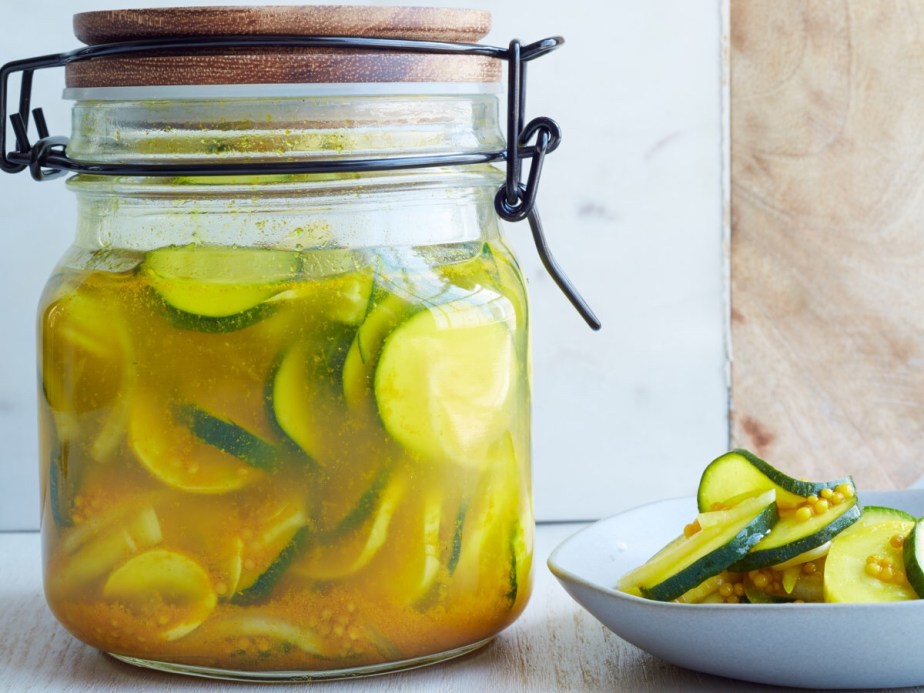
Zucchini Pickles

7 pounds Zucchini sliced thin

1 cup lime juice

Gallon of water

Syrup

9 Cups sugar

2 Quarts Of vinegar

1/4 teaspoon celery seed

1/2 tablespoon mustard seed

1 tablespoon whole cloves

1 teaspoon pickling spice

Soak zucchini in water lime mixture for 24 hours.  Drain and rinse 4 to 5 times.  Soak in clear cold water for 3 hours.  Drain.

Mix syrup and bring to a boil.  Pour over zucchini and let stand for 3 hours.  Boil 35 to 40 minutes.  Can hot

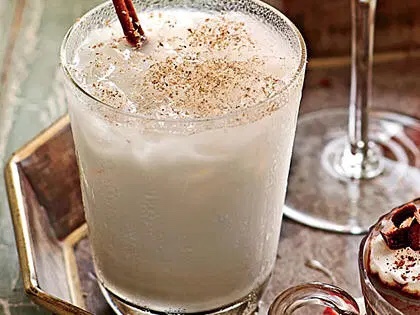
Milk Punch

3 Quarts Half-And-Half
1 Bottle (750-Ml) Of Bourbon
¼ Cup Vanilla Extract
2 Cups Powdered Sugar

Garnish: Grated Nutmeg

Combine all ingredients except the nutmeg in a gallon-size container. Cover and freeze until the mixture is slightly frozen.
Use an ice pick to make the mixture slightly slushy. Pour into a punch bowl or chilled pitcher. Add more powdered sugar, if desired. Sprinkle with nutmeg.

Pour into small cocktail glasses or wine goblets (not over ice). Garnish each drink with an additional pinch of nutmeg.

Serve very cold.

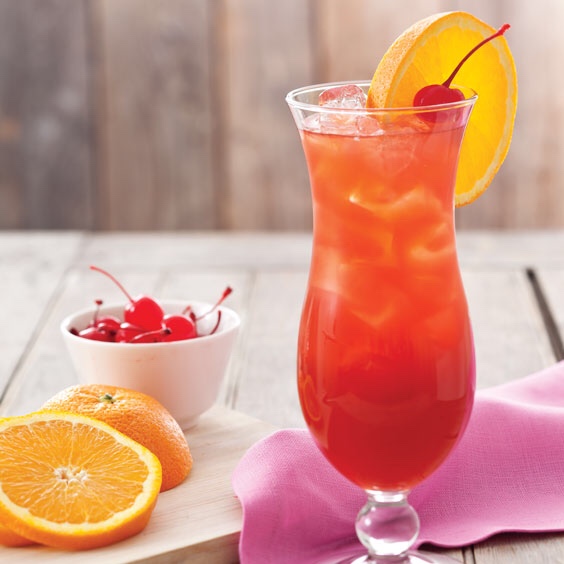
The Hurricane

1½ Cups Pineapple Juice
1¼ Cups Orange Juice
1 Cup Pomegranate Juice
½ Cup Grenadine
½ Cup Simple Syrup
½ Cup Freshly Squeezed Lime, Plus More To Taste
1¼ Cups Light Rum
1½ Ounces Dark Rum
2 Ounces Triple Sec

Garnishes: Orange And Lemon Slices, Maraschino Cherries With Stems

Combine all ingredients except for the garnishes in a large pitcher and stir well. Serve in 16-ounce glasses over lots of cubed ice, adorned with the garnishes.

Chatham Artillery Punch

Based upon a recipe in “Savannah Style – A cookbook by the junior league of Savannah.”

It is said that the concoction possesses more of a kick than the two brass cannons presented to Savannah by George Washington. It was first devised in the 1850’s to honor a rival military organization. The Republican Blues, and since then has laid to rest, at least temporarily many an unknown soldier and countless known Ones.

Serves 200

  • 2 gallons tea (green tea – l pound tea to 2 gallons water. Soak overnight in tin bucket and strain.)
  • Juice of 3 dozen lemons
  • 5 pounds brown sugar
  • 2 gallons Catawba wine
  • 2 gallons Santa Cruz rum
  • I gallon Hennessy (3 – Star) brandy
  • I gallon dry gin
  • I gallon rye whiskey 
  • 2 quarts cherries
  • 2 quarts pineapple cubes
  • 10 quarts champagne

Mix the tea with lemon juice, preferably in a cedar tub, then add brown sugar and liquors. Let this mixture “set” for at least I week, or preferably 2 weeks, in covered container.

After “setting” period and when ready to serve, pour over cake of ice. Never chill in refrigerator or used crushed ice. When this is done, add cherries, pineapple cubes and champagne. pouring in slowly and mixing with circular motion. The punch is now ready to serve.

Sweet Tea

“She [my mother] still made sweet tea, of course, being a Southern woman of whom having iced tea on hand is expected. But instead of sugar, my mother used Sweet’N Low, which is kind of like making chocolate cake with dirt. She insisted no one could tell the difference: “They’re both sweet.”

“To say Southerners drink sweet tea like water is both true and not. True because the beverage is served at every meal, and all times and venues in between—at church and at strip clubs, at preschool and in nursing homes. Not true because unlike water or wine or even Coca-Cola, sweet tea means something. It is a tell, a tradition. Sweet tea isn’t a drink, really. It’s culture in a glass. Like Guinness in Ireland. Or ouzo in Greece.”
~ Allison Glock, from “Sweet Tea: A Love Story” Excerpt From “The Southerner’s Handbook: A Guide To Living The Good Life.”

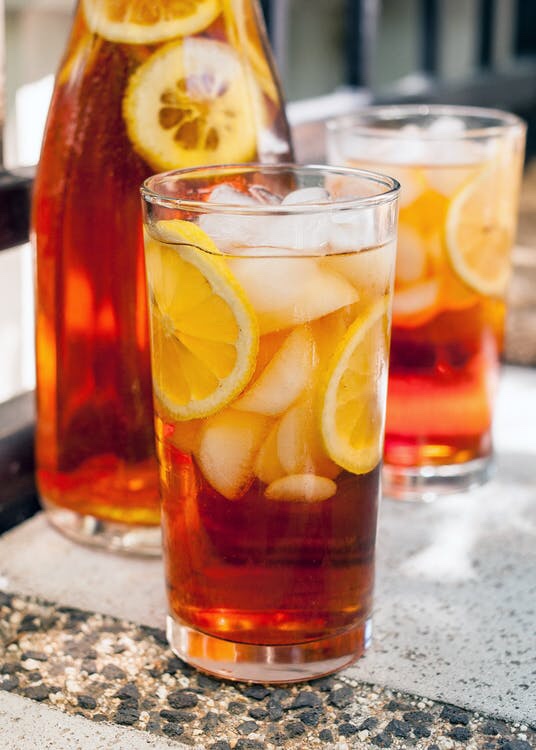
Simple Sweet Tea

6 family-size tea bags
8 cups boiling water
¼ teaspoon baking soda
1½ cups sugar

Place the tea bags in a large glass pitcher, pour the boiling water over, and steep for 15 minutes. Stir in the baking soda to remove bitterness and sugar.

Remove the tea bags and discard. Place the pitcher in the refrigerator.

Enjoy!

#SweetTea #SouthernCulture

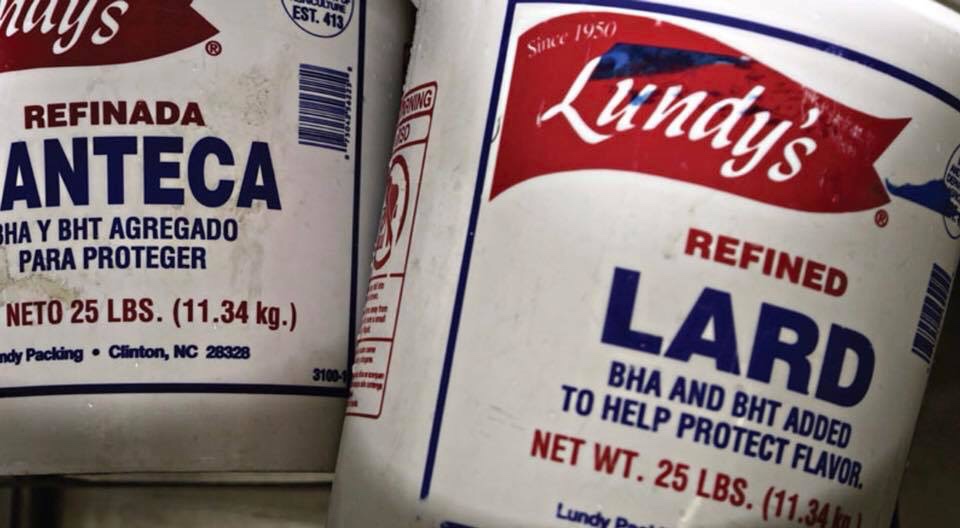
Lard

“Lard gets a bad rap, but in the right proportions adds a delicious layer of flavor and texture. Bill Neal once told me, “I am not saying ‘you shouldn’t’—I’m saying ‘don’t ever’ make biscuits or piecrust without lard. It’s just a waste of time.” The irony here is that lard really began its trip into ingredient obscurity about 40 years ago with the misconceptions passed around that pork was bad or unhealthy. It became a victim of the marketing of the hydrogenated vegetable shortenings, like Crisco, that allegedly lowered the risk of heart disease. Science has proven in recent years how incorrect and, actually, opposite that is. So while the pig is exalted, lard still languishes in disdain on the culinary blacklist.

Natural lard is a completely naturally occurring fat and has fewer calories and a cleaner fat content than butter, containing less nonfat solids. Do not confuse with shelf-stable lard, which is not terrible, but not as good for you as natural lard, which must be refrigerated. There are no trans fats in lard since it is a natural fat, and it is very high in omega 3 fatty acids. Studies indicate that it is no more responsible for raising LDL cholesterol than any other fat and will actually help raise HDL (“good” cholesterol) levels.

So get with the program, get over the stigma, and buy a little bucket of lard next time you are at the store. You’ll be happy you did, and your stuff will start tasting a lot more “like your grandmother used to make it.”
~ Chef John Currence, from “Pickles, Pigs & Whiskey”

#JohnCurrence #Lard #SouthernCooking

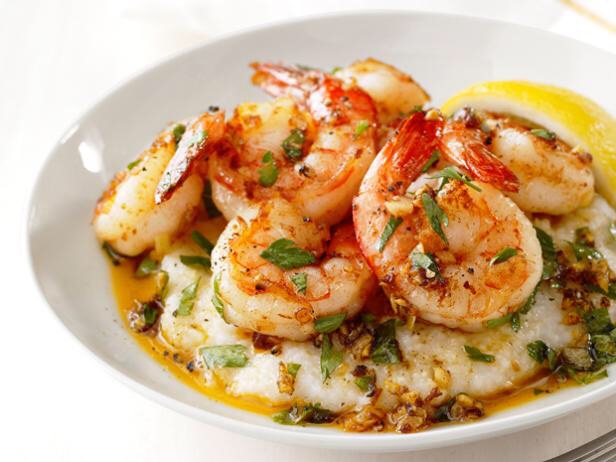
Grits

“Grits is the first truly American food. On a day in the spring of 1607 when sea-weary members of the London Company came ashore at Jamestown, Va., they were greeted by a band of friendly Indians offering bowls of a steaming hot substance consisting of softened maize seasoned with salt and some kind of animal fat, probably bear grease. The welcomers called it “rockahominie.”

The settlers liked it so much they adopted it as part of their own diet. They anglicized the name to “hominy” and set about devising a milling process by which the large corn grains could be ground into smaller particles without losing any nutriments. The experiment was a success, and grits became a gastronomic mainstay of the South and symbol of Southern culinary pride.”

~ Turner Catledge, New York Times on 31 January 1982

What exactly are Grits?

“Grits are—or is, as the case may be— a by-product of corn kernels. Dried, hulled corn kernels are commonly called hominy; grits are made of finely ground hominy. Whole-grain grits may also be produced from hard corn kernels that are coarsely ground and bolted (sifted) to remove the hulls.

Thus, throughout its history, and in pre-Columbian times as well, the South has relished grits and made them a symbol of its diet, its customs, its humor, and its good-spirited hospitality. From Captain John Smith to General Andrew Jackson to President Jimmy Carter, southerners rich and poor, young and old, black and white have eaten grits regularly. So common has the food been that it has been called a universal staple, a household companion, even an institution.

Grits cooked into a thick porridge are so common in some parts of the South that they are routinely served for breakfast, whether asked for or not. They are often flavored with butter or gravy, served with sausage or ham, accompanied by bacon and eggs, baked with cheese, or sliced cold and fried in bacon grease. Mississippi-born Craig Claiborne, the late New York Times food writer, loved grits and published elegant recipes for their preparation.

The last 30 years have seen renewed interest in grits. It has become a part of southern creative expression, as when bluesman Little Milton says, “If grits ain’t groceries / Eggs ain’t poultry / And Mona Lisa was a man.” Jimmy Carter’s presidency in the 1970s led to media interest in grits as a southern icon and the film My Cousin Vinny included a humorous scene of a couple from the Bronx eating the mysterious (to them) grit. By the mid-1980s a new generation of renowned southern chefs, including Bill Neal from North Carolina and Frank Stitt from Alabama, began serving sophisticated dishes with grits, such as Stitt’s grits soufflé with fresh thyme and country ham. South Carolina cookbook author John Martin Taylor helped popularize stone-ground grits, and smaller producers of artisanal grits grew into successful businesses, including Old Mill of Guilford (North Carolina), Falls Mill (Tennessee), Logan Turnpike Mill (Georgia), Adam’s Mill (Alabama), Anson Mills (South Carolina), and War Eagle Mill (Arkansas).”

~ John Egerton, Excerpt From “The New Encyclopedia of Southern Culture”

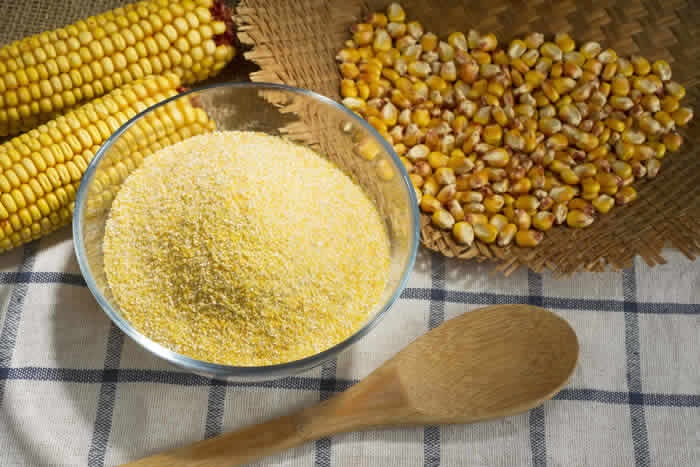
Corn Grist

CORN GRIST

Grist is grain that has been separated from its chaff in preparation for grinding. It can also mean grain that has been ground at a gristmill. Its etymology derives from the verb grind.

Grist can be ground into meal or flour, depending on how coarsely it is ground. Maize made into grist is called grits when it is coarse, and corn meal when it is finely ground. Wheat, oats, barley, and buckwheat are also ground and sifted into flour and farina. Grist is also used in brewing and distillation to make a mash.

CORNMEAL

Cornmeal is ground dried corn. You can find it at any chain grocery store, but the best cornmeal is stone ground and you may need to source that at a mill or through mail order. Unlike more modern methods of milling, the stones don’t substantially heat up the grains, resulting in a superior flavor and texture. Find a miller who grinds corn to order or purchase a small home grinder that will allow you to vary the size of the grind. Many millers ship grains via mail order, and a home mill can be easily purchased on the Internet.

HOMINY

If you take dried flint corn and cook it in lye until the outer hull of the kernel separates, you’ll leave the germ of the kernel behind—and get hominy. This process, called nixtamalization, originated with Mesoamerican Indians and has a very specific effect: it unlocks the nutritional power of corn, making it much more digestible, especially when combined with rice or beans. Unlike Native Americans, Southerners and Europeans didn’t fully adopt this practice and thus they often lacked the complete nutritional protein that it creates, leaving their populations who subsisted on cornmeal and preserved meat susceptible to a vitamin deficiency disease called pellagra.

HOMINY GRITS

Old-timers call it “little hominy,” but modern commercial grits bear little resemblance to the staple grist of yesteryear. Industrial milling and commercial corn production mean that most of the grits you find are simply coarsely ground cornmeal, but hominy grits are nixtamalized dried kernels ground to a coarse consistency.

MASA

Latin Americans take fresh hominy and grind it while still wet, producing a soft corn flour that constitutes the basis for everything from tortillas to tamales. The commercial kind is called masa harina and comes dried in bags, like cornmeal or flour.

POLENTA

Corn traveled quickly to Italy after its “discovery” in the Americas, and it soon replaced buckwheat and farro as the grain of choice for polenta. Very similar to the South’s grits and African ugali, polenta is a cornmeal mush originally eaten by peasants, a staple of the cuisine Italians call la cucina povera, but it is often made from flint corn, a very hard variety that has a lower starch content.

SAMP

Early colonists used the terms “grits” and “samp” interchangeably, but when we talk about samp today, we are referring to cracked hard flint corn. It’s hard to make, since the best samp is cracked by hand, but the kernels of good samp can be shattered, producing very little corn flour in the process. This type of rough corn cooks up like rice, tender and fluffy.”

~ Sean Brock from “Heritage”