The United States Holocaust Memorial Museum (USHMM) leads the nation in observing Days of Remembrance, established by the US Congress as the country’s annual Holocaust commemoration. Join our nation and a global community to honor Holocaust survivors, remember the six million Jews murdered, and pay tribute to American soldiers who liberated victims.
Despite a year when they faced loss and isolation, Holocaust survivors continue to rise to the challenge of educating by sharing their experiences, compelling us to confront an alarming rise in antisemitism, Holocaust denial, and extremist ideology. Their resilience and courage inspire us to create a better future than the past.
This year’s commemoration featured remarks from US Secretary of State Antony J. Blinken, who has spoken of the importance of Holocaust remembrance and the personal impact of his family’s experience. His stepfather survived the Holocaust after several years in Auschwitz and other camps, was liberated by American soldiers, and immigrated to the United States.
As United with Israel website notes, the picture below was taken in 2015 at the entrance to Auschwitz by Miriam Ciss, daughter of Julius Ciss, the executive director of Jews for Judaism, Canada. It shows Miriam holding the Israeli flag at the entrance through which so many doomed Jews (and gays, Romas, and so on) passed. The photo could be seen as a statement that the state of Israel was a result of what happened during the Holocaust.
If you find that offensive, there’s probably something wrong with you. But Facebook did!
Ciss has given permission to repost what he wrote on Facebook, presenting Facebook’s response to the picture:
Last week I posted the following regarding how Facebook had tagged the attached photo as “insensitive”:
“It seems that someone complained to Facebook about this previously posted photo of my daughter at Auschwitz Concentration Camp. When I posted it, I stated:
“My daughter, Miriam Ciss, was in Auschwitz Concentration Camp today. My mother Helena and Aunt Dolly survived Auschwitz Birkenau. This is just one of the amazing photos she took. Shabbat Shalom and Happy Passover.
“What I didn’t say was that aside from my parents and aunt, the Nazis murdered both my father’s and mother’s entire families.
“Well, today I received the following notice from Facebook: ‘Your photo wasn’t removed because it doesn’t violate our community standards, but it has been marked as insensitive because it could offend or upset people.’
I don’t know what that means, except that someone must have complained, and some functionary of Facebook in some country must have agreed with the assessment. Fortunately, people complained about the “insensitive” label and Facebook apologized this way:
“It has come to our attention that a piece of your content was mistakenly flagged by one of our reps. This was a mistake and we’ve reversed the action taken. We apologize for our error.” – Eleanor, Community Operations, Facebook
Primo Levi, who survived Auschwitz, and wrote the moving book If This is a Man about his experience, said of the Holocaust: “It happened, therefore it can happen again. . . It can happen, and it can happen everywhere.” I am not as pessimistic as he, but neither am I as certain as I used to be that we’ve moved beyond the possibility, at least in the West, that such a genocide could recur.
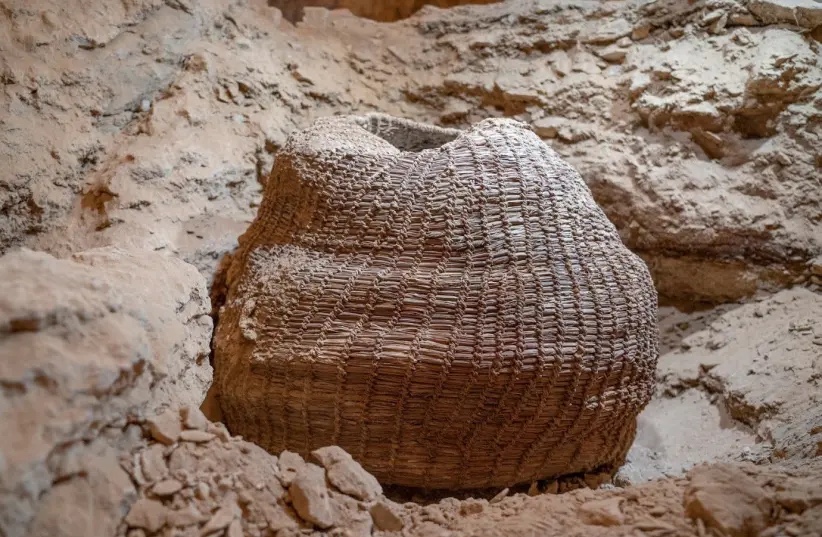
Oldest woven basket in the world found in Israel, dates back 10,000 years!
The basket was found empty and closed with a lid. Only a small amount of soil was retrieved in it and the researchers hope it will help identify what the vessel contained.
Beneath the Muslim Quarter in Jerusalem’s Old City is an underground quarry that goes by two names: Zedekiah’s Cave and Solomon’s Quarries. The names reflect the two main legends that surround this 750-foot-long (228.6 m) collection of caverns.
The first story is that King Zedekiah fled through the cave to escape from attacking Babylonians around 587 BCE. At the time, the legend goes, the cave extended all the way to Jericho—a distance of about 13 miles (21 km). The Babylonians chased Zedekiah to Jericho, capturing and blinding him. The dripping water in the cave is thus known as Zedekiah’s Tears. The second story involves King Solomon, who is fabled to have used stones from the cave to build the First Temple in the 10th century BCE.
There is no archaeological evidence to support either premise. However, chisel markings on the walls suggest Zedekiah’s Cave was one of the quarries that supplied limestone for King Herod’s Second Temple and Temple Mount expansion. The stones of the Western Wall (also called the Wailing Wall)—Judaism’s most sacred prayer site—may indeed have come from this cave.
“Fanaticism dates back much earlier than Islam. Earlier than Christianity and Judaism. Earlier than all the ideologies in the world. It is an elemental fixture of human nature, a “bad gene.” People who bomb abortion clinics, murder immigrants in Europe, murder Jewish women and children in Israel, burn down a house in the Israeli-occupied territories with an entire Palestinian family inside, desecrate synagogues and churches and mosques and cemeteries—they are all distinct from al-Qaeda and ISIS in the scope and severity of their acts, but not in their nature. Today we speak of “hate crimes,” but perhaps a more accurate term would be “zealotry crimes,” and such crimes are carried out almost daily, including against Muslims.
Genocide and jihad and the Crusades, the Inquisition and the gulags, extermination camps and gas chambers, torture dungeons and indiscriminate terrorist attacks: none of these are new, and almost all of them preceded the rise of radical Islam by centuries.
As the questions grow harder and more complicated, people yearn for simpler answers, one-sentence answers, answers that point unhesitatingly to a culprit who can be blamed for all our suffering, answers that promise that if we only eradicate the villains, all our troubles will vanish.
“It’s all because of globalization!” “It’s all because of the Muslims!” “It’s all because of permissiveness!” or “because of the West!” or “because of Zionism!” or “because of immigrants!” or “because of secularism!” or “because of the left wing!” All one needs to do is cross out the incorrect entries, circle the right Satan, then kill that Satan (along with his neighbors and anyone who happens to be in the area), thereby opening the gates of heaven once and for all.
More and more commonly, the strongest public sentiment is one of profound loathing—subversive loathing of “the hegemonic discourse,” Western loathing of the East, Eastern loathing of the West, secular loathing of believers, religious loathing of the secular. Sweeping, unmitigated loathing surges like vomit from the depths of this or that misery. Such extreme loathing is a component of fanaticism in all its guises.
For example, concepts that only half a century ago seemed innovative and exciting—multiculturalism and identity politics—quickly morphed, in many places, into the politics of identity hatred. What began with an expansion of cultural and emotional horizons is increasingly deteriorating into narrower horizons, isolationism, and hatred of the other. In short, a new wave of loathing and extremism assails us from all sides.”
Today in 1974 – Terracotta Army was discovered in Shaanxi province, China.
There are more than 8,000 life-sized figures in this army, which were made and buried with Qin Shi Huang, the first Emperor of China, in the third century BC. Pictured one of the three pits containing the figures.
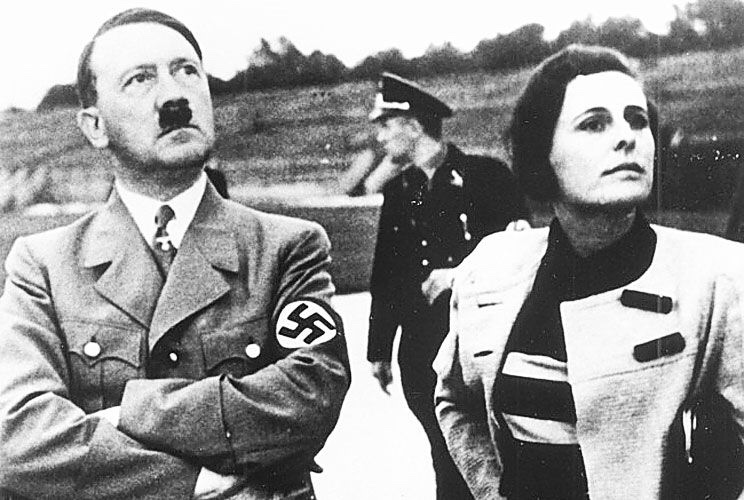
I have a deep appreciation for the film innovations of Leni Riefenstahl over her long career. To be clear I am not saying I admire her affiliation with Nazi Germany. I am not saying that I feel her propaganda work during the 1930’s & 1940’s is something that inspires me or I admire. I do however recognize the brilliance of the work she did during that time from a strictly artistic point-of-view and as an effective form of propaganda for a morally reprehensible regime that unfortunately existed in a dark period of human history. Whether you believe her claims that she was unaware of the Nazi war crimes they were committing or not I leave up to your own conscience. For what it is worth she won over fifty libel cases against people accusing her of knowing of the Nazi crimes. She would later go onto say of meeting Hitler, “It was the biggest catastrophe of my life. Until the day I die people will keep saying, ‘Leni is a Nazi’, and I’ll keep saying, ‘But what did she do?”
Her most infamous and historically significant film was “Triumph of the Will” (Named by Hitler) of the 1934 Nazi Party rally at Nuremberg. According to reports she originally did not wish to make the film, but Hitler convinced her on the condition that she not be required to make further films for the party. She did however make a few more films for the Nazi party such as an eighteen minute follow up film at the 1935 party rally focusing on the army which felt they were not fairly represented in the first film. She went on to claim to never have intended to make a pro-Nazi propaganda film and was disgusted it was used that way. Whether that is true or not “Triumph of the Will” has been universally recognized as a masterful, innovative example of documentary filmmaking. Years later the Economist (magazine) wrote that Triumph of the Will “sealed her reputation as the greatest female filmmaker of the 20th century.” The film scholar Mark Cousins went on to claim, “Next to Orson Welles and Alfred Hitchcock, Leni Riefenstahl was the most technically talented Western film maker of her era”.
In 1936 with the Olympics approaching she traveled to Greece to film the location of the original Olympics at Olympia. This footage became part of the film “Olympia” a highly successful film. It was noted for its technical as well as aesthetic achievements. Her use of tracking shots as well as slow motion of the athletes has been seen as a major influence on modern sports photography. She is noted to have filmed footage of all races at the Olympics, including the American Jesse Owens. Upon its release in the United States the American philanthropist and former Olympic athlete (1912 Olympics) Avery Brundage said it was, “The greatest Olympic film ever made.”
During the invasion of Poland she worked as a war correspondent. On September 12th, 1939 thirty civilians were executed and there are claims she attempted to intervene, but a German soldier held her at gunpoint and threatened to shoot her if she continued. Whether that is true or not, close-up photos of a distraught Riefenstahl still exist from that day. She would later claim she did not realize the civilians were Jews. Nevertheless a month later she filmed Hitler’s victory parade in Warsaw. It was the last Nazi related film of her career.
After the war she was held in American and French run detention camps and prisons from 1945-1948. She is reported to have reacted with horror and tears when shown photos of the concentration camps. She was tried four times but never found guilty of anything but being a “fellow traveler” who was sympathetic to the Nazis. Through the 1950’s and 1960’s she attempted many times (15 by her count) to make films but they were always met with resistance, public protests and sharp criticism.
In the 1960’s her focus made the transition to still photography. She became enamored with Africa, inspired by Hemingway’s book “The Green Hills of Afruca,” and the photography of George Rodger. She traveled many times to Sudan to photograph the Nuba tribes. She lived with them sporadically learning their culture so she could photograph them more easily. She was eventually granted Sudanese citizenship for her services to the country, becoming the first foreigner to have a Sudanese passport. Her two books of the tribes, “The Last of the Nuba,” and “The People of Kau,” published in the 1970’s were both international bestsellers. She photographed the 1972 Olympic games in Munich. Later she photographer Mick Jagger, Siegfried and Roy, and was a friend of Andy Warhol. She was a guest of honor at the 1976 Olympics in Montreal.
At age 72 she became interested in underwater photography. She lied about her age (by 20 years) and became certified to scuba dive. In 1978 she published a book of coral gardens and then in 1990 her book “Wonder Under Water.” On her 100th birthday she released her final film, “Underwater Impressions” an idealized documentary of life in the oceans. It was her first film in twenty-five years. At age 100 she was still photographing marine life and gained distinction as the world’s oldest scuba diver. She continued to be active in her late life being a member of Greenpeace for eight years. In 2000 she was in a helicopter crash while attempting to determine the fate of her Nuba friends during the Sudanese civil war. On Auguest 22nd, 2003 she celebrated her 101st birthday and married her longtime friend and cameraman Horst Kettner, who was forty years her junior. On September 8th she died from cancer.
As the daily telegraph wrote upon her death :
“[Leni Riefenstahl] was perhaps the most talented female cinema director of the 20th century; her celebration of Nazi Germany in film ensured that she was certainly the most infamous…Critics would later decry her fascination with the athletes’ [Olympia] physiques as fascistic; but in truth her interest was born not of racist ends but of the delight she, as a former dancer, took in the human form.”
“Opinions will be divided between those who see her as a young, talented and ambitious woman caught up in the tide of events which she did not fully understand, and those who believe her to be a cold and opportunist propagandist and a Nazi by association.”
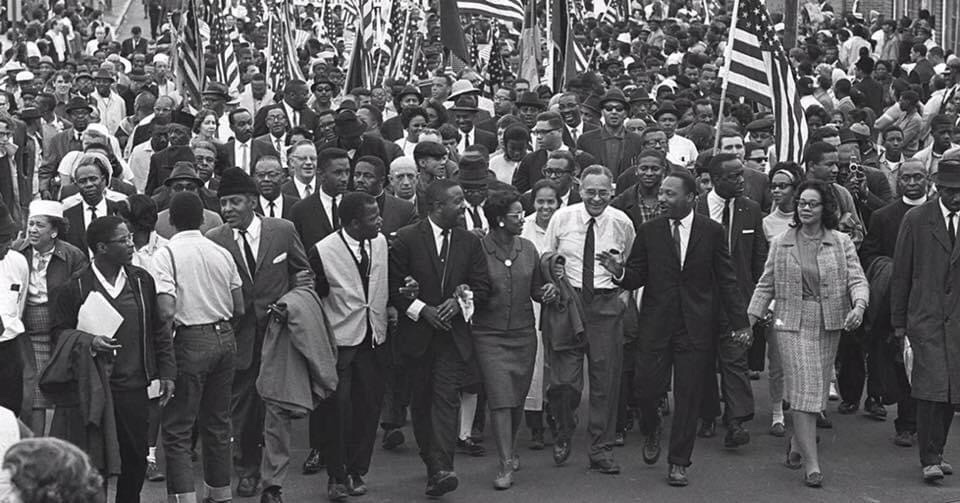
Today in history —> On this day in 1965, Martin Luther King led 3200 people on the third (and successful) civil rights march from Selma to Montgomery, Alabama…
The NYT has an interesting interview with documentary filmmaker Ken Burns, Would he make his classic series, “The Civil War” (still one of my favorite t.v. documentary of all time) differently in light of the present Zeitgeist? Was Shelby Foote a Confederate sympathizer? And why was Burns so changed by the early death of his mother?
Today in History –> On this day in history in 44 B.C., Julius Caesar, the”dictator for life”of the Roman Empire, was murdered by his own senators at a meeting in a hall next to Pompey’s Theatre. The conspiracy against Caesar encompassed as many as sixty noblemen, including Caesar’s own protege, Marcus Brutus…







 Mark Bere Peterson’s Counterculture, Urban Legends, Paganism & Witchcraft