Dostoyevsky Sentenced to Death

On November 16, 1849, Fyodor Dostoyevsky was sentenced to death by the Russian government for subversive activities. There was a mock execution, in which he and other were lined up before a firing squad, but at the last minute a reprieve came, and Fyodor served four years in a Siberian prison camp.

“Man is fond of counting his troubles, but he does not count his joys. If he counted them up as he ought to, he would see that every lot has enough happiness provided for it.”

~ Fyodor Dostoevsky

#TodayLiteraryHistory #FyodorDostoyevsky

Red Comet by Heather Clark

I’ve been waiting more than two months for this book to come out. It was released on Sylvia Plath’s birthday (Oct. 27th). I picked it up yesterday and it is amazing so far, but it’s long at 937 pages. Instead of the focus being on her suicide it is on the amazing art of the written form she composed during her lifetime.

The author spent eight years researching, given access to previously unseen journals, letters, stories and poetry. Highly recommend for anyone who wants to see through the mythology of Sylvia Plath and see the real woman and artist.

Here’s the NYT review:

https://www.nytimes.com/2020/10/27/books/review/red-comet-heather-clark-sylvia-plath.html

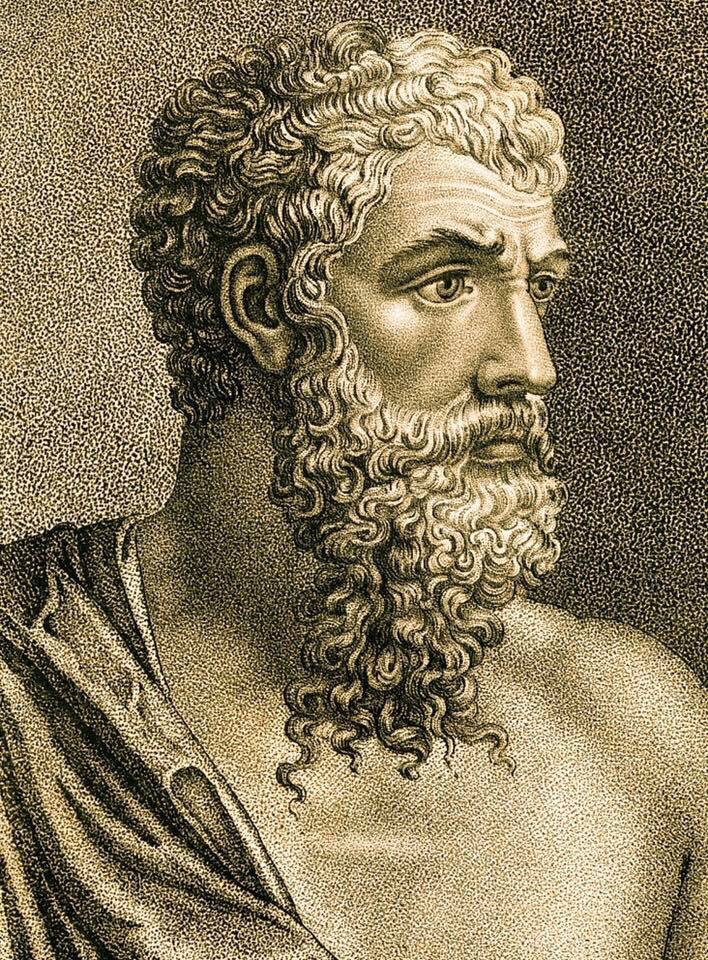
Aristophanes (c. 448-385 B.C.)

Aristophanes

Aristophanes (c. 448-385 B.C.) is the only representative of Old Comedy whose work we have in complete form. Aristophanes wrote political satire and his humor is often coarse. His sex-strike and anti-war comedy, Lysistrata, continues to be performed today in connection with war protests. Aristophanes presents a contemporary picture of Socrates, as a sophist in the Clouds, that is at odds with Plato’s Socrates.

Eleven of his forty plays survive virtually complete. These, together with fragments of some of his other plays, provide the only real examples of a genre of comic drama known as Old Comedy, and are used to define it.

Also known as “the Father of Comedy” and “the Prince of Ancient Comedy”, Aristophanes has been said to recreate the life of ancient Athens more convincingly than any other author. His powers of ridicule were feared and acknowledged by influential contemporaries; Plato singled out Aristophanes’ play The Clouds as slander that contributed to the trial and subsequent condemning to death of Socrates, although other satirical playwrights had also caricatured the philosopher.

His plays include: The Acharnians, Assemblywomen, The Birds, The Clouds, The Frogs, The Knights, Lysistrata, Peace, Plutus, Thesmophoriazusae, The Wasps

#ClassicalWisdom #ClassicalComedy #AncientGreece #Aristophanes

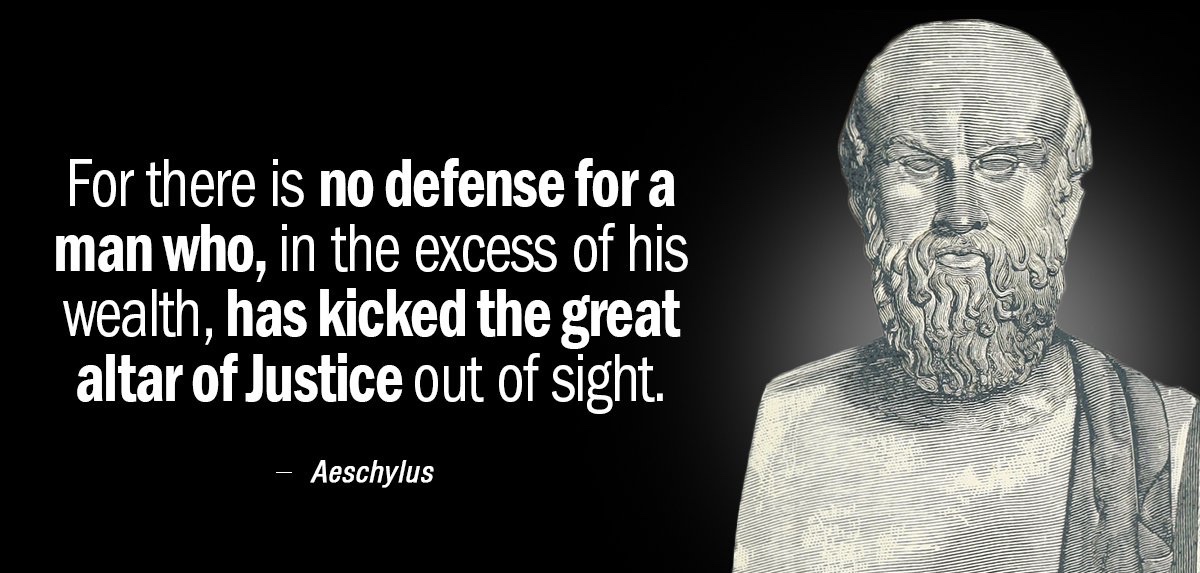
Aeschylus (c.525 – 456 B.C.)

Aeschylus

Aeschylus (c.525 – 456 B.C.) was the first great tragic poet. He introduced dialogue, the characteristic tragic boot (cothurnus) and mask. He established other conventions, like the performance of violent acts offstage. Before he became a tragic poet, Aeschylus, who wrote a tragedy about the Persians, fought in the Persian War in the battles of Marathon, Salamis, and Plataea.

Only seven of his estimated seventy to ninety plays have survived, and there is a long standing debate regarding his authorship of one of these plays, “Prometheus Bound”, which some believe his son Euphorion actually wrote.

Only seven tragedies have survived intact: The Persians, Seven against Thebes, The Suppliants, the trilogy known as The Oresteia, consisting of the three tragedies Agamemnon, The Libation Bearers and The Eumenides, together with Prometheus Bound.

The only complete trilogy of Greek plays by any playwright still extant (save a few missing lines in several spots) is the Oresteia (458 BC), although the satyr play that originally followed it, Proteus, is lost except for some fragments. The trilogy consists of Agamemnon, The Libation Bearers (Choephoroi), and The Eumenides. Together, these plays tell the bloody story of the family of Agamemnon, King of Argos.

#ClassicalWisdom #ClassicalTragedy #AncientGreece #Aeschylus

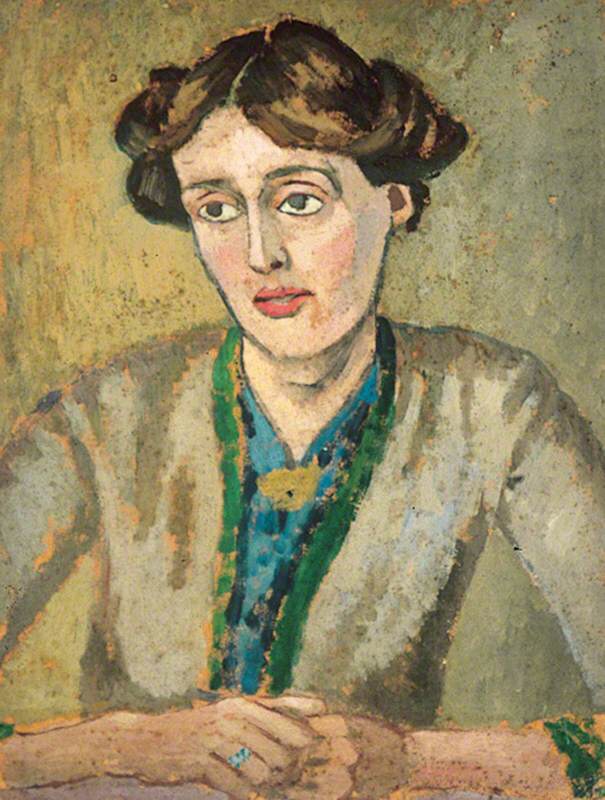
Virginia Woolf

Virginia Woolf (1882-1941)

Adeline Virginia Woolf is well known as one of the major literary figures of the twentieth century. The English author, novelist, essayist, biographer, feminist, publisher and writer of short stories is best known for her novels “Mrs. Dalloway,” “To The Lighthouse,” “Orlando,” and her book length essay, “A Room Of One’s Own.” From this essay she is often quoted, “A woman must have money and a room of her own if she is to write fiction.”

She began writing professionally in 1900 with an article about Haworth, the home of the Bronte family for the Times Literary Supplement. Her first novel “The Voyage Out” was published in 1915 by her half-brother. She would go on to publish novels and essays as an intellectual to both critical and popular success. Much of her work was self-published through the Hogarth Press. Her work was often criticized for its narrow portrayal of the upper middle class intellectuals and lacked anything of ethical or emotional relevance for the common reader. She is often criticized as well for being perceived as an anti-Semite despite the fact she was happily married to a Jewish man and condemned Christianity as self-righteous egotism and in a letter to her friend Ethel Smyth, “my Jew has more religion in one toe nail—more human love, in one hair.” Additionally her distaste for fascism and its ties to anti-Semitism is quite plainly spelled out in her book, “Three Guineas.” Her final work, “Between the Acts,” aptly expresses some of her main themes : transformation of life through art, sexual ambivalence, and the flux of time throughout one’s life at the same time being a deterioration and renewal.

Throughout her life Virginia suffered from several “breakdowns” as a result of having symptoms that conform to bipolar disorder, the first occurring by the sudden death of her mother when she was thirteen. Her most significant episode occurred after the death of her father in 1904 and was in turn briefly institutionalized after her first suicide attempt. Modern scholars have suggested her recurring depressive periods were a result of sexual abuse both her and her sister were subjected to by her half-brothers. She vividly recounts this in an autobiographical essay, “A Sketch of the Past,” which can be now read in “Moments of Being” a collection of posthumously-published autobiographical essays. She wrote of the event, “I can remember the feel of his hands going under my clothes; going firmly and steadily lower and lower, I remember how I hoped that he would stop; how I stiffened and wriggled as his hand approached my private parts. But he did not stop.”

Throughout her life she struggled with periodic mood swings and associated illnesses. Though this often affected her social life, her literary career and productivity continued with very few breaks. After the completion of “Between the Acts” she fell into a deep depression. The onset of World War II and the destruction of her London home in the bombing only deepened it. On March 28th, 1941 she filled the pockets of her overcoat with stones and drowned herself in the River Ouse which runs through the counties of West and East Sussex near her home. In her last note to her husband she wrote :

“Dearest, I feel certain that I am going mad again. I feel we can’t go through another of those terrible times. And I shan’t recover this time. I begin to hear voices, and I can’t concentrate. So I am doing what seems the best thing to do. You have given me the greatest possible happiness. You have been in every way all that anyone could be. I don’t think two people could have been happier ’til this terrible disease came. I can’t fight any longer. I know that I am spoiling your life, that without me you could work. And you will I know. You see I can’t even write this properly. I can’t read. What I want to say is I owe all the happiness of my life to you. You have been entirely patient with me and incredibly good. I want to say that – everybody knows it. If anybody could have saved me it would have been you. Everything has gone from me but the certainty of your goodness. I can’t go on spoiling your life any longer. I don’t think two people could have been happier than we have been.”
~ Virginia Woolf

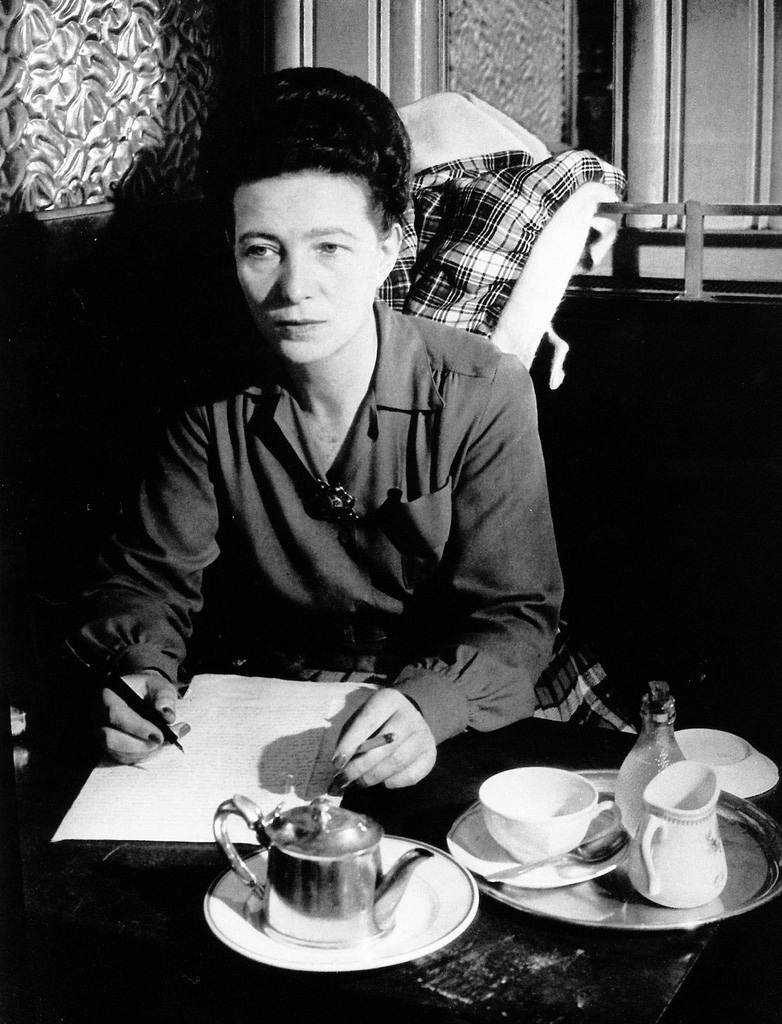
Simone de Beauvoir

Simone de Beauvoir (1908-1986)

Simone-Ernestine-Lucie-Marie Bertrand de Beauvoir was a French existentialist philosopher, intellectual, feminist and social theorist. She did not consider herself a philosopher, however her contributions to existential feminist thought firmly enshrines her legacy as one. In her lifetime she wrote novels, essays, biographies, a multi-volume autobiography, including articles/essays on philosophy, politics, and social issues. She is best remembered for her treatise “The Second Sex,” a highly detailed analysis of women’s oppression and as it relates and influences contemporary feminism. She is also known for her two metaphysical novels “She Came to Stay” and “The Mandarins,” but by far best known or renown for “The Second Sex.”

Simone de Beauvoir was born in Paris and studied mathematics and philosophy at the Institut Catholique and literature/languages at the Institut Sainte-Marie. She then went on to study philosophy at the Sorbonne. Afterwards while completing her practice teaching requirements she first met Maurice Merleau-Ponty and Claude Lévi-Strauss. While studying for her agrégation in philosophy (a highly competitive postgraduate civil service examination which serves as a national ranking of students for some position in the public education system) she met fellow students Jean-Paul Sartre, Paul Nizan, and René Maheu. The jury narrowly awarded Sartre first place over Beauvoir. She was twenty-one at the time and the youngest ever to pass the exam.

In June 1949 “The Second Sex” was published in France. She argues that men made women the “Other” in society by putting a false and constructed mystery around them. Therefore men used this as their excuse not to understand women, their problems and most importantly not to help them. She went on to argue that men stereotyped women and used it to organize society into a patriarchy. As an existentialist she believed, “l’existence précède l’essence” (existence precedes essence), there by one is not born a woman, but becomes one. It is the social construction of woman that she identifies as fundamental to woman oppression. She went on to argue that even Mary Wollstonecraft considered men to be the ideal to which women should aspire and that this belief limited women’s success by maintaining that perception. She vigorously argued that for feminism to move forward this assumption must be set aside. Thus Beauvoir aseerted that women are as capable of choice as man, and therefore can ellect to elevate themselves and move beyond the position which they have been resigned and reach a position in which they take responsibility for oneself and the world, where one can choose one’s freedom.

A long quote and a few short quotes :

“Art, literature, and philosophy are attempts to found the world anew on a human freedom: that of the creator; to foster such an aim, one must first unequivocally posit oneself as a freedom. The restrictions that education and custom impose on a woman limit her grasp of the universe…Indeed, for one to become a creator, it is not enough to be cultivated, that is, to make going to shows and meeting people part of one’s life; culture must be apprehended through the free movement of a transcendence; the spirit with all its riches must project itself in an empty sky that is its to fill; but if a thousand fine bonds tie it to the earth, its surge is broken. The girl today can certainly go out alone, stroll in the Tuileries; but I have already said how hostile the street is: eyes everywhere, hands waiting: if she wanders absentmindedly, her thoughts elsewhere, if she lights a cigarette in a cafe, if she goes to the cinema alone, an unpleasant incident can quickly occur; she must inspire respect by the way she dresses and behaves: this concern rivets her to the ground and self. “Her wings are clipped.” At eighteen, T.E. Lawrence went on a grand tour through France by bicycle; a young girl would never be permitted to take on such an adventure…Yet such experiences have an inestimable impact: this is how an individual in the headiness of freedom and discovery learns to look at the entire world as his fief…[The girl] may feel alone within the world: she never stands up in front of it, unique and sovereign.”

“One’s life has value so long as one attributes value to the life of others, by means of love, friendship, and compassion”

“A man attaches himself to woman — not to enjoy her, but to enjoy himself.”

“Man is defined as a human being and a woman as a female – whenever she behaves as a human being she is said to imitate the male.”

“Society, being codified by man, decrees that woman is inferior; she can do away with this inferiority only by destroying the male’s superiority.”

“The word love has by no means the same sense for both sexes, and this is one cause of the serious misunderstandings that divide them.”

“Representation of the world, like the world itself, is the work of men; they describe it from their own point of view, which they confuse with absolute truth.”

“One is not born a genius, one becomes a genius; and the feminine situation has up to the present rendered this becoming practically impossible.”
~ Simone de Beauvoir

Mary Wollstonecraft

Mary Wollstonecraft (1759-1797)

Mary Wollstonecraft was an eighteenth century English writer, philosopher and advocate of women’s rights. She wrote novels, treatises, a travel narrative, a history of the French Revolution, a conduct book, and a children’s book. She is best known for her 1792 book, “A Vindication of the Rights of Women.” Through it she argues that women are not naturally inferior to men, but appear so simply because they lack the education. She posits both men and women should be treated as rational beings and bring about a social order founded on reason. Today she is regarded as one of the founding feminist philosophers and her unconventional life is also cited as a fundamental influence among certain feminists.
A few of her quotes summarize some of her beliefs much more adequately than I could ever attempt :

“I do not wish them [women] to have power over men; but over themselves.”

“If we revert to history, we shall find that the women who have distinguished themselves have neither been the most beautiful nor the most gentle of their sex.”

“It is vain to expect virtue from women till they are in some degree independent of men.”

“My own sex, I hope, will excuse me, if I treat them like rational creatures, instead of flattering their fascinating graces, and viewing them as if they were in a state of perpetual childhood, unable to stand alone.”
“Taught from their infancy that beauty is woman’s sceptre, the mind shapes itself to the body, and roaming round its gilt cage, only seeks to adorn its prison.”

“It is time to effect a revolution in female manners – time to restore to them their lost dignity – and make them, as a part of the human species, labour by reforming themselves to reform the world. It is time to separate unchangeable morals from local manners.”

“Love from its very nature must be transitory. To seek for a secret that would render it constant would be as wild a search as for the philosopher’s stone or the grand panacea: and the discovery would be equally useless, or rather pernicious to mankind. The most holy band of society is friendship.”
~ Mary Wollstonecraft

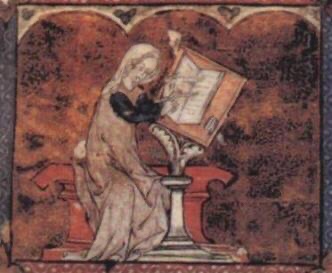
Marie de France

Marie de France (12th Century)

Very little is actually known of Marie de France as both her given name and where she lived is only known through her manuscripts. She was a medieval poet who probably was born in France and lived in England in the late 12th century. She lived and wrote at an unknown or undisclosed court, but was at least known of in the royal court of King Henry II of England. Some have suggested that she was perhaps a half-sister of Henry II.

She wrote a form of Anglo-Norman French and was proficient in Latin and English as well. She translated “Aesop’s Fables” into Anglo-Norman French from Middle English, and the “Legend of the Purgatory of St. Patrick” from Latin. She is best known as the writer of “The Lais Of Marie de France” which are still quite widely read and were a great influence on the romance genre (heroic literature) such as Chaucer’s “Canterbury Tales.”

“The Lais of Marie de France” are a series of twelve short (a few hundred lines each) Breton Lais. They are rhymed stanzas of 6-16 lines with 4-8 syllables per line which focus on glorifying the concept of courtly love through the adventure of the main character. The series of lais presents a contrast of the positive and negative actions that can result from love through magical situations, themes and imagery. Romantic themes include lovers in a hostile world, oppressive marriages and dichotomy social conventions, conflicts between love, chivalry and marriage, freedom of desire, love as an escape, and the psychological issues of love manifested in treachery and selfishness. They are also considered to have an ambiguous moral message especially for the time.

“Love is an invisible wound within the body, and, since it has its source in nature, it is a long-lasting ill.”

“Anyone who intends to present a new story must approach the problem in a new way and speak so persuasively that the tale brings pleasure to people.”

“It would be less dangerous for a man to court every lady in an entire land than for a lady to remove a single besotted lover from her skirts, for he will immediately attempt to strike back.”

~ Marie de France

Sylvia Plath

One of my favorite writers was born on this day in 1932, Sylvia Plath:

Sylvia Plath was an American poet, novelist, and short story writer. Born in Boston, Massachusetts she studied at Smith College and Newnham College. She married poet Ted Hughes in 1956 and had two children Frieda and Nicholas. After a long struggle with depression she committed suicide in 1963. To this day controversy surrounds both her life and death, as well as her writing and legacy. She along with some of her contemporaries (Anne Sexton and Robert Lowell among others) advanced the genre of confessional poetry. She is best known for her two collections of poetry “The Colossus and Other Poems,” and “Ariel,” as well as her semi-autobiographical novel “The Bell Jar.” In 1982 she became the first poet to win the Pulitzer Prize posthumously for “The Collected Poems of Sylvia Plath.”

Growing up in Winthrop, Massachusetts an eight year old Plath published her first poem in the children’s section of the “Boston Herald.” In addition to her writing, she showed a lot of promise as an artist winning an award for her painting from The Scholastic Art & Writing Awards in 1947. Her father died when she was eight due to untreated diabetes and led to her having a loss in faith and remained ambivalent about religion for the rest of her life. In 1942 her mother moved the family to Wellesley, Massachusetts.

In 1950 while attending Smith College she wrote to her mother, “The world is splitting open at my feet like a ripe, juicy watermelon.” The summer after her third year of college she spent a month in New York City as a guest editor of “Mademoiselle” magazine. It did not go as well as planned. That summer she was refused admission to the Harvard writing seminar and began an emotional downward spiral. In August 1953 she made her first suicide attempt by crawling under her house and taking her mother’s sleeping pills. She was not found for three days. Later she would write of the experience, “blissfully succumbed to the whirling blackness that I honestly believed was eternal oblivion.” She would spend the next six months at McLean Psychiatric Hospital. While under the care of Dr. Ruth Beuscher she would receive insulin and electric shock treatments. She appeared to recover and returned to Smith College.

Plath and English poet Ted Hughes were married on June 16th, 1956. Plath described Hughes as, “a singer, story-teller, lion and world-wanderer with a voice like the thunder of God.” In 1957 they moved to the United States with Plath first teaching at Smith College, and then moving to Boston in 1958 where she worked as a receptionist in the psychiatric unit at Massachusetts General Hospital while in the evening attending a creative writing class by Robert Lowell (Anne Sexton was also in attendance). During this time both Lowell and Sexton encouraged her to write from her own experience. She openly discussed her depression with Lowell, and her suicide attempt with Sexton. At this time she began to see herself as a more serious and focused poet and storyteller. She also began a lifetime friendship with the poet W. S. Merwin. In December she resumed her treatment with Dr. Ruth Beuscher.

In December of 1959 Plath and Ted Hughes moved to London. She remained anxious about writing confessional poetry from her own experience. Around this time she would explain that she learned, “to be true to my own weirdnesses.” In 1960 she released her first book of poetry. In 1961 her second pregnancy ended in a miscarriage, severely of her poems address this including, “Parliament Hill Fields.” In January of 1962 her son Nicholas was born. In June she was in a car accident which she would explain as one of her many suicide attempts. That July she would discover Ted Hughes was having an affair and they would separate in September.

Beginning in October of 1962 she would enter into the greatest burst of creativity of her career. It is at this time she would write almost all of the poems for which she is remembered and released posthumously in the collection “Ariel.” Her novel “The Bell Jar” came out in January 1963 to critical indifference. On February 11th, 1963 Plath was found dead having committed suicide by carbon monoxide poisoning in the kitchen with her head in the oven and the gas turned on. Hughes was devastated and in a letter wrote, “That’s the end of my life. The rest is posthumous.”

In the years following her death there were many accusations that Hughes had been abusive to Plath. The feminist poet Robin Morgan published a poem which openly accused Hughes of assault and her murder. In 1989 Hughes wrote an article in “The Guardian,” with this quote, “In the years soon after [Plath’s] death, when scholars approached me, I tried to take their apparently serious concern for the truth about Sylvia Plath seriously. But I learned my lesson early. […] If I tried too hard to tell them exactly how something happened, in the hope of correcting some fantasy, I was quite likely to be accused of trying to suppress Free Speech. In general, my refusal to have anything to do with the Plath Fantasia has been regarded as an attempt to suppress Free Speech […] The Fantasia about Sylvia Plath is more needed than the facts. Where that leaves respect for the truth of her life (and of mine), or for her memory, or for the literary tradition, I do not know.”

Hughes inherited the Plath estate and has been condemned in some circles for burning Plath’s last journal. He lost another journal and an unfinished novel and instructed a collection of her papers and journals should not be released until 2013. In 1998 he would publish a collection of poems called, “Birthday Letters,” which consists of 88 poems about his relationship with Plath. It would go on to win the Forward Poetry Prize, T.S. Eliot Prize for poetry, and the Whitebread Poetry Prize. He would die later that year of cancer.

A couple of quotes :

“If you expect nothing from anybody, you’re never disappointed.”

“Perhaps when we find ourselves wanting everything, it is because we are dangerously close to wanting nothing.”

“Death must be so beautiful. To lie in the soft brown earth, with the grasses waving above one’s head, and listen to silence. To have no yesterday, and no to-morrow. To forget time, to forgive life, to be at peace.”

~ Sylvia Plath

Tulips – By Sylvia Plath

The tulips are too excitable, it is winter here.

Look how white everything is, how quiet, how snowed-in

I am learning peacefulness, lying by myself quietly

As the light lies on these white walls, this bed, these hands.

I am nobody; I have nothing to do with explosions.

I have given my name and my day-clothes up to the nurses

And my history to the anaesthetist and my body to surgeons.

They have propped my head between the pillow and the sheet-cuff

Like an eye between two white lids that will not shut.

Stupid pupil, it has to take everything in.

The nurses pass and pass, they are no trouble,

They pass the way gulls pass inland in their white caps,

Doing things with their hands, one just the same as another,

So it is impossible to tell how many there are.

My body is a pebble to them, they tend it as water

Tends to the pebbles it must run over, smoothing them gently.

They bring me numbness in their bright needles, they bring me sleep.

Now I have lost myself I am sick of baggage —-

My patent leather overnight case like a black pillbox,

My husband and child smiling out of the family photo;

Their smiles catch onto my skin, little smiling hooks.

I have let things slip, a thirty-year-old cargo boat

Stubbornly hanging on to my name and address.

They have swabbed me clear of my loving associations.

Scared and bare on the green plastic-pillowed trolley

I watched my teaset, my bureaus of linen, my books

Sink out of sight, and the water went over my head.

I am a nun now, I have never been so pure.

I didn’t want any flowers, I only wanted

To lie with my hands turned up and be utterly empty.

How free it is, you have no idea how free —-

The peacefulness is so big it dazes you,

And it asks nothing, a name tag, a few trinkets.

It is what the dead close on, finally; I imagine them

Shutting their mouths on it, like a Communion tablet.

The tulips are too red in the first place, they hurt me.

Even through the gift paper I could hear them breathe

Lightly, through their white swaddlings, like an awful baby.

Their redness talks to my wound, it corresponds.

They are subtle: they seem to float, though they weigh me down,

Upsetting me with their sudden tongues and their colour,

A dozen red lead sinkers round my neck.

Nobody watched me before, now I am watched.

The tulips turn to me, and the window behind me

Where once a day the light slowly widens and slowly thins,

And I see myself, flat, ridiculous, a cut-paper shadow

Between the eye of the sun and the eyes of the tulips,

And I hve no face, I have wanted to efface myself.

The vivid tulips eat my oxygen.

Before they came the air was calm enough,

Coming and going, breath by breath, without any fuss.

Then the tulips filled it up like a loud noise.

Now the air snags and eddies round them the way a river

Snags and eddies round a sunken rust-red engine.

They concentrate my attention, that was happy

Playing and resting without committing itself.

The walls, also, seem to be warming themselves.

The tulips should be behind bars like dangerous animals;

They are opening like the mouth of some great African cat,

And I am aware of my heart: it opens and closes

Its bowl of red blooms out of sheer love of me.

The water I taste is warm and salt, like the sea,

And comes from a country far away as health.

#SylviaPlath #Poet #Author #MentalHealth #ABellJar

Marguerite Porete

Marguerite Porete (?-1310)

Marguerite Porete was a French mystic and the author of “The Mirror of Simple Souls.” It is a Christian Spiritual work concerning divine love. When she refused to remove her book form circulation and recant her views she was burned at the stake as a heretic in 1310. Little is known of her life except through her trial for heresy and it is certainly biased and incomplete. She has been a rather obscure figure until recent years as until 1946 her work had been published anonymously since her death.

Porete was officially warned by the Church that her works were heretical and they were publically burned by the Bishop of Cambrai. She had written her book in Old French as opposed to Latin and was ordered not to circulate her ideas ever again. She was eventually arrested by the local inquisitor. Twenty-one theologians scoured her book for evidence of heresy. In the end three bishops passed final judgment on her. After a year and a half in prison in Paris her trial began. She refused to recant her ideas or cooperate with the authorities. Because she did not recant she was found guilty and burnt at the stake. As she died the crowd is said to have been moved to tears by her calmness.

“The Mirror of Simple Souls,” is an allegorical conversation between Love, Reason, Soul, and Truth. It deals with Porete’s belief that when the soul is full of God’s love it is united with God and in a union which transcends the contradictions of the world. In this state one cannot sin because the soul is united with God’s will and incapable of such. A few quotes:

“O Truth, says this Soul, for god’s sake, do not say
That of myself I might ever say something of Him,
save through Him;
And this is true, do not doubt it,
And if it pleases you to know whose I am,
I will say it through pure courtesy:
Love holds me so completely in her domain,
That I have neither sense, nor will,
Nor reason to do anything,
Except through her, as you know.”

“Theologians and other clerks,
You won’t understand this book,
— However bright your wits —
If you do not meet it humbly,
And in this way, Love and Faith
Make you surmount Reason, for
They are the protectors of Reason’s house. ”

“God has nowhere to put his goodness, if not in me no place to put himself entire, if not in me. And by this means I am the exemplar of salvation, and what is more, I am the salvation itself of every creature, and the glory of God.”
~ Marguerite Porete