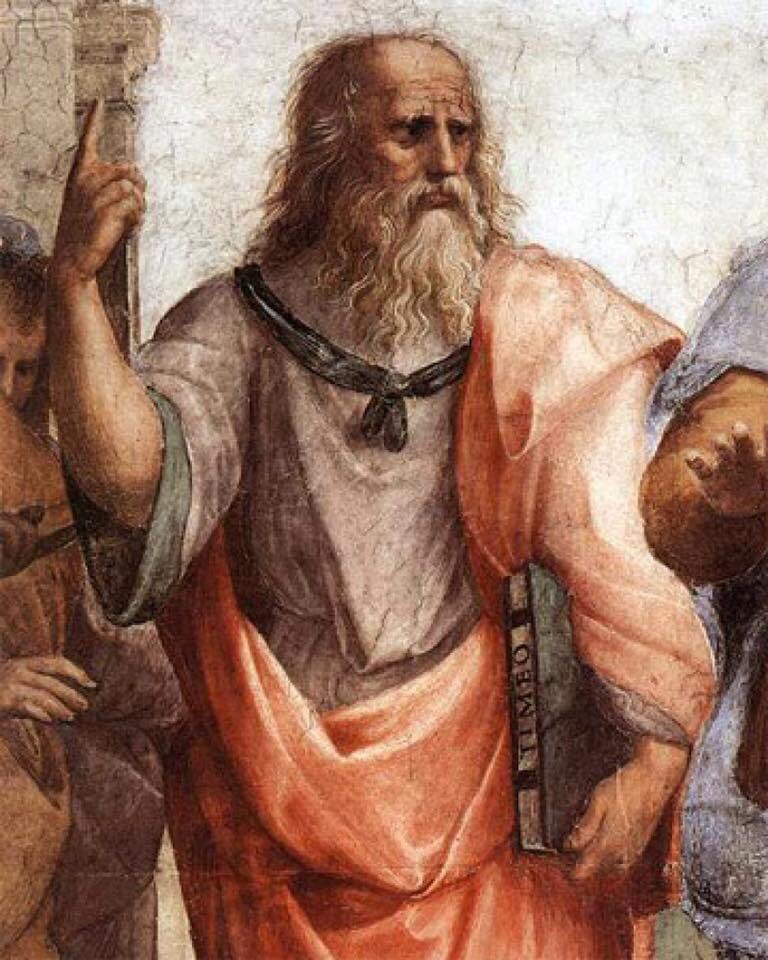
“According to Greek mythology, humans were originally created with four arms, four legs and a head with two faces. Fearing their power, Zeus split them into two separate parts, condemning them to spend their lives in search of their other halves… and when one of them meets the other half, the actual half of himself, whether he be a lover of youth or a lover of another sort, the pair are lost in an amazement of love and friendship and intimacy and one will not be out of the other’s sight, as I may say, even for a moment.”
An epic poem written by Edmund Spenser and published starting in 1590. ‘The Faerie Queene’ is the tale of Arthur and his knights and a variety of adventures and quests they go on, including their interactions with the Fairy realm and the Fairy Queen Gloriana, who is a literary invention of Spenser’s. The poem is largely allegorical and possibly intended to reflect the real world politics of the time, with Gloriana acting as a stand in for Queen Elizabeth and Fairy for Elizabethan England.
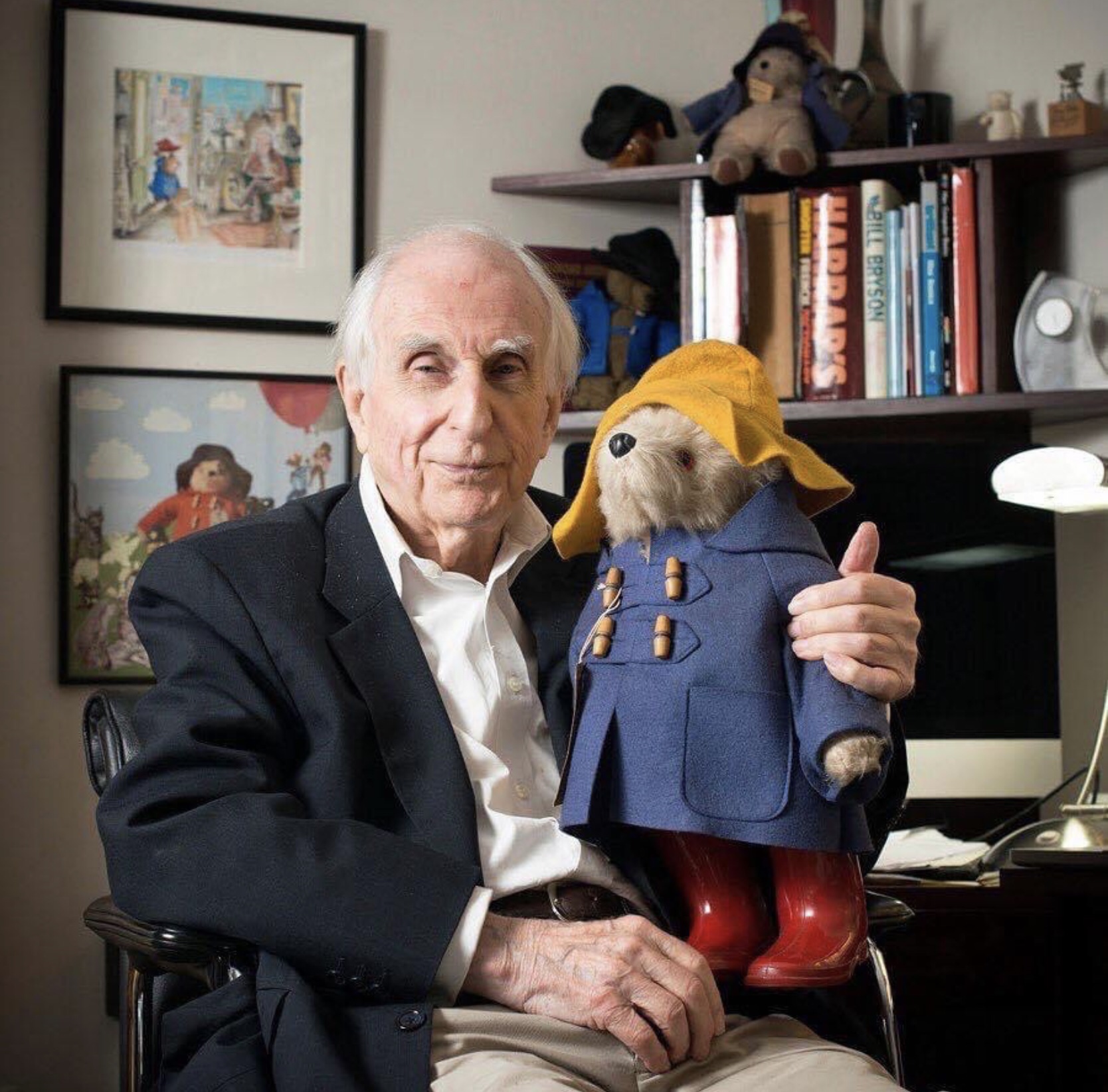
Did you know that the beloved character Paddington Bear was inspired by Jewish children who escaped the Holocaust on the Kindertransport? Creator Michael Bond (1926-2017) was motivated by his memories of children arriving at London’s Reading station during WWII. These young refugees each carried a small suitcase and wore labels around their necks to identify them. It’s no coincidence that in the book, the little bear is found sitting on his suitcase in Paddington Station in London with a note around his neck that reads, “Please take care of this bear. Thank you.” He is discovered and adopted by the Brown family, thus the name Paddington Bear. In the story, Paddington’s best friend is Mr. Samuel Gruber, an elderly Jew from Hungary who escaped the Nazis. ❤️
Theodor Seuss Geisel —> better known as Dr. Seuss. Geisel attended Dartmouth College, graduating in 1925. His first nationally published cartoon appeared in the July 16, 1927, issue of The Saturday Evening Post. His first book wasn’t published until 1931. His work includes several of the most popular children’s books of all time, selling over 600 million copies and being translated into more than 20 languages by the time of his death.
Geisel was a liberal Democrat and a supporter of President Franklin D. Roosevelt and the New Deal. His early political cartoons show a passionate opposition to fascism, and he urged action against it both before and after the United States entered World War II. His cartoons portrayed the fear of communism as overstated, finding greater threats in the House Un-American Activities Committee and those who threatened to cut the United States’ “life line” to Stalin and the USSR, whom he once depicted as a porter carrying “our war load”
Author profile –> Herman Wouk (May 27th, 1915 – May 17th, 2019)
I was reading about Jewish novelists (Franz Kafka, Phillip Roth, Saul Bellow, Joseph Heller, Elie Wiesel) last night when I realized Herman Wouk is still alive at 103 years old. Was I the only one who assumed he had passed away long ago? I have to admit I’ve read a fair amount of his books and have always considered them a “guilty pleasure.”
Herman Wouk is an American author. His 1951 novel “The Caine Mutiny” won the Pulitzer Prize for Fiction. His other works include “The Winds of War” and “War and Remembrance,” historical novels about World War II. “The Hope,” and “The Glory,” historical novels about the founding of Israel. He also wrote non-fiction such as “This Is My God,” a popular explanation of Judaism from a Modern Orthodox perspective, written for Jewish and non-Jewish audiences. In 2010 he wrote “The Language God Talks: On Science and Religion.” His books have been translated into 27 languages. The Washington Post called Wouk, who cherishes his privacy, “the reclusive dean of American historical novelists.” Historians, novelists, publishers, and critics who gathered at the Library of Congress in 1995 to mark Wouk’s 80th birthday described him as an American Tolstoy.
Wouk was born in the Bronx, the second of three children born to Esther and Abraham Isaac Wouk, Russian Jewish immigrants from what is today Belarus. When Wouk was 13, his maternal grandfather, Mendel Leib Levine, came from Minsk to live with them and took charge of his grandson’s Jewish education. Wouk was frustrated by the amount of time he was expected to study the Talmud, but his father told him, “if I were on my deathbed, and I had breath to say one more thing to you, I would say ‘Study the Talmud.’” Eventually Wouk took this advice to heart. After a brief period as a young adult during which he lived a secular life, he returned to religious practice. Judaism would become integral to both his personal life and his career. He would later say that his grandfather and the United States Navy were the two most important influences on his life.
After his childhood and adolescence in the Bronx and a high school diploma from Townsend Harris High School in Manhattan, he earned a Bachelor of Arts degree at the age of 19 from Columbia University in 1934, and served as editor of the university’s humor magazine, “Columbia Jester,” and wrote two of its annual variety shows. Soon thereafter, he became a radio dramatist, working in David Freedman’s “Joke Factory” and later with Fred Allen for five years. In 1941, he began working for the United States government, writing radio spots to sell war bonds.
Wouk joined the U.S Navy following the attack on Pearl Harbor and served in the Pacific Theater during World War II, an experience he later characterized as educational: “I learned about machinery, I learned how men behaved under pressure, and I learned about Americans.” Wouk served as an officer aboard two destroyer minesweepers (DMS). During off-duty hours aboard ship he started writing a novel, “Aurora Dawn.” Wouk sent a copy of the opening chapters to philosophy professor Irwin Edman, under whom he studied at Columbia, who quoted a few pages verbatim to a New York editor. The result was a publisher’s contract sent to Wouk’s ship, then off the coast of Okinawa. The novel was published in 1947 and became a Book of the Month Club main selection. His second novel, “City Boy,” proved to be a commercial disappointment at the time of its initial publication in 1948. While writing his next novel, Wouk read each chapter to his wife as it was completed. At one point she remarked that if they did not like this one, he had better take up another line of work (a line he would give to the character of the editor Jeannie Fry in his 1962 novel “Youngblood Hawke”). The novel, “The Caine Mutiny” (1951), went on to win the Pulitzer Prize. A best-seller, drawing from his wartime experiences aboard minesweepers during World War II, The Caine Mutiny was adapted by the author into a Broadway play called “The Caine Mutiny Court Martial” and, in 1954, Columbia Pictures released a film version with Humphrey Bogart portraying Lt. Commander Philip Francis Queeg, captain of the fictional USS Caine.
His first novel after “The Caine Mutiny” was “Marjorie Morningstar” (1955), which earned him a Time magazine cover story. Three years later Warner Brothers made it into a movie starring Natalie Wood, Gene Kelly and Claire Trevor. His next novel, a paperback, was “Slattery’s Hurricane” (1956), which he had written in 1948 as the basis for the screenplay for the film of the same name. Wouk’s first work of non-fiction was 1959’s “This is My God: The Jewish Way of Life,” a primer on the beliefs and practices of Orthodox Judaism.
In the 1960s he authored Youngblood Hawke (1962), a drama about the rise and fall of a young writer modeled on the life of Thomas Wolfe, and “Don’t Stop the Carnival” (1965), a comedy about escaping mid-life crisis by moving to the Caribbean (loosely based on Wouk’s own experience). “Youngblood Hawke” was serialized in McCall’s magazine from March to July 1962. A movie version starred James Franciscus and Suzanne Pleshette, which was released by Warner Brothers in 1964. “Don’t Stop the Carnival”” was turned into a short-lived musical by Jimmy Buffett in 1997.
In the 1970s Wouk published two monumental novels, “The Winds of War” (1971) and its sequel, “War and Remembrance” (1978). He described the latter, which included a devastating depiction of the Holocaust, as “the main tale I have to tell.” Both were made into popular TV miniseries, the first in 1983 and the second in 1988. Although they were made several years apart, both were directed by Dan Curtis and both starred Robert Mitchum as Captain Victor “Pug” Henry, the main character. The novels are historical fiction. Each has three layers: the story told from the viewpoints of Captain Henry and his circle of family and friends; a more or less straightforward historical account of the events of the war; and an analysis by a member of Hitler’s military staff, the insightful fictional General Armin von Roon. Wouk devoted “thirteen years of extraordinary research and long, arduous composition” to these two novels, noted Arnold Beichman. “The seriousness with which Wouk has dealt with the war can be seen in the prodigious amount of research, reading, travel and conferring with experts, the evidence of which may be found in the uncatalogued boxes at Columbia University” that contain the author’s papers.
Wouk would spend the next several decades of his literary career writing about Jews, Israel, Judaism, and, for the first time, science. “Inside, Outside” (1985) is the story of four generations of a Russian Jewish family and its travails in Russia, the U.S. and Israel. “The Hope” (1993) and its sequel, “The Glory” (1994), are historical novels about the first 33 years of Israel’s history. They were followed by “The Will to Live On: This is Our Heritage” (2000), a whirlwind tour of Jewish history and sacred texts and companion volume to “This is My God.” “A Hole in Texas” (2004) is a novel about the discovery of the Higgs boson (whose existence was proven nine years later), while “The Language God Talks: On Science and Religion” (2010) is an exploration into the tension between religion and science that originated in a discussion Wouk had with the theoretical physicist Richard Feynman. “The Lawgiver” (2012) is an epistolary novel about a contemporary Hollywood writer of a movie script about Moses – with the consulting help of a nonfictional character: Herman Wouk himself, a “mulish ancient” who gets involved despite the strong misgivings of his wife.
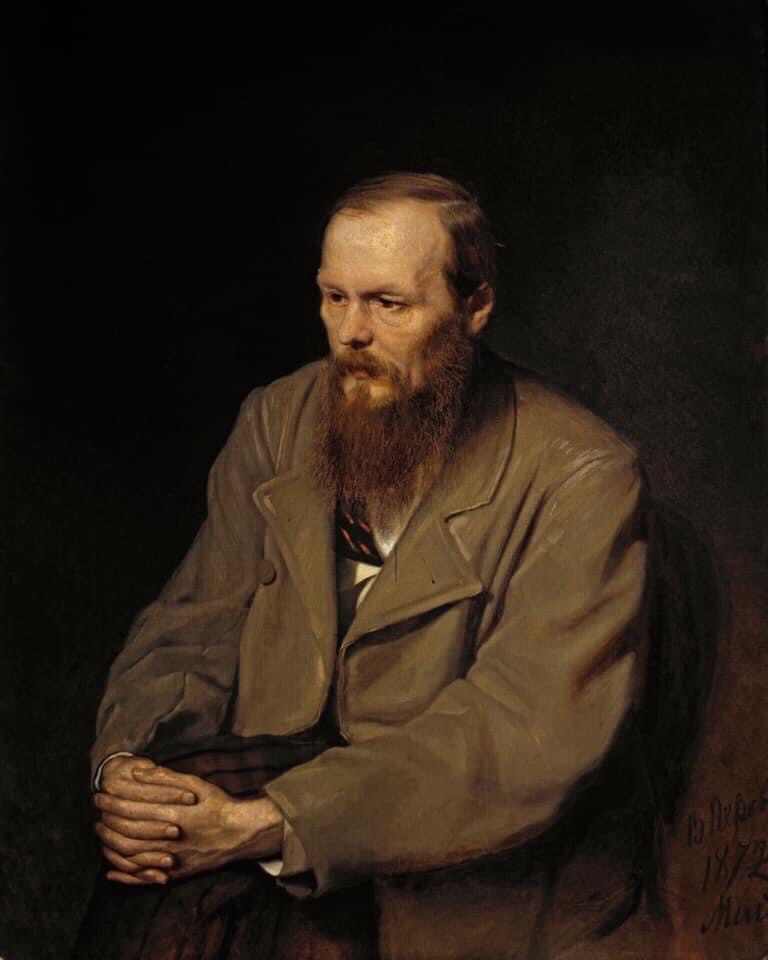
On November 16, 1849, Fyodor Dostoyevsky was sentenced to death by the Russian government for subversive activities. There was a mock execution, in which he and other were lined up before a firing squad, but at the last minute a reprieve came, and Fyodor served four years in a Siberian prison camp.
“Man is fond of counting his troubles, but he does not count his joys. If he counted them up as he ought to, he would see that every lot has enough happiness provided for it.”
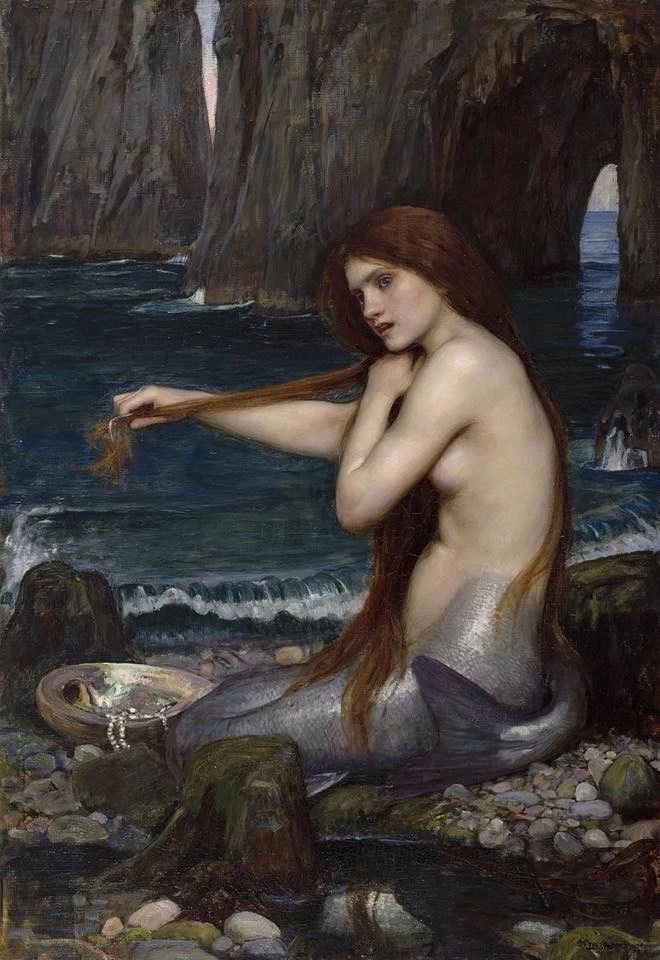
“My gentle Puck, come hither. Thou rememberest
Since once I sat upon a promontory
And heard a mermaid on a dolphin’s back
Uttering such dulcet and harmonious breath
That the rude sea grew civil at her song.”
~ William Shakspeare, A Midsummer Night’s Dream Act II, Scene I






 Mark Bere Peterson’s Counterculture, Urban Legends, Paganism & Witchcraft