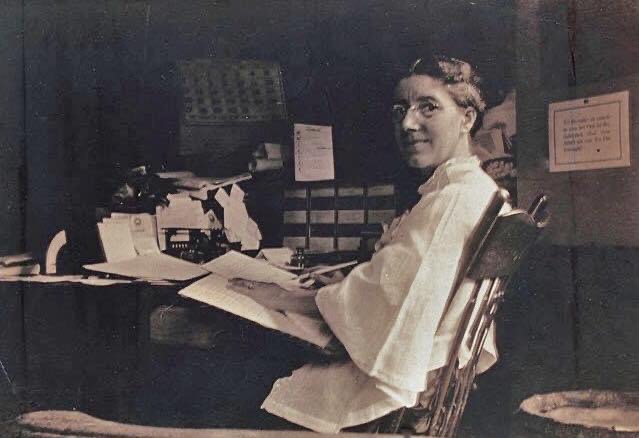
Virginia Woolf Suicide Note

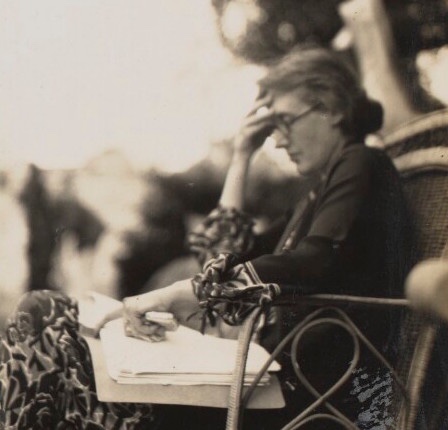
Virginia Woolf died 80 years ago on this day in 1941:

“Dearest, I feel certain that I am going mad again. I feel we can’t go through another of those terrible times. And I shan’t recover this time. I begin to hear voices, and I can’t concentrate. So I am doing what seems the best thing to do. You have given me the greatest possible happiness. You have been in every way all that anyone could be. I don’t think two people could have been happier till this terrible disease came. I can’t fight any longer. I know that I am spoiling your life, that without me you could work. And you will I know. You see I can’t even write this properly. I can’t read. What I want to say is I owe all the happiness of my life to you. You have been entirely patient with me and incredibly good. I want to say that—everybody knows it. If anybody could have saved me it would have been you. Everything has gone from me but the certainty of your goodness. I can’t go on spoiling your life any longer. I don’t think two people could have been happier than we have been. V.”

~ Virginia Woolf’s suicide letter to her husband

#VirginiaWoolf #FavoriteAuthors #MentalHealth

Mary Wollstonecraft Quotes for Women’s History Month

A few quotes by Mary Wollstonecraft, author of “A Vindication of the Rights of Woman,” for women’s history month:

“I do not wish them [women] to have power over men; but over themselves.”

“My own sex, I hope, will excuse me, if I treat them like rational creatures, instead of flattering their fascinating graces, and viewing them as if they were in a state of perpetual childhood, unable to stand alone.”

“[I]f we revert to history, we shall find that the women who have distinguished themselves have neither been the most beautiful nor the most gentle of their sex.”

“Taught from their infancy that beauty is woman’s sceptre, the mind shapes itself to the body, and roaming round its gilt cage, only seeks to adorn its prison.”

“I love man as my fellow; but his scepter, real, or usurped, extends not to me, unless the reason of an individual demands my homage; and even then the submission is to reason, and not to man.”

“The beginning is always today.”
~ Mary Wollstonecraft (1759-1797)

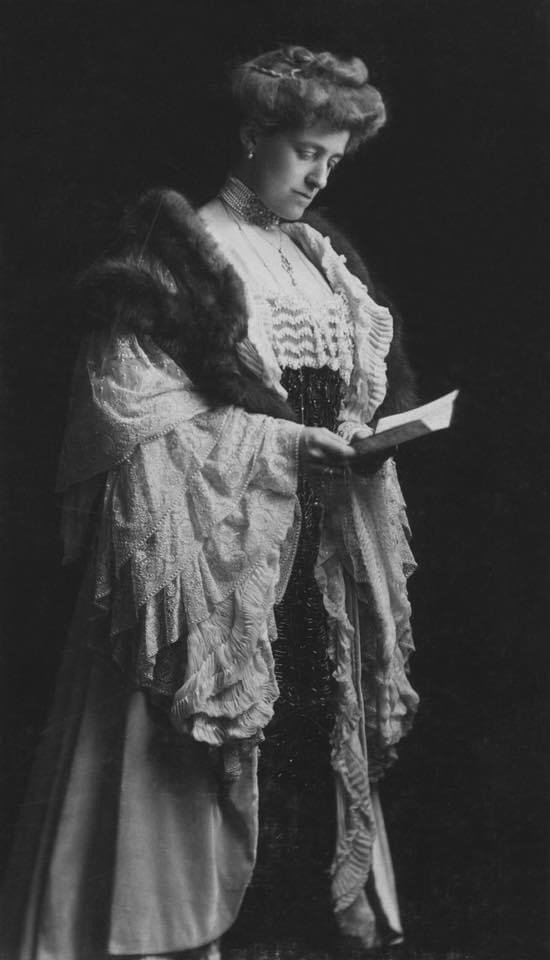
Edith Wharton Quotes for Women’s History Month

A few quotes by Edith Wharton (first woman to win the pulitzer prize) for women’s history month:

“Life is always either a tightrope or a feather bed. Give me the tightrope.”

“There is one friend in the life of each of us who seems not a separate person, however dear and beloved, but an expansion, an interpretation, of one’s self, the very meaning of one’s soul.”

“In spite of illness, in spite even of the archenemy sorrow, one can remain alive long past the usual date of disintegration if one is unafraid of change, insatiable in intellectual curiosity, interested in big things, and happy in small ways.”
~ Edith Wharton (1862-1937)

Virginia Woolf. from “To the Lighthouse”

“She looked up over her knitting and met the third stroke and it seemed to her like her own eyes meeting her own eyes, searching as she could alone search into her mind and her heart, purifying out of existence that lie, any lie. She praised herself in praising the light, without vanity, for she was stern, she was searching, she was beautiful like that light.”

~ Virginia Woolf. “To the Lighthouse”

#FavoriteQuotes #FavoriteAuthors #VirginiaWoolf #ToTheLighthouse

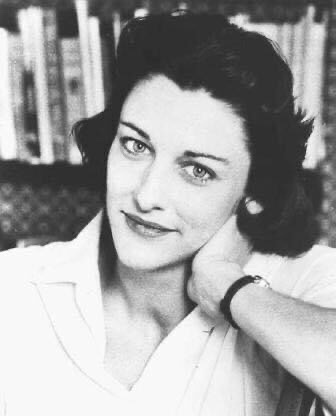
Wanting to Die – by Anne Sexton

Since you ask, most days I cannot remember.

I walk in my clothing, unmarked by that voyage.

Then the almost unnameable lust returns.


Even then I have nothing against life.

I know well the grass blades you mention,

the furniture you have placed under the sun.


But suicides have a special language.

Like carpenters they want to know which tools.

They never ask why build.


Twice I have so simply declared myself,

have possessed the enemy, eaten the enemy,

have taken on his craft, his magic.


In this way, heavy and thoughtful,

warmer than oil or water,

I have rested, drooling at the mouth-hole.


I did not think of my body at needle point.

Even the cornea and the leftover urine were gone.

Suicides have already betrayed the body.


Still-born, they don’t always die,

but dazzled, they can’t forget a drug so sweet

that even children would look on and smile.


To thrust all that life under your tongue!–

that, all by itself, becomes a passion.

Death’s a sad Bone; bruised, you’d say,


and yet she waits for me, year after year,

to so delicately undo an old wound,

to empty my breath from its bad prison.


Balanced there, suicides sometimes meet,

raging at the fruit, a pumped-up moon,

leaving the bread they mistook for a kiss,


leaving the page of the book carelessly open,

something unsaid, the phone off the hook

and the love, whatever it was, an infection.

Turn On, Tune In, Drop Out.

Timothy Leary was an American psychologist who became an iconic figure of the 1960s counterculture, coining possibly the most widely used catchphrase linked with that era: “Turn On, Tune In, Drop Out.”

However, the order in which Leary wished us to do these three things is slightly different. He felt that society was polluted by politics, and made up of sterile, generic communities that do not allow the depth of meaning needed by true individuals. The first thing he thought we should do is “Drop Out,” by which he meant that we should detach ourselves from artificial attachments and become self-reliant in thought and deed. Unfortunately, “Drop Out” has been misinterpreted as urging people to halt productivity, which was never his intention.

Next, Leary tells us to “Turn On,” or delve into our unconscious, and “find a sacrament which returns you to the temple of God, your own body.” This is a command to explore deeper layers of reality, as well as the many levels of experience and consciousness. Drugs were one way to do this, and Leary, a Harvard professor, began experimenting with the hallucinogenic drug LSD.

To “Tune In,” Leary asks us to return to society with a new vision, seeking fresh patterns of behavior that reflect our transformation, and to teach others our newfound ways.”

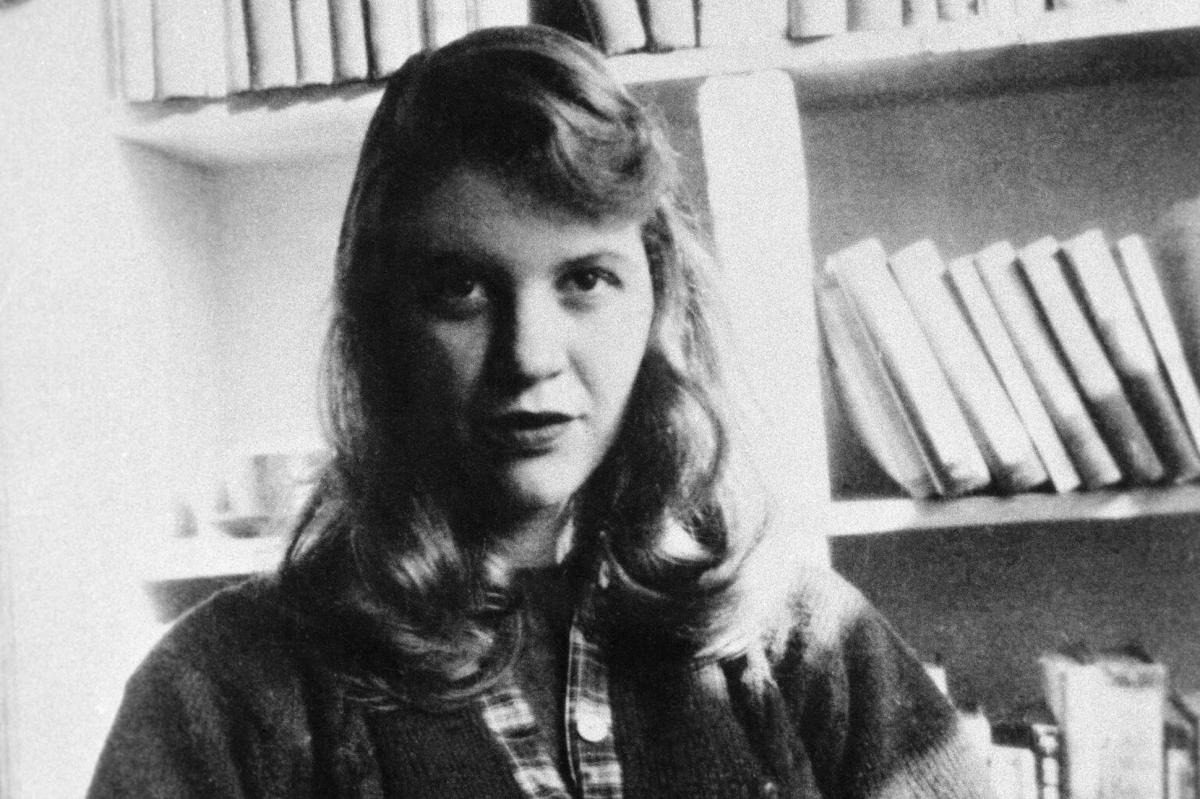
Sylvia Plath Fig Tree Metaphor

“I saw my life branching out before me like the green fig tree in the story. From the tip of every branch, like a fat purple fig, a wonderful future beckoned and winked. One fig was a husband and a happy home and children, and another fig was a famous poet and another fig was a brilliant professor, and another fig was Ee Gee, the amazing editor, and another fig was Europe and Africa and South America, and another fig was Constantin and Socrates and Attila and a pack of other lovers with queer names and offbeat professions, and another fig was an Olympic lady crew champion, and beyond and above these figs were many more figs I couldn’t quite make out. I saw myself sitting in the crotch of this fig tree, starving to death, just because I couldn’t make up my mind which of the figs I would choose. I wanted each and every one of them, but choosing one meant losing all the rest, and, as I sat there, unable to decide, the figs began to wrinkle and go black, and, one by one, they plopped to the ground at my feet.”

~ Sylvia Plath, “The Bell Jar”

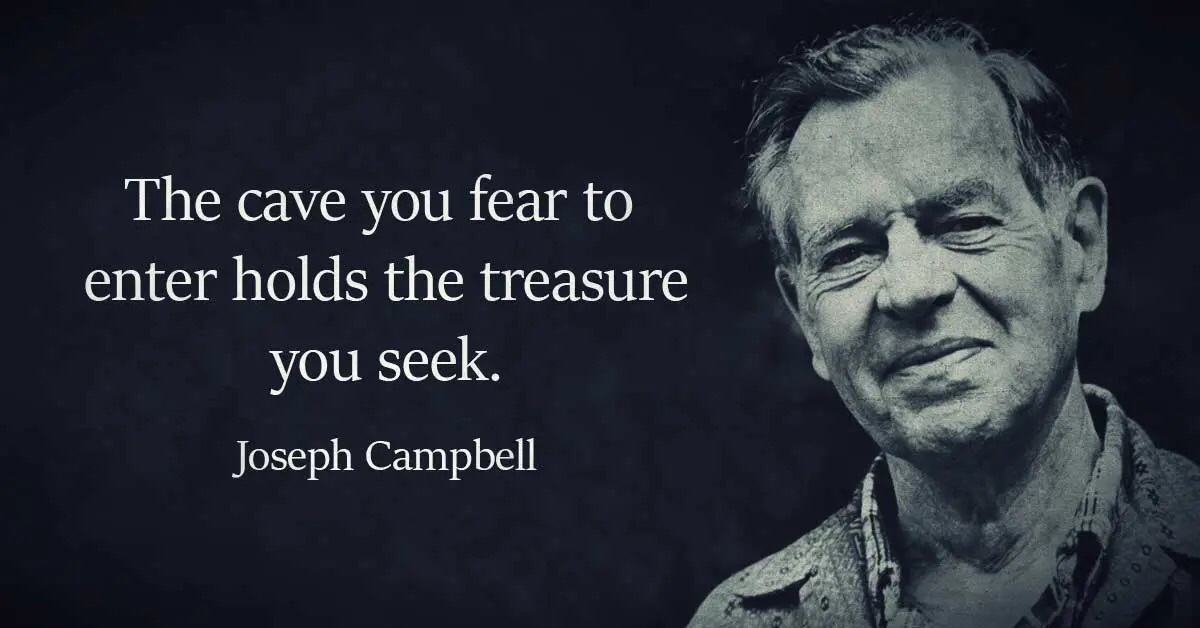
Joseph Campbell Defines Mythology

“One might reasonably define mythology as other people’s religion. The definition of religion is equally uncomplicated: it is misunderstood mythology. The misunderstanding consists typically in interpreting mythological symbols as though they were references to historical facts. . . . One finds the same basic mythological themes in all the religions of the world, from the most primitive to the most sophisticated, from the North American plains to European forests to Polynesian atolls. The imagery of myth is a language, a ‘lingua franca’ that expresses something basic about our deepest humanity.”

~ Joseph Campbell

#FavoriteQuotes #JosephCampbell