Pixies

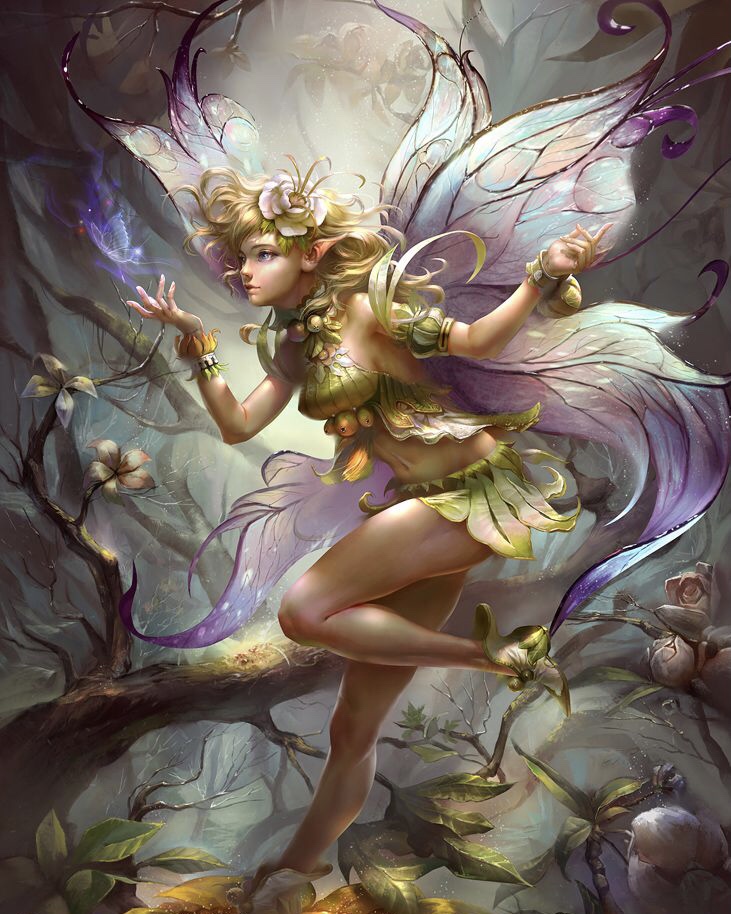
Pixies are the whimsical and tiny fairy creatures often depicted in Victorian fairy paintings and the popular work of artist Cicely Mary Barker.

Pixies do often have wings, and love dancing and playing games. They’re also fond of flowers and gardens. Pixies are often drawn to laughter, children, and merrymaking. Tinker Bell from J. M. Barrie’s Peter Pan is a pixie.

Faerie Glamour

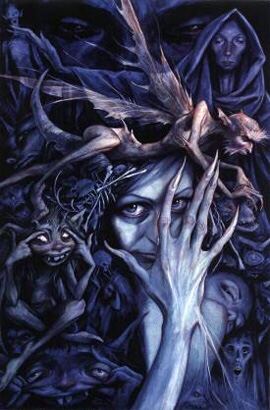
Glamour is an archaic word for the magic of the Fae. Glamour can make curious onlookers see what they wish that person to see or not see what they do not wish that person to see with this ability. It can also hide the true whereabouts of a faery, so one could say it’s a survival skill in addition to being magical. So, when someones says, “Looks can be deceiving.” You may want to make a important mental note of that.

Glamour is a Fae-wide ability, how the ability is used is up to the individual. However in most cases, Fae use the ability to modify their appearance with glamour i.e. eye color, hair color, and shapeshifting to appear as animals or other creatures. Even so, please do not think that every faery is wearing nothing but glamour to hide their hideous faces and bodies. Simply not true. Plenty of fae are naturally ravishing people, and there are plenty of fae who are much less attractive.

Faerie glamour, than any other means of alteration is being-specific. Some people wonder about if glamour is more of an hypnosis effect. Well no, that’s not something tied to glamour specifically. When using glamour no one is really being hypnotized to the point where the person can’t look away, because the person most certainly can. It more eye-trickery and confusion than anything. It’s to hinder the person from seeing what is true. Fae really do not put on that much glamour as people would like to think. So, think about that before you can look right through the disguise and paint us ugly or all beautiful.

The Faerie Court

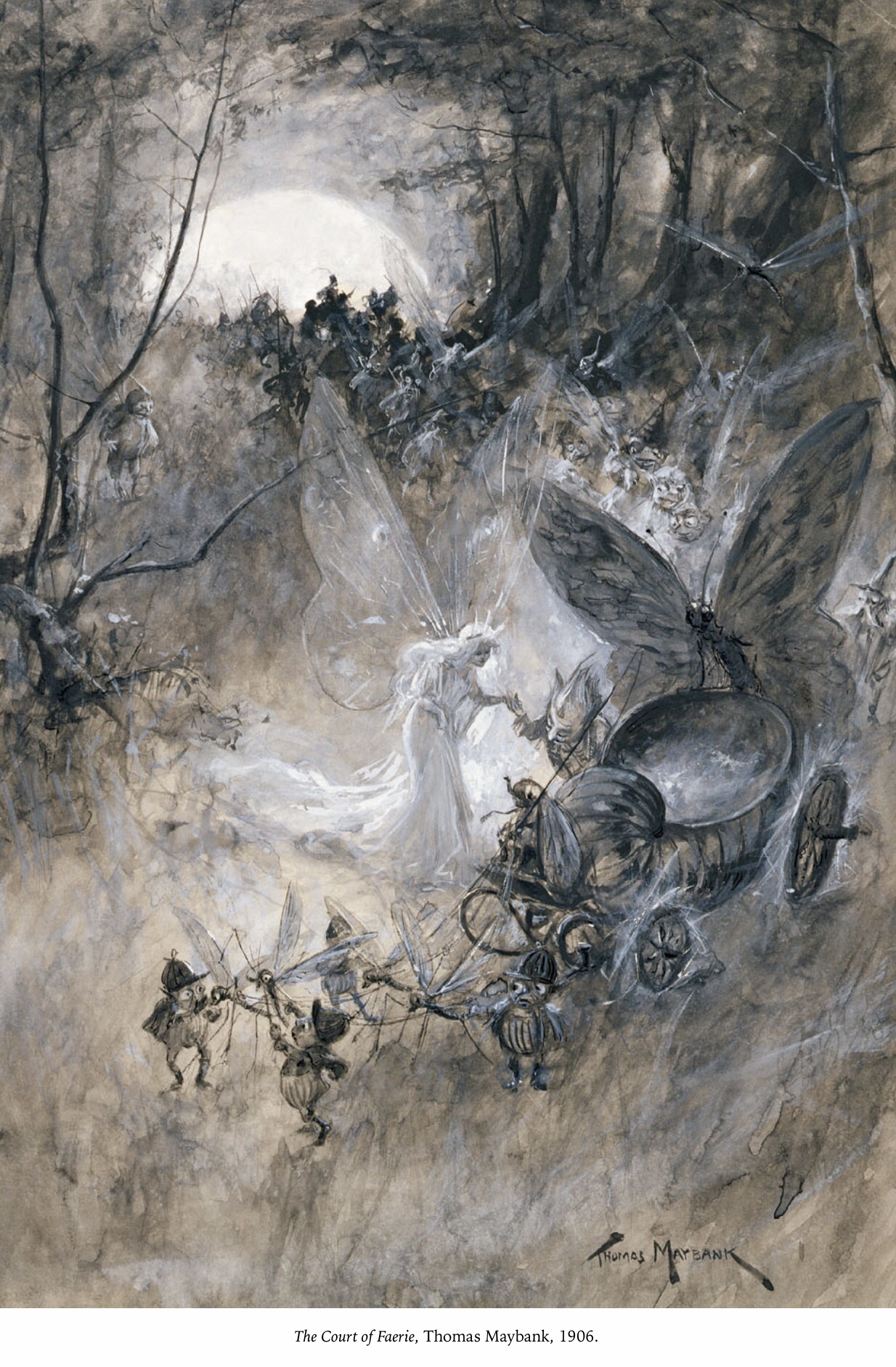
Scottish folklore divides the realm of Faerie and its fairy denizens into two categories: Seelie and Unseelie.

Seelie fairies, whose name stems from the same Scottish root word “silly,” meaning “happy,” are good-natured and generally associated with lightness, goodness, and benevolence to humans. It’s still wise to be cautious with a Seelie fairy, as some may play pranks and sometimes aren’t aware of the chaos they can cause. Unseelie fairies are more darkly inclined, appearing at night and wreaking havoc seemingly indiscriminately among mortals and their fellow fairies. They can sometimes grow fond of a human and treat him or her with kindness, but generally they are up to no good.

So be warned: The creature of moss and oak leaves that peers around a forest tree on your morning walk could be friend or foe, and the glitter-winged, dust-trailing sprite of your dreams might actually have razor-sharp teeth.

The Amazons (of Greek Mythology)

The Amazons (Amazones or Amazonides, “breastless ones”) of Greek mythology were a race of warrior women led by a queen. They fought against the Greeks, for instance, during the Trojan War. Procreation for them took place only by way of men from other races. Boy children were disposed of; girls had their right breasts removed so as not to impede the use of bows. The hero, Theseus, had significant relations with the Amazons.

There are many versions of these relations. The most popular involves his abduction of and marriage to the Amazon queen Hippolyta, who gave birth to his son Hippolytus. Some say that Theseus abducted Hippolyta’s sister Antiope and that he defeated the Amazon army led by Hippolyta, which invaded Attica in a rescue attempt. Some say that Hippolyta and Antiope are different names for the same Amazon. Still others say that Heracles killed Hippolyta during the course of his ninth labor, which involved the taking of her sacred belt or girdle.

Dragons

Dragons have walked and flown all over the earth in every age. They are present from ancient Greece and Rome to ancient India and China, in Norse myths, Anglo-Saxon poetry, Chinese art, and modern literature.

The dragons of the Far East are water serpents who live in the ocean, breathe clouds, and bring rain. They usually have four legs, long snakelike bodies, and horns or a crest. The dragons of the ancient Western world were legless serpents, sometimes killing elephants by coiling around their necks and strangling them.

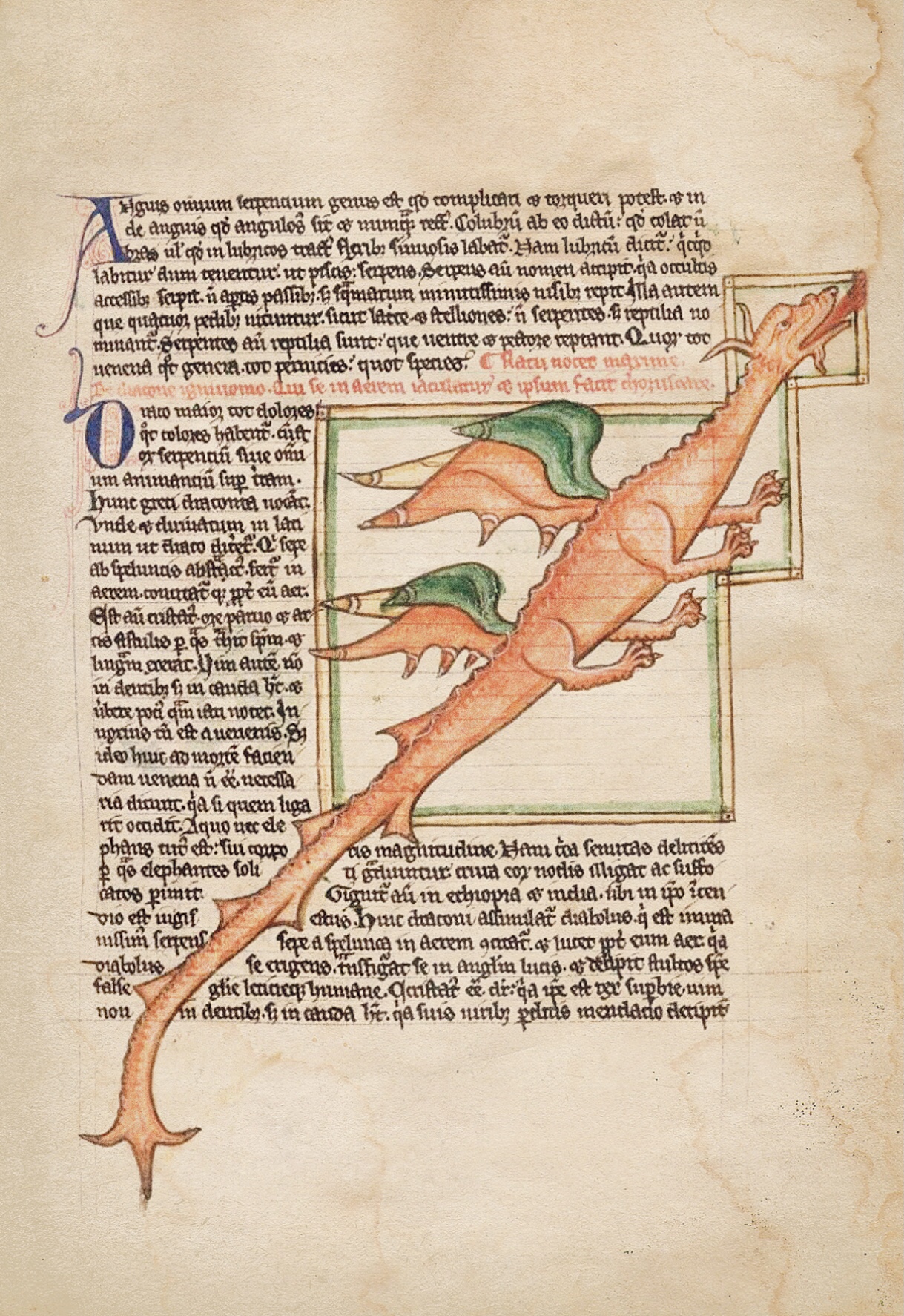
By the time of the medieval bestiaries, dragons were still serpents but usually with legs (sometimes two, sometimes four) and wings. They had impenetrable scales, breathed fire, and liked to steal and hoard precious objects. The earliest example in literature of this kind of dragon is in Beowulf, an Anglo-Saxon epic poem that described events that took place in the sixth century but was written down between 975 and 1025. The dragon the hero Beowulf must slay is nocturnal, treasure hoarding, airborne, vengeful, and fire breathing.

In medieval Europe, people feared attacks by dragons. Urine from dragons flying overhead would putrefy human skin, and dragons’ breath could poison wells and streams. Satan was able to take the shape of a dragon, motivating heroes and saints to slay him. Saint George famously did so in Palestine in the third century, but slaying dragons could also be women’s work: Saint Margaret of Antioch (289–304) and Saint Elizabeth of Constantinople, who is thought to have lived between the sixth and ninth centuries, slew their fair share.

Because the dragon is associated with Satan, his enemy is the panther, who is a symbol of Christ. Dragons cannot stand the sweet smell of the panther’s breath and hide when the big cat roars. Dragons are also repelled by the peridexion tree, which grows in India, and are harmed if they even fall under its shadow. This is likely why doves, symbol of the Holy Spirit and faithful Christians, roost in the peridexion tree.

Another enemy of the dragon is the ichneumon, a mongoose that doesn’t care much for social propriety. When it sees a dragon, the ichneumon covers itself with mud, closes its nostrils with its tail, and then attacks and kills the dragon immediately.

The Hydra

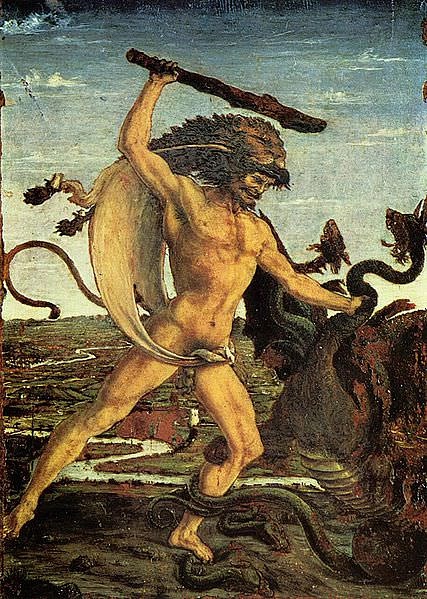
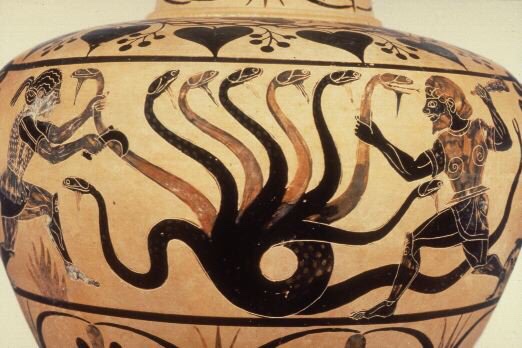
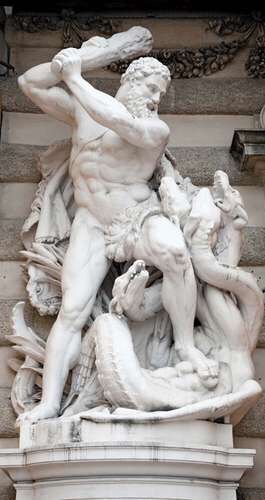
The Hydra, also called the Lernean Hydra, in Greek mythology, the offspring of Typhon and Echidna (according to Hesiod’s Theogony), a gigantic water-snake-like monster with nine heads (the number varies), one of which was immortal. The monster’s haunt was the marshes of Lerna, near Árgos, from which he periodically emerged to harry the people and livestock of Lerna. Anyone who attempted to behead the Hydra found that as soon as one head was cut off, two more heads would emerge from the fresh wound.

The destruction of the Lernean Hydra became one of the 12 Labours of Heracles. For that and other labours, Heracles enlisted the aid of his nephew Iolaus. As Heracles severed each mortal head, Iolaus was set to the task of cauterizing the fresh wounds so that no new heads would emerge. When only the immortal head remained, Heracles cut it off too and buried it under a heavy rock. Further, he dipped his arrows in the beast’s poisonous blood (or venom) to be able to inflict fatal wounds. According to Sophocles(Trachinian Women), that measure eventually caused his own accidental death at the hands of his wife, Deianeira.

In modern English, hydra or hydra-headed can describe a difficult or multifarious situation. The name hydra has been assigned to a genus of invertebrate freshwater animals having a circlet of 4 to 25 tentacles on one end of its tubelike body.

Valkyrie

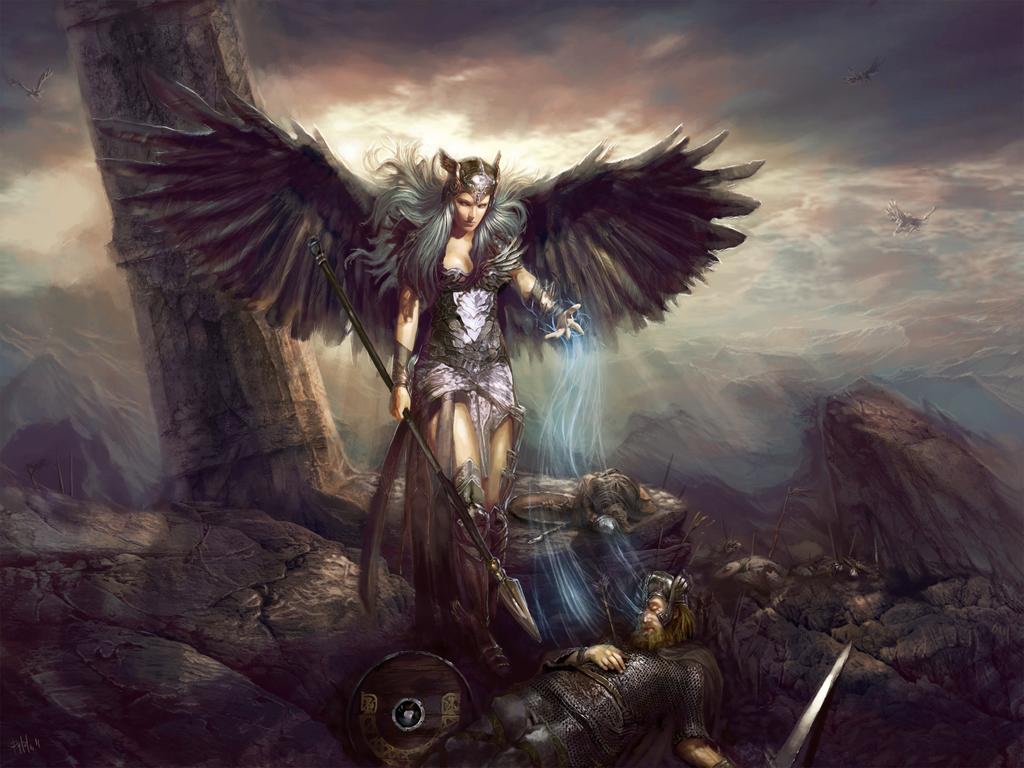
Valkyrie (“Choosers of the Battle-slain”; Old Norse valkyrja, pl. valkyrjar): The valkyries are representative of warfare, but are also magicians, guardians, female lovers of heroes, bird-women, and keepers of knowledge. They are concerned with fertility and fecundity and have many points in common with the Dises (deities), the Norns (the Germanic Fates), and the fylgjur (personal tutelary spirits).

They are in Odin’s service, and their names are most often of a warlike nature, formed from words like battle, combat, sword, spear, fury, bravery, and so forth. Régis Boyer has analyzed the thirty-eight valkyrie names that have been preserved in the texts; from his study it becomes apparent that they escape any strict classification as one-third of them are engaged in two different functions.

The valkyries select the slain warriors who will populate Valhalla. They attach themselves to the kings and princes who are worshippers of Odin, helping them, counseling them, bringing them luck, and even marrying them after their death. If they disobey Odin they are punished—as in the case of Brynhildr, who, pricked by the sleep-thorn, lies on Hindarfjall Mountain waiting for the one who will awaken her. In Valhalla the valkyries serve beer to the warriors.

Valhalla

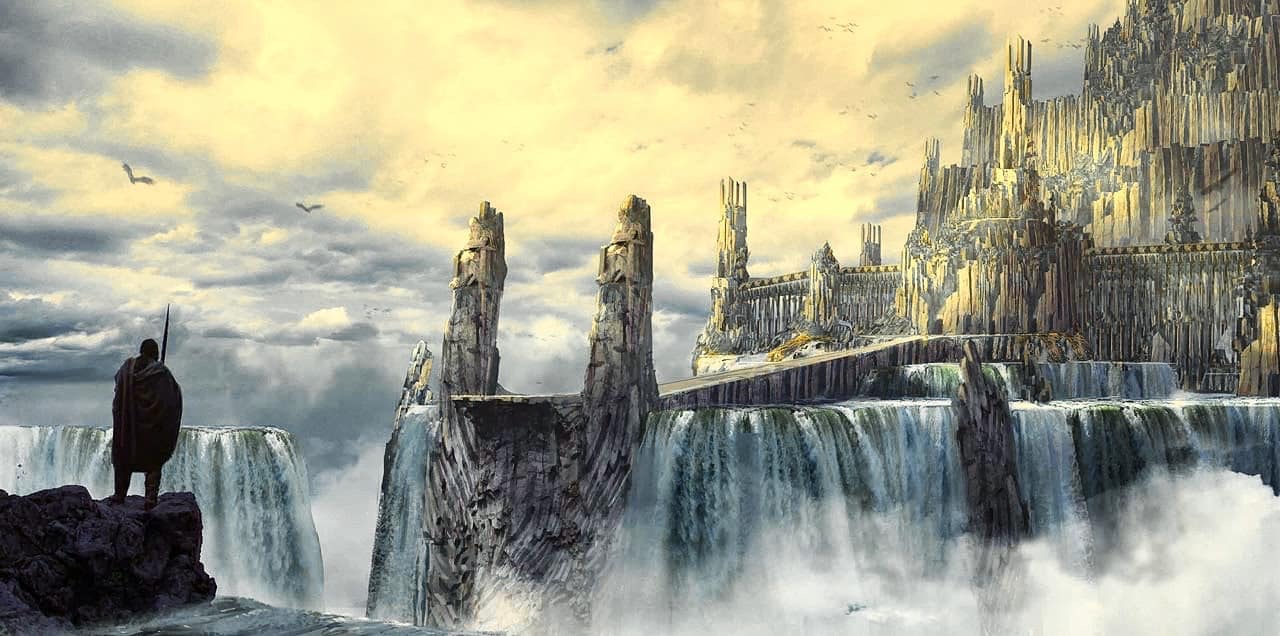
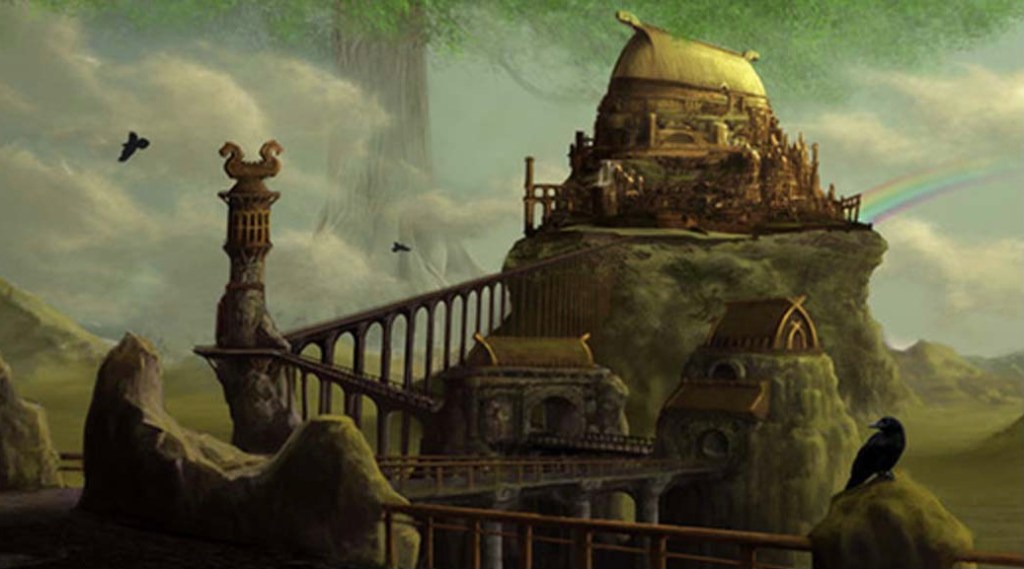
Valhalla (“Hall of the Slain”; Old Norse Valhöll): Odin’s dwelling in Ásgarðr and the paradise of warriors. One cannot enter it if death came as a result of illness or old age. Armor lies strewn about on the benches. The roof is made of spears and shields. Atop it is where the goat Heiðrún stands; she chews on the leaves of Læraðr (Yggdrasill), and from her udders comes the mead that the valkyries serve to the einherjar.

Near her is the stag Eikþyrnir (“Oak-thorny”) who munches on the branches of the tree; moisture flows from his antlers. Valhalla has 540 doors. Each day the warriors emerge from them to fight each other in the courtyard for amusement, and they return to the hall when the signal for dinner has sounded. The cook, Andhrímnir, then serves them the meat of the boar Sæhrímnir. On the day of Ragnarök the warriors will leave Valhalla to confront the forces of chaos.

Freyja

Freyja (“Lady,” “Mistress”): She is the primary goddess of the family of the Vanir, daughter of Njörðr and the sister of Freyr. She was married to Óðr, with whom she had a daughter, Hnoss, also called Gersimi. When her husband went away on his travels, she wept gold tears. She lives in Fólkvangr, one of the heavenly dwellings, and her hall is called Sessrumnir. She shares half of the dead with Odin. She is fond of love poetry and is famous for her promiscuity. The worship addressed to her was erotic, which likens her to several Eastern deities, Cybele in particular. Freyja travels in a chariot drawn by cats.

Her field of activity is vast: life (birth) and death, love and battle, fertility and black magic. It is Freyja who taught the Æsir the magic rites most honored by the Vanir.

She is beautiful and lascivious, which inspired the giants with an urge to wed her, and the historiographical texts tell us that she was good to invoke for matters concerning love.

In skaldic poetry she was called Vanadís (“Dise of the Vanir”), Sýr (“Sow”), Gefn (“The Giving One”), Hörn (“Spirit of Flax”?), and Mardöll (“Sea-brightener”). She was quite renowned because of her necklace, Brísingamen. She obtained this piece of jewelry by sleeping with the dwarves who had forged it. The strength of the worship dedicated to Freyja is well attested by Norwegian and Swedish place-names, but the texts remain silent on this point.

The Gorgons

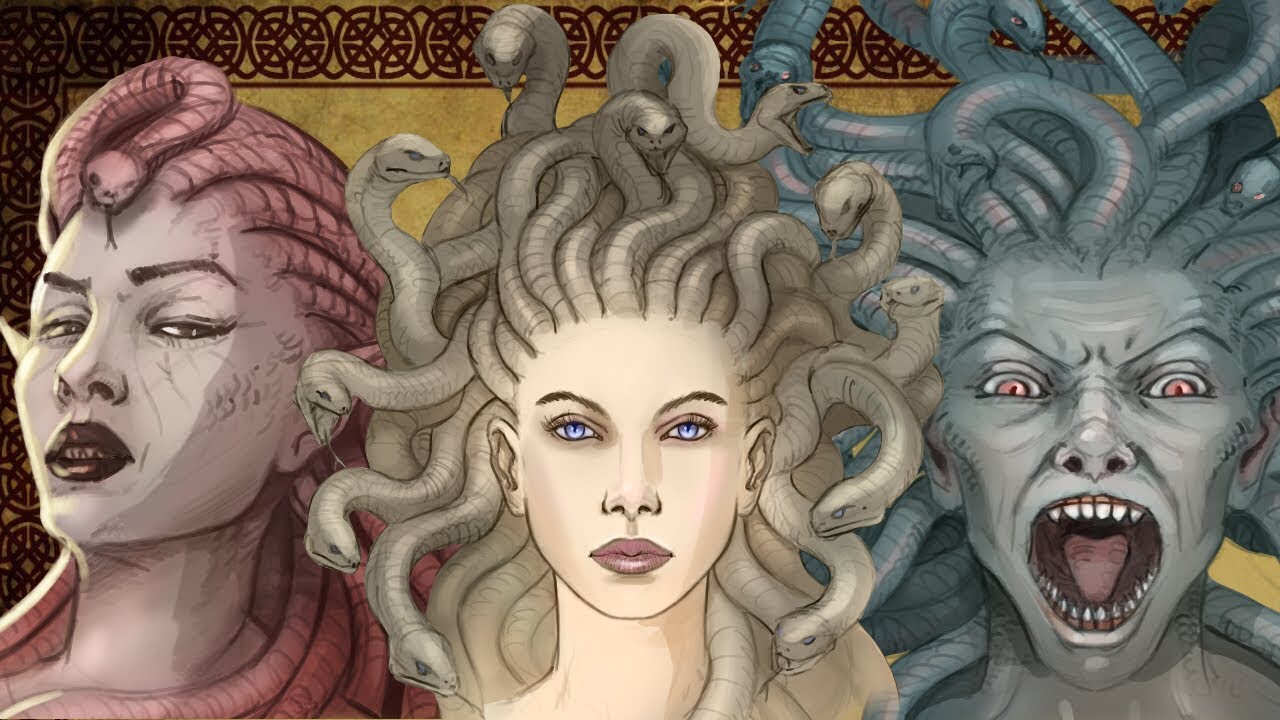
The Gorgons were three monstrous sisters whose lair was in the territory of Libya. Their names were Stheno, Euryale, and Medusa, and they were said to be the offspring of the sea deity Phorcys and his sister Ceto. According to an alternate tradition, they sprang from the earth goddess Gaia, who produced them to be her allies in the battle between the gods and Giants. Of the Gorgon sisters only Medusa was mortal, and for that reason Perseus was sent to fetch her head. According to mythographer Apollodorus, the Gorgons had serpents as hair, large tusks like a boar’s, hands of bronze, and golden wings. Indeed, they were so hideous in appearance that they turned to stone all who looked upon them directly.