Undines

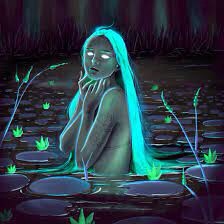
Undines, sometimes spelled Ondine, are a water nymph who becomes human when she falls in love with a mortal man. If he is unfaithful, her death is inevitable.

Derived from the Latin word unda, which means wave or water.

Undines were first discussed by Paracelsus (circa 1493 – 1541). They are believed to be connected to Greek mythology figures known as Nereids, who were portrayed as young women who lived in any body of water and were kind to humans.

A story of an Undine tells of how, in a fishing village, a human couple had lost their own child but shortly after found a baby left at their door. They took her in as their own, and she grew to a most beautiful young woman with pearly skin and green eyes, both loving and fickle in her nature.

Hildebrand saw and fell in love with her and took her as his wife. But he betrayed her with another named Bertalda. With this breaking of the vow, Undine was reclaimed by her Merfolk and vanished back to the sea.

However, on the eve of his wedding to Bertalda, Hildebrand went to the well in the courtyard and there he saw Undine. She embraced him and took his soul with her to the waters, leaving his body by the well.

Carol Rose – Spirits, Fairies, Gnomes, and Goblins
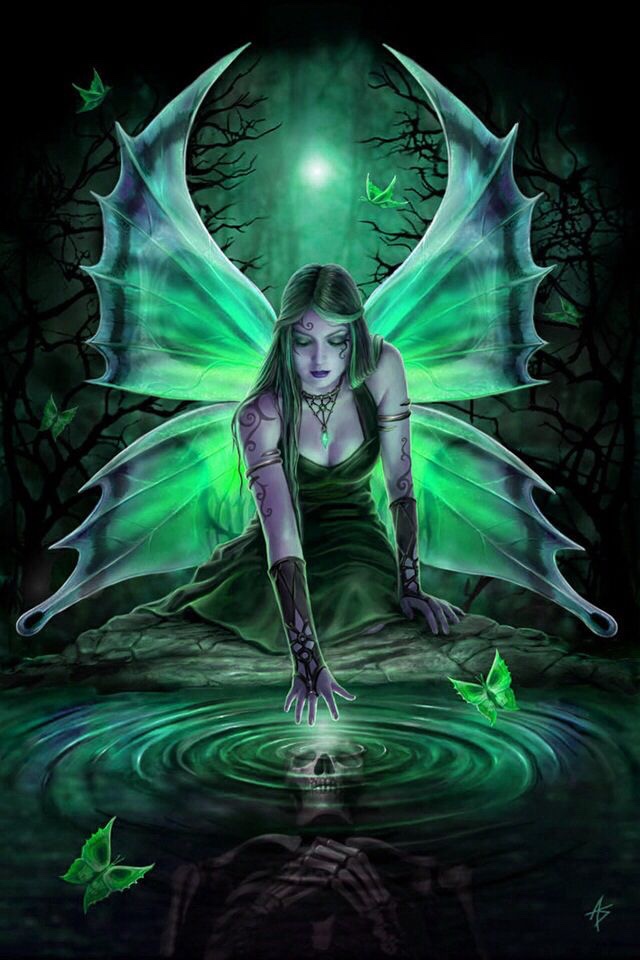
Faerie Classifications

According to most Fae legends, there are two types of Fae: Trooping faeries and Solitary faeries.

It’s smart to familiarize yourself with the many types of Fae and research the ones you prefer to work with. Always cross-reference books, videos, or your research materials!

Trooping Faeries:

Trooping faeries usually travel in large groups and are recognized for dancing, partying, and throwing exciting festivities and fairs.

Most of the legends about Trooping faeries describe them as fun-loving and always looking for lighthearted entertainment.

Trooping faeries are typically a part of the Seelie Court and are mostly occupied with their community and peaceful society, including royalty and high society.

Solitary Faeries:

Some faeries exist entirely on their own and are referred to as Solitary faeries. Many stories of lone faeries portray them as quickly vanishing around boulders or appearing to evaporate into thin air. Solitary Fae are often less interested in human affairs.

Solitary Fae are often seen less frequently and are believed to be keepers of wisdom and knowledge. They live in caverns, pits, marshes, and ditches and are mostly hidden. Solitary Fae are only noticed by humans if they are intentionally enticed into peril or when the Fae were unknowingly observed by a passerby.

Salamanders

Salamanders are a type of elemental spirit commonly associated with fire. Salamanders were first described by German-Swiss physician Paracelsus (1493 -1541) and have remained popular in esoteric occultism, literature, and art since then.

Paracelsus believed that since Nature is made up of elements we can see, they must also have spiritual counterparts of peculiar creatures we can’t see. He called these the Elementals, which are now referred to as Nature spirits, and divided them into four groups gnomes (earth), undines (water), sylphs (air), and salamanders (fire).

In the folklore of Salamanders, there are two forms. The first is their association with fire: Salamanders purify the soul through fire and illuminate the mind with wisdom. Second, they represent an aspect of spirit that must be re-awakened and a force that assists in spiritual transformation.

Depictions of Salamanders vary greatly! Some people insist they are little balls of light, but during the Middle Ages, many claimed they are lizard-like in appearance. Alternatively, Salamanders are sometimes described as slender, red, and dry-skinned creatures with a malevolent demeanor.

Selkies

Originating from Orkney and United Kingdom folklore, a Selkie is a gentle water spirit believed to live in the sea as a seal, but once on land, they fully assume human form.

They must shed their seal skins to become human but should always keep their pelt close by otherwise, they will remain in human form forever.

According to some legends, Selkie are fallen angels who were too pure to be condemned to Hell and instead fell to the shoreline of Earth. They’re often described as beautiful and doe-eyed.

Other folklore stories warn humans from shedding Selkie blood, or wild and violent storms will claim many human lives at sea.

Pùca

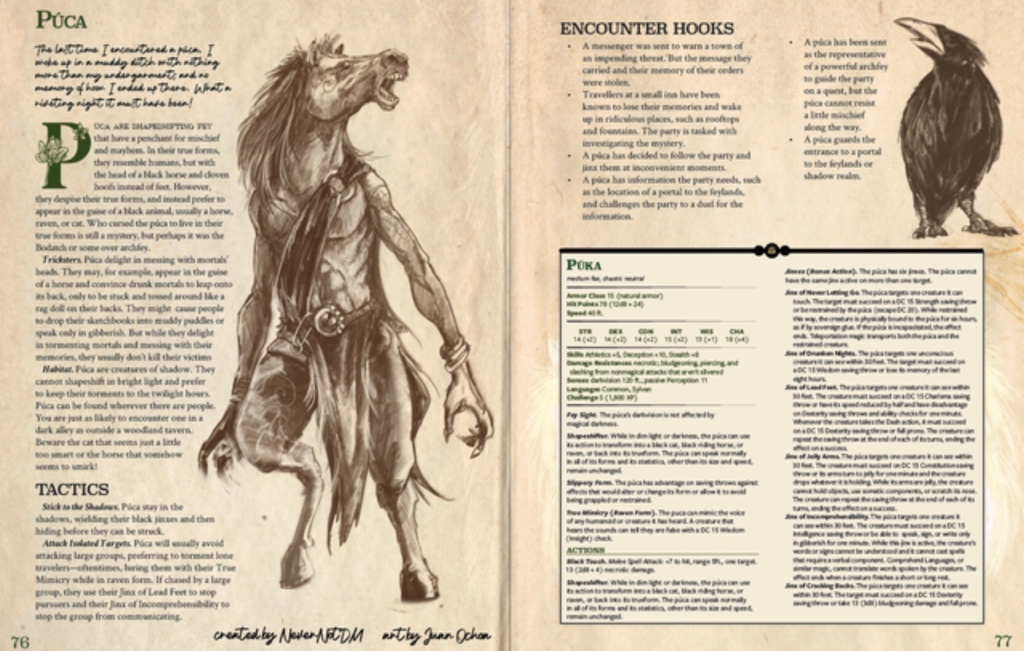
Pùca, sometimes spelled Pooka, is a Celtic spirit andshape-shifter that can take various forms, including horses, rabbits, goats, and humans.

It’s also known as Puck in English Folklore, is sometimes believed to use the light of Will o’ the Wisp to lure people into swamps or ditches and then fleeing with delight.

Depending on circumstances, Pooka may be helpful to humanity, but more often than not, its pranks are damaging and hurtful. It has been said that seeing a Pooka in some form is an omen of imminent death.

It was believed during medieval times Pooka would whisk away little children if they were to go near them.

Púca are said to inhabit wild places like remote thickets and glens. A household would leave a plate of food at night for the púca outside their house or yard; in return, it would do chores during the night and protect the property from fire and trespassers.

During the Celtic Feast of Samhain, it was believed the Pooka, shaped like a horse, would stomp the last seasonal blackberries and offer prophecy and divination to anyone who wished to receive it.

In Old and Middle English the word meant simply “demon.” In Elizabethan lore he was a mischievous, brownie like fairy also called Robin Goodfellow, or Hobgoblin.

As one of the leading characters in William Shakespeare’s Midsummer Night’s Dream, Puck boasts of his pranks of changing shapes, misleading travelers at night, spoiling milk, frightening young girls, and tripping venerable old dames.

Britannica – Puck fairy

Mermaids

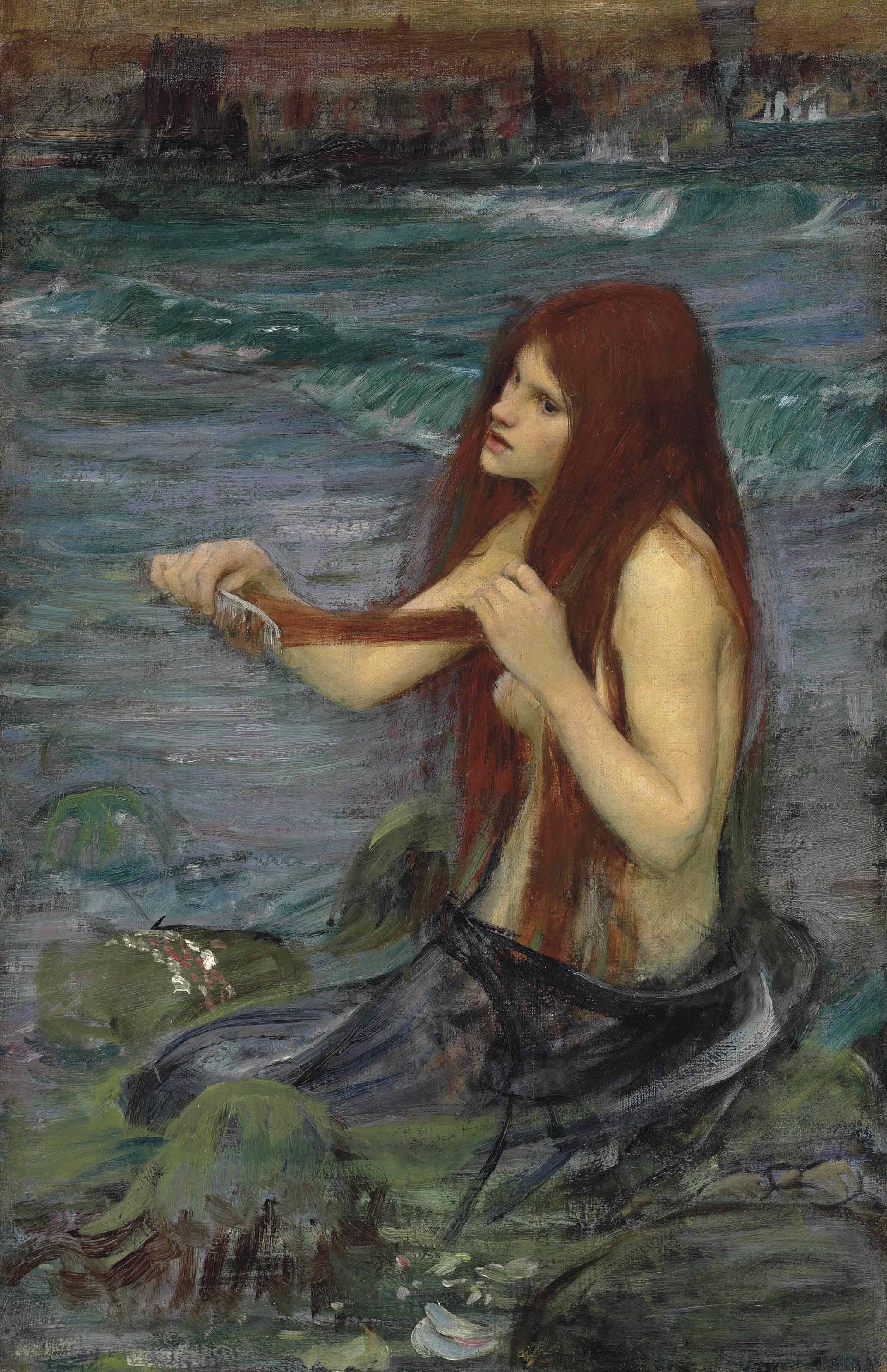
Mermaids are water spirits, and in Irish folklore, they’re known as Merrows. Mermaids are depicted as half-human, half-fish creatures and have been around for centuries in folklore and legends. Mermaids love music, and you’ll often hear them singing.

These water spirits have been linked to sorrow and destruction in modern and ancient folklore, while they can also be compassionate. They have provided the wisdom of natural remedies for deadly illnesses, lavish gifts, and storm advisories when rescued or saved. They may also lure sailors to doom and death by guiding them to rocks and causing their ships to wreck.

Mermen are sometimes associated with eating their own children or drowning people underwater out of spite and revenge for fishing in their territory.

Aquatic mammals, such as the dugong and manatee, that suckle their young in human fashion above water are considered by some to be the origin of myths about mermaids.

Britannica – Mermaid – Legendary being

Asanbonsam

Asanbonsam (Ah-SAN-bon-some)

Variations: Asambosam, Asanbosan, Asasa-bonsam, Sasabonsam

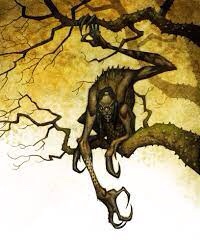
The asanbonsam terrorizes mankind from southern Ghana in Togo and along the Ivory Coast of Africa. Although it is rarely encountered, it looks like a human with hooks for its hands and feet. Its preferred method of hunting is to patiently sit in a tree and wait for some luckless individual to pass directly underneath it. When this happens, the asanbonsam will use its hooks to snatch up its prey and drain it dry of blood. When times are lean, it will venture into a village at night and sip blood from a sleeping person’s thumb. Fortunately, the regular sacrifices of a goat and the spilling of its blood on the ground will keep it satisfied enough to not hunt within the village.

Leanan Sidhe

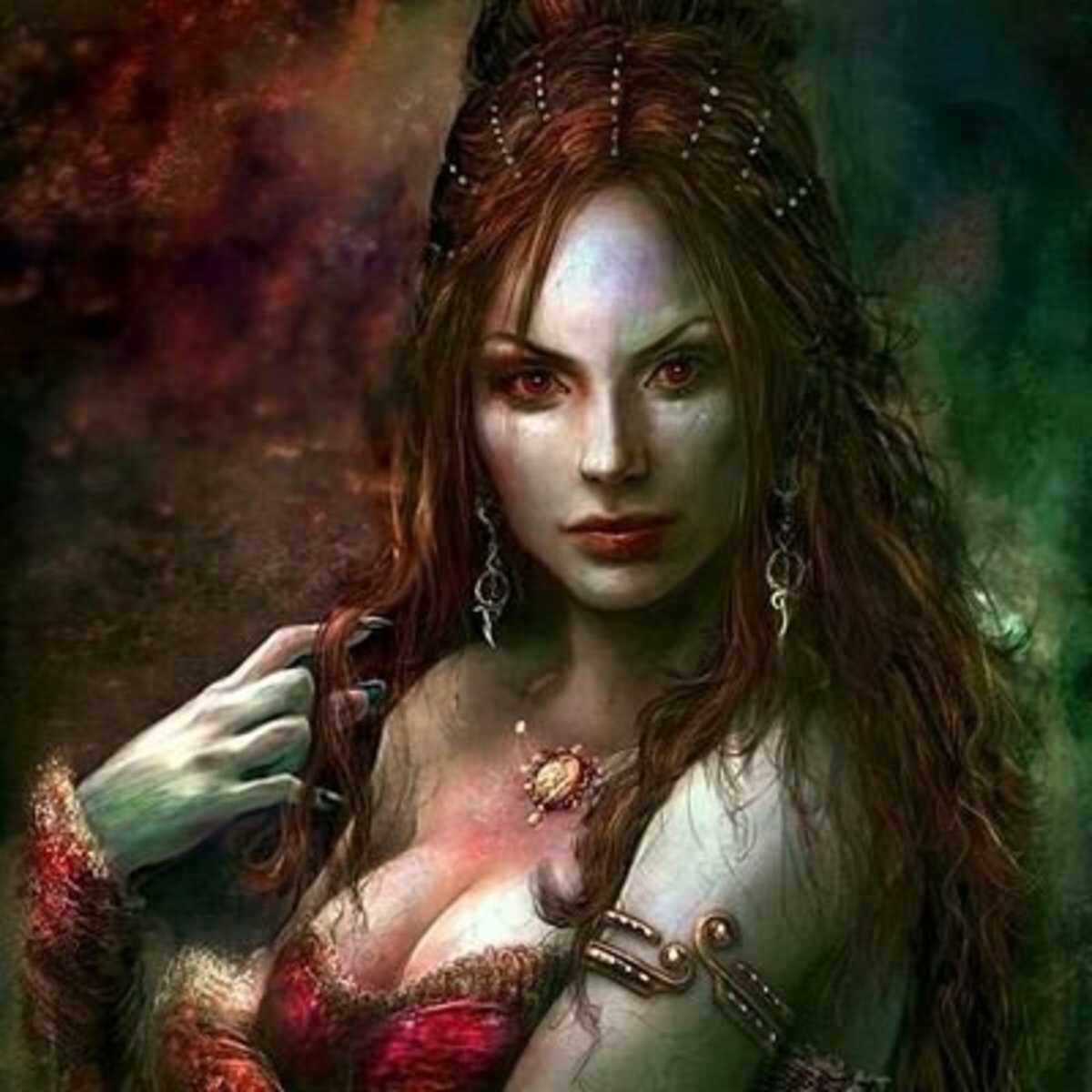
The Leanan Sidhe (pronounced La-non shee) means Fairy Mistress and is a beautiful Irish solitary Fae from the Otherworld. Leanan Sidhe is often portrayed as female, but a few folklores characterizes them as male.

Leanan Sidhe often seduce and help people with creative abilities like poets, artists, or musicians. They are gorgeous and fascinating to their lovers, but entirely invisible to their lover’s friends and family.

Leanan Sidhe inspires their lovers so they can achieve prestige and success, while simultaneously draining their life and vitality until they eventually waste away.Once their lover dies,Leanan Sidhe roam about until they find another.

TheLeanan Sidhe is not always seen as evil. In fact, theLeanan Sidhe is sometimes misunderstood and it’s believed many truly care for their human lovers. They try to provide them with as much inspiration as they can offer, without draining too much of their life energy away.

Some claimLeanan Sidhe is an invention of W. B. Yeats, while they could also be a variation of older Fae mythology.

Gean-Cánach

Gean-Cánach is a type of Fae in Irish mythology known for smoking a dudeen (clay pipe). Gean-Cánach (pronounced Ghan-Caw-nah) literally translates to ‘Love Talker’ and refers to faeries known for their ability to be alluring or enchanting with their voices.

Gean-Cánach has a passion for seducing shepherdesses and milkmaids and making love to them.

You’ll recognize a Gean-Cánach faery by his lack of shadow, a mist that swirls around him, and the birds will stop singing.

Legend states that any woman who is unlucky enough to kiss a Gean-Cánach faery was doomed because he would vanish as fast as he had appeared, leaving them to die of desire.

Changelings

Stories of Changelings have been passed down for centuries and involve the Fae leaving deformed or sickly faerie infants in place of a human baby shortly after it’s born. One belief surrounding Changelings is that the Fae take human children, leaving a faery in its place.

A Changeling could be identified by a few characteristics, including being old, ugly, having minimal growth, or advanced and intelligent for its age.

Parents and family members were frequently blamed for Fae kidnappings. A newborn that received too much adoration or praise might garner unwanted awareness from the Fae, who desired attractive or charming babies.

Fear of Changeling Fae abductions was prevalent throughout European folklore, but similar beliefs have been found in multiple cultures.

Changeling stories are thought to exist due to the rise of Christianity, and the belief that infants are vulnerable to demonic possession. Stories were told claiming Fae prey on unbaptized babies. 

There was a continuous dread of Fae kidnappings, and all sorts of drastic precautions were sought to avoid replacements. If a child was suspected of being a Changeling, they may be exposed to all kinds of strange mistreatment, including abuse and torture.

Placing a child on a shovel held over the fire was a common technique of discovering a Changeling. It was believed the Fae would come to rescue the Changeling if they were blasted with iron nails or forced to spend the day on a hillside or manure mound.

Long into the Victorian era, complaints of parents abusing alleged Changeling children persisted.

On a happier message, a mother was occasionally told that being kind towards a Changeling will lead to the recovery of her own child, which did happen in each instance.

Changeling, in European folklore, a deformed or imbecilic offspring of fairies or elves substituted by them surreptitiously for a human infant. According to legend, the abducted human children are given to the devil or used to strengthen fairy stock.

Britannica – Changeling folklore