The Rainbow Family of Living Light is a counter-culture, in existence since approximately 1970. It is a loose affiliation of individuals, some nomadic, generally asserting that it has no leader. They put on yearly, primitive camping events on public land known as Rainbow Gatherings. Inspired in large part by the first Woodstock Festival, two attendees, Barry “Plunker” Adams and Garrick Beck, are both considered among the founders of the Rainbow Family
The first official Rainbow Family Gathering was held at the Strawberry Lake, Colorado, on the Continental Divide, in 1972. Use of this site was offered by Paul Geisendorfer, a local developer, after a court order was issued against their gathering at the original location on nearby Table Mountains.
Regional Rainbow Gatherings are held throughout the year in the United States, as are annual and regional gatherings in dozens of other countries. These Gatherings are non-commercial, and all who wish to attend peacefully are welcome to participate. There are no leaders, and traditionally the Gatherings last for a week, with the primary focus being on gathering on public land on the Fourth of July in the U.S., when attendees pray, meditate, and/or observe silence in a group effort to focus on World Peace. Most gatherings elsewhere in the world last a month from new moon to new moon, with the full moon being the peak celebration. Rainbow Gatherings emphasize a spiritual focus towards peace, love, and unity.
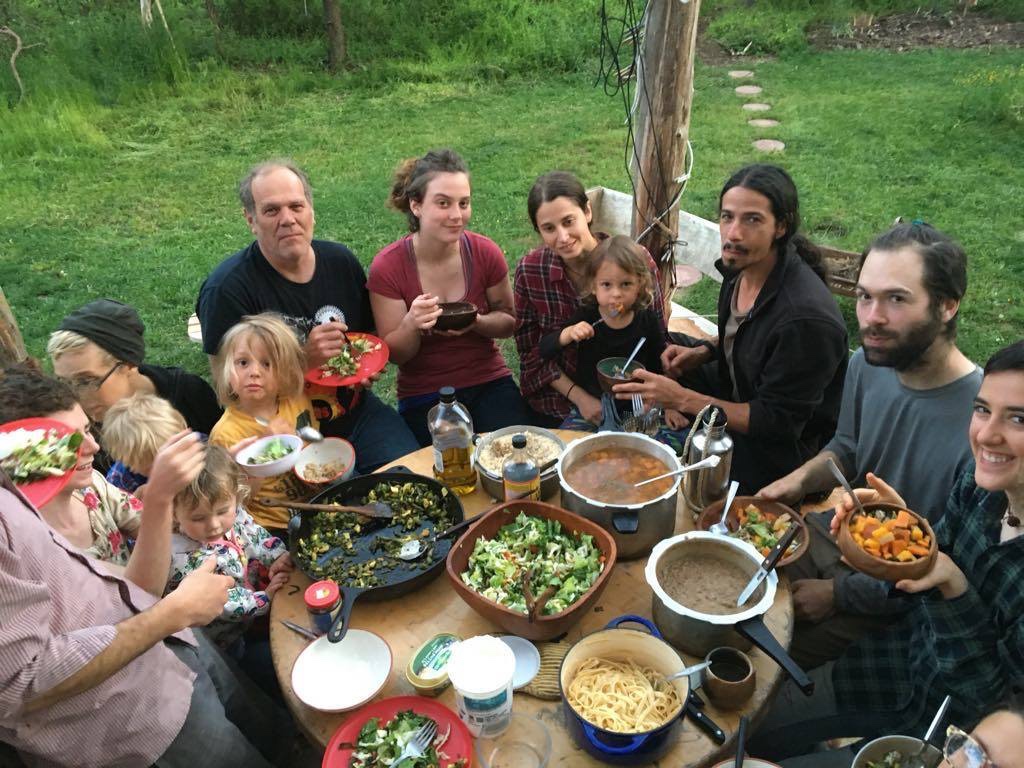
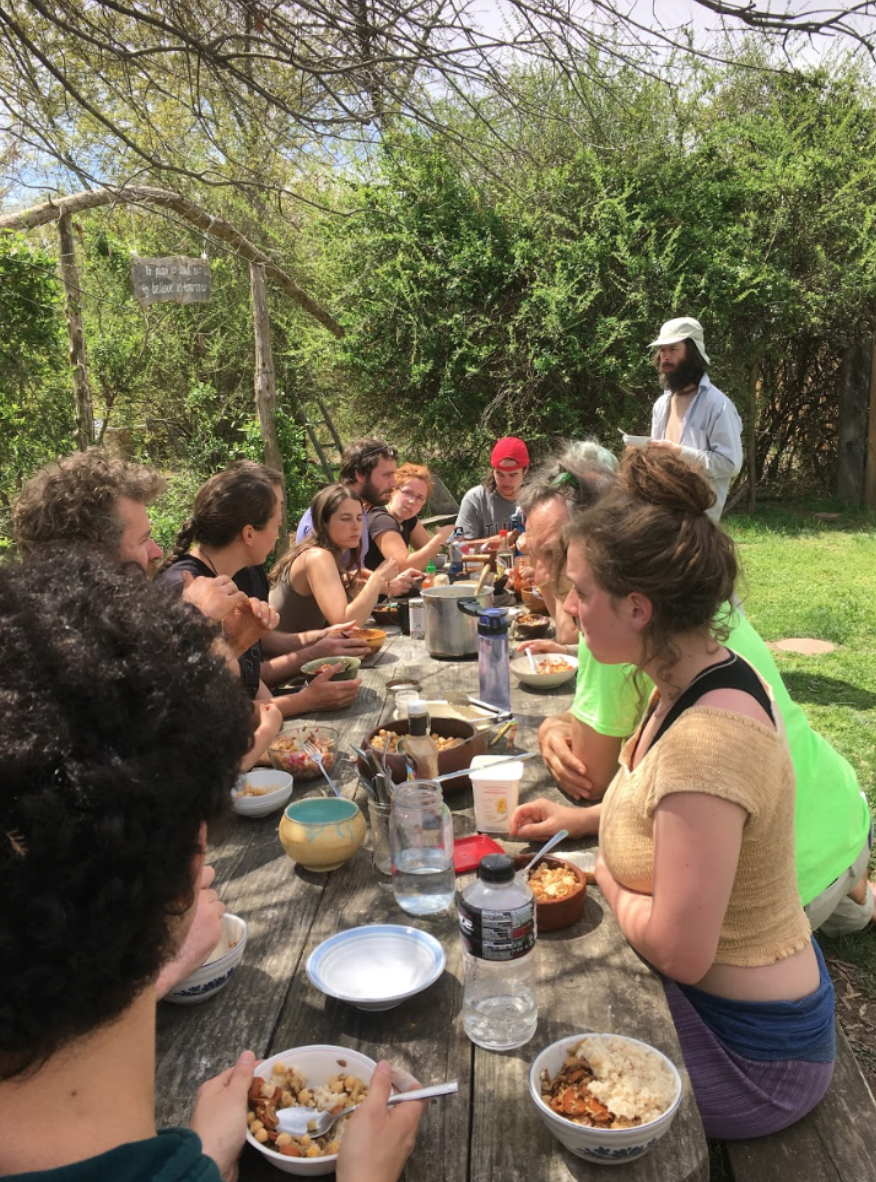
We are forming an egalitarian and income-sharing community. We are co-creating a culture of social sustainability and harmony that nourishes us as well as the earth.
“whatever makes a house into a home makes a game into play and makes culture come to life. but home, play and culture, strain to grow without a structure.”
Established: 2015
Shared Income: All or Close to All
Mission Statement: We aspire for a small and stable community with a high level of sharing and connection. We are inspired by the nature around us as we attempt to create human habitat that emulates the beauty and complexity of living systems. We seek to intertwine reason and intuition, aesthetics and efficiency. We are interested in increasing our skills and education through experience, mentorship, sharing and study, and growing as individuals. Within a thriving cluster of neighboring income sharing communities, we are creating a viable, regenerative alternative to the mainstream. We intend to strengthen the relationships between existing communities.
Community Description: We are forming an egalitarian and income sharing community. We are co-creating a culture of social sustainability and harmony that nourishes us as well as the earth. We focus on re-humanizing the scale of our lives. We do that with slower pace, balance in our lives, deep social connection, natural building, education, creativity, and intuitive structure to our time and space. While we are focused on interpersonal and cultural aspects of our community, we are interested in building small, beautiful, natural housing, doing our best to be ecologically conscious, using new and old technologies, and upholding values of minimalism. We want to continually learn about what works in community and do our best to integrate our lessons into our lifestyle. We are planning educational programs in subjects including experiential natural building workshops, off grid technologies, crafts, and nature awareness. We are working on understanding what makes communities thrive through sociological research.
Setting: Cambia is nestled within 15 acres, with about 5 of which is mostly a thicket of young scrubby vegetation and about 10 acres of mature (80 year old or so) forest. we have a small old house (over 100 years old) that we are restoring and currently using as our common house, it has our kitchen and living room and two bedrooms.
Personal dwellings are small and modest. We have a garden shed that’s converted to a duplex, a cozy sailboat with a deck, a fantastic vintage air stream trailer that’s completely remodeled inside, and a building that we built which we call “the barn” (due to lack of better names) which has a workshop, guest space, residence, and a sacred space for gathering and meditation.
Daily Schedule
7:30: Optional meditation, morning quiet time, breakfast. 9am: Coordination meeting 9:15: Priority Projects at Cambia and income work 1pm: Lunch 2pm: Personal and greater awesomeness projects 6:30pm: Dinner 8:30pm: Shared evening activities (3 or 4 days/week including writing group, cuddle puddles, listening to audiobooks, heart circle ceremony, singing)
A majority of the written sources we do have are from Iceland. Vikings discovered Iceland in the middle of the 9th century. This discovery led to a land rush as many families were eager to carve out a new life in this austere place of stark beauty. Many of these settlers were escaping Harald Fairhair and other despotic kings who were nation-building in Scandinavia. These pioneer families were fiercely independent and wanted to preserve their way of life and culture without becoming the serfs of greedy lords.
Consequently, many of the Vikings who settled Iceland were from western Norway. Other Vikings came to Iceland indirectly, by way of the Hebrides, Orkney, Ireland, or the Faroe Islands, with Celts from those lands making up portions of their households.
The Vikings set up a democracy in Iceland, with a firm sense of law based on honor and restitution. In the year 1000, the Icelanders voted to accept Christianity as the public religion, while allowing people to practice whatever religion they chose in private. This decision was made for the sake of peace and to keep up with the changing times. But this peculiar conversion would have another effect as well: while Viking descendants in Christianized Scandinavia, Normandy, England, and elsewhere actively distanced themselves from their pagan past, the Icelanders were much more comfortable with that part of their heritage. This, combined with natural isolation and a conservative disposition, led to Iceland remaining a bastion of Old Norse culture.
Even today, a thousand years later, the modern Icelandic language is very similar to Old Norse. Though some word meanings and pronunciation have naturally shifted, Icelandic college students can read the Medieval manuscripts without much difficulty. This retention of language is a tremendous testament to the cultural preservation that occurred in that island nation.
In the middle of the 13th century – more than 150 years after the last Vikings sailed the seas or stood in battle – Iceland was undergoing a violent political crisis. This crisis of politics became a crisis of identity, and perhaps because of this, there was a strong intellectual impulse to record the remnants of their ancient heritage. For the first time, Viking lore was set down in writing for future generations to read.
This creative impulse expressed itself in two forms: The first was the Eddas – the collected poetry and myths of the Old Norse gods, goddesses, and heroes. But the second impulse may have been the more remarkable: the Icelanders set down the stories of their ancestors – ordinary men and women. These sagas were a unique accomplishment in medieval literature. Even today, the sagas are recognized as one of the world’s great literary achievements and a forerunner of the modern novel.
Even in the Viking Age, poets from Iceland were considered among the best. But after their time, their descendants expanded the Norse oral tradition into a vibrant literary culture. To this day, Icelanders read more books and even write more books per capita than any other nation in the world.
Belief in witches stretches across almost all cultures in history, and the Vikings definitely did not invent them. Vikings believed in magic and never took it lightly. There are about 40 different words for magic and magic users in their language of Old Norse, showing the range of understanding and the importance they placed on it. Freyja, the most venerated of the Norse goddesses, was a goddess of magic and taught her arcane arts to Odin. Freyja is sometimes called a witch in the Eddic poems and was much maligned for this by later Christians. Freyja traveled in a chariot drawn by black or gray cats. These quiet, intelligent, ruthless creatures are her familiars or messenger spirits. A Viking who looked up to see a raven might see it as an omen from Odin, just as he might see a black cat as a sign that Freyja was watching.
Witches, sorcerers, and wizards were taken seriously and respected in the Viking world. This is further attested by the many Viking Age graves archaeologists have discovered that have grave goods (valuables deliberately interred with the body) associated with magic users. One tell-tale sign of a witch’s grave is an iron staff. It is thought that these iron staffs were used by Völva sorceresses in certain magic rituals, held between the thighs as the witch entered a shamanistic trance. At such times, it was thought that the witch’s layers of inner self left their outer body (what occultists now refer to as astral projection).
One passage referring to this is in the Havamal:
I know a tenth spell If I see witches at play in the air I can cast this spell So that they get lost So they can’t find their skins So they can’t find their minds
If the Viking Age, witches used their iron rod as a means of traveling across levels of consciousness, it is easy to see how later Medieval Christians would say that witches “flew through the air riding on brooms.”
So, the pagan Vikings respected (and feared) witches and often turned to them for help, but when the Vikings gradually became more Christian, witches were targeted as public enemies by the Church. Witchcraft never wholly died out, though. In Iceland, in particular, witchcraft survived in a well-documented line from early Viking times until the present – though it certainly changed and took on elements and influences from other cultures.
It is not just the Medieval Christian that shifted the perspective of the witch from medicine woman and soothsayer to evil, hexing hag, though. Viking lore is replete with frightening or “wicked” witches. There are at least three Eddic poems in which the speaker is a dead witch awoken by Odin or Freyja’s necromancy, and forced to lend her wisdom to the gods though she is full of spite for them. The worst of the evil witches were sometimes referred to as “Troll Wives” and were Jötnar rather than human. Like many fearsome beings in Norse lore, Troll Wives are seldom described in detail. However, the impression given fits the Halloween image of a lank-haired, green-skinned disfigured distortion of the elderly.
But it is clear that there is a broad range of witches. Only some of them could really be classified as good or evil – which is typical of the moral complexity and honesty that has made Norse lore so poignant and enduring.
“All manner of Viking symbols and misconceptions about a golden age of Nordic racial purity have been appropriated by racist extremists looking to justify their xenophobia and acts of violence, according to the University of Alberta researcher.
Van Deusen said the age of racial purity never existed and she is determined to debunk the corrosive myth at every turn, especially in the classroom.
Viking symbols are everywhere among the ultra-right. When the Unite the Right rally took place in Charlottesville in 2017, some protesters carried banners featuring the Norse god Thor’s hammer, popular among the Nazis and neo-Nazi groups.
The perpetrator of New Zealand’s Christchurch massacre last year wrote, “See you in Valhalla”-referring to the great hall where heroes of Norse mythology go after they die-at the end of his manifesto.
Closer to home, the Soldiers of Odin-a Finnish white supremacist movement named after another Norse god in 2015-have recently emerged in Alberta and throughout Canada.
“The precedent was set with the Nazis,” said Van Deusen. “National Socialism and Hitler idealized the Norse people-those who lived in the Nordic areas. Even the swastika is based in part on a symbol based on Viking artifacts.”
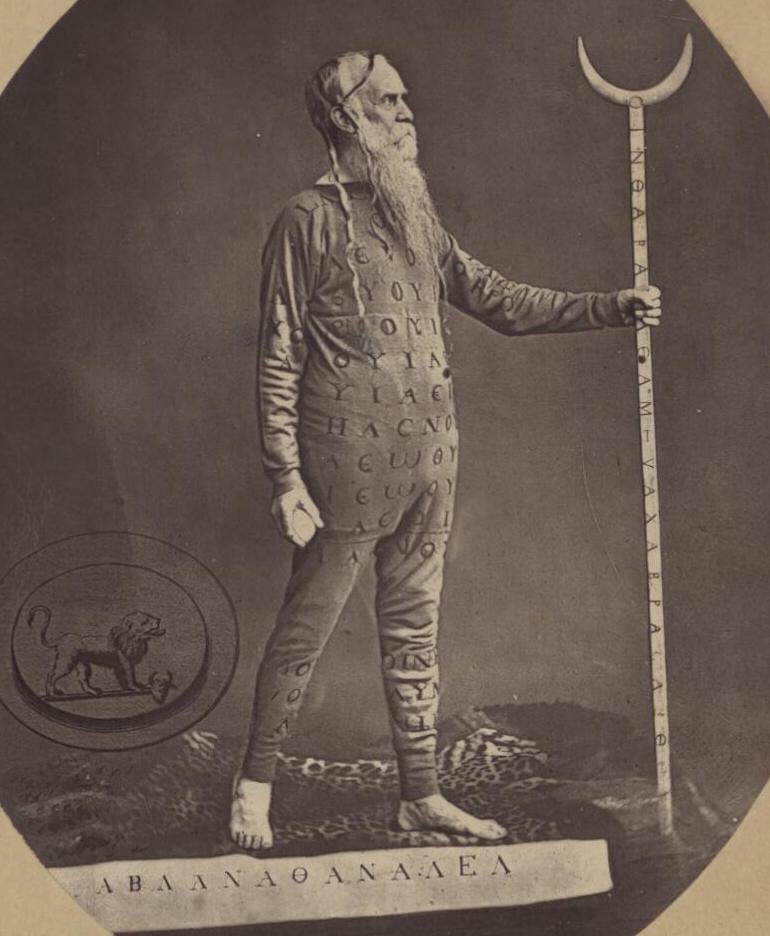
Today in weird history —> On January 18, 1884 Dr. William Price attempts to cremate the body of his infant son, Jesus Christ Price, setting a legal precedent for cremation in the United Kingdom. Price, a Welshman, was an interesting character in many ways. He adopted the Druid “religion” for many years; here he is onstage in 1884 wearing Druidic attire. At the time he cremated his infant son, cremation was illegal in England, but his action helped change the law…
“The term ‘Norse’ is used to describe the various peoples of Scandinavia who spoke the Old Norse language between the eighth and thirteenth centuries AD. While it had eastern and western dialects it would have been generally mutually understood across the range of areas within which it was spoken. A third recognisable form was spoken on the island of Gotland.
The Old Norse language later developed into modern Danish, Faroese, Icelandic, Norwegian and Swedish. In addition, there once existed the so-called Norn languages of Orkney and Shetland that are now extinct. It was, essentially, the language of the Vikings.”
This is the video that went viral in 2019 and put Jonna Jinton on the map. I love her lifestyle, art, balancing stones. I won’t be taking an ice bath like this anytime soon though:
This version of the lullaby from “Ronja Rövardotter / Ronia the robbers daugther” written by beloved Swedish writer, Astrid Lindgren, whose books have been read for children all over the world:
Lyrics in Swedish and English:
Vargen ylar i nattens skog
(The wolf is howling in the forest of the night)
Han vill men kan inte sova
(He wants to, but cannot sleep)
Hungern river i hans varga buk
(The hunger tears his wolven stomach)
Och det är kallt i hans stova
(And it’s cold in his burrow)
Du varg du varg, kom inte hit
(Wolf, wolf, don’t you come here)
Ungen min får du aldrig
( I will never let you take my child)
Vargen ylar i nattens skog
(The wolf is howling in the forest of the night)
Ylar av hunger o klagar
(Howling out of hunger and moaning)
Men jag ska ge’n en grisa svans
(But I will give him a pig tail)
Sånt passar i varga magar
(Which suits a wolven stomach)
Du varg du varg, kom inte hit
(Wolf, wolf, don’t you come here)
Ungen min får du aldrig
( I will never let you take my child)
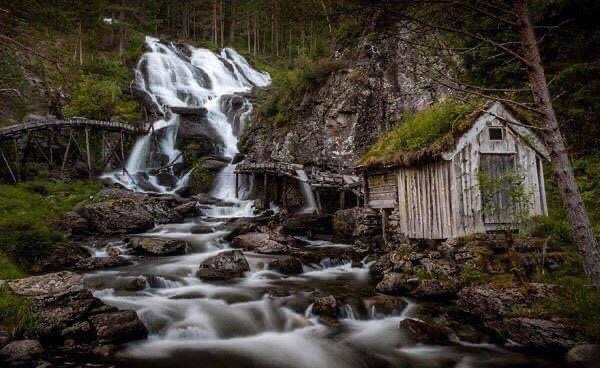
In Iceland and the Faroe Islands, elves are often called the Huldufólk (the hidden folk). They are mysterious and mischievous, at times acting helpful and at other times playing tricks. Tradition says they make their homes in the rocks that cover the island. For centuries, the wee folk lived in the dancing shadows of hearth fires as farmers entertained wide-eyed children with tales of shenanigans while warning them not to stray too far from home, lest they disappear into elfland, never to return.
In Iceland, elves, (‘alfar’ in Icelandic), are beings thought to be smaller than most humans. Elves are thought to live outdoors, and to rarely speak. While some Icelanders believe elves to be a very distinct group, many have come to see them as synonymous with another group of mythical beings known as the huldufólk, or Hidden People.
Like elves, huldufólk also live outdoors, making their homes in Iceland’s rocks and cliffs. According to a study done in 2006, 32% of Icelanders believe the existence of these beings to be possible, while 24% believe their existence is either likely or an outright certainty.
Celebrating elves and huldufólk is common in Iceland. For instance, it is customary for Icelanders to clean and leave food for elves as it’s believed they hold parties late at night. On New Year’s Eve, it is thought that huldufólk move to new locations. As a result, it’s traditional to leave candles out to help them find their way. Finally, Þrettándinn, or Thirteenth Night, is celebrated on January 6th and marks the last day of Christmas in Iceland. On this day, bonfires called álfabrennur, of Elf Fires, are commonly lit.













 Mark Bere Peterson’s Counterculture, Urban Legends, Paganism & Witchcraft