InSight Detects Two Quakes

NASA’s InSight lander has detected two strong, clear quakes originating in a location of Mars called Cerberus Fossae—the same place where two strong quakes were seen earlier in the mission. The new quakes have magnitudes of 3.3 and 3.1; the previous quakes were magnitude 3.6 and 3.5. InSight has recorded over 500 quakes to date, but because of their clear signals, these are four of the best quake records for probing the interior of the planet.

Studying marsquakes is one way the InSight science team seeks to develop a better understanding of Mars’ mantle and core. The planet doesn’t have tectonic plates like Earth, but it does have volcanically active regions that can cause rumbles. The March 7 and March 18 quakes add weight to the idea that Cerberus Fossae is a center of seismic activity.

“Over the course of the mission, we’ve seen two different types of marsquakes: one that is more ‘Moon-like’ and the other, more ‘Earth-like,'” said Taichi Kawamura of France’s Institut de Physique du Globe de Paris, which helped provide InSight’s seismometer and distributes its data along with the Swiss research university ETH Zurich. Earthquake waves travel more directly through the planet, while those of moonquakes tend to be very scattered; marsquakes fall somewhere in between. “Interestingly,” Kawamura continued, “all four of these larger quakes, which come from Cerberus Fossae, are ‘Earth-like.'”

The new quakes have something else in common with InSight’s previous top seismic events, which occurred almost a full Martian year (two Earth years) ago: They occurred in the Martian northern summer. Scientists had predicted this would again be an ideal time to listen for quakes because winds would become calmer. The seismometer, called the Seismic Experiment for Interior Structure (SEIS), is sensitive enough that, even while it is covered by a dome-shaped shield to block it from wind and keep it from getting too cold, wind still causes enough vibration to obscure some marsquakes. During the past northern winter season, InSight couldn’t detect any quakes at all.

“It’s wonderful to once again observe marsquakes after a long period of recording wind noise,” said John Clinton, a seismologist who leads InSight’s Marsquake Service at ETH Zurich. “One Martian year on, we are now much faster at characterizing seismic activity on the Red Planet.”

Sources: Phys.org
Galaxy NGC 1947

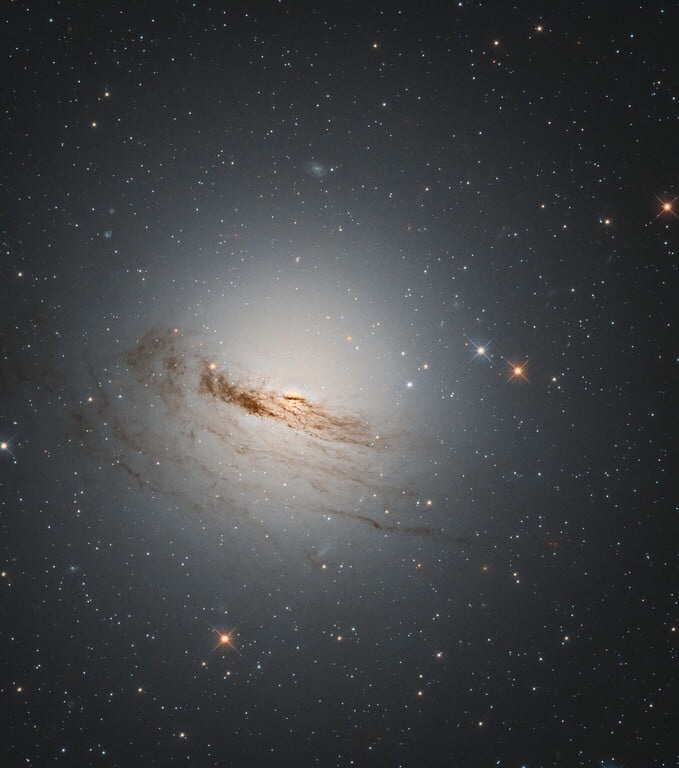
The Hubble Space Telescope has captured a image of a lenticular galaxy called NGC 1947. A lenticular galaxy is one that is neither a spiral galaxy, like our Milky Way, nor an elliptical galaxy, but somewhere in between the two. It has a large disk in the middle but unlike other spiral galaxies, it does not have spiral arms reaching out from its center.

This galaxy wasn’t always this way, however. At a point in its past, it did have spiral arms. You can see the evidence of these arms in the swirls of dust which still surround it, as the European Space Agency writes: “the faint remnants of the galaxy’s spiral arms can still be made out in the stretched thin threads of dark gas encircling it.”

Another difference between lenticular galaxies like NGC 1947 and other kinds of galaxy is the rate of star formation. Galaxies like the Milky Way continue to form new stars, especially in their spiral arms, as clouds of dust and gas clump together and are eventually bound by gravitational forces. In lenticular galaxies, however, there is very little star formation. These galaxies have used up most of their interstellar matter so there is not enough material for the formation of many new stars.

This means that the average age of stars in NGC 1947 is getting older, and the galaxy is fading over time. To see the galaxy for yourself, you’d need to be located in the southern hemisphere as it is further south than the celestial equator.

Source: Digital Trends

Planet GJ 1132 b Regenerates Atmosphere

Scientists know that the atmospheres of planets change over time — Mars, for example, is gradually losing its atmosphere as it evaporates into space. The examples we know of suggested this was a one-way process, where an atmosphere developed and then was subsequently lost. But now, researchers using the Hubble Space Telescope have discovered a very odd planet that seems to be re-growing its atmosphere after having lost it in the past. This is the first time such a thing has been observed.

Planet GJ 1132 b is several times the size of Earth, making it a type called a sub-Neptune, and it started out with a thick atmosphere of hydrogen and helium. But, being close to its hot, young star, this atmosphere was quickly lost and the planet was reduced to a core around the size of Earth. So far, so typical.

Where it gets weird is recent observations from Hubble which show the planet has a secondary atmosphere of hydrogen, hydrogen cyanide, methane, and ammonia. Researchers think that hydrogen from the original atmosphere was absorbed by the planet’s mantle, and is now being released once more by volcanic activity. The atmosphere seems to be replenishing itself even as hydrogen continues to be lost into space.

It’s super exciting because we believe the atmosphere that we see now was regenerated, so it could be a secondary atmosphere,” said study co-author Raissa Estrela of NASA’s Jet Propulsion Laboratory (JPL) in a statement. “We first thought that these highly irradiated planets could be pretty boring because we believed that they lost their atmospheres. But we looked at existing observations of this planet with Hubble and said, ‘Oh no, there is an atmosphere there.’”

Source: Digital Trends

Nicolaus Copernicus‘s book “On the Revolutions of the Heavenly Spheres” is added to the Index of Forbidden Books

Today in Science:

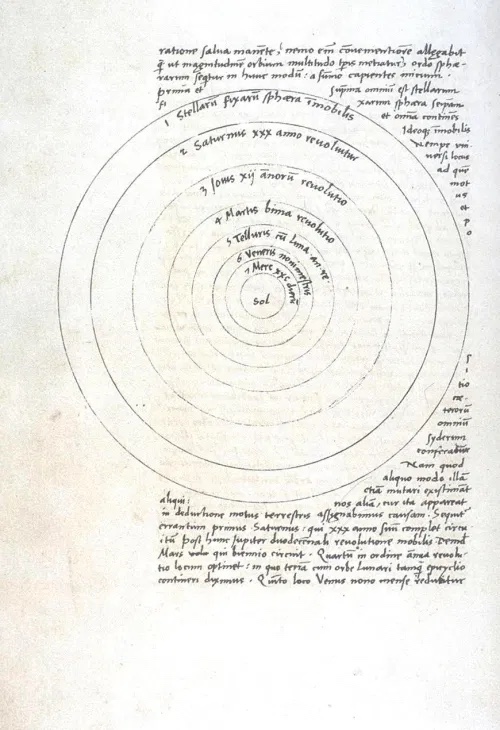
1616 – Nicolaus Copernicus‘s book On the Revolutions of the Heavenly Spheres is added to the Index of Forbidden Books 73 years after it was first published.

Here’s Copernicus’s heliocentric model in the book’s manuscript. Note the Sun in the center with seven planets around it. The Index Librorum Prohibitorum was finally abolished as church law in 1965

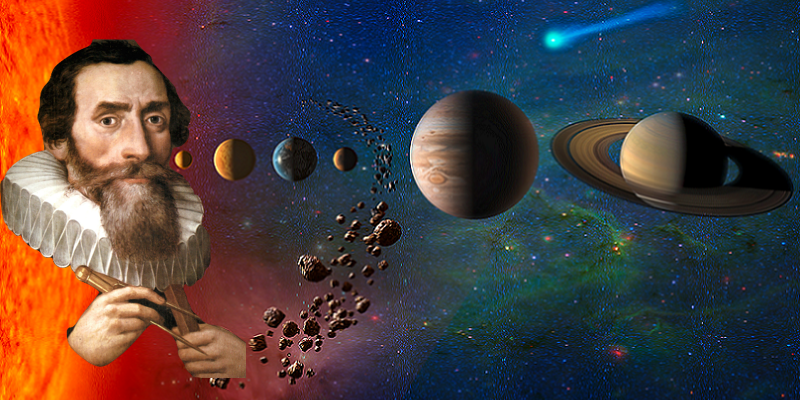
Johannes Kepler

Born in the city of Weil der Stadt near Stuttgart, southern Germany, in 1571, Johannes Kepler witnessed the Great Comet of 1577 as a small child, marking the start of his fascination with the heavens. While studying at the University of Tübingen, he developed a reputation as a brilliant mathematician and astrologer. He corresponded with various leading astronomers of the time, including Tycho Brahe, ultimately moving to Prague in 1600 to become Brahe’s student and academic heir.

Following Brahe’s death in 1601, Kepler took on the post of Imperial Mathematician, with a royal commission to complete Brahe’s work on the so-called Rudolphine Tables for predicting the movements of the planets. He completed this work in Linz, Austria, where he worked from 1612 until his death in 1630.

Key works:

1596 The Cosmic Mystery

1609 Astronomia Nova (New Astronomy)

1619 The Harmony of the World

1627 Rudolphine Tables

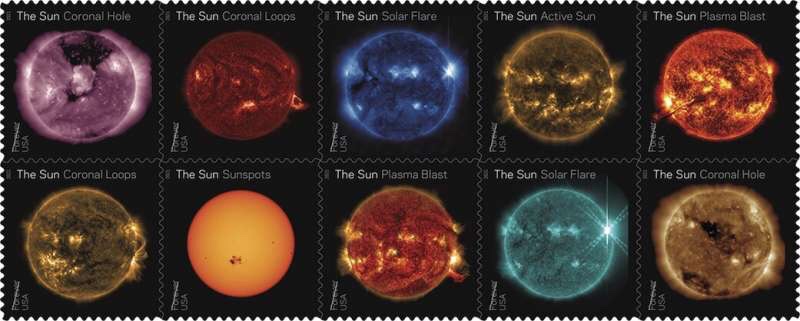
Postal Service to issue NASA sun science forever stamps

“I have been a stamp collector all my life and I can’t wait to see NASA science highlighted in this way,” said Thomas Zurbuchen, associate administrator for NASA’s Science Mission Directorate (SMD) in Washington. “I feel that the natural world around us is as beautiful as art, and it’s inspiring to be able to share the import and excitement of studying the sun with people around the country.”

The 20-stamp set features ten images that celebrate the science behind NASA’s ongoing exploration of our nearest star. The images display common events on the sun, such as solar flares, sunspots and coronal loops. SDO has kept a constant eye on the sun for over a decade. Outfitted with equipment to capture images of the sun in multiple wavelengths of visible, ultraviolet, and extreme ultraviolet light, SDO has gathered hundreds of millions of images during its tenure to help scientists learn about how our star works and how its constantly churning magnetic fields create the solar activity we see.

Source: phys.org

Lagoon Nebula

The Lagoon Nebula in Hydrogen, Sulfur, and Oxygen:

The majestic Lagoon Nebula is filled with hot gas and the home for many young stars. Spanning 100 light years across while lying only about 5000 light years distant, the Lagoon Nebula is so big and bright that it can be seen without a telescope toward the constellation of Sagittarius…

Earth Rotation Day

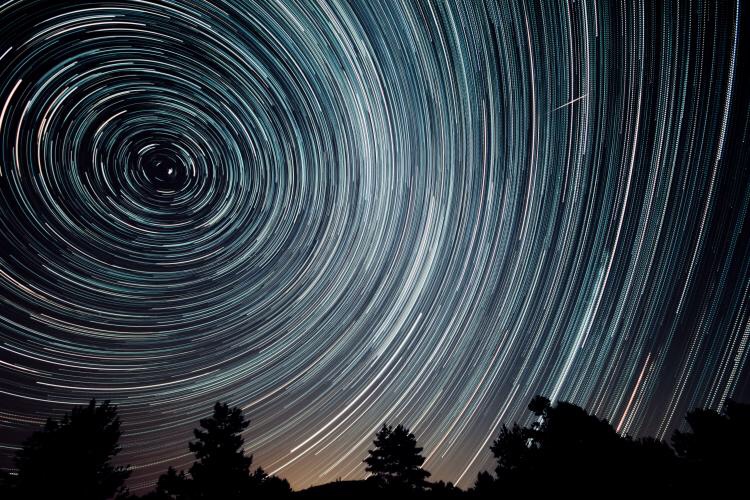
It’s Earth Rotation Day, in honor of Foucault, who did this:

On January 8, 1851, Foucault performed an experiment in the cellar of his home, in which he swung a five-kilogram weight attached to a two-meter-long pendulum. He put sand underneath it to mark the pendulum’s path, allowing him to see any changes in it. He observed a slight clockwise movement in the plane—the floor, and thus the earth, were slowly rotating; the pendulum kept its position. His experiment showed that the earth rotated on its axis. No longer was it just a hypothesis.

Today in Science —> Galileo’s Death

Today in Science –> In 1642 Italian astronomer Galileo Galilei dies in Italy at age 77. Born February 15, 1564, Galileo has been referred to as the “father of modern astronomy,” the “father of modern physics” and the “father of science” due to his revolutionary discoveries. The first person to use a telescope to observe the skies, Galileo discovered the moons of Jupiter, the rings of Saturn, sunspots and the solar rotation. After Galileo published his confirmation that the Earth orbits the Sun, in favor of the Copernican system, he was charged with heresies (ideas that ran counter to teaching of the church) by the Inquisition—the legal body of the Catholic church. He was found guilty in 1633 and sentenced to life imprisonment but due to his age and poor health he was allowed to serve out his sentence under house arrest.

Today in Science —> Stephen Hawking

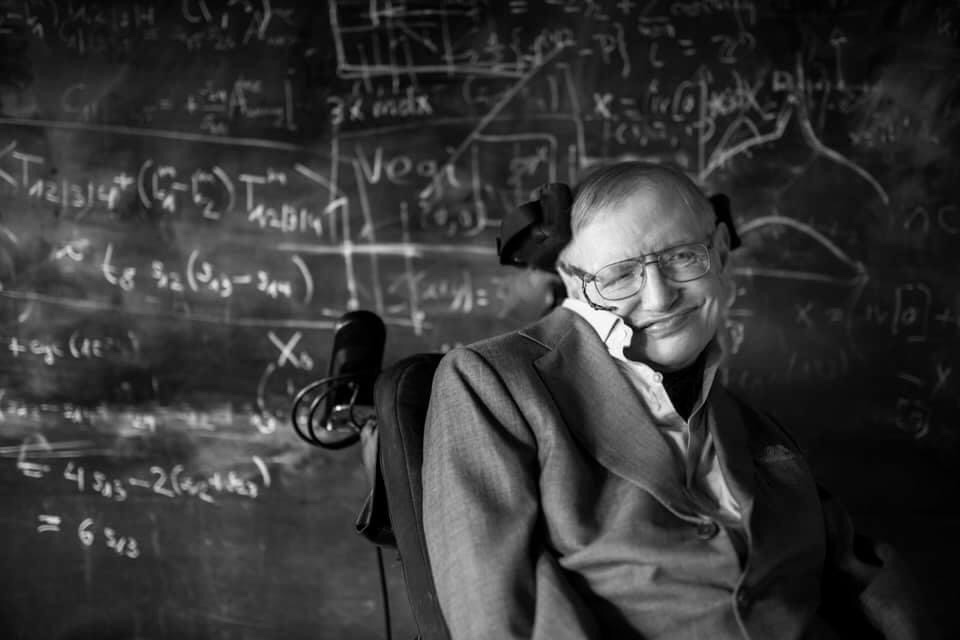
Notable born on this day in History —> On this date in 1942, cosmologist Stephen Hawking was born in Oxford, England, “300 years after the death of Galileo,” as he points out at his Web site. He attended Oxford, studying physics, then earned his Ph.D. in cosmology at Cambridge. Hawking is celebrated for his work on unifying General Relativity with Quantum Theory.

“There is a fundamental difference between religion, which is based on authority, [and] science, which is based on observation and reason. Science will win because it works.”

“All that my work has shown is that you don’t have to say that the way the universe began was the personal whim of God.”

~ Stephen Hawking