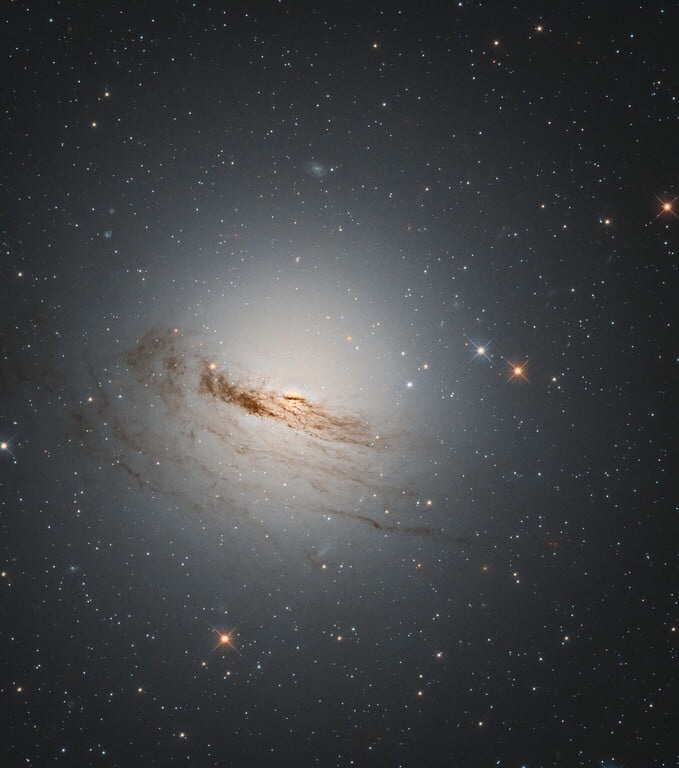
Galaxy NGC 1947

The Hubble Space Telescope has captured a image of a lenticular galaxy called NGC 1947. A lenticular galaxy is one that is neither a spiral galaxy, like our Milky Way, nor an elliptical galaxy, but somewhere in between the two. It has a large disk in the middle but unlike other spiral galaxies, it does not have spiral arms reaching out from its center.

This galaxy wasn’t always this way, however. At a point in its past, it did have spiral arms. You can see the evidence of these arms in the swirls of dust which still surround it, as the European Space Agency writes: “the faint remnants of the galaxy’s spiral arms can still be made out in the stretched thin threads of dark gas encircling it.”

Another difference between lenticular galaxies like NGC 1947 and other kinds of galaxy is the rate of star formation. Galaxies like the Milky Way continue to form new stars, especially in their spiral arms, as clouds of dust and gas clump together and are eventually bound by gravitational forces. In lenticular galaxies, however, there is very little star formation. These galaxies have used up most of their interstellar matter so there is not enough material for the formation of many new stars.

This means that the average age of stars in NGC 1947 is getting older, and the galaxy is fading over time. To see the galaxy for yourself, you’d need to be located in the southern hemisphere as it is further south than the celestial equator.

Source: Digital Trends

Planet GJ 1132 b Regenerates Atmosphere

Scientists know that the atmospheres of planets change over time — Mars, for example, is gradually losing its atmosphere as it evaporates into space. The examples we know of suggested this was a one-way process, where an atmosphere developed and then was subsequently lost. But now, researchers using the Hubble Space Telescope have discovered a very odd planet that seems to be re-growing its atmosphere after having lost it in the past. This is the first time such a thing has been observed.

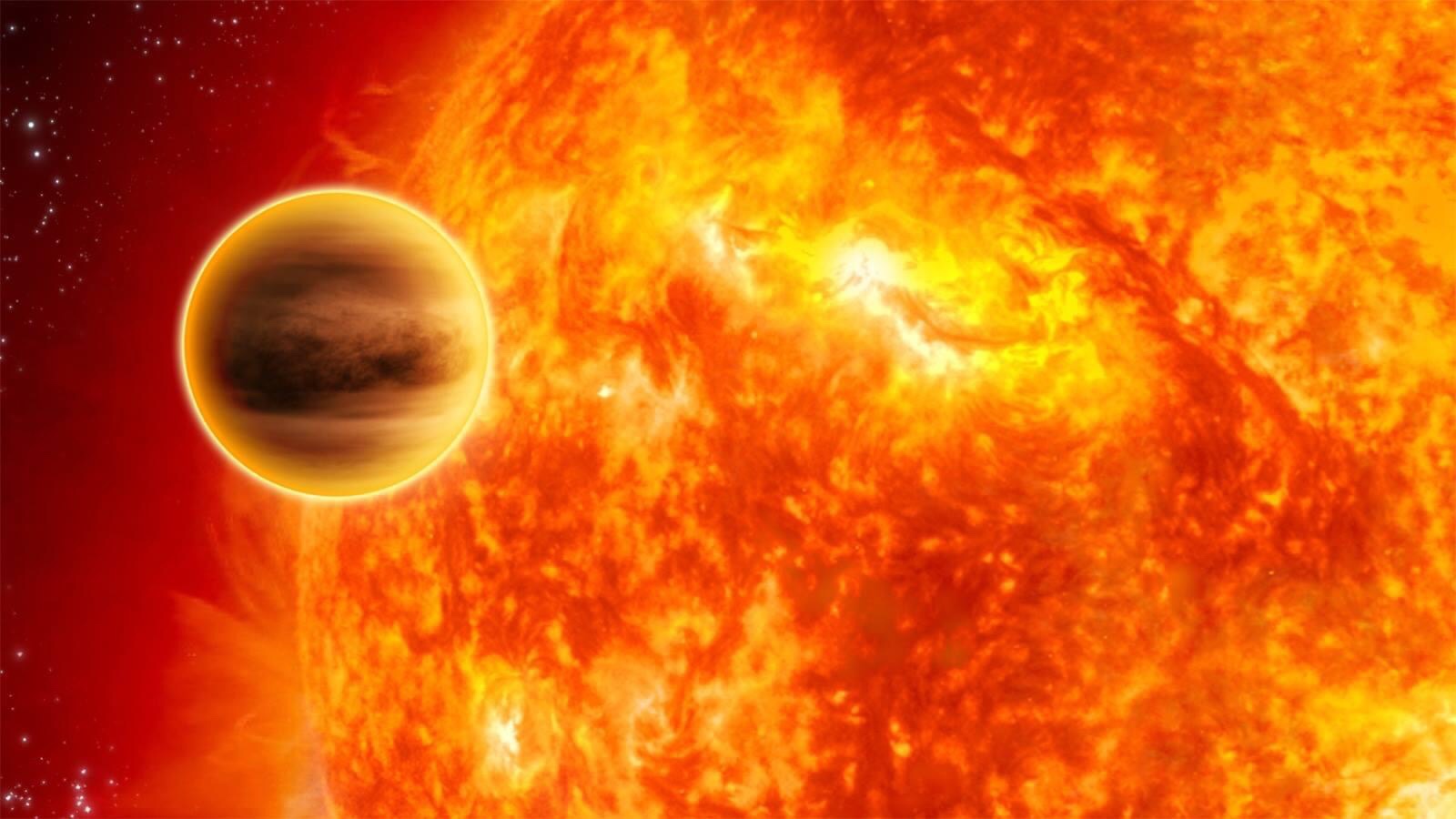
Planet GJ 1132 b is several times the size of Earth, making it a type called a sub-Neptune, and it started out with a thick atmosphere of hydrogen and helium. But, being close to its hot, young star, this atmosphere was quickly lost and the planet was reduced to a core around the size of Earth. So far, so typical.

Where it gets weird is recent observations from Hubble which show the planet has a secondary atmosphere of hydrogen, hydrogen cyanide, methane, and ammonia. Researchers think that hydrogen from the original atmosphere was absorbed by the planet’s mantle, and is now being released once more by volcanic activity. The atmosphere seems to be replenishing itself even as hydrogen continues to be lost into space.

It’s super exciting because we believe the atmosphere that we see now was regenerated, so it could be a secondary atmosphere,” said study co-author Raissa Estrela of NASA’s Jet Propulsion Laboratory (JPL) in a statement. “We first thought that these highly irradiated planets could be pretty boring because we believed that they lost their atmospheres. But we looked at existing observations of this planet with Hubble and said, ‘Oh no, there is an atmosphere there.’”

Source: Digital Trends

Cosmological considerations in the general theory of relativity

Today in Science history —> On this day 104 years ago, Albert Einstein presented the paper “Kosmologische Betrachtungen zur allgemeinen Relativitätstheorie” (“Cosmological considerations in the general theory of relativity”) at the weekly meeting of the Prussian Academy of Sciences in Berlin. The pivotal research, often overlooked amid Einstein’s many accomplishments, applied his newly minted general theory of relativity to the universe as a whole. The study of cosmology would never be the same again. Despite the shortcomings of Einstein’s model universe, the paper was a major advance at a time when many astronomers believed that the Milky Way constituted the entire universe.

#Science #Einstein

SS Katherine Johnson

Considering the crucial role Katherine Johnson played in helping humankind reach space, it’s only fitting that a space craft would finally be named after her.

Northrop Grumman has announced that it will name its new NG-15 Cygnus spacecraft after the legendary NASA mathematician. The ship, which will bear the name the SS Katherine Johnson, will be used for an upcoming cargo delivery mission to the International Space Station.

Earth Rotation Day

It’s Earth Rotation Day, in honor of Foucault, who did this:

On January 8, 1851, Foucault performed an experiment in the cellar of his home, in which he swung a five-kilogram weight attached to a two-meter-long pendulum. He put sand underneath it to mark the pendulum’s path, allowing him to see any changes in it. He observed a slight clockwise movement in the plane—the floor, and thus the earth, were slowly rotating; the pendulum kept its position. His experiment showed that the earth rotated on its axis. No longer was it just a hypothesis.

Today in Science —> Stephen Hawking

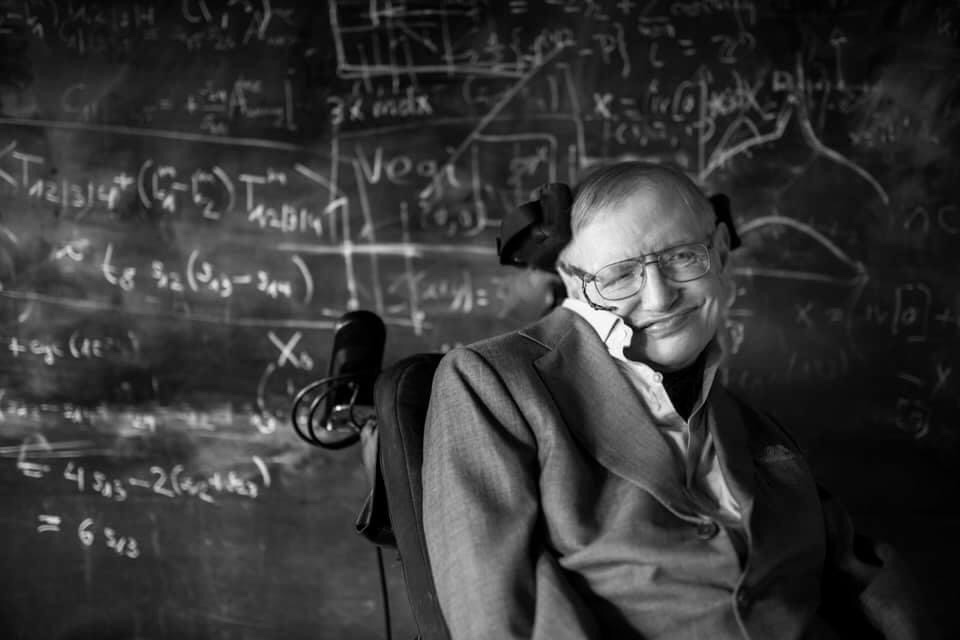
Notable born on this day in History —> On this date in 1942, cosmologist Stephen Hawking was born in Oxford, England, “300 years after the death of Galileo,” as he points out at his Web site. He attended Oxford, studying physics, then earned his Ph.D. in cosmology at Cambridge. Hawking is celebrated for his work on unifying General Relativity with Quantum Theory.

“There is a fundamental difference between religion, which is based on authority, [and] science, which is based on observation and reason. Science will win because it works.”

“All that my work has shown is that you don’t have to say that the way the universe began was the personal whim of God.”

~ Stephen Hawking

Speed of Light

In today’s physics lesson —> The speed of light (299,792,458 m/s):

Light travels at about 1 foot per nanosecond. Hold your hand up 12 inches from your face: you’re seeing your hand as it was a nanosecond ago. Everything you look at is, to one degree or another, in the past. The farther away in space, the more ancient in time.

You can’t see the Sun as it is now, but you can see it as it was about 8 minutes ago. You can’t see Alpha Centauri now, but you can see it 4.4 years ago. You can see the Andromeda Galaxy as it was 2.5 million years in the past. And so on. With powerful telescopes, we can see galaxies whose light has been traveling to us for more than 13 billion years. We see them shining in a universe that’s still young, where gravity has just begun to pull matter together into stars and galaxies.

We can see something even more distant, and more ancient, than the first galaxies. If we peer out far enough, in between the galaxies, we can see parts of the Universe that are so far away, it has taken the light from that distance almost the entire age of the cosmos to reach us. When we look at the most distant parts of the cosmos, in every direction, we see parts of the Universe that are so far in the past, they’re still in the final stages of the Big Bang. So far away, so far back, the space is filled with a dense, roiling plasma, the fire of creation.

We are not the center of the Universe. But we are the center of our own perception as light reaches us from afar; we lie embedded in nesting-doll layers of cosmic time. Each concentric sphere is an era. We can see the structure of matter changing, like geological strata around us. The most distant layer of time that we can see is the light that has been traveling since the moment the primordial fire began to cool. The cosmic microwave background surrounds us at every edge of our vision. We are embedded in shells of cosmic time, and the final one is fire.

The fire shell (as I’m calling it) is the cosmic microwave background, which comes from the final stages of the Big Bang, about 380,000 years after time zero. But it’s all dense plasma before that, so we can’t see through that shell with light. We could see farther if we could pick up the first neutrinos, and almost to time zero if we could catch primordial gravitational waves. But we can’t see past time zero no matter what — not with any kind of signal. From there, it’s inference and speculation.

Source: @AstroKatie

Where are the aliens?

Where are the aliens from space?

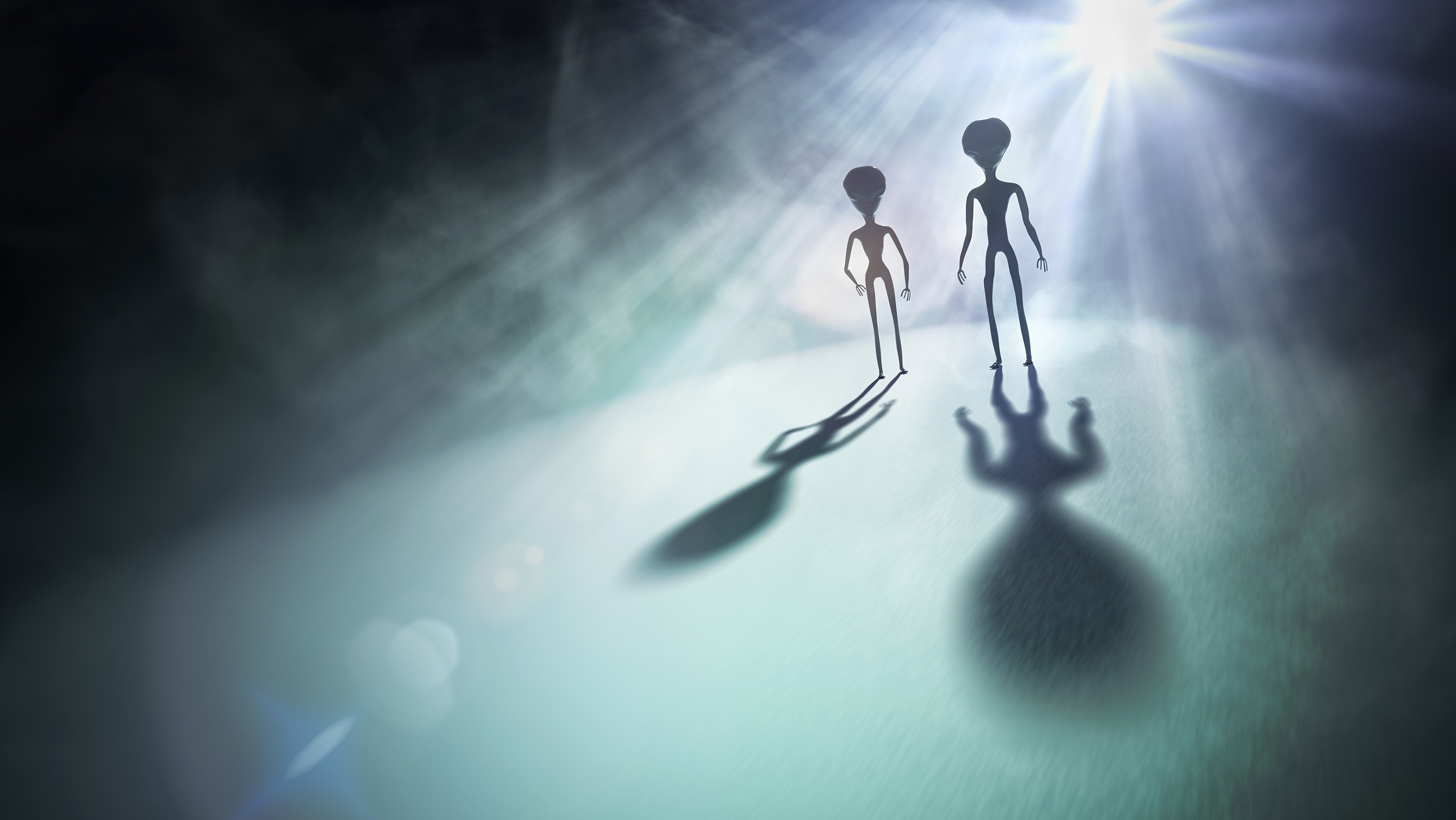
My guess is that they exist. But if they can reach us from the stars, they are a Type II or III civilization and are thousands of years ahead of us. So we have nothing to offer them. After all, if we meet chipmunks in the forest, do we want to talk to them? Maybe at first. But we quickly get bored because they don’t talk back. In the same way, they would get bored talking to us. They would also not want to plunder us. There are plenty of uninhabited planets to plunder so they would leave us alone. Unless, of course, we get in their way.

On this Kardashev scale, a type I might resemble the world of Flash Gordon. A type II civilization might resemble Star Trek. A type III civilization might resemble Star Wars. With an exponential growth in energy, one can also compute when we might attain these cosmic milestones.

What might an alien civilization look like, ranked by energy? A type I civilization would control the output of an entire planet. A type II would control a star’s energy. A type III would control the output of an entire galaxy.

What are we on this cosmic scale?

Type 0.

~ Dr. Michio Kaku, American theoretical physicist, futurist, and popularizer of science. He is a professor of theoretical physics in the City College of New York and CUNY Graduate Center.

#ScienceQuestions #TheoreticalPhysics #MichioKaku