John Muir

John Muir was born April 21, 1838 also known as “John of the Mountains”, was an American naturalist, author, environmental philosopher, glaciologist and early advocate for the preservation of wilderness in the United States. His letters, essays, and books describing his adventures in nature, especially in the Sierra Nevada, have been read by millions. His activism has helped to preserve the Yosemite Valley, Sequoia National Park and many other wilderness areas. The Sierra Club, which he founded, is a prominent American conservation organization. The 211-mile (340 km) John Muir Trail, a hiking trail in the Sierra Nevada, was named in his honor. Other such places include Muir Woods National Monument, Muir Beach, John Muir College, Mount Muir, Camp Muir and Muir Glacier. In Scotland, the John Muir Way, a 130-mile-long route, was named in honor of him.

In his later life, Muir devoted most of his time to the preservation of the Western forests. He petitioned the U.S. Congress for the National Park bill that was passed in 1890, establishing Yosemite National Park. The spiritual quality and enthusiasm toward nature expressed in his writings has inspired readers, including presidents and congressmen, to take action to help preserve large nature areas. Today Muir is referred to as the “Father of the National Parks” and the National Park Service has produced a short documentary about his life.

John Muir has been considered “an inspiration to both Scots and Americans”. Muir’s biographer, Steven J. Holmes, believes that Muir has become “one of the patron saints of twentieth-century American environmental activity,” both political and recreational. As a result, his writings are commonly discussed in books and journals, and he is often quoted by nature photographers such as Ansel Adams. “Muir has profoundly shaped the very categories through which Americans understand and envision their relationships with the natural world,” writes Holmes. Muir was noted for being an ecological thinker, political spokesman, and religious prophet, whose writings became a personal guide into nature for countless individuals, making his name “almost ubiquitous” in the modern environmental consciousness. According to author William Anderson, Muir exemplified “the archetype of our oneness with the earth”, while biographer Donald Worster says he believed his mission was “…saving the American soul from total surrender to materialism.” On April 21, 2013, the first ever John Muir Day was celebrated in Scotland, which marked the 175th anniversary of his birth, paying homage to the conservationist.

“Keep close to Nature’s heart… and break clear away, once in awhile, and climb a mountain or spend a week in the woods. Wash your spirit clean.”
~ John Muir

Lawrence Krauss on the Universe

“… the fact that the universe itself may have no purpose doesn’t affect our purpose, in fact it’s the incredible height of solipsism to assume that without us the universe doesn’t matter, and that if the universe is purposeless we don’t matter. We make our own purpose, and it seems to me life is more precious because it’s temporary and accidental, and we should take advantage of that. And we have evolved brains and that allows us to ask questions not just about how the universe works but how we should behave.”

~ Lawrence Krauss, (born May 27, 1954) is an American-Canadian theoretical physicist and cosmologist who is Foundation Professor of the School of Earth and Space Exploration at Arizona State University, and director of its Origins Project.

#FavoriteQuotes #LawrenceKrauss #Science

David John Chalmers

On this date in 1966, philosopher David John Chalmers was born in Australia. Chalmers earned a bachelor’s degree in mathematics and computer science from the University of Adelaide in 1986. He was briefly a Rhodes Scholar at Oxford University, but transferred to Indiana University at Bloomington, where he obtained a Ph.D. in 1993 in philosophy and cognitive science. He worked at Washington University in St. Louis from 1993 to 1995, and at the University of California – Santa Cruz from 1995 to 1998. He worked in the Department of Philosophy and the Center for Consciousness Studies at the University of Arizona from 1999 to 2004. Since 2004, Chalmers is professor of philosophy and director of the Centre for Consciousness at Australian National University. As of 2009, he is also a part-time professor of philosophy at New York University. His 1996 book, The Conscious Mind, is considered a seminal work on consciousness. His numerous papers and books have had great influence in the realms of cognitive science, philosophy of the mind and philosophy of language.

“Now I have to say I’m a complete atheist. I have no religious views myself and no spiritual views, except very watered down humanistic spiritual views. And consciousness is just a fact of life. It’s a natural fact of life.”
~ David Chalmers in an interview on “Encounter” with Margaret Coffey for Australian ABC National Radio, April 10, 2011

Bicycle Day

Happy Bicycle Day, which doesn’t celebrate bicycles but the effects of LSD:

On April 19, 1943, Albert Hofmann, a researcher at Sandoz Laboratories in Basel, Switzerland, purposely ingested .25 milligrams (250 micrograms) of LSD at his lab. He thought this would be the threshold dose—the lowest amount taken where there are still effects—when in reality the threshold dose for LSD is only 20 micrograms. But what does a bicycle have to do with the day?

Within an hour, Hofmann began to notice changes in his perception and senses. He decided that he should go home, so he hopped on his bicycle and began riding. Because the drug was already greatly affecting him, he had his laboratory assistant help guide him to his house. At times during his bicycle ride, he thought he was going insane, thought his neighbor was a witch and thought the LSD had poisoned him.

He later wrote in LSD: My Problem Child, “On the way home, my condition began to assume threatening forms. Everything in my field of vision wavered and was distorted as if seen in a curved mirror. I also had the sensation of being unable to move from the spot. Nevertheless, my assistant later told me that we had traveled very rapidly.”

Needless to say, his bicycle ride was quite a trip.

Charles Darwin’s Death

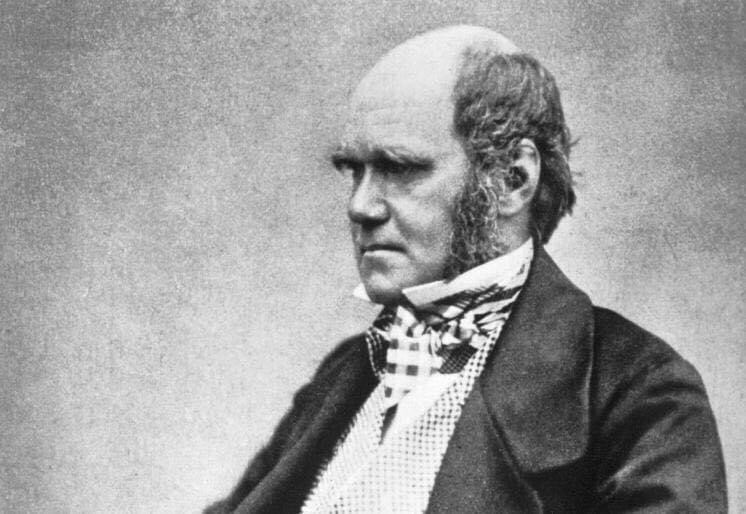
Famed British biologist Charles Darwin died 139 years ago on April 19. Often dubbed as the “Father of Evolution,” Darwin provided the world with explanations on the origin and evolution of living things on Earth.

Darwin was born on Feb. 12, 1809, in Shrewsbury, England, and was homeschooled with his sister Caroline until the age of 8. He was sent to a boarding school after spending a year at a day school. His father enrolled him to the University of Edinburgh to study medicine. There, he began collecting, hunting, and naturalizing rather than studying medicine, according to Charles Darwin Online.

After graduating in 1831, Darwin accepted a job on the HMS Beagle, a vessel that mapped South America’s coast over a span of two or three years. During the job, he took notes and sent samples and specimens to botanist John Henslow in England. After returning to England after five years on the vessel, Darwin found that his specimen collection amazed Henslow and geologists, zoologists, and botanists.

Darwin’s research during his job on HMS Beagle contributed to the development of theory of evolution and natural selection. He, however, took over 20 years to publish the revolutionary theory — in 1858. He was apparently concerned about the acceptance of his idea. However, the theory turned out to be groundbreaking and was eventually widely accepted in mainstream science.

A few quotes:

“The mystery of the beginning of all things is insoluble by us; and I for one must be content to remain an agnostic.”

“We can allow satellites, planets, suns, universe, nay whole systems of universes, to be governed by laws, but the smallest insect, we wish to be created at once by special act.”

“False facts are highly injurious to the progress of science, for they often endure long; but false views, if supported by some evidence, do little harm, for every one takes a salutary pleasure in proving their falseness.”

“At some future period, not very distant as measured by centuries, the civilized races of man will almost certainly exterminate, and replace the savage races throughout the world.”

“A man who dares to waste one hour of his life has not discovered the value of life.”

“The highest possible stage in moral culture is when we recognize that we ought to control our thoughts.”

“It is a cursed evil to any man to become as absorbed in any subject as I am in mine.”

“A man’s friendships are one of the best measures of his worth.”

“A scientific man ought to have no wishes, no affections, – a mere heart of stone.”

“False facts are highly injurious to the progress of science, for they often endure long; but false views, if supported by some evidence, do little harm, for every one takes a salutary pleasure in proving their falseness.”

#CharlesDarwin #EvolutionByNaturalSelection #FatherOfEvolution

Clarence Darrow

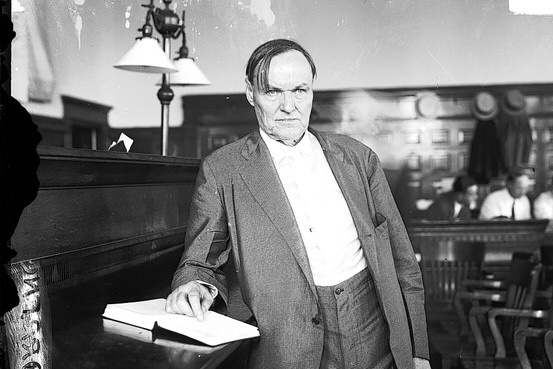
On this date in 1857, Clarence Darrow, later dubbed “Attorney for the Damned” and “the Great Defender,” was born. For a time he lived in an Ohio home that had served as a stop on the Underground Railroad. His father was known as the “village infidel.” Darrow attended the University of Michigan Law School for one year, then passed the bar in 1878 and moved to Chicago. There he joined protests against the trumped-up charges against four radicals accused in the Haymarket Riot case. Darrow became corporate counsel to the City of Chicago, then counsel for the North Western Railway. He quit this lucrative post when he could no longer defend their treatment of injured workers, then went on to defend without pay Socialist striker Eugene V. Debs. In 1907, Darrow successfully defended labor activist “Big Bill” Haywood, charged with assassinating a former governor. His passionate denunciation of the death penalty prompted him to defend the famous killers, Loeb and Leopold, who received life sentences in 1924.

His most celebrated case was the Scopes Trial, defending teacher John Scopes in Dayton, Tenn., who was charged with the crime of teaching evolution in the public schools. Darrow’s brilliant cross-examination of prosecuting attorney William Jennings Bryan lives on in legal history. During the trial, Darrow said: “I do not consider it an insult, but rather a compliment to be called an agnostic. I do not pretend to know where many ignorant men are sure–that is all that agnosticism means.” Darrow wrote many freethought articles and edited a freethought collection. His two appealing autobiographies are The Story of My Life (1932), containing his plainspoken views on religion, and Farmington (1932). He also wrote Resist Not Evil (1902), An Eye for An Eye (1905), and Crime, Its Causes and Treatments (1925). His freethought writings are collected into Why I Am an Agnostic and Other Essays. He told The New York Times, “Religion is the belief in future life and in God. I don’t believe in either” (April 19, 1936). D. 1938.

“I don’t believe in God because I don’t believe in Mother Goose.”
~ Clarence Darrow, speech, Toronto, 1930.

NASA Chooses SpaceX to Return Humans to the Moon

NASA has selected SpaceX to land the first astronauts on the surface of the Moon since 1972, the agency said Friday, in a huge victory for Elon Musk’s company.

The contract, worth $2.9 billion, involves the prototype Starship spacecraft that is being tested at SpaceX’s south Texas facility.

“Today I’m very excited, and we are all very excited to announce that we have awarded SpaceX to continue the development of our integrated human landing system,” said Lisa Watson-Morgan, NASA’s Human Landing System program manager.

SpaceX beats out Jeff Bezos’ Blue Origin and defense contractor Dynetics to be the sole provider for the system, a surprising break from the past when NASA has chosen multiple companies in case one fails.

Industry analysts said the decision underscores the company, founded by Musk in 2002 with the goal of colonizing Mars, as NASA’s most trusted private sector partner. 

Last year, SpaceX became the first private firm to successfully send a crew to the International Space Station, restoring American capacity to accomplish the feat for the first time since the Shuttle program ended.

For its Moon lander bid, SpaceX put forward its reusable Starship spacecraft, which is designed to carry large crews and cargo for deep space voyages, and land upright both on Earth and other celestial bodies.

Prototypes of the vessel are currently being put through their paces at the company’s south Texas facility, though all four versions that have so far attempted test flights have exploded.

Under the Artemis program to return humans to the Moon, NASA wants to use the Space Launch System rocket to launch four astronauts on board an Orion crew capsule, which will then dock with a lunar space station called Gateway.

Starship will be waiting to receive two crew members for the final leg of the journey to the surface of the Moon. 

The idea is for Gateway to be the go-between but for the initial mission Orion might dock directly with Starship, Watson-Morgan said.

The astronauts would then spend a week on the Moon before boarding Starship to return to lunar orbit, then take Orion back to Earth.

Separately, SpaceX has plans to combine the Starship spaceship with its own Super Heavy rocket, to make a combined vessel that will tower 394 feet (120 meters) tall and be the most powerful launch vehicle ever deployed.

Humanity last stepped foot on the Moon in 1972 during the Apollo program.

NASA wants to go back and establish a sustainable presence, complete with a lunar space station, in order to test new technologies that will pave the way for a crewed mission to Mars. 

Sources: Phys.org

Emile Durkheim

On this date in 1858, one of the most significant founders of sociology, David Emile Durkheim, was born in Epinal in Lorraine, France. His father, grandfather and great-grandfather were prominent rabbis. Durkheim spent time in rabbinical school but broke with Judaism early in life (Emile Durkheim: An Introduction to Four Major Works by Robert Alun Jones, 1986). Durkheim excelled in school, earning his bachelor in letters and sciences in 1875, two years earlier than normal, from College d’Epinal. He was admitted to the prestigious École normale supérieure in 1879 and passed examinations to become a philosophy lecturer in 1882. He was appointed to the Faculty of Letters at Bordeaux to lecture on the “Science Sociale,” marking the first time sociology officially entered the French university system.

Durkheim founded the Année Sociologique in 1898, the first French social science journal, still in existence. In 1902, Durkheim was appointed chair of education at the Sorbonne in Paris. For a time, his courses were the only lectures required at the Sorbonne. Durkheim believed religion served a unique role in human life, and indeed shaped many social structures, but that its origins were in human society, not from a divine source (“Reasons people choose atheism,” BBC, Oct. 22, 2009). “Frequently described as a ‘secular pope,’ Durkheim was viewed by critics as an agent of government anti-clericalism” (Jones, 1986). Some of his greatest contributions to sociology include: The Division of Labour in Society (1893), Rules of the Sociological Method (1895), On the Normality of Crime (1895), Suicide (1897), Sociology and Its Scientific Domain (1900) and The Elementary Forms of Religious Life (1912). Published posthumously were other important works including Education and Sociology (1922), Sociology and Philosophy (1924) and Pragmatism and Sociology (1955). Overwork and the death of a beloved son in war (in 1916) had severe repercussions on Durkheim’s health. He suffered a stroke and died at the age of 59. He is buried in Paris. D. 1917.

“Religious force is nothing other than the collective and anonymous force of the clan.”
~ Emile Durkheim in The Elementary Forms of the Religious Life, 1912.

Leonardo da Vinci

Today in 1452 Leonardo da Vinci was born. Leonardo di ser Piero da Vinci (15 April 1452 – 2 May 1519), more commonly Leonardo da Vinci or simply Leonardo, was an Italian polymath whose areas of interest included invention, painting, sculpting, architecture, science, music, mathematics, engineering, literature, anatomy, geology, astronomy, botany, writing, history, and cartography. He has been variously called the father of palaeontology, ichnology, and architecture, and is widely considered one of the greatest painters of all time. Sometimes credited with the inventions of the parachute, helicopter and tank, he epitomised the Renaissance humanist ideal.

Many historians and scholars regard Leonardo as the prime exemplar of the “Universal Genius” or “Renaissance Man”, an individual of “unquenchable curiosity” and “feverishly inventive imagination”. According to art historian Helen Gardner, the scope and depth of his interests were without precedent in recorded history, and “his mind and personality seem to us superhuman, while the man himself mysterious and remote”. Marco Rosci notes that while there is much speculation regarding his life and personality, his view of the world was logical rather than mysterious, and that the empirical methods he employed were unorthodox for his time.

Born out of wedlock to a notary, Piero da Vinci, and a peasant woman, Caterina, in Vinci in the region of Florence, Leonardo was educated in the studio of the renowned Florentine painter Andrea del Verrocchio. Much of his earlier working life was spent in the service of Ludovico il Moro in Milan. He later worked in Rome, Bologna and Venice, and he spent his last years in France at the home awarded to him by Francis I of France.

Leonardo was, and is, renowned primarily as a painter. Among his works, the Mona Lisa is the most famous and most parodied portrait and The Last Supper the most reproduced religious painting of all time. Leonardo’s drawing of the Vitruvian Man is also regarded as a cultural icon, being reproduced on items as varied as the euro coin, textbooks, and T-shirts. Perhaps fifteen of his paintings have survived. Nevertheless, these few works, together with his notebooks, which contain drawings, scientific diagrams, and his thoughts on the nature of painting, compose a contribution to later generations of artists rivalled only by that of his contemporary, Michelangelo.

Leonardo is revered for his technological ingenuity. He conceptualised flying machines, a type of armoured fighting vehicle, concentrated solar power, an adding machine, and the double hull. Relatively few of his designs were constructed or even feasible during his lifetime, as the modern scientific approaches to metallurgy and engineering were only in their infancy during the Renaissance. Some of his smaller inventions, however, such as an automated bobbin winder and a machine for testing the tensile strength of wire, entered the world of manufacturing unheralded. A number of Leonardo’s most practical inventions are nowadays displayed as working models at the Museum of Vinci. He made substantial discoveries in anatomy, civil engineering, geology, optics, and hydrodynamics, but he did not publish his findings and they had no direct influence on later science.

Today, Leonardo is widely considered one of the most diversely talented individuals ever to have lived.

#LeonardoDaVinci #RenaissanceMan #Artist #Scientist