Svanslös Crosswalk, showing an unusual “cat crossing” sign in the town of Uppsala, Sweden:
The road signs in front of Carolina Rediviva Library in Uppsala have something unusual: cats. On closer look, you might notice the adult cat leading kittens has no tail. He isn’t just an ordinary bobtail cat. He’s Pelle Svanslös (“Peter No-Tail” in English), a popular character from a children’s book series with the same name.
The Pelle Svanslös series—there are 12 books in total—was written by Gösta Knutsson between 1939 and 1972. As his name suggests, Pelle has no tail. A rat bit his tail off when he was a kitten. But despite this mean mishap, Pelle grows into a kind-hearted young cat. He has been loved by many Swedish children for decades.
Pelle and his feline friends live in Uppsala, Sweden, where the author also lived for many years of his life. To mark the cat’s popularity, Uppsala added some features related to the children’s literature star around the city, such as a statue, a peep-hole (his residence), and these crossing signs.
A few quotes by Mary Wollstonecraft, author of “A Vindication of the Rights of Woman,” for women’s history month:
“I do not wish them [women] to have power over men; but over themselves.”
“My own sex, I hope, will excuse me, if I treat them like rational creatures, instead of flattering their fascinating graces, and viewing them as if they were in a state of perpetual childhood, unable to stand alone.”
“[I]f we revert to history, we shall find that the women who have distinguished themselves have neither been the most beautiful nor the most gentle of their sex.”
“Taught from their infancy that beauty is woman’s sceptre, the mind shapes itself to the body, and roaming round its gilt cage, only seeks to adorn its prison.”
“I love man as my fellow; but his scepter, real, or usurped, extends not to me, unless the reason of an individual demands my homage; and even then the submission is to reason, and not to man.”
“The beginning is always today.” ~ Mary Wollstonecraft (1759-1797)
For the observant Jew, even the most ordinary aspects of life are invested with an aura of wonder, of sanctity. Judaism includes blessings for almost anything one can experience during the day (and the rabbis believed that a Jew should offer at least a hundred b’rakhot every day). Here is a selection of blessings for a wide range of occasions and phenomena.
Before eating bread:
Barukh ata Adonai Eloheinu Melekh ha’olam ha-motzi lekhem min ha’aretz/Blessed are You, Adonai our God, Ruler of the Universe, who brings forth bread from the earth
Before eating products of wheat, barley, rye, oats, or spelt:
Barukh ata Adonai Eloheinu Melekh ha’olam borei minei mizonot/Blessed are You, Adonai our God, Ruler of the Universe, who creates many types of nourishment
Before drinking wine or grape juice:
Barukh ata Adonai Eloheinu Melekh ha’olam borei p’ree ha-gafen/Blessed are You, Adonai our God, Ruler of the Universe, who creates the fruit of the vine
Before eating fruit grown on a tree:
Barukh ata Adonai Eloheinu Melekh ha’olam borei p’ree ha-eitz/Blessed are You, Adonai our God, Ruler of the Universe, who creates the fruit of the tree
Before eating produce grown in the earth:
Barukh ata Adonai Eloheinu Melekh ha’olam borei p’ree ha-adamah/Blessed are You, Adonai our God, Ruler of the Universe, who creates the fruit of the earth
Before eating or drinking any other foods:
Barukh ata Adonai Eloheinu Melekh ha’olam she-hakol ni-hiyeh b’dvaro/Blessed are You, Adonai our God, Ruler of the Universe, through Whose word everything came to be
Upon smelling fragrant shrubs, trees, or their flowers:
Barukh ata Adonai Eloheinu Melekh ha’olam borei atzei b’samim/Blessed are You, Adonai our God, Ruler of the Universe, who creates fragrant trees
Upon seeing lightning:
Barukh ata Adonai Eloheinu Melekh ha’olam oseh ma’aseh b’reisheet/Blessed are You, Adonai our God, Ruler of the Universe, who makes the work of Creation
Upon seeing the ocean:
Barukh ata Adonai Eloheinu Melekh ha’olam she’aseh et ha-yam ha-gadol/Blessed are You, Adonai our God, Ruler of the Universe, who made the great sea
Upon seeing exceptionally beautiful people, trees, or fields:
Barukh ata Adonai Eloheinu Melekh ha’olam shekakhah lo ba-olamoh/Blessed are You, Adonai our God, Ruler of the Universe, who has such in His universe
Upon seeing exceptionally strange-looking people or animals:
Barukh ata Adonai Eloheinu Melekh ha’olam mishaneh hab’riyot/Blessed are You, Adonai our God, Ruler of the Universe, who makes the creatures different
Upon hearing unusually good news that benefits not only oneself but others:
Barukh ata Adonai Eloheinu Melekh ha’olam ha-tov v’hametiv/Blessed are You, Adonai our God, Ruler of the Universe, who is good and does good
Upon hearing unusually bad news:
Barukh ata Adonai Eloheinu Melekh ha’olam dayan ha-emet/Blessed are You, Adonai our God, Ruler of the Universe, the true Judge
The legal code known as the Shulkhan Arukh, compiled by the great Sephardic rabbi Joseph Caro in the mid1500s, is still the standard legal code of Judaism. When rabbis, particularly if they are Orthodox, are asked to rule on a question of Jewish law, the first volume they consult generally is the Shulkhan Arukh. A major reason for its universal acceptance is that it was the first code to list the differing customs and laws of both Sephardic and Ashkenazic Jewry. (Maimonides’s earlier Mishneh Torah, for example, contained only the legal rulings of Sephardic Jewry, which differed in certain areas from European Jewry’s practices.)
This unique feature was not intended by Joseph Caro, but came about through a happy coincidence. At the very time that Caro was compiling his code, a similar undertaking was being planned by Rabbi Moses Isserles of Poland. Isserles, known in Jewish life as the Rama, was thrown into some despair when he first heard about Caro’s work, for he knew Caro to be a greater scholar than himself. Nonetheless, he soon realized that both Caro’s legal code and his own would not by themselves meet the needs of all Jews. Thus, the Shulkhan Arukh was published with Caro’s rulings listed first, and Isserles’s dissents and addenda included in italics.
The Shulkhan Arukh is divided into four volumes:
1. Orakh Hayyim-laws of prayer and of holidays.
2. Yoreh Deah-diverse laws, including those governing charity (tzedaka), Torah study and the Jewish dietary laws.
3. Even haEzer-laws concerning Jewish marriage and divorce.
4. Khoshen Mishpat-Jewish civil law.
To this day, rabbinic ordination (semikha) usually is given to a student only after he has been examined on the Shulkhan Arukh, particularly on those sections that deal with kashrut (dietary laws). More than rote knowledge of the Shulkhan Arukh’s rulings, however, is expected. A popular Jewish folktale tells of a young student who came to a prominent rabbi to be tested for ordination. The rabbi’s first question was “Name the five volumes of the Shulkhan Arukh.”
The student, thinking that the rabbi had made a slip of the tongue, named the four volumes, but the rabbi asked him to name the fifth.
“There is no fifth volume,” the student said.
“There is indeed,” the rabbi said. “Common sense is the fifth volume, and if you don’t have it, all your rulings will be of no use, even if you know the other four volumes by heart.”
The Shulkhan Arukh’s exhaustive presentation of the details of Jewish law is suggested by the following, taken from the section listing the laws of Torah study, in which Caro gives directives to both teachers and pupils:
“The rabbi should not be angry with his pupils if they do not understand but he should repeat the matter over and over again until they grasp the proper depth of the law. The pupil should not say that he understands when he does not but should ask over and over again. And if the rabbi is angry with him he should say, ‘Rabbi, it is the Torah and I want to know it, but my mind is inadequate”‘ (Yoreh Deah 246:10).
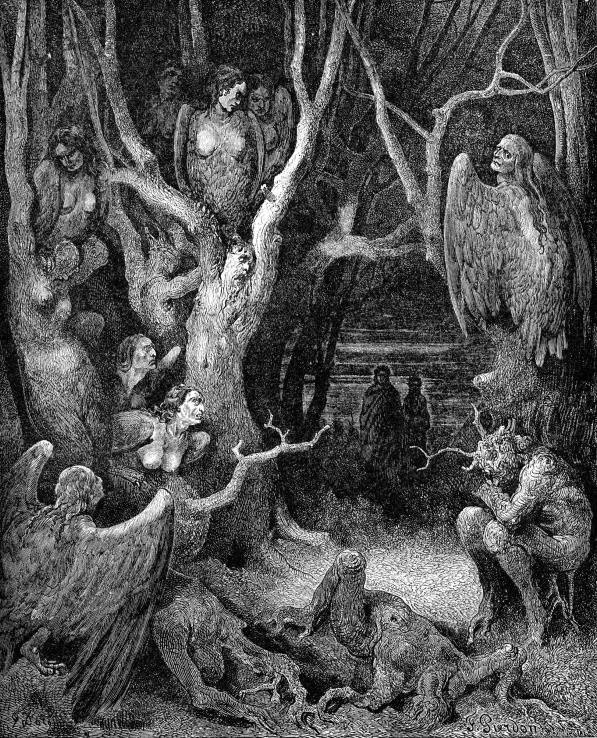
The Veshtitza is said to an old woman who is possessed by an evil spirit. The soul leaves her body at night and wanders around until it enters the body of a hen or a black moth. When in the body of the animal, the Veshtitza flies around until she finds a home where there is a sleeping baby or young child.
The Veshtitza’s favorite food is a young heart.
Sometimes, all of the Vestitza would flock together and join in the branches of a tree and hold a meeting while snacking on what they’d gathered earlier in the night. Sometimes old women who have traits of a witch may join in the meetings.
Nothingness in Existential Philosophy & Norse Mythology Concept of Ginnungagap
Several modern philosophers associated with existentialism, a movement that takes our experience of existence as the starting point of its philosophizing, have spoken of a similar schema using the more prosaic and impersonal language of philosophy and psychology. While the writings of luminaries such as Søren Kierkegaard, Martin Heidegger, and Jean-Paul Sartre differ considerably on these points, a fascination with negation and anxiety is a central focus of their work. In existentialist parlance, “nothingness” is that which negates oneself, one’s values, and/or one’s worldview – one’s “personal cosmos.”
The ultimate nothingness is death, because it negates one absolutely (at least in the modern worldview – see Death and the Afterlife for Norse perspective on death), but any condition over which one cannot triumph is a hostile absence into which one’s yearnings, strivings, and beliefs vanish. This negation is the root of anxiety (or “angst” or “Being-toward-death”), the fear of what we might not be able to overcome, that which stands every chance of “getting us” in the end. This is one of the fundamental facts of life with which everyone who strives to live deliberately and authentically must grapple. In Heidegger’s words, “To be a particular being means to be immersed in nothingness.”[5] While these philosophers don’t necessarily identify nothingness with a physical void as the Norse did, the principle remains the same.
This primordial, annihilating chaos is ever-present; wherever there is darkness, wherever there is silence, wherever any wish or belief is negated, there is Ginnungagap.
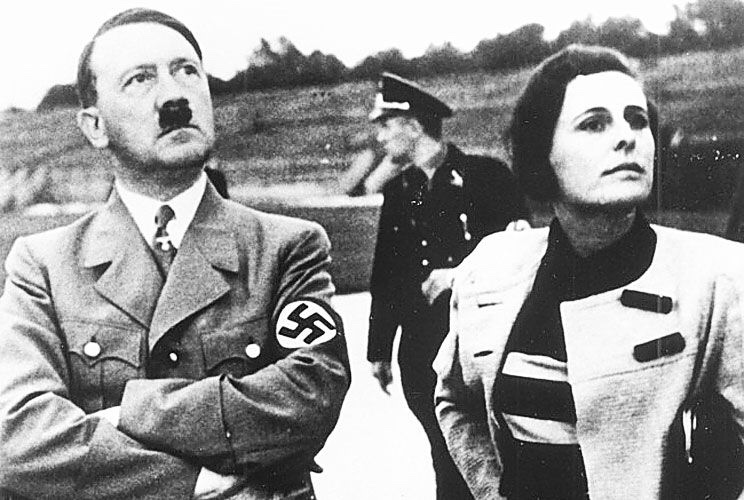
I have a deep appreciation for the film innovations of Leni Riefenstahl over her long career. To be clear I am not saying I admire her affiliation with Nazi Germany. I am not saying that I feel her propaganda work during the 1930’s & 1940’s is something that inspires me or I admire. I do however recognize the brilliance of the work she did during that time from a strictly artistic point-of-view and as an effective form of propaganda for a morally reprehensible regime that unfortunately existed in a dark period of human history. Whether you believe her claims that she was unaware of the Nazi war crimes they were committing or not I leave up to your own conscience. For what it is worth she won over fifty libel cases against people accusing her of knowing of the Nazi crimes. She would later go onto say of meeting Hitler, “It was the biggest catastrophe of my life. Until the day I die people will keep saying, ‘Leni is a Nazi’, and I’ll keep saying, ‘But what did she do?”
Her most infamous and historically significant film was “Triumph of the Will” (Named by Hitler) of the 1934 Nazi Party rally at Nuremberg. According to reports she originally did not wish to make the film, but Hitler convinced her on the condition that she not be required to make further films for the party. She did however make a few more films for the Nazi party such as an eighteen minute follow up film at the 1935 party rally focusing on the army which felt they were not fairly represented in the first film. She went on to claim to never have intended to make a pro-Nazi propaganda film and was disgusted it was used that way. Whether that is true or not “Triumph of the Will” has been universally recognized as a masterful, innovative example of documentary filmmaking. Years later the Economist (magazine) wrote that Triumph of the Will “sealed her reputation as the greatest female filmmaker of the 20th century.” The film scholar Mark Cousins went on to claim, “Next to Orson Welles and Alfred Hitchcock, Leni Riefenstahl was the most technically talented Western film maker of her era”.
In 1936 with the Olympics approaching she traveled to Greece to film the location of the original Olympics at Olympia. This footage became part of the film “Olympia” a highly successful film. It was noted for its technical as well as aesthetic achievements. Her use of tracking shots as well as slow motion of the athletes has been seen as a major influence on modern sports photography. She is noted to have filmed footage of all races at the Olympics, including the American Jesse Owens. Upon its release in the United States the American philanthropist and former Olympic athlete (1912 Olympics) Avery Brundage said it was, “The greatest Olympic film ever made.”
During the invasion of Poland she worked as a war correspondent. On September 12th, 1939 thirty civilians were executed and there are claims she attempted to intervene, but a German soldier held her at gunpoint and threatened to shoot her if she continued. Whether that is true or not, close-up photos of a distraught Riefenstahl still exist from that day. She would later claim she did not realize the civilians were Jews. Nevertheless a month later she filmed Hitler’s victory parade in Warsaw. It was the last Nazi related film of her career.
After the war she was held in American and French run detention camps and prisons from 1945-1948. She is reported to have reacted with horror and tears when shown photos of the concentration camps. She was tried four times but never found guilty of anything but being a “fellow traveler” who was sympathetic to the Nazis. Through the 1950’s and 1960’s she attempted many times (15 by her count) to make films but they were always met with resistance, public protests and sharp criticism.
In the 1960’s her focus made the transition to still photography. She became enamored with Africa, inspired by Hemingway’s book “The Green Hills of Afruca,” and the photography of George Rodger. She traveled many times to Sudan to photograph the Nuba tribes. She lived with them sporadically learning their culture so she could photograph them more easily. She was eventually granted Sudanese citizenship for her services to the country, becoming the first foreigner to have a Sudanese passport. Her two books of the tribes, “The Last of the Nuba,” and “The People of Kau,” published in the 1970’s were both international bestsellers. She photographed the 1972 Olympic games in Munich. Later she photographer Mick Jagger, Siegfried and Roy, and was a friend of Andy Warhol. She was a guest of honor at the 1976 Olympics in Montreal.
At age 72 she became interested in underwater photography. She lied about her age (by 20 years) and became certified to scuba dive. In 1978 she published a book of coral gardens and then in 1990 her book “Wonder Under Water.” On her 100th birthday she released her final film, “Underwater Impressions” an idealized documentary of life in the oceans. It was her first film in twenty-five years. At age 100 she was still photographing marine life and gained distinction as the world’s oldest scuba diver. She continued to be active in her late life being a member of Greenpeace for eight years. In 2000 she was in a helicopter crash while attempting to determine the fate of her Nuba friends during the Sudanese civil war. On Auguest 22nd, 2003 she celebrated her 101st birthday and married her longtime friend and cameraman Horst Kettner, who was forty years her junior. On September 8th she died from cancer.
As the daily telegraph wrote upon her death :
“[Leni Riefenstahl] was perhaps the most talented female cinema director of the 20th century; her celebration of Nazi Germany in film ensured that she was certainly the most infamous…Critics would later decry her fascination with the athletes’ [Olympia] physiques as fascistic; but in truth her interest was born not of racist ends but of the delight she, as a former dancer, took in the human form.”
“Opinions will be divided between those who see her as a young, talented and ambitious woman caught up in the tide of events which she did not fully understand, and those who believe her to be a cold and opportunist propagandist and a Nazi by association.”
Today in history —> On this day in 1965, Martin Luther King led 3200 people on the third (and successful) civil rights march from Selma to Montgomery, Alabama…
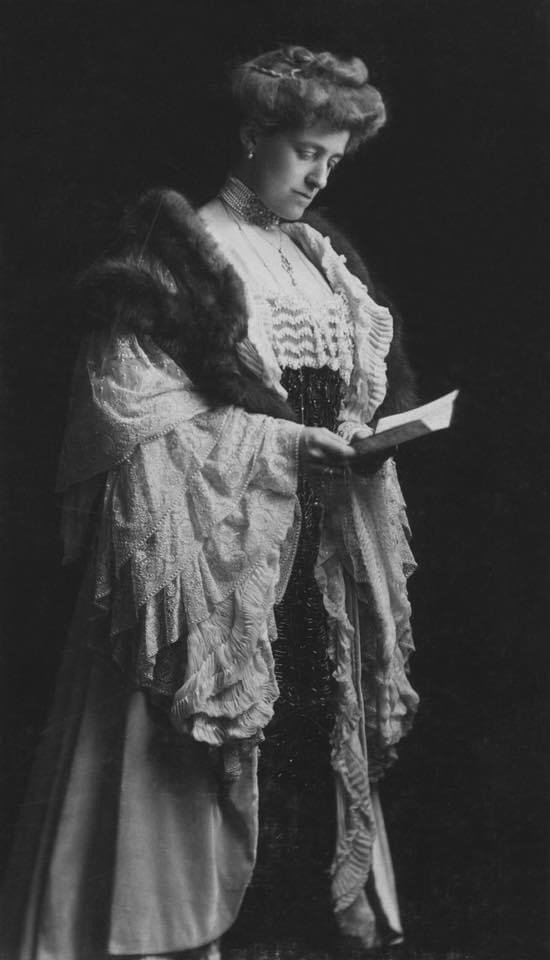
A few quotes by Edith Wharton (first woman to win the pulitzer prize) for women’s history month:
“Life is always either a tightrope or a feather bed. Give me the tightrope.”
“There is one friend in the life of each of us who seems not a separate person, however dear and beloved, but an expansion, an interpretation, of one’s self, the very meaning of one’s soul.”
“In spite of illness, in spite even of the archenemy sorrow, one can remain alive long past the usual date of disintegration if one is unafraid of change, insatiable in intellectual curiosity, interested in big things, and happy in small ways.” ~ Edith Wharton (1862-1937)
From the philosophy section of Institute of Art and Ideas, we have a new 30-minute interview with philosopher Daniel Dennett. It’s basically about “the arc of his life”, and has some interesting revelations. I’ll just touch on a few key ideas, but you should listen to it yourself:
• Dan’s father was a spy who worked for the OSS, but Dan didn’t learn that until his dad died.
• Dan says that most of his good ideas came from his Ph.D. thesis and postdoc, and since then he’s been largely “turning the crank” on (i.e., working out the consequences of) his early ideas.
• Those good ideas involved “the intentional stance”, how learning takes place, and views about consciousness and the evolution of the brain. He doesn’t talk much about consciousness, though, and doesn’t mention free will once during the interview, much to my relief.
• In new work, Dan says he and a colleague are extending the intentional-stance view down to the level of the cell, visualizing development as the consequences of “what the cell wants.” This isn’t like panpsychism, for Dan isn’t dumb enough to think that cells really have desires, but he’s looking at it as Dawkins looked at the metaphor of the “selfish gene”, gaining insight by imagining how genes would behave if they were selfish even though he realizes (and has repeatedly emphasized in the light of misinterpreters) that genes don’t have desires.
• Dan doesn’t admit that he ever had a wrong idea. But he does say he’s worked to prevent misuses of his ideas.
• Dan decries the truth-denial aspect of postmodernism as “intellectual vandalism,” but also ponders the question of whether some ideas or truths are too dangerous to impart to the world. I’ll leave you listen to that bit yourselves.
• There’s a lot about religion at the end, with Dan arguing that it’s time for the world to “grow up and leave religion behind”. And he thinks many faiths are in fact doing this, stripping out the false claims and injurious morality and leaving the ceremonial bits—bits that he has no quarrel with.

 Svanslös Crosswalk, showing an unusual “cat crossing” sign in the town of Uppsala, Sweden:














 Mark Bere Peterson’s Counterculture, Urban Legends, Paganism & Witchcraft