3 Quarts Half-And-Half 1 Bottle (750-Ml) Of Bourbon ¼ Cup Vanilla Extract 2 Cups Powdered Sugar
Garnish: Grated Nutmeg
Combine all ingredients except the nutmeg in a gallon-size container. Cover and freeze until the mixture is slightly frozen. Use an ice pick to make the mixture slightly slushy. Pour into a punch bowl or chilled pitcher. Add more powdered sugar, if desired. Sprinkle with nutmeg.
Pour into small cocktail glasses or wine goblets (not over ice). Garnish each drink with an additional pinch of nutmeg.
1½ Cups Pineapple Juice
1¼ Cups Orange Juice
1 Cup Pomegranate Juice
½ Cup Grenadine
½ Cup Simple Syrup
½ Cup Freshly Squeezed Lime, Plus More To Taste
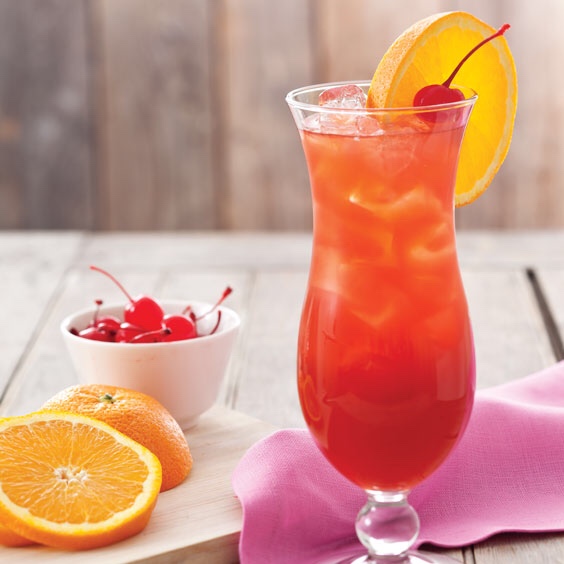
1¼ Cups Light Rum
1½ Ounces Dark Rum
2 Ounces Triple Sec
Garnishes: Orange And Lemon Slices, Maraschino Cherries With Stems
Combine all ingredients except for the garnishes in a large pitcher and stir well. Serve in 16-ounce glasses over lots of cubed ice, adorned with the garnishes.
Based upon a recipe in “Savannah Style – A cookbook by the junior league of Savannah.”
It is said that the concoction possesses more of a kick than the two brass cannons presented to Savannah by George Washington. It was first devised in the 1850’s to honor a rival military organization. The Republican Blues, and since then has laid to rest, at least temporarily many an unknown soldier and countless known Ones.
Serves 200
2 gallons tea (green tea – l pound tea to 2 gallons water. Soak overnight in tin bucket and strain.)
Juice of 3 dozen lemons
5 pounds brown sugar
2 gallons Catawba wine
2 gallons Santa Cruz rum
I gallon Hennessy (3 – Star) brandy
I gallon dry gin
I gallon rye whiskey
2 quarts cherries
2 quarts pineapple cubes
10 quarts champagne
Mix the tea with lemon juice, preferably in a cedar tub, then add brown sugar and liquors. Let this mixture “set” for at least I week, or preferably 2 weeks, in covered container.
After “setting” period and when ready to serve, pour over cake of ice. Never chill in refrigerator or used crushed ice. When this is done, add cherries, pineapple cubes and champagne. pouring in slowly and mixing with circular motion. The punch is now ready to serve.
The word “geek” has a colorful history. It originally referred to a crazy person. Later, it denoted sideshow performers who would bite the heads off live chickens — something geeks of today do not partake in.
Then came along the 1980s and the word “geek” became slang for a person who was an expert in scientific and technological pursuits but lacked basic social skills. Isolated and shunned by his or her peers, this geek was thought to find solace in science fiction, fantasy, and comic books — in the opinion of some to an unhealthy degree.
The dot.com boom changed the nature of the economy in the 1990s. Leading this new computer revolution was not the savvy ad man or financial shark of times past. Instead, it was the geek. As Alpha-geeks such as Bill Gates, Jeff Bezos, and Steve Jobs became household names, the term “geek” began to take on a more positive connotation. The high school geek of the 1980s now drove a Ferrari and dated supermodels, while the star quarterback who had tormented him was now long unemployed and drove an old pick-up truck.
Is a geek the same as a nerd?
No. While a geek may be obsessed with certain esoteric topics, he or she can still have an active social life, though often only with other geeks. The stereotypical “nerd,” however, is more awkward, less confident, and more socially inept than the geek. In other words, a room full of geeks would be able to spot the nerd.
An epic poem written by Edmund Spenser and published starting in 1590. ‘The Faerie Queene’ is the tale of Arthur and his knights and a variety of adventures and quests they go on, including their interactions with the Fairy realm and the Fairy Queen Gloriana, who is a literary invention of Spenser’s. The poem is largely allegorical and possibly intended to reflect the real world politics of the time, with Gloriana acting as a stand in for Queen Elizabeth and Fairy for Elizabethan England.
Zhang Heng was born in 78 CE in the town of Xi’e, in what is now Henan Province, in Han Dynasty China. At 17, he left home to study literature and train to be a writer. By his late 20s, Zhang had become a skilled mathematician and was called to the court of Emperor An-ti, who, in 115 CE, made him Chief Astrologer.
Zhang lived at a time of rapid advances in science. In addition to his astronomical work, he devised a water-powered armillary sphere (a model of the celestial objects) and invented the world’s first seismometer, which was ridiculed until, in 138 CE, it successfully recorded an earthquake 250 miles (400 km) away. He also invented the first odometer to measure distances traveled in vehicles, and a nonmagnetic, south-pointing compass in the form of a chariot. Zhang was a distinguished poet, whose works give us vivid insights into the cultural life of his day.
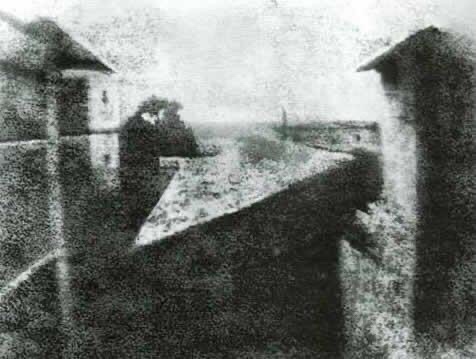
This is the oldest surviving camera photograph. It was taken in 1826 and took 8 hours of exposure. It was created by Nicéphore Niépce in 1826 or 1827 at Saint-Loup-de-Varennes, France, and shows parts of the buildings and surrounding countryside of his estate, Le Gras, as seen from a high window.
Niépce captured the scene with a camera obscura focused onto a 16.2 cm × 20.2 cm (6.4 in × 8.0 in) pewter plate thinly coated with Bitumen of Judea, a naturally occurring asphalt. The bitumen hardened in the brightly lit areas, but in the dimly lit areas it remained soluble and could be washed away with a mixture of oil of lavender and white petroleum.
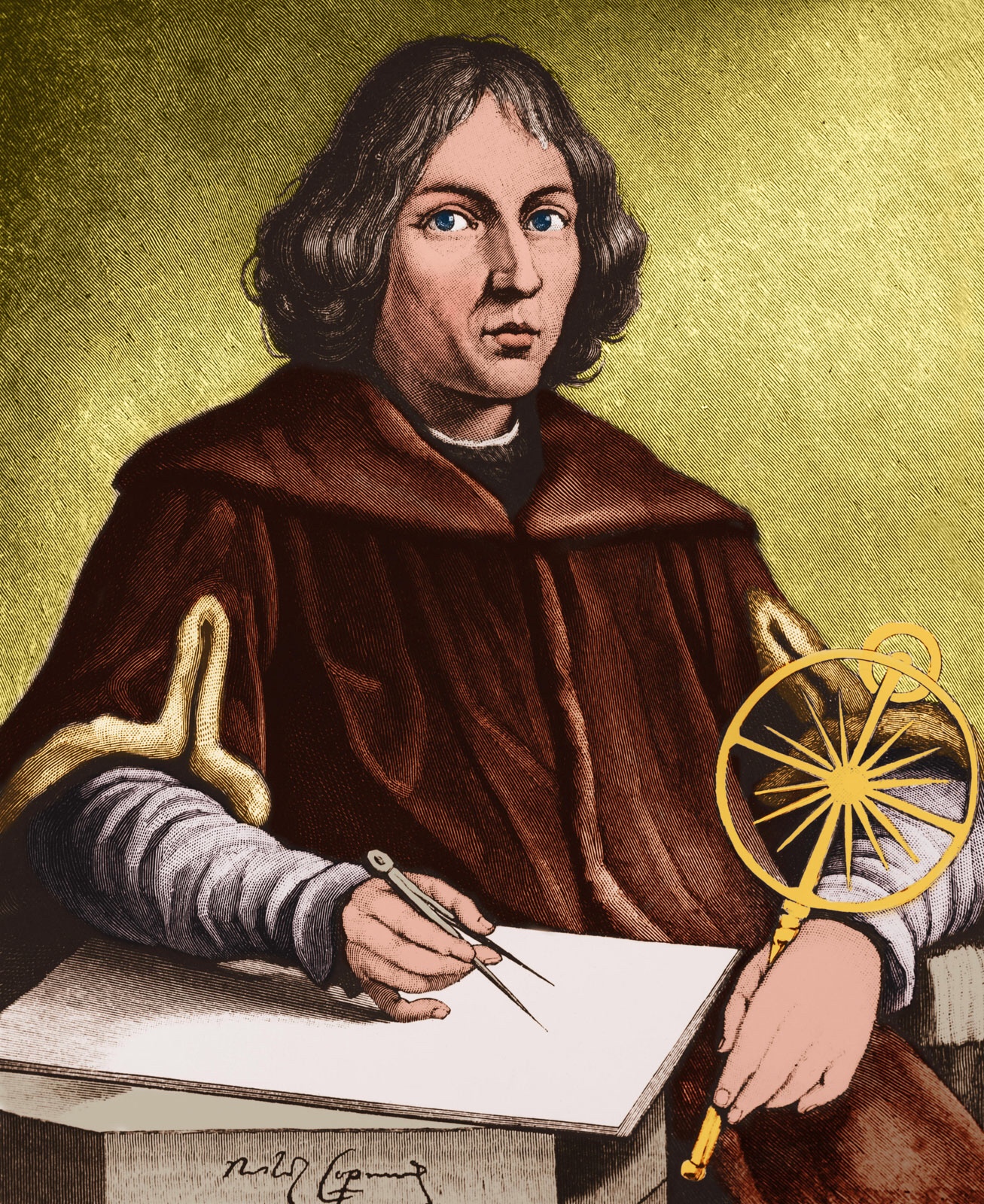
Born in the Polish city of Torun in 1473, Nicolaus Copernicus was the youngest of four children of a wealthy merchant. His father died when Nicolaus was 10. An uncle took him under his wing and oversaw his education at the University of Krakow. He spent several years in Italy studying medicine and law, returning in 1503 to Poland, where he joined the canonry under his uncle, who was now Prince-Bishop of Warmia.
Copernicus was a master of both languages and mathematics, translating several important works and developing ideas about economics, as well as working on his astronomical theories. The theory he outlined in De Revolutionibus was daunting in its mathematical complexity, so while many recognized its significance, it was not widely adopted by astronomers for practical everyday use.
In Norse mythology, the Valkyries were a group of warrior maidens who had served the God Odin and were sent to the battlefields to choose pass judgments upon the slain.
They were not only associated with bloodshed and battle but also with fairness. They were a force to be reckoned with. The Old Norse Poems provide a list of Valkyrie names who were known as the fiercest warriors in battles:
1. Brynhildr(pronounced as “Brin-hil-duur”), meaning”battle armor” or “bright battle,” was known as the leader of the Valkyries.
2. Eir(pronounced as “Ee-rh”), meaning”peace” or “mercy.” In Old Norse mythology, she is a Valkyrie associated with medical proficiency.
3. Geirahöð (pronounced as “Gee-ey-ra-hut”), meaning”battle spear,” is mentioned in some of the manuscripts of Grímnismál.
4. Geiravör (pronounced as “Gee-ey-ra-vurr”), meaning “spear-vör,” is a Valkyrie mentioned in the long list amongst the two Nafnaþulur lists found in the Prose Edda.
5. Geirdrifu(pronounced as “Gee-ey-dra-fu”), meaning”spear-flinger.”
6. Geirönu(pronounced as “Gee-ey-ro-nu”), meaning”the one charging forth with the spear.”
7. Geirskögu(pronounced as “Gee-aer-sko-gu”), meaning”spear-bearer,” a fierce Valkyrie name.
8. Göl(pronounced as “Gawl”), meaning”tumult” or “noise, battle,” is a Valkyrie who served Odin in battle.
9. Göndu(pronounced as “Gawn-du”), meaning”wand-wielder” is one of the most fierce Old Norse Valkyries and the chooser of the slain.
10. Gunnr(pronounced as “Gunner”), meaning”war” or “battle” is a great Valkyrie name with a dual meaning.
11. Herfjötur(pronounced as “Her-fyo-tur”), meaning “fetter of the army” or “host fetter” is well-known in Norse mythology as a powerful Valkyrie with her ability to place fetters.
12. Herja(pronounced as “Herja”), meaning”one who devastates” who was both a Valkyrie and a Germanic goddess and chooser of the slain.
13. Hlaðguðr svanhvít(pronounced as “Hluh-goor-svan-vit”), meaning”swan-white” is King Hlödvér’s daughter, and the sister of Hervör alvit.
14. Hildr (pronounced as “Hill-dur”), meaning”battle” is the daughter of Högni and Hedin’s wife.
15. Hjalmþrimul(pronounced as “Jam-pree-mul”), meaning”helmet clatterer” is amongst the Valkyries in Norse Legend who chooses who will die in battle.
16. Hervör alvitr (pronounced as “Her-vor-aal-vee-tur”), meaning”all-wise strange creature” is a Valkyrie who is the sister of the sister of Hlaðguðr in Nordic mythology.
17. Hjörþrimul(pronounced as “Jor-pree-mul”), meaning”the female sword warrior,” is a legendary Valkyrie.
18. Hlökk(pronounced as “Lowk”), meaning”noise, battle”. She is mentioned in the Poetic Edda poemGrímnismál.
19. Hrist(pronounced as “Rist”), meaning”the quaking one” is a legendary Norse Valkyrie who also appears intheValkyrie Profile series.
20. Hrund(pronounced as “Rund”), meaning“pricker”.
21. Kára(pronounced as “Kaara”), meaning”the curly one” is a Valkyrie mentioned in the Poetic Edda poem Helgakviða Hundingsbana II.
22. Mist(pronounced as “Mist”), meaning”cloud” or “mist”. She appears in the list in the Poetic Edda poem Grímnismál.
23. Ölrún(pronounced as “Awl-run”), meaning”ale-rune” is a powerful Valkyrie.
24. Randgrid(pronounced as “Rand-grid”), meaning”shield-destroyer” is a powerful Valkyrie.
25. Ráðgríðr(pronounced as “Rad-gri-dur”), meaning”council-truce” is a well-known Valkyrie in Norse legend who judges who will die in battle.
26. Reginleif(pronounced as “Rain-leaf”), meaning”daughter of the gods” is a Valkyrie who became Volund for Adam when Ragnarök took place.
27. Róta(pronounced as “Row-tah”), meaning”sleet and storm” is a Valkyrie who is attested in the 36th chapter of the Prose Edda book Gylfaginning, mentioned alongside the other valkyries.
28. Sanngriðr(pronounced as “San-grid-ur”), meaning”very violent and very cruel” is a Valkyrie who is mentioned in the skaldic poem Darraðarljóðand a powerful female figure.
29. Sigrdrífa(pronounced as “Sig-ur-dri-fa”), meaning”inciter to victory” is a well-known Valkyrie in Norse literature who is known as the chooser of the slain.
30. Sigrún(pronounced as “Sig-run”), meaning”victory rune” is a famous Nordic Valkyrie in Norse mythology.
31. Skalmöld(pronounced as “Skal-mold”), meaning”sword-time” is amongst the Valkyries is one of the female figures who decide who will die in battle.
32. Skeggöld(pronounced as “Ske-gold”), meaning”axe-age” who appears in at two poems as a Valkyrie and was one of the powerful female figures.
33. Skögul(pronounced as “Sko-guul”), meaning”shaker” or “high-towering” is one of the Valkyries who appear in Heimskringla.
34. Skuld(pronounced as “Skuld”), meaning“debt” or “future” is a Valkyrie who held the Norn position as the goddess of fate.
35. Sveið(pronounced as “Sveyud”), meaning”vibration” or “noise” is a powerful Valkyrie.
36. Svipu(pronounced as “Svi-poo”), meaning”changeable” is one of the Valkyries about whom much information isn’t provided.
37. Þögn(pronounced as “Pawn”), meaning”silence” is a Valkyrie, found in the Nafnaþulur section attached to the Prose Edda.
38. Þrima(pronounced as “Prima”), meaning “fight” is a Valkyrie, found in the Nafnaþulursection of Skáldskaparmál.
39. Þrúðr (pronounced as “Pruder”), meaning”strength” or “power” is an old Norse Valkyrie who serves ale to the Einherjar in Valhalla.
This technique works better than baking soda to deodorize a refrigerator:
Place a handful of charcoal briquettes in a disposable plastic container with no lid in the refrigerator. Once the offending smell is gone, simply discard the charcoal.







 Mark Bere Peterson’s Counterculture, Urban Legends, Paganism & Witchcraft