Ancient Egyptian Religion Overview

Ancient Egyptian Religion Overview:

~ The religion of Ancient Egypt lasted for more than 3,000 years, and was polytheistic, meaning there were a multitude of deities, who were believed to reside within and control the forces of nature.

~ Formal religious practice centered on the pharaoh, or ruler, of Egypt, who was believed to be divine, and acted as intermediary between the people and the gods. His role was to sustain the gods so that they could maintain order in the universe.

~ The Egyptian universe centered on Ma’at, which has several meanings in English, including truth, justice and order. It was fixed and eternal; without it the world would fall apart.

~ The most important myth was of Osiris and Isis. The divine ruler Osiris was murdered by Set (god of chaos), then resurrected by his sister and wife Isis to conceive an heir, Horus. Osiris then became the ruler of the dead, while Horus eventually avenged his father and became king.

~ Egyptians were very concerned about the fate of their souls after death. They believed ka (life-force) left the body upon death and needed to be fed. Ba, or personal spirituality, remained in the body. The goal was to unite ka and ba to create akh.

~ Artistic depictions of gods were not literal representations, as their true nature was considered mysterious. However, symbolic imagery was used to indicate this nature.

~ Temples were the state’s method of sustaining the gods, since their physical images were housed and cared for; temples were not a place for the average person to worship.

~ Certain animals were worshipped and mummified as representatives of gods.

~ Oracles were used by all classes.

Antidepressant Withdrawal: Is It Real?

Antidepressant withdrawal is possible if you abruptly stop taking an antidepressant, particularly if you’ve been taking it longer than four to six weeks. Symptoms of antidepressant withdrawal are sometimes called antidepressant discontinuation syndrome and typically last for a few weeks. Certain antidepressants are more likely to cause withdrawal symptoms than others.

Quitting an antidepressant suddenly may cause symptoms within a day or two, such as:

• Anxiety

• Insomnia or vivid dreams

• Headaches

• Dizziness

• Tiredness

• Irritability

• Flu-like symptoms, including achy muscles and chills

• Nausea

• Electric shock sensations

• Return of depression symptoms

Having antidepressant withdrawal symptoms doesn’t mean you’re addicted to an antidepressant. Addiction represents harmful, long-term chemical changes in the brain. It’s characterized by intense cravings, the inability to control your use of a substance and negative consequences from that substance use. Antidepressants don’t cause these issues.

To minimize the risk of antidepressant withdrawal, talk with your doctor before you stop taking an antidepressant. Your doctor may recommend that you gradually reduce the dose of your antidepressant for several weeks or more to allow your body to adapt to the absence of the medication.

In some cases, your doctor may prescribe another antidepressant or another type of medication on a short-term basis to help ease symptoms as your body adjusts. If you’re switching from one type of antidepressant to another, your doctor may have you start taking the new one before you completely stop taking the original medication.

It’s sometimes difficult to tell the difference between withdrawal symptoms and returning depression symptoms after you stop taking an antidepressant. Keep your doctor informed of your signs and symptoms. If your depression symptoms return, your doctor may recommend that you start taking an antidepressant again or that you get other treatment.

Sources: The Mayo Clinic, NAMI, NIMH

Seven Wonders of the Ancient World

BA605C79-DCDB-4061-BB78-8AE31EF03A65

GREAT PYRAMID AT GIZA

The Great Pyramid at Giza was constructed between 2584 and 2561 BCE for the Egyptian Pharoah Khufu (known in Greek as `Cheops’) and was the tallest man-made structure in the world for almost 4,000 years. Excavations of the interior of the pyramid were only initiated in earnest in the late 18th and early 19th centuries CE and so the intricacies of the interior which so intrigue modern people were unknown to the ancient writers. It was the structure itself with its perfect symmetry and imposing height which impressed ancient visitors.

16115FEB-7AE7-4295-96C0-1A786A8820C6

HANGING GARDENS OF BABYLON

The Hanging Gardens of Babylon, if they existed as described, were built by Nebuchadnezzar II between 605-562 BCE as a gift to his wife. They are described by the ancient writer Diodorus Siculus as being self-watering planes of exotic flora and fauna reaching a height of over 75 feet (23 metres) through a series of climbing terraces. Diodorus wrote that Nebuchadnezzar’s wife, Amtis of Media, missed the mountains and flowers of her homeland and so the king commanded that a mountain be created for her in Babylon. The controversy over whether the gardens existed comes from the fact that they are nowhere mentioned in Babylonian history and that Herodotus, makes no mention of them in his descriptions of Babylon. Diodorus, Philo, and the historian Strabo all claim the gardens existed. They were destroyed by an earthquake sometime after the 1st century CE.

676E418A-2792-42B3-96B8-46394588BAC1

STATUE OF ZEUS AT OLYMPIA

The Statue of Zeus at Olympia was created by the great Greek sculptor Phidias (known as the finest sculptor of the ancient world in the 5th century BCE, he also worked on the Parthenon and the statue of Athena there in Athens). The statue depicted the god Zeus seated on his throne, his skin of ivory and robes of hammered gold, and was 40 feet tall, designed to inspire awe in the worshippers who came to the Temple of Zeus at Olympia.  He has shown Zeus seated, but with the head almost touching the ceiling, so that we have the impression that if Zeus moved to stand up he would unroof the temple.” With the rise of Christianity the statue was carried off to Constantinople where it was later destroyed, sometime in either the 5th or 6th centuries CE, by an earthquake.

9AD81452-6F04-4C73-A220-4C175D9A21BB

TEMPLE OF ARTEMIS AT EPHESUS

The Temple of Artemis at Ephesus, a Greek colony in Asia Minor, took over 120 years to build and only one night to destroy. Completed in 550 BCE, the temple was 425 feet high, 225 feet wide, supported by 127 60 foot high columns. Sponsored by the wealthy King Croesus of Lydia, who spared no expense in anything he did the temple was so magnificent that every account of it is written with the same tone of awe and each agrees with the other that this was among the most amazing structures ever raised by humans. On July 21, 356 BCE a man named Herostratus set fire to the temple in order to achieve lasting fame by forever being associated with the destruction of something so beautiful. The Ephesians decreed that his name should never be recorded nor remembered but Strabo set it down as a point of interest in the history of the temple. On the same night the temple burned, Alexander the Great was born and, later, offered to rebuild the ruined temple but the Ephesians refused his generosity. It was rebuilt on a less grand scale after Alexander’s death but was destroyed by the invasion of the Goths. Rebuilt again, it was finally destroyed utterly by a Christian mob lead by Saint John Chrysostom in 401 CE.

A8F5B812-B8C5-4FEE-AE2F-B9F922F1AE10
Lion from the Mausoleum at Halicarnassus

MAUSOLEUM AT HALICARNASSUS

The Mausoleum at Halicarnassus was the tomb of the Persian Satrap Mausolus, built in c. 351 BCE. Mausolus chose Halicarnassus as his capital city, and he and his beloved wife Artemisia went to great lengths to create a city whose beauty would be unmatched in the world. Mausolus died in 353 BCE and Artemisia wished to create a final resting place worthy of such a great king. Artemisia died two years after Mausolus and her ashes were entombed with his in the mausoleum. The tomb was 135 feet tall and ornately decorated with fine sculpture. It was destroyed by a series of earthquakes and lay in ruin for hundreds of years until, in 1494 CE, it was completely dismantled and used by the Knights of St. John of Malta in the building of their castle at Bodrum. It is from the tomb of Mausolus that the English word `mausoleum’ is derived.

182EC87F-6F01-44BA-B75A-6E344AD21AC3

COLOSSUS OF RHODES

The Colossus of Rhodes was a statue of the god Helios (the patron god of the island of Rhodes) constructed between 292 and 280 BCE. It stood over 110 feet high overlooking the harbor of Rhodes and, despite fanciful depictions to the contrary, stood with its legs together on a base and did not straddle the harbour. The statue was commissioned after the defeat of the invading army of Demetrius in 304 BCE. Demetrius left behind much of his siege equipment and weaponry and this was sold by the Rhodians for 300 talents (approximately the equivalent of 360 million U.S. dollars) which money they used to build the Colossus. The statue stood for only 56 years before it was destroyed by an earthquake in 226 BCE. It lay in impressive ruin for over 800 years, according to Strabo, and was still a tourist attraction. According to the historian Theophanes the bronze ruins were eventually sold to “a Jewish merchant of Edessa” around 654 CE who carried them away on 900 camels to be melted down.

72D33F91-1EC9-4A5D-BACF-8ECC8851325A

LIGHTHOUSE OF ALEXANDRIA

The Lighthouse at Alexandria, built on the island of Pharos, stood close to 440 feet in height and was commissioned by Ptolemy I Soter. Construction was completed sometime around 280 BCE. The lighthouse was the third tallest human-made structure in the world (after the pyramids) and its light (a mirror which reflected the sun’s rays by day and a fire by night) could be seen as far as 35 miles out to sea. The structure rose from a square base to a middle octagonal section up to a circular top and those who saw it in its glory reported that words were inadequate to describe its beauty. The lighthouse was badly damaged in an earthquake in 956 CE, again in 1303 CE and 1323 CE and, by the year 1480 CE, it was gone. The Egyptian fort Quaitbey now stands on the site of the Pharos, built with some of the stones from the ruins of the lighthouse.

Myth Busting Classical History

E7D4B3B8-E152-4D2B-96A4-B15368A3EC0D
The Giza Pyramid Complex
MYTH: The pyramids were built using slave labor.

TRUTH: It’s unlikely that the Egyptians made wide use of slaves to construct the pyramids. Hieroglyphs and archeological sites suggest that it was actually a potentially society-wide network of skilled ancient workers who were paid relatively well.

#Myths #AncientEgypt #Pyramids

4ABF2488-792A-4662-B420-8C4AB23157E8
The Infamous Trojan Horse (Replica)
MYTH: The Greeks used a Trojan horse to sack the city of Troy.

TRUTH: The only places that the Trojan horse is mentioned in antiquity is in the Aeneid, an epic poem written by Virgil hundreds of years after the supposed events; and The Odyssey, an epic poem written by Homer. Likely, this infamous subterfuge never actually happened.

#TrojanHorse #Troy #Homer #Virgil

94C39DA8-1C54-45FA-819B-CCD24E49A99D.jpeg
The Spartans
Myth: Just 300 Spartans held off the Persian at Thermopylae for three days.

Truth: Indeed, there were only 300 Spartan soldiers guarding the pass at Thermopylae, but they had support from neighboring allies numbering over 5,000 soldiers. It is true however, that the Persian army was tens of thousands strong, perhaps even 100,000 in number. So a three day stand with less than 6,000 soldiers is still impressive.

#Spartans #Thermopylae

8F424B1B-ED99-4F9D-A70A-609A188BFBC0
The Collosus of Rhodes
Myth: The Colossus of Rhodes straddled the Greek harbor of Rhodes.

Truth: The Colossus of Rhodes was an authentic statue, but it did not straddle the harbor of the Greek isle of Rhodes. The 100-foot high statue of Helios was erected adjacent to the harbor in 280 BC. Artistic recreations showing the statue straddling the harbor are simply wrong. The giant statue toppled over during an earthquake in 226 BC, and its legend remains today.

#ColossusOfRhodes #ArtistRepresentations

09EAD33F-DCEA-422F-9380-48FC4E2E2715.gif
The Viking Warrior
Myth: Viking warriors wore horned helmets

Truth: It’s difficult to tackle this because the image of the Viking warrior with his ax, dragon-headed boat, and horned helmet is one of the most iconic in European history. Almost every popular representation of a Viking has the horns. Unfortunately, there’s a problem… there were no horns!

#Vikings #HornedHelmets

3B4A1E6C-66BE-4779-AD09-C3956D37053C.jpeg
Droit de Seigneur
Myth: Droit de Seigneur

Truth: Did lords really have the right to spirit newly married women away on their weddings nights, as Braveheart would have you believe? Well, no, not at all. This was a lie designed to slander your neighbors, and most probably didn’t exist at all, let alone in the way the film shows.

#DroitDeSeigneur #Slander

3CCB1A44-0F58-4194-BA3F-D22373AA656F
Nero Throwing Christians to the Lions
Myth: Nero Threw Christians to the lions.

Truth: There were a lot of crazy shows Romans saw at the Colosseum. The ones best remembered today are the gladiator fights and Christians being thrown to the lions. However, there is no reliable evidence to suggest that Christians were ever executed in the Colosseum, by lions or otherwise. The idea was spread mostly by Renaissance artists and writers.

Just to be clear, there have been Christians sentenced to damnatio ad bestias(condemnation to beasts). There have also been people who were killed by animals in the Colosseum. There just is no reliable proof that the two overlapped.

We know for a fact that Nero never did this for a simple reason: The Colosseum didn’t exist when he was emperor. Nero reigned until AD 68, and construction of the Colosseum didn’t start until four years later under Vespasian. Nero is often the emperor most associated with the act because, according to contemporary historians, he was the first Roman emperor to persecute Christians. Tacitus said that Nero blamed Christians for the Great Fire of Rome in 64 AD. However, Tacitus wrote that Nero had Christians killed by burning, crucifixion, or being mauled by dogs. He makes no mention of lions.

#Christians #Nero #Colosseum

92485F05-ADA4-475D-8B68-053414A8B530.jpeg
Gladiators
Myth: All gladiators were slaves

Truth: While it’s true that most gladiators were captives who’d been forced into this dangerous occupation, the lifestyle attracted plenty of freeborn citizens as well—including women. The appeal was plain to see: Like modern wrestlers, successful gladiators frequently became celebrities. A few of them even amassed small fortunes, since winning a big fight could mean taking home a cash prize.

Those who willingly became gladiators were usually impoverished people who sought the financial security that the profession offered. A good number of ex-Roman soldiers signed up as well. To receive training, they’d join what was known as a ludus—gladiator troupes that doubled as rigorous combat schools. The typical ludus was owned by a wealthy politician or former gladiator, who’d rent out his fighters for use in organized shows. Julius Caesar himself once ran a troupe which may have contained up to 1000 gladiators.

Eventually, the government cracked down on freeborn combatants. To help keep young aristocrats out of the fighting pits, the Senate issued an age requirementin 11 CE. This made it illegal for free men who were younger than 25 and free women who hadn’t yet turned 20 from joining a ludus. A subsequent ruling enacted in 19 CE barred all upper-class ladies from becoming gladiators. Then, in 200 CE, Emperor Septimus Severus officially turned this into an all-male sport.

#Gladiators #NotAlwaysSlaves #Women

Myth 2: Gladiator fights were to the death.

Truth: Historian Georges Ville has calculated that during the first century CE, out of 100 fights (and 200 gladiators), 19 gladiators died, giving a death rate of around 10 percent (approximately 20 percent for the loser). By the year 300 CE, however, these confrontations became deadlier. In Ville’s estimation, half of all the man-to-man gladiator fights around that time ended with the loser’s demise.

Even so, those odds still might seem low to contemporary movie fans—after all, in “sword and sandal” flicks, gladiator fights almost always result in at least one fatality. However, Ville’s numbers make a lot more sense when you consider the real-life economics involved. Gladiators were expensive, and if one died in combat or was permanently disabled, the venue paid a steep fine to the owner of his ludus. To help keep the body count down, fighters might receive first-rate medical attention after leaving the arena.

But with that said, the crowd often demanded death. Throughout Roman history, most gladiator duels concluded when one party was rendered too weak or injured to keep fighting. Defeated athletes could surrender by throwing down their weapon or shield, or the loser would extend one arm and point upward. At that point, the bested fighter’s fate would be decided by the presiding event chairman, or editor. Generally, his verdict could be expected to appease the audience, whose cheers and jeers helped determine if the fallen warrior lived to fight another day.

#Gladiators #MedicalAttention #SurvivalRate

7EB4C1C2-E4B1-44C6-89AD-C112D970FD24.jpeg
Roman Galleons
Myth: The romans made slaves row their war vessels.

Truth: In an iconic sequence from BenHur, we see a group of slaves being forced to row a Roman galley ship at increasingly demanding speeds. While a war beating drum sets the relentless tempo, wandering soldiers mercilessly flog those poor souls who collapse from fatigue. Though the scene is definitely compelling, it’s also inaccurate. Roman galleys were actually powered by paid and well-trained freemen unless absolutely necessary. Frankly, handing this job over to slaves would have been foolish—if a ship were captured, enslaved oarsmen might well side with the enemy and attack their masters.

#RomanGalleons #Slaves #PaidFreemen

Schizoid Personality Disorder: Symptoms

Schizoid personality disorder is an uncommon condition in which people avoid social activities and consistently shy away from interaction with others. They also have a limited range of emotional expression.

If you have schizoid personality disorder, you may be seen as a loner or dismissive of others, and you may lack the desire or skill to form close personal relationships. Because you don’t tend to show emotion, you may appear as though you don’t care about others or what’s going on around you.

The cause of schizoid personality disorder is unknown. Talk therapy, and in some cases medications, can help.

Symptoms

If you have schizoid personality disorder, it’s likely that you:

• Prefer being alone and choose to do activities alone

• Don’t want or enjoy close relationships

• Feel little if any desire for sexual relationships

• Feel like you can’t experience pleasure

• Have difficulty expressing emotions and reacting appropriately to situations

• May seem humorless, indifferent or emotionally cold to others

• May appear to lack motivation and goals

• Don’t react to praise or critical remarks from others

Schizoid personality disorder usually begins by early adulthood, though some features may be noticeable during childhood. These features may cause you to have trouble functioning well in school, a job, socially or in other areas of life. However, you may do reasonably well in your job if you mostly work alone.

Schizotypal personality disorder and schizophrenia

Although a different disorder, schizoid personality disorder can have some similar symptoms to schizotypal personality disorder and schizophrenia, such as a severely limited ability to make social connections and a lack of emotional expression. People with these disorders may be viewed as odd or eccentric.

Even though the names may sound similar, unlike schizotypal personality disorder and schizophrenia, people with schizoid personality disorder:

• Are in touch with reality, so they’re unlikely to experience paranoia or hallucinations

• Make sense when they speak (although the tone may not be lively), so they don’t have conversational patterns that are strange and hard to follow

Causes

Personality is the combination of thoughts, emotions and behaviors that makes you unique. It’s the way you view, understand and relate to the outside world, as well as how you see yourself. Personality forms during childhood, shaped through an interaction of inherited tendencies and environmental factors.

In normal development, children learn over time to accurately interpret social cues and respond appropriately. What causes the development of schizoid personality disorder is unknown, although a combination of genetic and environmental factors, particularly in early childhood, may play a role in developing the disorder.

Risk factors

Factors that increase your risk of developing schizoid personality disorder include:

• Having a parent or other relative who has schizoid personality disorder, schizotypal personality disorder or schizophrenia

• Having a parent who was cold, neglectful or unresponsive to emotional needs

Complications

People with schizoid personality disorder are at an increased risk of:

• Developing schizotypal personality disorder, schizophrenia or another delusional disorder

• Other personality disorders

• Major depression

• Anxiety disorders

Homer’s Odyssey Extract

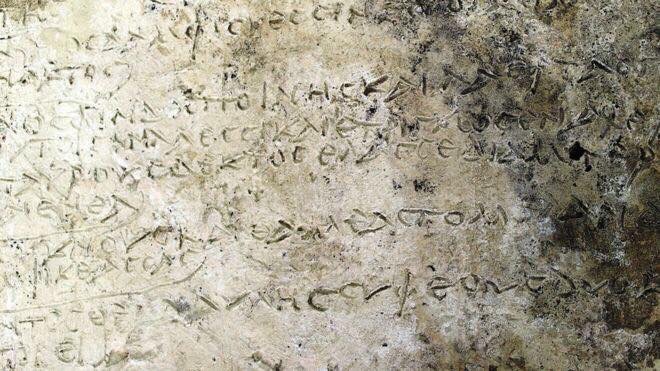
According to the BBC, the oldest known extract from Homer’s Odyssey has been found on a clay tablet, found in Olympia Greece and dated “to Roman times” (better dating is impending). The extract “contains 13 verses from the Odyssey’s 14th Rhapsody, in which Odysseus addresses his lifelong friend Eumaeus.” It will be interesting to compare this to other extracts to see how well an orally transmitted work was reproduced in writing. Here’s part of the tablet:

#Homer #TheOdyssey

List of deaths in the Illiad

List of deaths in the Illiad:
Antilochus (Greek) kills Echepolus (Trojan) (spear in the head) (4.529)
Agenor (Trojan) kills Elephenor (Greek) (spear in the side) (4.543)
Ajax son of Telamon (Greek) kills Simoeisius (Trojan) (speared in the nipple) (4.549)
Antiphus (Trojan) kills Leucus (Greek) (speared in the groin) (4.569)
Odysseus (Greek) kills Democoön (Trojan) (spear through the head) (4.579)
Peirous (Trojan) kills Diores (Greek) (hit with a rock, then speared in the gut) (4.598)
Thoas (Greek) kills Peirous (Trojan) (spear in the chest, sword in the gut) (4.608)
Diomedes (Greek) kills Phegeus (Trojan) (spear in the chest) (5.19)
Agamemnon (Greek) kills Odius (Trojan) (spear in the back) (5.42)
Idomeneus (Greek) kills Phaestus (spear in the shoulder) (5.48)
Menelaus (Greek) kills Scamandrius (spear in the back) (5.54)
Meriones (Greek) kills Phereclus (Trojan) (spear in the buttock) (5.66)
Meges (Greek) kills Pedaeus (Greek) (spear in the neck) (5.78)
Eurypylus (Greek) kills Hypsenor (Trojan) (arm cut off) (5.86)
Diomedes (Greek) kills Astynous (Trojan) (spear in the chest) (5.164)
Diomedes (Greek) kills Hypeiron (Trojan) (sword in the collar bone) (5.165)
Diomedes (Greek) kills Abas (Trojan) (5.170)
Diomedes (Greek) kills Polyidus (Trojan) (5.170)
Diomedes (Greek) kills Xanthus (Trojan) (5.174)
Diomedes (Greek) kills Thoon (Trojan) (5.174)
Diomedes (Greek) kills Echemmon (Trojan) (5.182)
Diomedes (Greek) kills Chromius (Trojan) (5.182)
Diomedes (Greek) kills Pandarus (Trojan) (spear in the nose) (5.346)
Diomedes (Greek) wounds Aeneas (Trojan) with a rock (5.359)
Agamemnon (Greek) kills Deicoon (Trojan), spear in the stomach (5.630)
Aeneas (Trojan) kills Crethon (Greek)
Aeneas (Trojan) kills Orsilochus (Greek)
Menelaus (Greek) kills Phlaemenes (Trojan), spear in the collar bone (5.675)
Antilochus (Greek) kills Mydon (Trojan), sword in the head, stomped by his horses (5.680)
Hector (Trojan) kills Menesthes (Greek) (5.714)
Hector (Trojan) kills Anchialus (Greek) (5.714)
Ajax son of Telamon kills Amphion (Trojan), spear in the gut (5.717)
Sarpedon (Trojan) kills Tlepolemus (Greek), spear in the neck (5.764)
Tlepolemus (Greek) wounds Sarpedon (Trojan) spear in the thigh (5.764)
Odysseus (Greek) kills Cocranus (Trojan) (5.783)
Odysseus (Greek) kills Alastor (Trojan) (5.783)
Odysseus (Greek) kills Chromius (Trojan) (5.783)
Odysseus (Greek) kills Alcandrus (Trojan) (5.784)
Odysseus (Greek) kills Halius (Trojan) (5.784)
Odysseus (Greek) kills Noemon (Trojan) (5.784)
Odysseus (Greek) kills Prytanis (Trojan) (5.784)
Hector (Trojan) kills Teuthras (Greek) (5.811)
Hector (Trojan) kills Orestes (Greek) (5.811)
Hector (Trojan) kills Trechus (Greek) (5.812)
Hector (Trojan) kills Oenomaus (Greek) (5.812)
Hector (Trojan) kills Helenus (Greek) (5.813)
Hector (Trojan) kills Oresbius (Greek) (5.813)
Ares kills Periphas (Greek) (5.970)
Diomedes wounds Ares in the gut (5.980)
Ajax son of Telamon (Greek) kills Acamas (Trojan), spear in the head (6.9)
Diomedes (Greek) kills Axylus (Trojan) (6.14)
Diomedes (Greek) kills Calesius (Trojan) (6.20)
Euryalus (Greek) kills Dresus (Trojan) (6.23)
Euryalus (Greek) kills Opheltius (Trojan) (6.23)
Euryalus (Greek) kills Aesepus (Trojan) (6.24)
Euryalus (Greek) kills Pedasus (Trojan) (6.24)
Polypoetes (Greek) kills Astyalus (Trojan) (6.33)
Odysseus (Greek) kills Pidytes (Trojan), with his spear (6.34)
Teucer (Greek) kills Aretaon (Trojan) (6.35)
Antilochus (Greek) kills Ableros (Trojan), with his spear (6.35)
Agamemnon (Greek) kills Elatus (Trojan) (6.38)
Leitus (Greek) kills Phylacus (Trojan) (6.41)
Eurypylus (Greek) kills Melanthus (6.42)
Agamemnon (Greek) kills Adrestus (Trojan), spear in the side (6.76)
Paris (Trojan) kills Menesthius (Greek) (7.8)
Hector (Trojan) kills Eioneus (Greek), spear in the neck (7.11)
Glaucus (Trojan) kills Iphinous (Greek), spear in the shoulder (7.13)
Diomedes (Greek) kills Eniopeus (Trojan), spear in the chest (8.138)
Diomedes (Greek) kills Agelaos (Trojan), spear in the back (8.300)
Teucer (Greek) kills Orsilochos (Trojan), with an arrow (8.321)
Teucer (Greek) kills Ormenus (Trojan), with an arrow (8.321)
Teucer (Greek) kills Ophelestes (Trojan), with an arrow (8.321)
Teucer (Greek) kills Daitor (Trojan), with an arrow (8.322)
Teucer (Greek) kills Chromius (Trojan), with an arrow (8.322)
Teucer (Greek) kills Lycophontes (Trojan), with an arrrow (8.322)
Teucer (Greek) kills Amopaon (Trojan), with an arrow (8.323)
Teucer (Greek) kills Melanippus (Trojan), with an arrow (8.323)
Teucer (Greek) kills Gorgythion (Trojan), with an arrow (8.353)
Teucer (Greek) kills Archeptolemos (Trojan), with an arrow (8.363)
Hector (Trojan) wounds Teucer (Greek), with a rock (8.380)
Diomedes (Greek) kills Dolon (Trojan), sword across the neck (10.546)
Diomedes (Greek) kills twelve sleeping Thracian soldiers (10.579) (includes Rhesus)
Agamemnon (Greek) kills Bienor (Trojan) (11.99)
Agamemnon (Greek) kills Oileus (Trojan), spear in the head, (11.103)
Agamemnon (Greek) kills Isus (Trojan), spear in the chest (11.109)
Agamemnon (Greek) kills Antiphus (Trojan), sword in the head (11.120)
Agamemnon (Greek) kills Peisander (Trojan), spear in the chest (11.160)
Agamemnon (Greek) kills Hippolochus (Trojan), sword cuts off his head (11.165)
Agamemnon (Greek) kills Iphidamas T), sword in the neck (11.270)
Coön (Trojan) wounds Agamemnon (Greek), spear in the arm (11.288)
Agamemnon (Greek) kills Coön (Trojan), spear in the side (11.295)
Hector (Trojan) kills Asaeus (Greek) (11.341)
Hector (Trojan) kills Autonous (Greek) (11.341)
Hector (Trojan) kills Opites (Greek) (11.341)
Hector (Trojan) kills Dolops (Greek) (11.342)
Hector (Trojan) kills Opheltius (Greek) (11.324)
Hector (Trojan) kills Agelaus (Greek) (11.325)
Hector (Trojan) kills Aesymnus (Greek) (11.325)
Hector (Trojan) kills Orus (Greek) (11.343)
Hector (Trojan) kills Hipponous (Greek) (11.325)
Diomedes (Greek) kills Thymbraeus (Trojan), spear in the chest (11.364)
Odysseus (Greek) kills Molion (Trojan) (11.366)
Diomedes (Greek) kills two sons of Merops (Trojan) (11.375)
Odysseus (Greek) kills Hippodamas (Trojan) (11.381)
Odysseus (Greek) kills Hypeirochus (Trojan) (11.381)
Diomedes (Greek) kills Agastrophus (Trojan), spear in the hip (11.384)
Paris (Trojan) wounds Diomedes (Greek), arrow in the foot (11.430)
Odysseus (Greek) kills Deïopites (Trojan) (11.479)
Odysseus (Greek) kills Thoön (Trojan) (11.481)
Odysseus (Greek) kills Ennomus (Greek) (11.481)
Odysseus (Greek) kills Chersidamas (Trojan), spear in the groin (11.481)
Odyssues (Greek) kills Charops (Trojan) (11.485)
Odysseus (Greek) kills Socus (Trojan), spear in the back (11.506)
Socus (Trojan) wounds Odysseus (Greek), spear in the ribs (11.493)
Ajax son of Telamon (Greek) kills Doryclus (Trojan) (11.552)
Ajax son of Telamon (Greek) kills Pandocus (Trojan) (11.553)
Ajax son of Telamon (Greek) kills Lysander (Trojan) (11.554)
Ajax son of Telamon (Greek) kills Pyrasus (Trojan) (11.554)
Ajax son of Telamon (Greek) kills Pylantes (Trojan) (11.554)
Eurypylus (Greek) kills Apisaon (Trojan), spear in the liver (11.650)
Polypoetes (Greek) kills Damasus (Trojan), spear through the cheek (12.190);
Polypoetes (Greek) kills Pylon (Trojan) (12.194)
Polypoetes (Greek) kills Ormenus (Trojan) (12.194)
Leonteus (Greek) kills Hippomachus, spear in the stomach (12.196)
Leonteus (Greek) kills Antiphates (Trojan), struck with a sword (12.198)
Leonteus (Greek) kills Menon (Trojan) (12.201)
Leonteus (Greek) kills Iamenus (Trojan) (12.201)
Leonteus (Greek) kills Orestes (Trojan) (12.201)
Ajax son of Telamon (Greek) kills Epicles (Trojan), rock in the skull (12.416)
Teucer (Greek) wounds Glaucus (Trojan), arrow in the arm (12.425)
Sarpedon (Trojan) kills Alcmaon (Greek), spear in the body (12.434)
Teucer (Greek) kills Imbrius (Trojan), spear in the ear (13.198)
Hector (Trojan) kills Amphimachus (Greek), spear in the chest (13.227)
Idomeneus (Greek) kills Othryoneus (Trojan), spear in the gut, (13.439 ff)
Idomeneus (Greek) kills Asius (Trojan), spear in the neck (13.472)
Antilochus (Greek) kills Asius’ charioteer, spear in the gut (13.482)
Deïphobus (Trojan) kills Hypsenor (Greek), spear in the liver (13.488) (wounded?)
Idomeneus (Greek) kills Alcathous (Trojan), spear in the chest (13.514 ff)
Idomeneus (Greek) kills Oenomaus (Trojan), spear in the stomach (13.608)
Deïphobus (Trojan) kills Ascalaphus (Greek), spear in the shoulder (13.621)
Meriones (Greek) wounds Deïphobus (Trojan) spear in the arm (13.634)
Aeneas (Trojan) kills Aphareus (Greek), spear in the throat (13.647)
Antilochus (Greek) kills Thoön (Greek), spear in the back) (13.652).
Meriones (Greek) kills Adamas (Trojan), spear in the testicles (13.677).
Helenus (Trojan) kills Deïpyrus (Greek), sword on the head (13.687)
Menelaus (Greek) wounds Helenus (Trojan), spear in the hand (13.705)
Menelaus (Greek) kills Peisander (Trojan), sword in the head (13.731)
Meriones (Greek) kills Harpalion (Trojan), arrow in the buttock (13.776)
Paris (Trojan) kills Euchenor (Greek), arrow in the jaw (13.800)
Ajax son of Telamon (Greek) hits Hector (Trojan) with a rock (14.477)
Ajax son of Oileus (Greek) kills Satnius (Trojan), spear in the side (14.517)
Polydamas (Trojan) kills Prothoënor (Greek), spear in the shoulder (14.525)
Ajax son of Telamon (Greek) kills Archelochus, spear in the neck (14.540)
Acamas (Trojan) kills Promachus (Greek), spear (14.555)
Peneleus (Greek) kills Ilioneus (Trojan), spear in the eye (14.570)
Ajax son of Telamon (Greek) kills Hyrtius (14.597)
Meriones (Greek) kills Morys (14.601)
Meriones (Greek) kills Hippotion (14.601)
Teucer (Greek) kills Prothoön (Trojan) (14.602)
Teucer (Greek) kills Periphetes (Trojan) (14.602)
Menelaus (Greek) kills Hyperenor (Trojan), spear in the side (14.603)
Phalces (Trojan) killed (death not mentioned but armor stripped) (14.600)
Mermerus (Trojan) killed (death not mentioned but armor stripped) (14.600)
Hector (Trojan) kills Stichius (Greek) (15.389)
Hector (Trojan) kills Aresilaus (Greek) (15.389)
Aeneas (Trojan) kills Medon (Greek) (15.392)
Aeneas (Trojan) kills Iasus (Greek) (15.392)
Polydamas (Trojan) kills Mecistus (Greek) (15.399)
Polites (Trojan) kills Echius (Greek) (15.400)
Agenor (Trojan) kills Clonius (15.401)
Paris (Trojan) kills Deïochus (Greek), spear through the back (15.402)
Ajax son of Telamon (Greek) kills Caletor (Trojan), spear in the chest (15.491)
Hector (Trojan) kills Lycophron (Greek) spear in the head (15.503)
Teucer (Greek) kills Cleitus (Greek), arrow in the back of the neck (15.521)
Hector (Trojan) kills Schedius (Greek) (15.607)
Ajax son of Telamon (Greek) kills Laodamas (Trojan) (15.608)
Polydamas (Trojan) kills Otus (Greek) (15.610)
Meges (Greek) kills Croesmus (Trojan), spear in the chest (15.616)
Menelaus (Greek) kills Dolops (Trojan), speared in the back (15.636)
Antilochus (Greek) kills Melanippus (Trojan), spear in the chest (15.675)
Hector (Trojan) kills Periphetes (Greek), spear in the chest (15.744)
Patroclus (Greek) kills Pyraechmes (Trojan), spear in the shoulder (16.339)
Patroclus (Greek) kills Areilycus (Trojan), spear in the thigh (16.361)
Menelaus (Greek) kills Thoas (Trojan), spear in the chest (16.365)
Meges (Greek) kills Amphiclus (Trojan), spear in the leg (16.367)
Antilochus (Greek) kills Atymnius (Trojan), spear in the side (16.372)
Thrasymedes (Greek) kills Maris (Trojan), spear in the shoulder (16.377)
Ajax son of Oileus (Greek) kills Cleobulus (Trojan), sword in the neck (16.386)
Peneleus (Greek) kills Lyco (Greek), sword in the neck (16.395)
Meriones (Greek) kills Acamas (Trojan), spear in the shoulder (16.399)
Idomeneus (Greek) kills Erymas (Trojan), spear in the mouth (16.403)
Patroclus (Greek) kills Pronous (Trojan), spear in the chest (16.464)
Patroclus (Greek) kills Thestor (Trojan), spear in the head (16.477)
Patroclus (Greek) kills Erylaus (Trojan), rock on the head (16.479)
Patroclus (Greek) kills Erymas (Trojan) (16.484)
Patroclus (Greek) kills Amphoterus (Trojan) (16.484)
Patroclus (Greek) kills Epaltes (Trojan) (16.484)
Patroclus (Greek) kills Tlepolemus (Trojan) (16.485)
Patroclus (Greek) kills Echius (Trojan) (16.485)
Patroclus (Greek) kills Pyris (Trojan) (16.486)
Patroclus (Greek) kills Ipheus (Trojan) (16.486)
Patroclus (Greek) kills Euippus (Trojan) (16.486)
Patroclus (Greek) kills Polymelus (Trojan) (16.486)
Patroclus (Greek) kills Thrasymedes (Trojan), spear in the gut (16.542)
Patroclus (Greek) kills Sarpedon (Trojan), spear in the chest (16.559)
Hector (Trojan) kills Epeigeus (Greek), rock on the head (16.666)
Patroclus (Greek) kills Sthenelaus (Trojan), rock on the head (16.682)
Glaucus (Trojan) kills Bathycles (Greek), spear in the chest (16.691)
Meriones (Greek) kills Laogonus (Trojan), spear in the jaw (16.702)
Patroclus (Greek) kills Adrestus (Trojan) (16.808)
Patroclus (Greek) kills Autonous (Trojan) (16.809)
Patroclus (Greek) kills Echeclus (Trojan) (16.809)
Patroclus (Greek) kills Perimus (Trojan) (16.809)
Patroclus (Greek) kills Epistor (Trojan) (16.810)
Patroclus (Greek) kills Melanippus (Trojan) (16.810)
Patroclus (Greek) kills Elasus (Trojan) (16.811)
Patroclus (Greek) kills Mulius (Trojan) (16.811)
Patroclus (Greek) kills Pylantes (Trojan) (16.811)
Patroclus (Greek) kills Cebriones (Trojan), rock in the head (16.859)
Hector (Trojan) kills Patroclus (Greek) (16.993)
Ajax son of Telamon (Greek) kills Hippothous (Trojan), spear in the head (17.377)
Hector (Trojan) kills Scedius (Greek), spear in the collar (17.393)
Ajax son of Telamon (Greek) kills Phorcys (Trojan), spear in the gut (17.399)
Aeneas (Trojan) kills Leocritus (Greek), (17.439);
Lycomedes (Greek) kills Apisaon (Trojan) (17.443)
Automedon (Greek) kills Aretus (Trojan), spear in the gut (17.636)
Menelaus (Trojan) kills Podes (Trojan), spear in the stomach (17.704)
Hector (Trojan) kills Coeranus (Greek), spear in the head (17.744)
Achilles (Greek) kills Iphition (Trojan), spear in the head (20.463)
Achilles (Greek) kills Demoleon (Trojan), spear in the head (20.476)
Achilles (Greek) kills Hippodamas (Trojan), spear in the back (20.480)
Achilles (Greek) kills Polydorus (Trojan), spear in the back (20.488)
Achilles (Greek) kills Dryops (Trojan), spear in the knee, sword thrust (20.546)
Achilles (Greek) kills Demouchos (Trojan) spear thrust (20.548).
Achilles (Greek) kills Laogonus (Trojan), spear thrust (20.551)
Achilles (Greek) kills Dardanus (Trojan), sword thrust (20.551)
Achilles (Greek) kills Tros (Trojan), sword in the liver (20.555)
Achilles (Greek) kills Mulius (Trojan), spear in the head (20.567)
Achilles (Greek) kills Echeclus (Trojan), sword on the head (20.569)
Achilles (Greek) kills Deucalion (Trojan), sword in the neck (20.573)
Achilles (Greek) kills Rhigmus (Trojan), spear in the gut (20.581)
Achilles (Greek) kills Areithous (Trojan), spear in the back (20.586)
Achilles (Greek) kills Lycaon (Trojan), sword in the neck (21.138)
Achilles (Greek) kills Asteropaeus (Trojan), sword in the stomach (21.215)
Achilles (Greek) kills Thersilochus (Trojan) (21.249)
Achilles (Greek) kills Mydon (Trojan) (21.249)
Achilles (Greek) kills Astypylus (Trojan) (21.250)
Achilles (Greek) kills Mnesus (Trojan) (21.250)
Achilles (Greek) kills Thrasius (Trojan) (21.250)
Achilles (Greek) kills Aenius (Trojan) (21.250)
Achilles (Greek) kills Ophelestes (Trojan) (21.251)
Achilles (Greek) kills Hector (Trojan), spear through the throat (22.410)

McLean Psychiatric Hospital: Belmont, Massachusetts

Founded in 1811: McLean Hospital is a leader in psychiatric care, research, and education and is the largest psychiatric teaching hospital of Harvard Medical School.

Mission Statement

McLean Hospital is dedicated to improving the lives of people and families affected by psychiatric illness.

McLean pursues this mission by:

• Providing the highest quality compassionate, specialized and effective clinical care, in partnership with those whom we serve

• Conducting state-of-the-art scientific investigation to maximize discovery and accelerate translation of findings towards achieving prevention and cures

• Training the next generation of leaders in psychiatry, mental health and neuroscience

• Providing public education to facilitate enlightened policy and eliminate stigma

Core Values

We dedicate ourselves each and every day to McLean’s mission of clinical care, scientific discovery, professional training and public education in order to improve the lives of people with psychiatric illness and their families.

In all of our work, we strive to:

• Conduct ourselves with unwavering integrity

• Demonstrate compassion and respect for our patients, their families and our colleagues

• Foster an environment that embraces diversity and promotes teamwork

• Achieve excellence and ever-better effectiveness and efficiency through innovation

• McLean Hospital’s clinical and research activities are organized into seven Centers of Excellence and Innovation

These centers integrate the hospital’s three mission elements—clinical care, research, and education—with a focus on the rapid translation of science in order to establish, deliver, and disseminate ever-better, evidence-based approaches to care.

• Led by world-class clinicians and researchers, each of the seven centers have a primary diagnostic, research, or demographic focus and are laying the groundwork for further innovation as McLean continues to set a high bar in psychiatric care, research, and education.

Center of Excellence in Alcohol, Drugs, and Addiction

• McLean’s Center of Excellence in Alcohol, Drugs, and Addiction, led by Chief Roger D. Weiss, MD, is designed to foster integrated, evidence-based approaches to prevention, early detection, and treatment of substance use disorders.

• Addiction has become one of the most prevalent health issues of our time. From the current opioid crisis to the treatment of those dually diagnosed with addiction and other mental health illnesses, McLean offers a continuum of addiction care, including brief hospitalization for detoxification and stabilization, four residential programs, a partial hospital program, outpatient treatment, specialized programs, and a consultation service.

• The center also includes robust training and research initiatives through the Co-Occurring Disorders Institute, the Alcohol and Drug Addiction Clinical Research Program, and the Addiction Psychiatry Fellowship.

Nancy and Richard Simches Center of Excellence in Child and Adolescent Psychiatry

• Mental health issues are appearing ever-more widespread among young people. Joseph Gold, MD, is McLean’s chief medical officer and chief of the Simches Center of Excellence in Child and Adolescent Psychiatry. Children and teens are more prone than adults to depression, anxiety, obsessive compulsive disorder, attention-deficit/hyperactivity disorder, autism, bipolar disorder, addiction, and personality disorders.

• Led by Dr. Gold, McLean treats children ages 3 to 19 years who are struggling with these and other issues. Two fully accredited schools provide educational opportunities for children needing specialized academic programming. The center also reaches into the community to support children and adolescents in every possible setting, including public and private schools and pediatrician’s offices.

Center of Excellence in Depression and Anxiety Disorders

• Anxiety disorders are the most commonly diagnosed psychiatric disorders in the United States today, and individuals with anxiety also frequently suffer from clinical depression. Led by McLean’s Chief Scientific Officer Kerry J. Ressler, MD, PhD, along with its Director of Research Diego A. Pizzagalli, PhD, and Clinical Director Jane Eisen, MD, the Center of Excellence in Depression and Anxiety Disorders works to understand the biological underpinnings of these illnesses.

• The center conducts both clinical and basic science research into the relationship between stress, fear, trauma, and the prevalence of depression and anxiety disorders. Because these disorders occur in all demographics and often appear in conjunction with other psychiatric diagnoses, the center works collaboratively with McLean’s six other centers of excellence to speed the translation of science from bench to bedside to develop ever-better clinical and medication treatments.

• The center incorporates all levels of care, from outpatient to residential to multiple specialty inpatient programs and outpatient services like ECT, TMS, and ketamine.

Center of Excellence in Geriatric Psychiatry

• Providing psychiatric care for older adults can include managing the normal effects of mental and physical changes of aging while also concentrating on the psychological and neurological changes that can worsen as the body and brain get older.

• Led by Chief Brent P. Forester, MD, MSc, McLean’s Center of Excellence in Geriatric Psychiatry works to make the later stages of life healthy, fulfilling, and joyful. Clinical care and research at the center focus on older adults with depression, bipolar disorder, and behavioral complications of Alzheimer’s disease and related dementias.

Center of Excellence in Psychotic Disorders

• Led by Chief Dost Öngür, MD, PhD, the Center of Excellence in Psychotic Disorders includes inpatient programs, a residential facility, specialty outpatient clinics, and community-based services for individuals diagnosed with psychotic disorders, primarily schizophrenia or bipolar disorder.

• Dr. Öngür and his team have built clinical and research collaborations to advance our understanding of the neurobiology of psychosis and develop new insights into treatment and prevention. Researchers and clinicians in the center are changing the landscape of recovery and helping to restore lives and offer hope to those diagnosed with these debilitating disorders.

Center of Excellence in Women’s Mental Health

• The mission of McLean’s Center of Excellence in Women’s Mental Health is to innovate and improve mental health care for all women and girls throughout their life span. Led by center Chief Shelly F. Greenfield, MD, MPH, and Clinical Director Amy Gagliardi, MD, the center provides a uniting infrastructure to advance clinical care, training, and education.

• The center is a national leader in this emerging field and is conducting and sharing research across McLean and around the globe.

Center of Excellence in Basic Neuroscience

• One of McLean’s primary mission elements is to conduct state-of-the-art scientific investigation to maximize discovery and speed translation of findings toward prevention and cures for major psychiatric disorders.

• Chief Bill Carlezon, PhD, leads McLean’s Center of Excellence in Basic Neuroscience which is dedicated to studying the role of biological factors in mental illness. Under his direction, more than 130 principal investigators in more than 40 research labs conduct research into the “why” and “how” of mental illness.

• Scientists study the brain at the cellular and molecular levels to push the frontiers of knowledge and move their findings from “benchtop to bedside.”

McLean Values are at the core of everything we do. As clinicians, researchers, educators, administrators, and support staff, we conduct ourselves in ways that reflect our deep commitment to integrity, compassion and respect, diversity and teamwork, excellence, and innovation. These Values are the essence of McLean; they are at once emblematic of who we are and what we aspire to be.

~ McLean Hospital President and Psychiatrist in Chief Scott L. Rauch, MD