Counterculture blooms wherever and whenever a few members of a society choose lifestyles, artistic expressions, and ways of thinking and being that wholeheartedly embrace the ancient axiom that the only true constant is change itself. The mark of counterculture is not a particular social form or structure, but rather the evanescence of forms and structures, the dazzling rapidity and flexibility with which they appear, mutate, and morph into one another and disappear.
Counterculture is the moving crest of a wave, a zone of uncertainty where culture goes quantum. To borrow the language of Nobel Prize– winning physicist Ilya Prigogine, counterculture is the cultural equivalent of the “third thermodynamic state,” the “nonlinear region” where equilibrium and symmetry have given way to a complexity so intense as to appear to the eye as chaos.
Participants in a counterculture thrive in this zone of turbulence. It is their native medium, the only clay malleable enough to be shaped and reshaped fast enough to keep pace with the flashing of their inner visions. They are adepts of flux, chaos engineers, migrating in step with the ever-traveling wavefront of maximum change.
In counterculture, social structures are spontaneous and transient. Participants in countercultures are constantly clustering into new molecules, fissioning and regrouping into configurations appropriate to the interests of the moment, like particles jostling in a high-energy accelerator, exchanging dynamic charge. In these configurations they reap the benefits of exchanging ideas and innovations through fast feedback in small groups, affording a synergy that allows their thoughts and visions to grow and mutate almost the instant they are formulated.
Counterculture lacks formal structure and formal leadership. In one sense it is leaderless; in another sense, it is leader-full, all of its participants constantly innovating, pushing into new territory where others may eventually follow.
Counterculture may be found in (sometimes uneasy) alliances with radical, even revolutionary political groups and insurrectionary forces, and the memberships of countercultures and such groups often overlap.
But the focus of counterculture is the power of ideas, images, and artistic expression, not the acquisition of personal and political power. Thus, minority, alternative, and radical political parties are not themselves countercultures. While many countercultural memes have political implications, the seizure and maintenance of political power requires adherence to structures too inflexible to accommodate the innovation and exploration that are basic to the countercultural raison d’être. Organization and institution are anathema to counterculture.
“The snake that gives birth to itself also incestuously makes love to itself, putting its own tail in its mouth; it is the seminal member and womb of creation in one. It represents the source and origin of all life and the place where it comes to renew itself in time. The uroboros is both alpha and omega, an image of death drive and sexuality intertwined; both self-fertilization and rebirth come to be as one. The notion of this life force or “cosmic” sexual energy is always found at the heart of mythology.” ~ Norland Tellez
Image: The serpent Ouroboros, from Cyprianus, 18th Century
More time elapsed between the painting of these ice age horses [LEFT: Chauvet cave >33,000 years ago and RIGHT: Niaux cave ~15,000 years ago] than has passed since the Niaux cave art and now!
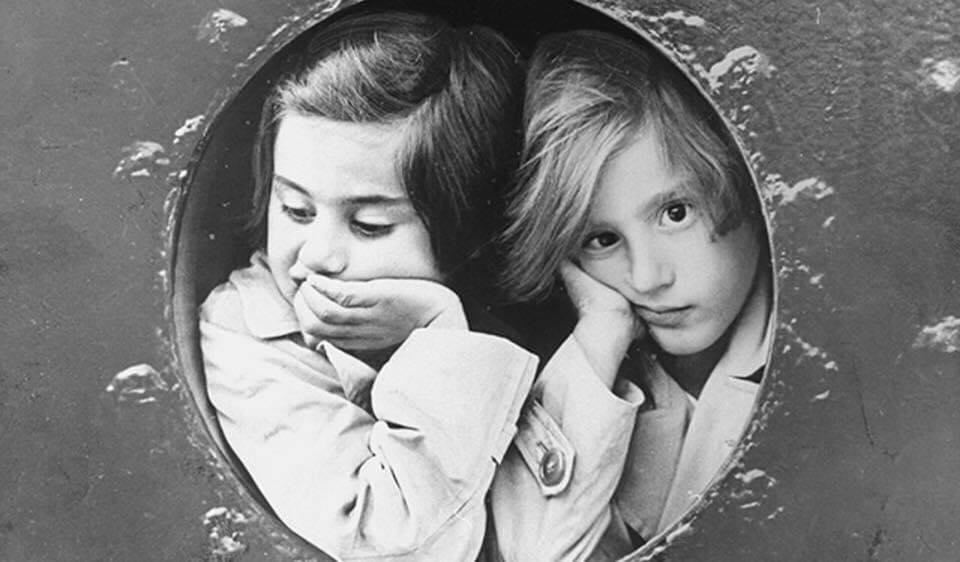
The passenger liner St. Louis set sail from Germany to Cuba with more than 900 Jewish refugees on board in May 1939. When the ship reached Havana, Cuban officials allowed fewer than 30 passengers to disembark, because only they had valid landing permits. The rest had unknowingly purchased fraudulent landing permits from a corrupt Cuban government official. After failing to get permission to enter Cuba or the United States, the refugees were forced to return to Europe on June 6, where the Netherlands, France, Belgium, and the United Kingdom took them in.
All of these countries, except the United Kingdom, were later occupied by Nazi Germany, and more than 250 St. Louis passengers were killed in the Holocaust.
It was on May 22, 1826, that HMS Beagle set out on its its first voyage. That was to Tierra del Fuego, and the captain, Pringle Stokes, got depressed and shot himself on the trip. The ship’s most famous voyage, with Captain Robert FitzRoy and Charles Darwin aboard, took place between 1831 and 1836. Curiously, FitzRoy also got depressed and committed suicide in 1865, cutting his throat with a razor.
Cults whether fictional or real are having a cultural moment. The recent success of Hulu’s “The Path” and “American Horror Story: Cult” in which we see versions of cult leaders like David Koresh and Jim Jones – all portrayed by Evan Peters. Our fascination with cults – real or fictional – may stem from the fine line between being drawn to what appears to be a utopian community and a dangerous, free-will-stripping group.
The Peoples Temple (1955 – 1978)
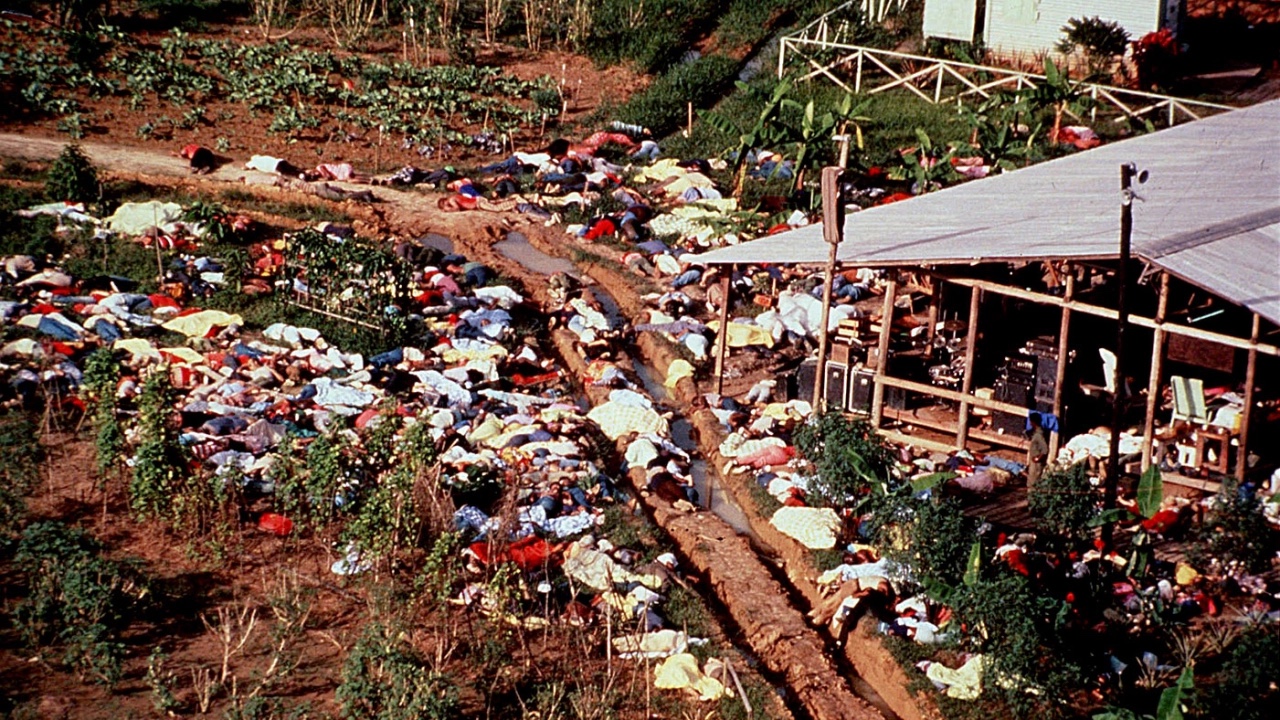
When Jim Jones founded the Peoples Temple in Indiana in 1955, it appealed to many as a progressive organization advocating for civil rights, and operating homes for the elderly and those with mental health issues. Like previous progressive groups, Jones’s goal was to create an egalitarian utopian community. In 1965, Jones moved his family and the Peoples Temple to the Redwood Valley in California, based on recommendations from an article in Esquire suggesting places to survive a nuclear war. In 1974, the Peoples Temple leased land in Guyana, where the group would flee media scrutiny in the United States and set up an agricultural commune. By 1978, the population of “Jonestown” in Guyana had grown to around 900, but a few disillusioned members tipped off the American media of the armed compound in South America and rehearsals of mass suicide. In November 1978 Congressman Leo Ryan traveled to Jonestown where he, three journalists and one defector were shot and killed, before Jones ordered his followers to drink a cyanide-laced drink, resulting the loss of 909 lives.
The Branch Davidians (1955 – 1993)
Although this extremist sect of the Seventh Day Adventists has been active since the 1950s, the Branch Davidians are best known for the 1993 standoff in Waco, Texas. David Koresh, the leader at the time, believed he was the Messiah and declared all women – including those underage or already married – his “spiritual wives.”The group believed the apocalypse was imminent and, fearing its arrival, locked themselves into a sprawling compound. On February 28th, 1993, agents from the Department of Alcohol, Firearms and Tobacco raided the Waco compound on the suspicion that Koresh was stockpiling weapons. What started as a shootout soon turned into a standoff between the Branch Davidians and the FBI. Itlasted 51 days, and eventually ended when tanks were brought in: the compound was filled with tear gas and caught on fire, leaving more than 80 people dead.
Sullivanians (1957 – 1991)
Saul B. Newton founded The Sullivan Institute in 1957 with his wife, Dr. Jane Pearce, in an attempt to create a viable alternative to the traditional nuclear family, which he viewed as the root of all social anxiety. Located in three buildings on the Upper West Side of Manhattan, the Sullivan Institute operated as both a therapy center and a polyamorous commune, despite the fact that Newton, the leader, had no formal training as a therapist. Unlike other practicing therapists who worked under a strict code of ethics, there were no such boundaries for the Sullivanians, as the members of the Institute were known, with therapists and other members of the community sleeping with each other regularly. In fact, they were forbidden from engaging in exclusive relationships. Any children born to Sullivanians were sent away to boarding school or caretakers with very little visitation from their parents. All members were encouraged to cut ties with their former friends and family members. In the 1970s, the group – which had around 500 members – merged with a progressive theater collective call the Fourth Wall and relocated to Orlando in 1979 following the nuclear meltdown at Three Mile Island. After seeing a decline in membership in the 1980s, the Sullivan Institute ended with the death of Newton in 1991.
Children of God – Family International (1968 – Present)
David “Moses” Berg founded this communist Christian offshoot in California in 1968. For someone so concerned with moral decay and evolution, Berg had a very sex-centric perspective on how to spread the views of Jesus, including reported recruitment through “flirty fishing” (i.e. using young women to lure in new members by having sex with them) and apparently opposing anti-pedophilia laws – according to some former members, having sex with children was not only permitted, but also a divine right. Berg was a master of propaganda, writing, publishing and distributing pamphlets discussing his teachings. The group changed its name several times – most recently to “Family International” in 2004 – and still exists today, operating in 80 countries, although no longer permits sex between adults and children. Actors Joaquin Phoenix and Rose McGowan were born into the cult and have since left and spoken out against the group.
Heaven’s Gate (1972 – 1997)
Heaven’s Gate – founded in San Diego in 1972 by Marshall Applewhite and Bonnie Nettles – was based on the premise that aliens would escort members of the group to the “Kingdom of Heaven” via extraterrestrial spacecraft. They first made headlines in 1975, when they convinced 20 new followers to give up their earthly possessions, leave their families and disappear. On the CBS Evening News, Walter Cronkite reporting that “it’s a mystery whether they’ve been taken on a so-called trip to eternity – or simply taken.” (They turned out to be living underground, camping everywhere from Rhode Island to Oklahoma.) But Heaven’s Gate is best known for a much more tragic event two decades later. In March 1997, the group carefully planned and then executed a mass suicide, timed to coincide with the arrival of the Hale-Bopp comet, which members thought would conceal the alien spacecraft on its way to earth. Clad in black tunics and Nikes, 39 Heaven’s Gate members ate applesauce mixed chased a sedative with vodka, covered their heads in plastic bags and died. Nine of the 18 men – including Applewhite – had been surgically castrated, as the group mandated celibacy. An upbeat videotaped message made the members prior to the suicide indicated that they were willing – even happy – to die and move to the “next level.”
Amelia Earhart writing to the NYT publisher in 1932 requesting that the paper stop referring to her as her husband’s wife and start calling her by her name. (She won)
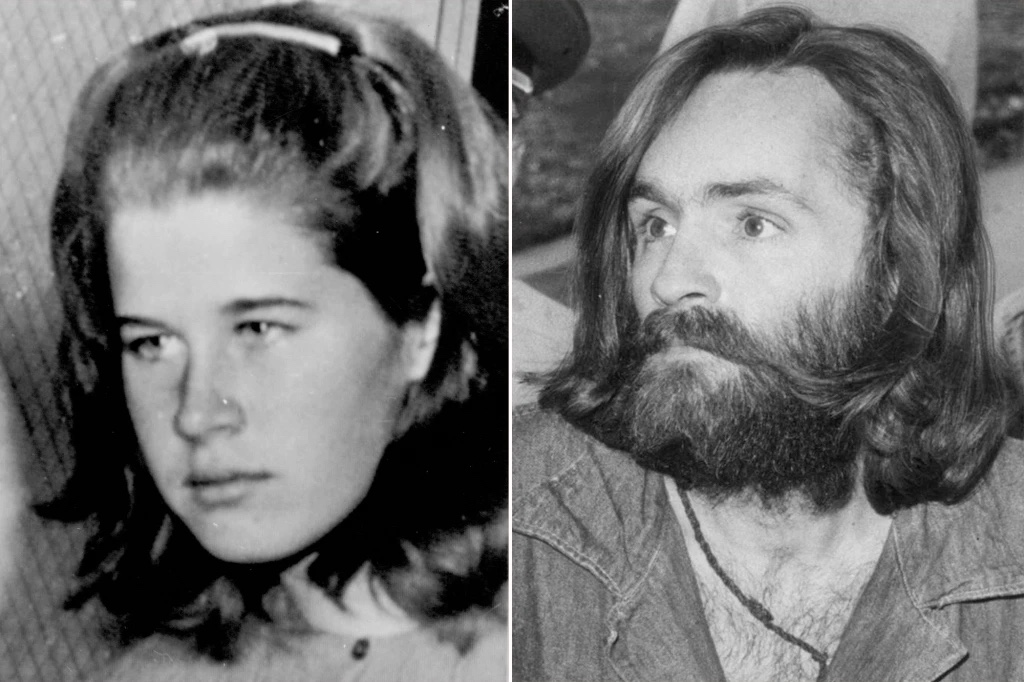
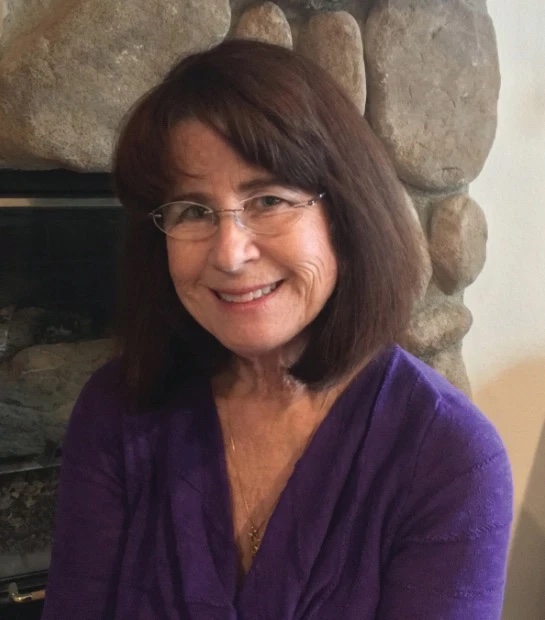
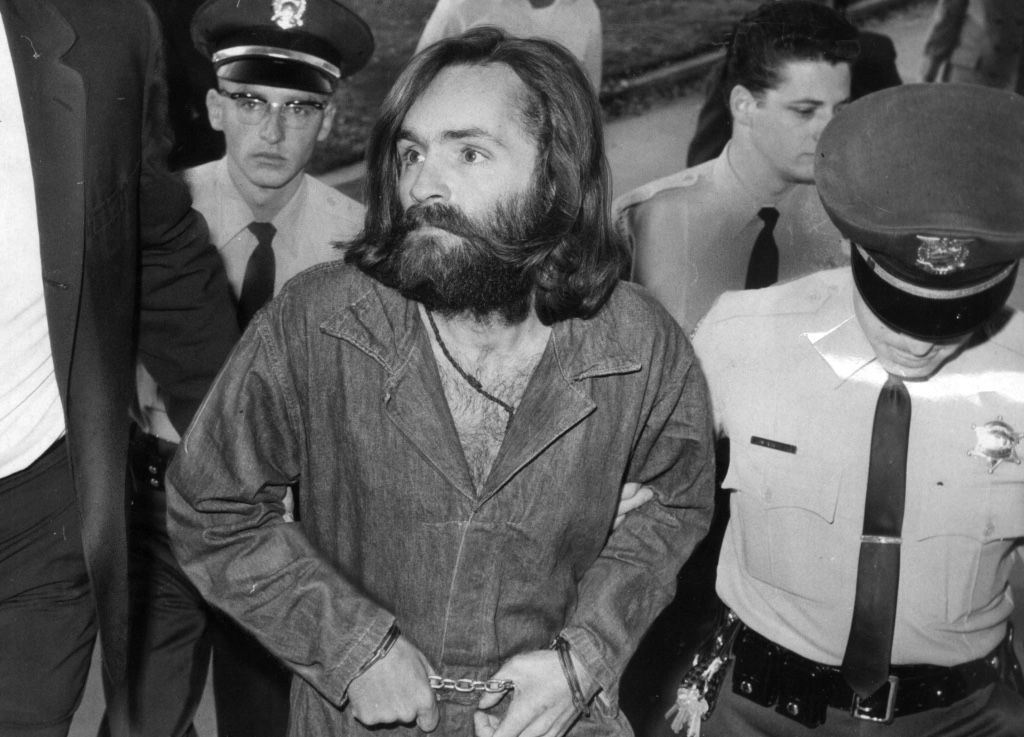
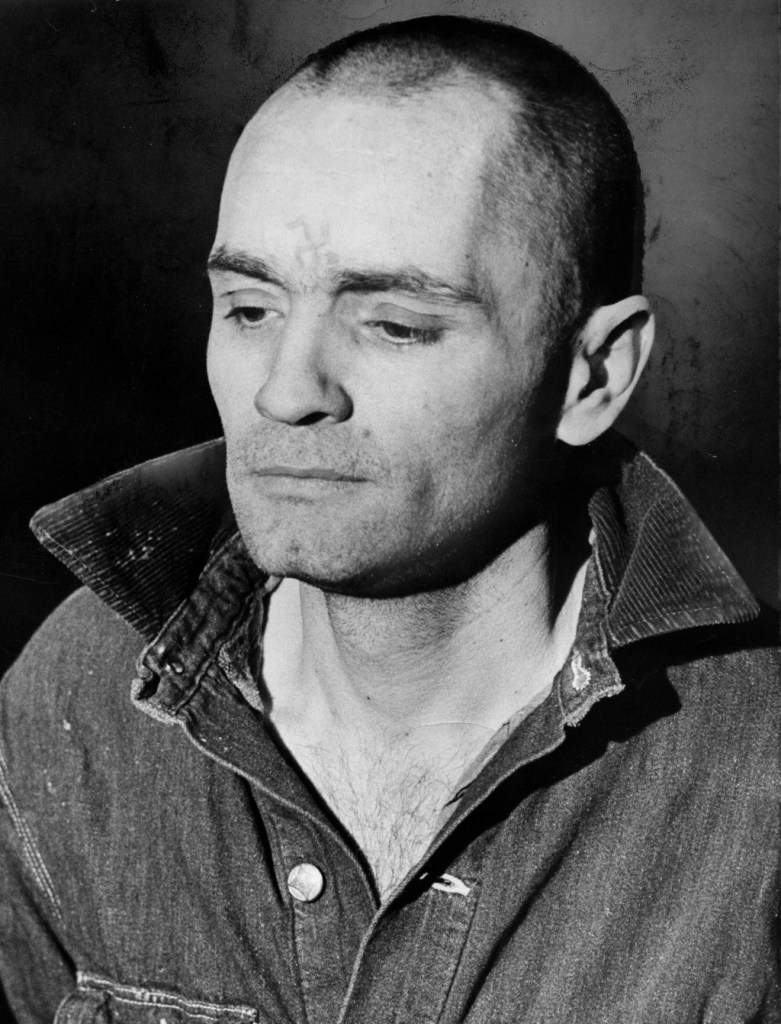
Dianne Lake was just 14 years old when she first met Charles Manson. Her parents were hippies who moved in the same circles as the charismatic cult leader, who would go on to orchestrate the murders of at least seven people, including actress Sharon Tate. In 1967, Lake was going to love-ins and communes, having been given a note from her parents granting her permission to live on her own. While she never participated in any of the cult’s gruesome crimes, she would spend two years living with the Manson Family, becoming its youngest member. Lake, opened up about the man whose spell she fell under in her book, “Member of the Family: My Story of Charles Manson, Life Inside His Cult, and the Darkness That Ended the Sixties”
Excerpt:
[It all started with meeting him at a party in LA’s Topanga Canyon at a place called the Spiral Staircase House.]
When we arrived, we climbed the stairs that led into the living room, and a red-haired girl got up to greet us. She stared at me for a minute and ran back to her friends yelling, “Dianne is here! Dianne is here!”
I was incredibly confused. As far as I knew we weren’t planning to go to the party until the last minute, so I couldn’t imagine they were expecting me. The girl returned with three other girls, who all took turns hugging me. The red-haired girl, who called herself Lynette, said, “You are even prettier than your picture. Charlie is going to be so happy to meet you.”
She took my hand and led me to where a bunch of people were sitting in a circle, and in the middle of the floor sat a small man playing the guitar. There were girls surrounding him, singing along to his soulful music of songs I’d never heard before. The girls sat me down, and Lynette kept her arms around my shoulder. As soon as the music stopped, she jumped up and pulled me by the hand.
“Charlie, we found Dianne. She’s here!” They weren’t just excited, they were overjoyed. It had been ages since I felt truly wanted, and all the attention made me feel like royalty.
They were beaming with love and I felt it. Without hesitation, they sat me in their circle as if I belonged and, strange as it may seem, I felt like I belonged there, too.
Lynette must have sensed my confusion, because she began to explain how they recognized me. While I’d been off in the Haight, they’d met my mother at the [hippie commune] Hog Farm. Apparently, my mother had given them my photo and told them to keep an eye out for me if they made it to San Francisco.
What I didn’t understand then and only learned much later was that my parents and siblings had done more than just run into the Family at the Hog Farm and given them my photo. They’d actually taken a trip into the desert with them, traveling in the black school bus that Charlie drove around in and outfitted for his followers.
Many people during this period were painting buses, bread trucks and VW vans with psychedelic Day-Glo colors. Charlie and the girls chose to make a different statement with their monochrome home on wheels, tricking out a surplus school bus by painting it all black, including the windows, which made him easy to spot. To the residents of Tujunga and the Hog Farm, Charlie was known as Black Bus Charlie.
Charlie stood up and looked into my eyes so deeply and intimately that I almost turned away on instinct. Instead I held his gaze and felt like he was looking into me.
“So, this is our Dianne,” he said and pulled me to his chest in a hug so close I could feel his heartbeat. He held on for several seconds and I felt my resistance fade. I was used to the hippie hugs at the Hog Farm, but this felt warm and real. Tears welled up into my eyes as I took in his embrace.
Charlie held me at arm’s length, looked at me and said, “Oh, you’re beautiful. I want to talk to you. I’ve been looking for you.” I sat next to him and listened as he sang and told funny stories. My first impression of him was that he was charming, witty and most of all intriguing.
“Have some root beer, little darling. I give you the last sip in honor of your arrival.”
Lynette and a girl named Patty stroked my hair and passed me a joint while Charlie strummed out more tunes on the guitar. At first I thought Patty was homely. She had a prominent, bulbous nose and thin lips. But when she smiled, her face became beautiful to me. She exuded a motherly warmth and was obviously completely smitten with Charlie. His presence was disarming. He continued to sing and seemed to make up the words as he went along.
“Dianne is home,” he sang out, and the girls joined in with the chorus: “Home is where you are happy.”
Everything felt like a dream. I had been around groups of people grooving on music, but they were often into their own trip. These girls seemed to love one another. They were affectionate like best friends or sisters, but it didn’t seem fake. They weren’t trying to outdo each other in their outrageousness, as was true of those at the Hog Farm, where everything seemed like one big joke. There was something different about this group of girls and about Charlie and while I wasn’t sure what it was, I immediately knew I wanted to be a part of it. Like a raindrop joining a puddle, I blended in easily, my loneliness disappearing. For the first time in my life, I felt like I was in the right place at the right time.
There was a lot of unspoken communication between Charlie and the girls. His expression changed slightly, and as if the scene had been rehearsed, Patty took his guitar from him. He stood, took my hand and led me outside. We walked hand in hand to the black bus. He went in first and motioned for me to follow. It reminded me of a raja’s palace, with mattresses on the floor and Indian-print bedspreads and carpets hanging from the walls. Pillows were strewn about and colorful swirls were painted on any surface not already covered with fabric. This explosion of color was the last thing I’d expected from the blackness of the exterior.
We sat facing each other and the anticipation swelled up inside me. I expected a kiss, but instead Charlie had me put my hands up against his. He moved his hands in different directions until I caught on that I was to follow his every move. It was a game, and I was more than eager to play. It was like he was syncing up our energy. He sped up until I could no longer follow and he started to laugh. Then he guided me onto the mattress and again looked into my eyes so that I felt there was no one else but the two of us in the entire world. “You are so beautiful, my little one.” His voice was barely above a whisper, but I heard it reverberate through my consciousness.
We had only smoked pot, but I felt as if I were on a trip, his trip, and he was guiding my every move. Charlie was older than the other men I had slept with, but his body seemed younger. He had tattoos on his arms and a small tuft of hair on his chest. There was something magnetic about him, even though I wasn’t sure I even found him attractive. He was small and nice-looking but not as classically handsome as some of the men I had pursued. The attraction was more chemical and inevitable without any thought about whether I would or wouldn’t.
He took his time to explore my body. He avoided the places that made me purr until I could barely stand it. After a few minutes, he put himself inside me while staring into my eyes. He was tender as he held me up to meet his deep thrusts. When he finished, he sighed; I exhaled and realized I was hooked.
I watched as Charlie put on his jeans. He was clearly a man but also seemed like a boy. He was playful, and that made me feel even more comfortable with him. Sometimes after I would sleep with a man, I would be left feeling empty. My experience with Charlie was the beginning of something. I felt appreciated by him, not just like some pretty young thing. Charlie was offering me more than sex. He told me I should forget my parents and give up my inhibitions. He made it clear he wanted me to be a part of the group; his group. It felt as if there was no turning back. When I’d been with other older men, I’d been playing the role of a woman — Charlie made me feel like I’d actually become one. He said everything I needed to hear.
That night I went home with [friends] Richard and Allegra, but I knew I would return. The decision seemed so natural; a date with destiny. Charlie and the girls were now living at the Spiral Staircase House. It was only a matter of time before I joined them.
Things with Richard and Allegra continued much as they had been, with them taking me back and forth to the Hog Farm. Whatever threads bound me to that place were finally severed as it became clear there was nothing left for me there. I was an outsider, and my parents and brother and sister were having a life without me. Each time I took a trip there, my presence seemed to make less and less sense.
When I eventually made it back to visit Charlie and the girls at the Spiral Staircase House, Lynette and Patty told me I should stay with them. Creating a sense of urgency, they told me they were planning to take a trip soon, and I had to make up my mind.
I wasn’t sure yet about leaving my parents for good; in living with Richard and Allegra, I still had a connection to the Hog Farm as well as the possibility that my parents would tell me they wanted me to stay. It was a childish fantasy, but it helped ground me. As long as I was near them, I wasn’t truly alone. Still, I was concerned that I would lose my new friends if I hesitated for too long.
When I got back from the Spiral Staircase House, I told Richard and Allegra about the possibility of going with Charlie and the girls. “I don’t know about that, Chicken Little,” Richard said. For some reason, he had changed his mind about Charlie. “It may not be such a cool scene. Maybe you should stick around here for a little while.”
That was the one warning I got about Charles Manson. It was not from my parents or from people at the Hog Farm. It was from my speed-addict friend who somehow understood something that the rest of us did not. Richard never gave me any specifics about why he felt the way he did, so I don’t know where his hesitation came from, and thus there was nothing to dampen my growing crush on Charlie and his girls. But honestly, I’m not sure anyone could have kept me away. The pull of belonging had become too great.
I thought about the note my parents had given me. Even though it was for a specific purpose, it had given me my freedom to be on my own. I didn’t see any reason not to use it as my passport to Charlie’s world.
I visited the Hog Farm one last time, stuffing what few belongings I had in the bread truck into my knapsack and saying goodbyes to my father, mother, brother and sister. As we parted, I was surprised how little I felt toward them. The rift that had been growing for months was finally complete.
When Richard and Allegra took me to the Spiral Staircase House, all the girls ran out to greet me. It turned out they were packing the bus for a drive and told me I was just in time. Charlie reached out his hand to me. And I took it.
Remembering his face in the December light, I find it hard to reconcile the man I followed onto that bus with the monster the world now knows him to be. Over the years, I’ve wished that I could go back and show my younger self what he was to become, changing the story from the start. Clearly that’s not something anyone can do, so I’m left trying to defend the indefensible: Why did I get on that bus?
In the decades since I first met him, I’ve turned the question over in my mind countless times. The obvious answer was that I felt an attraction to him, and as a 14-year-old girl, I reacted to that hormonally. But that’s not really the answer, or at least the full answer. More than just attraction, I felt a deep connection. It seemed as if he understood me completely and wouldn’t let me down or betray me as all the other important people in my life had. Ever since we’d “dropped out,” I’d been an afterthought, at various points a mouth to feed, jailbait and a reminder of a previous life in the straight world.
With Charlie and the Family, from the beginning, there was none of that baggage. I had a place with them from that first night. I belonged in a way that I hadn’t anywhere in months. Charlie and the girls also made it OK for me to want and have sex. It seems so simple, yet this freed me from some of the deepest confusion and shame I’d been experiencing since I was 9.
There is no doubt that Charlie took advantage of me. This small man oozed self-confidence and sex appeal, and as he would demonstrate time and time again in the months and years ahead, he knew exactly what he was doing. He was a master manipulator, while I was 14 and essentially on my own. I was a naive, lonely, love-starved little girl looking for a parental figure to tell me, “No, don’t do that.”
As I discovered that first day in his magic bus, when he focused his attention on you, he made you believe there was no one else in the world. He also had the uncanny sensibility bestowed upon mystics, yet misused by sociopaths and con men, to know exactly what you needed.
Charlie knew what you were afraid of and could paint a scenario that would use all those insights to his advantage — traits that I would see in equal parts over time. Of course, in this moment, as I walked up the bus steps, I saw none of these things. Instead, all I saw was acceptance.
But perhaps the most impressive trick of all was how he made this seem as if it was my idea. Ever since my father first left home, I’d cultivated a sense of independence. I’d taken care of my siblings, I’d cooked, I’d become a free thinker, I’d taken drugs. I might have been 14, but I thought I understood who I was and what was missing from my life.
What I needed was a family. And now it seemed I’d found one.
Dissociation is when our brain (and rest of our nervous system) feel overwhelmed and unable to deal with what’s going on in the moment and they pull us away. I have always talked about dissociation as our brain pulling the ripcord on reality because it’s just too much! When it comes to the DSM they call any dissociation DPDR or depersonalization/ derealization disorder.
Now depersonalization is when we feel out of our body like we are watching ourselves from above or in a haze and derealization is when we feel separated from our environment and it can feel like we are in a dream or like everything around us isn’t real. These experiences are really common, it’s estimated that half of all adults have had at least one episode of DPDR! 50%! That’s a lot of people, so know that you are not alone!
A group of open-minded, perfectly matched people with complementary skills, goals, and life philosophies
A goat
A chore sign-up sheet
A casual relationship with the notion of privacy
“On Liberty” by John Stuart Mill
The collected works of Karl Marx and Friedrich Engels
A natural inclination toward egalitarianism
A belief in the inherent benefits of “intentional communities”
Move into house.
Get along.
Garden.
Rules:
Rules are naturally a touchy subject. If you are starting a commune, you’ll need some guidelines in order to prevent complete chaos, but it is best to keep them to a few, if only to avoid the several day-long house meetings required to decide which rules to make and how to follow them. The first you might consider “Everyone gives something, and everyone gets something back.” If you didn’t do your part (e.g., you refuse to help paint the porch) you’re asked to leave.
Television is generally discouraged in communes, mostly because the number of people makes it hard to decide what to watch.
Once you accept that everyone has an equal responsibility to share in the commune chores, you can immediately begin trying to get out of them.
Gardening:
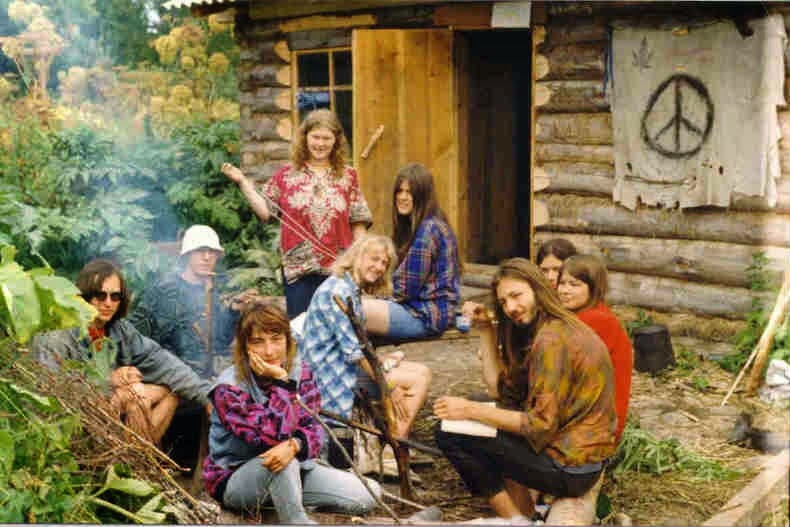
There is nothing better for a commune than a good-sized vegetable patch. A few tomato plants, some basil, and some rhubarb will keep you busy for the better part of a summer. Everyone can participate in the garden’s care and harvest. Because all residents are participating, the garden is truly a product of the community and a central element of commune life. Also, a bountiful garden can feed a bevy for several months—longer if produce is jarred or frozen.










 Mark Bere Peterson’s Counterculture, Urban Legends, Paganism & Witchcraft