The Girls – Emma Cline

“Emma Cline’s first novel, “The Girls” (Random House), is a song of innocence and experience—in ways that she has intended, and perhaps in ways that she has not. It’s a story of corruption and abuse, set in 1969, in which a bored and groundless California teen-ager joins a Manson-like cult, with bloody, Manson-like results. Evie Boyd, an only child whose upper-middle-class parents have recently divorced, wants to be older than her fourteen years, and is drawn to the free-spirited, rebellious young women she sees one day in a Petaluma park. They are looking for food to take back to the ranch where they live. The novel charts Evie’s accelerated sentimental education, as she is inducted into the imprisoning liberties of free love, drugs, and eventual violence, all of it under the sway of the cult’s magus, Russell Hadrick. In another way, though, Cline’s novel is itself a complicated mixture of freshness and worldly sophistication. Finely intelligent, often superbly written, with flashingly brilliant sentences, “The Girls” is also a symptomatic product not of the sixties but of our own age: a nicely paced literary-commercial début whose brilliant style, in the end, seems to restrict its reach and depth.”

~ The New Yorker

Zen Mind, Beginner’s Mind

“In Japan we have the phrase shoshin, which means “beginner’s mind.” The goal of practice is always to keep our beginner’s mind.. For a while you will keep your beginner’s mind, but if you continue to practice one, two, three years or more, although you may improve some, you are liable to lose the limitless meaning of original mind.

For Zen students the most important thing is not to be dualistic. Our “original mind” includes everything within itself. It is always rich and sufficient within itself. You should not lose your self‑sufficient state of mind. This does not mean a closed mind, but actually an empty mind and a ready mind. If your mind is empty, it is always ready for anything; it is open to everything. In the beginner’s mind there are many possibilities; in the expert’s mind there are few.

If you discriminate too much, you limit yourself. If you are too demanding or too greedy, your mind is not rich and self‑sufficient. If we lose our original self‑sufficient mind, we will lose all precepts. When your mind becomes demanding, when you long for something, you will end up violating your own precepts: not to tell lies, not to steal, not to kill, not to be immoral, and so forth. If you keep your original mind, the precepts will keep themselves.

In the beginner’s mind there is no thought, “I have attained something.” All self‑centered thoughts limit our vast mind. When we have no thought of achievement, no thought of self, we are true beginners. Then we can really learn something. The beginner’s mind is the mind of compassion. When our mind is compassionate, it is boundless. Dogen‑zenji, the founder of our school, always emphasized how important it is to resume our boundless original mind. Then we are always true to ourselves, in sympathy with all beings, and can actually practice.

So the most difficult thing is always to keep your beginner’s mind. There is no need to have a deep understanding of Zen. Even though you read much Zen literature, you must read each sentence with a fresh mind. You should not say, “I know what Zen is,” or “I have attained enlightenment.” This is also the real secret of the arts: always be a beginner. Be very very careful about this point. If you start to practice zazen (meditation), you will begin to appreciate your beginner’s mind. It is the secret of Zen practice.”

~ Shunryu Suzuki
Zen Mind, Beginner’s Mind

Ancient Greeks and the Nature of Matter

The fundamental questions of what the world is made of, and where matter came from, are some of the oldest. In the 6th century BCE, Greek philosophers such as Thales and Anaximenes proposed that all substances were modifications of more intrinsic substances, the main candidates being water, air, earth, and fire. In the 5th century BCE, Empedocles claimed that everything was a mixture of all four of these substances, or elements. His near-contemporary Democritus developed the idea that the universe is made of an infinite number of indivisible particles called atoms. Finally, in the 4th century BCE the influential scholar Aristotle added a fifth element, ether, to Empedocles’four. Although Aristotle was skeptical of the idea of atoms, it is remarkable that the concepts of both atoms and elements had been proposed more than 2,000 years before either was proved to exist.

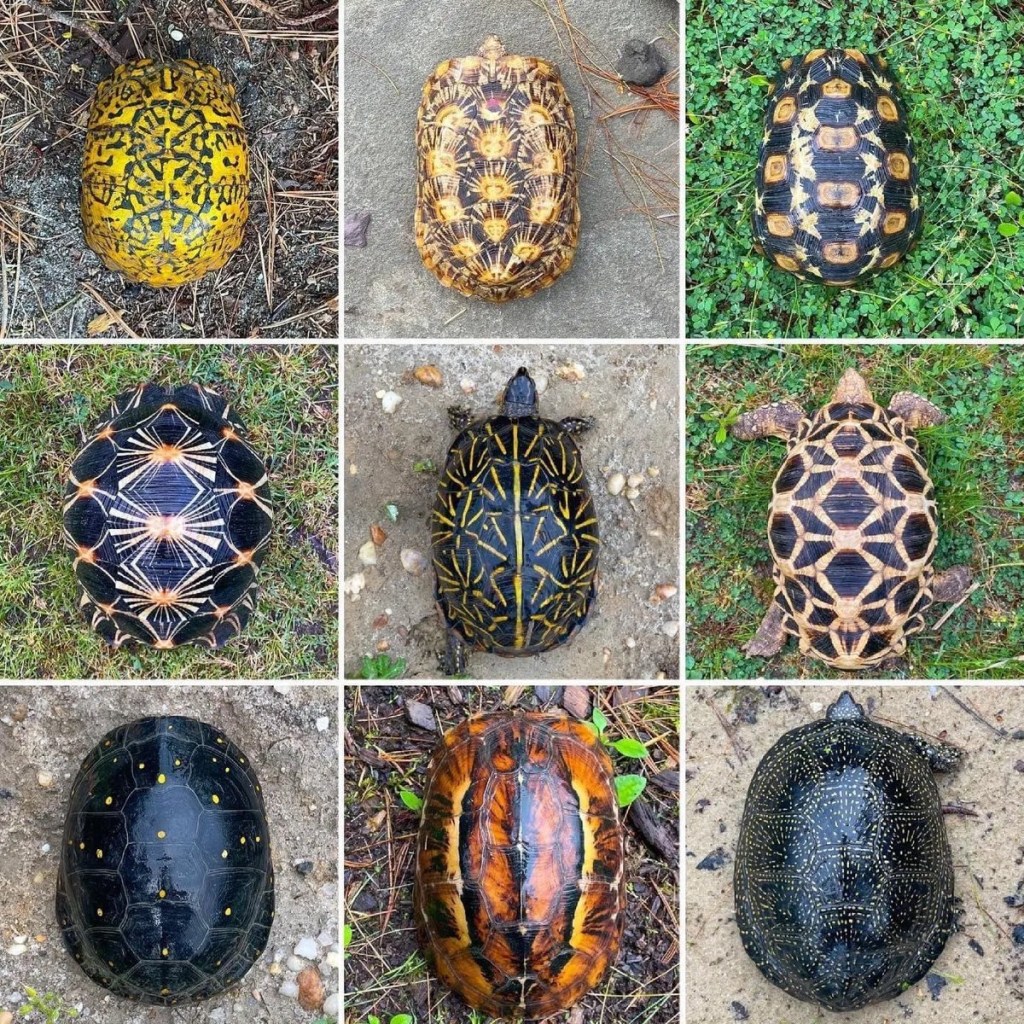
Varieties of Turtle and Tortoise Shells

Absolutely stunning and mind blowing!

The varieties of turtle and tortoise shells there are from species to species:

Top L to R eastern box turtle, pancake tortoise and Bell’s hingeback tortoise

Middle row L to R radiated tortoise, Florida box turtle and Burmese star tortoise

Bottom row L to R spotted turtle, Bourret’s box turtle and European pond turtle

A Guide to the Faerie Realm

  1. Politeness and respect goes a long way. It could save your ass and it is really a universal skill to have.
  2. If a faery starts talking to you be sure to be polite. It will not do you any harm. Woe if you’re rude or pompous because you may find yourself in a heap of trouble.
  3. Do not purposely insult the Fae. Apologize and truly mean it– even then they might not forgive you. (Humans are the same way…)
  4. Please do not assume that all Fae know one another, or like one another.
  5. Faery food is fine it is from someone your personally trust then you do need not to be weary about what you are eating.
  6. Do offer the fae folk sweet, shiny, natural gifts. We like the shiny.
  7. Honey.
  8. Recognize your environmental/carbon footprint. Plenty of fae dedicate time and effort in helping protect the planet. You should too!
  9. According to lore it would be wise not to walk into circles of mushrooms. In Faerie they are spellbound.
  10. Circles of dark green grass, too.
  11. If you choose to befriend a faery do not carry cold iron on you. (However, iron that’s been shaped into other things, such as steel and Wrought iron is not as lethal) and they will take it offensively.
  12. Faerie time is different from Earthly time.
  13. Try to not say thank you. The fae find it disrespectful as it dilutes their act of kindness or whatever they have done for you. Say “you are most kind” or “I appreciate your help/act of kindness/fellowship” etc. as a means of gratitude.
  14. Not over or under, but in-between, is where you’ll find the blessed and unblessed unseen.
  15. Nothing in Faerie is black or white, everything is gray.
  16. Keeping the rule of number 13 in mind, do not say I’m sorry. Say “my apologies”, “pardon me”, or “I express regret”.
  17. When the fae speak they mean everything they say. The tongue holds power so be careful what you say and listen closely to them because they may be saying more than they let on.
  18. If you are so super awesome that you can get the fae to promise something they will stick to that promise even if it means them death. The phrases “a faery’s promise” and “you have my word” are very powerful. Either of these sayings mean business.
  19. Fae are masters of manipulation. They will twist your words and generally make you regret what you asked for. Do understand that manipulation is a survival skill and it honestly isn’t narrowed down to just Fae culture.
  20. You can actually contract a fae: bond between you and them where both parties have to do something for one another– be careful. Faeries are very good at finding loopholes. Ex: You say they can’t cause you any injury and then they bite you, explaining the fact that they simply chose to take injury as meaning “verbal insult” instead of “bodily harm”. Very sly.
  21. The fae are able use glamour to confuse you or mislead you if that is their goal.
  22. If you are going for walks in wooded areas and get an overwhelming feeling of not being welcome then leave immediately. The Fae there probably feel threatened by your arrival and do not want you there. Or it could be something else entirely not fae.
  23. Some areas are more prone to fae activity than others, they could be urban or wild.
  24. Branches from hawthorn trees have a protective abilities. They also lure faeries and you might be able to see them there.

Gua Sha

This practice of strategically “scraping” body surfaces is performed to relieve pain, reduce inflammation, increase circulation, and boost the immune system. Traditionally this is done with a small, flat jade stone with rounded edges, which can be used on the body, muscles, acupressure points, and/or meridians to release heat, toxins, and so on. You usually scrape in the direction of the meridians only until you see small red dots (called petechia). These red dots indicate that blood has been brought to the surface of the skin, where it is able to release the heat and toxins. Chinese medicine calls this “raising the sha,” which is said to eliminate stagnation and inflammation in the blood and protect the immune system for days or even weeks after the treatment. You can easily learn to do this at home for certain conditions, such as when you are feeling vulnerable to a cold, have tight or sore muscles, or are feeling inflamed in a particular part of your body. For chronic conditions such as cancer or autoimmune disease, or if there are lumps, cysts, or fibroids, I recommend working with a practitioner before performing gua sha.

Lewis and Clark Expedition

One year after the United States doubled its territory with the Louisiana Purchase, the Lewis and Clark expedition leaves St. Louis, Missouri, on a mission to explore the Northwest from the Mississippi River to the Pacific Ocean.

Even before the U.S. government concluded purchase negotiations with France, President Thomas Jefferson commissioned his private secretary Meriwether Lewis and William Clark, an army captain, to lead an expedition into what is now the U.S. Northwest. On May 14, the “Corps of Discovery”—featuring approximately 45 men (although only an approximate 33 men would make the full journey)—left St. Louis for the American interior.

The expedition traveled up the Missouri River in a 55-foot long keelboat and two smaller boats. In November, Toussaint Charbonneau, a French-Canadian fur trader accompanied by his young Native American wife Sacagawea, joined the expedition as an interpreter. The group wintered in present-day North Dakotabefore crossing into present-day Montana, where they first saw the Rocky Mountains. On the other side of the Continental Divide, they were met by Sacagawea’s tribe, the Shoshone Indians, who sold them horses for their journey down through the Bitterroot Mountains. After passing through the dangerous rapids of the Clearwater and Snake rivers in canoes, the explorers reached the calm of the Columbia River, which led them to the sea. On November 8, 1805, the expedition arrived at the Pacific Ocean. After pausing there for the winter, the explorers began their long journey back to St. Louis.

On September 23, 1806, after almost two and a half years, the expedition returned to the city, bringing back a wealth of information about the region (much of it already inhabited by Native Americans), as well as valuable U.S. claims to OregonTerritory.

Source: history.com

Primate Facts

A bit about our closest relatives:

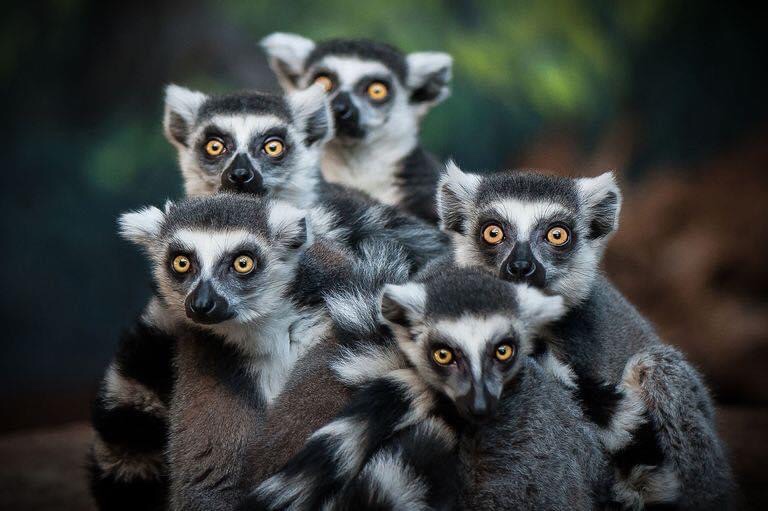
Primate Facts —> Just how egocentric are human beings? Well, it’s telling that “primate,” the name employed for this order of mammals, is Latin for “first rank,” a not-so-subtle reminder that Homo sapiens considers itself the pinnacle of evolution. Scientifically speaking, though, there’s no reason to believe that monkeys, apes, tarsiers and lemurs–all of the animals in the primate order–are more advanced from an evolutionary perspective than birds, reptiles or even fish; they just happened to branch off in a different direction millions of years ago.

Until recently, naturalists divided primates into prosimians (lemurs, lorises and tarsiers) and simians (monkeys, apes and human beings). Today, though, the more widely accepted split is between “strepsirrhini” (wet-nosed) and “haplorhini” (dry-nosed) primates; the former includes all the non-tarsier promisimians, and the latter consists of tarsiers and simians. Simians themselves are divided into two major groups: old world monkeys and apes (“catarrhines,” meaning “narrow-nosed”) and new world monkeys (“platyrhines,” meaning “flat-nosed”). Technically, therefore, all human beings are haplorhine cattarrhines, dry-nosed, narrow-nosed primates. Confused yet?

#PrimateFacts #Science #Evolution