Isaac Newton Quote

“I do not know what I may appear to the world, but to myself I seem to have been only like a boy playing on the seashore, and diverting myself in now and then finding a smoother pebble or a prettier shell than ordinary, whilst the great ocean of truth lay all undiscovered before me.”

~ Isaac Newton (1642-1727)

#IsaacNewton #Science

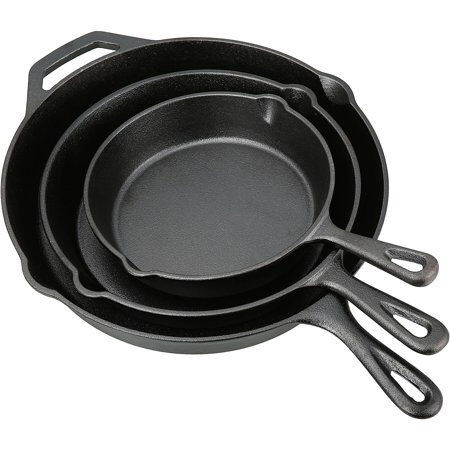
Seasoning Your Cast Iron Pan

Both of my grandmothers, from either end of Tennessee—McNairy County on the Tennessee River and Sevier County in Appalachia—cooked every day in cast iron. Mind you, these women could not have been more different. The South is a big place, and there are hundreds of miles and hundreds of years of diverging histories between folks in the Mississippi Delta and those in the Smokies. Tennessee is long, but cast iron is one common denominator.”

“The only tried-and-true way to season a cast-iron skillet is with lard.”
~ John Martin Taylor, Southern-Food Historian

Buy a Lodge cast-iron Pan they make the best in the world. They come pre-seasoned nowadays, but if you have your Great-Gramma’s pan that has been neglected or you just need to know how to season your pan here is an easy guide:

  • Wash a new skillet with warm soapy water once to remove the thin coating of wax applied at the factory. That’s the last time you should ever wash it with soap.
  • Have the butcher grind enough fresh pork fat to nearly fill the skillet. Place a thin layer of water (about ⅛ inch) in the bottom, and then add the fat. Put the skillet in the oven set to 225 degrees or on top of the stove over very low heat.
  • Melt the fat slowly; it can take an hour or more. When the solid matter (called cracklings) turns brown and sinks to the bottom, strain the fat into a glass jar with a tight-fitting lid and wipe out the skillet. After the fat has cooled, cover it and store in the refrigerator. You now have rendered lard for biscuits and piecrusts—and a seasoned skillet.
  • After each use, rub the inside of the skillet with bacon grease and wipe out the excess. The salt in the bacon grease will help preserve the skillet and keep food from sticking to the surface. If you must wash it to remove any dust or bits of burned food, don’t even think about putting it in the dishwasher. Use only cold water and a natural-bristle brush, then dry it thoroughly and wipe down with bacon grease.

Source: “The Southener’s Handbook,” by Garden & Gun

Iron Age Burial Uncovered In West Sussex

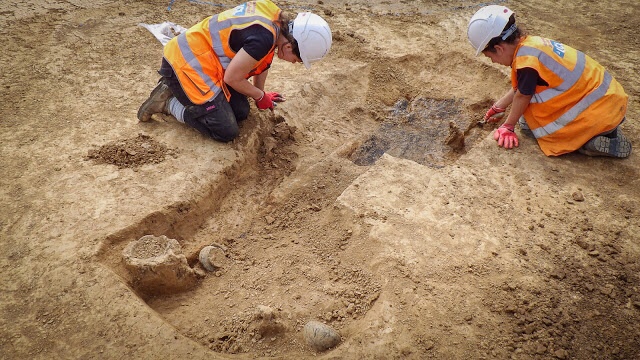
A richly-furnished grave belonging to an Iron Age ‘warrior’ buried 2,000 years ago has been uncovered in West Sussex. Iron weapons had been placed inside the grave, including a sword in a highly-decorated scabbard and a spear. The burial was discovered during an excavation commissioned by Linden Homes, who are developing a site on the outskirts of Walberton, near Chichester, to create 175 new homes.

ASE archaeologist Jim Stevenson, who is managing the post-excavation investigations into the burial, said: “There has been much discussion generally as to who the people buried in the ‘warrior’ tradition may have been in life. Were they really warriors, or just buried with the trappings of one? The grave is dated to the late Iron Age/ early Roman period (1st century BC – AD 50). It is incredibly rare, as only a handful are known to exist in the South of England.

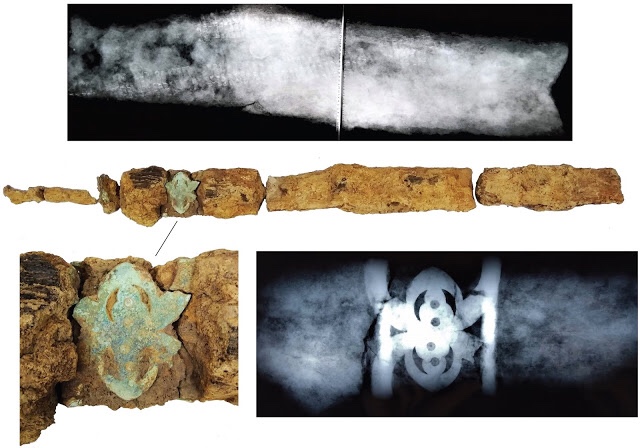
X-rays and initial conservation of the sword and scabbard reveal beautiful copper-alloy decoration at the scabbard mouth, which would have been highly visible when the sword was worn in life. Dotted lines on the X-ray may be the remains of a studded garment worn by the occupant when buried. This is particularly exciting for the archaeologists as evidence of clothing rarely survives.

The grave also held the remains of a wooden container, preserved as a dark stain, likely used to lower the individual into the grave. Four ceramic vessels were placed outside of this container, but still within the grave. The vessels are jars made from local clays and would usually have been used for food preparation, cooking and storage. It is likely that they were placed in the grave as containers for funerary offerings, perhaps intended to provide sustenance for the deceased in the afterlife.

Source: Archaeology News Network

Plato’s Euthyphro Dilemma

Plato’s Euthyphro Dilemma

“Are morally good acts willed by God because they are morally good, or are they morally good because they are willed by God?”

~ Socrates

(1) If divine command theory is true then either (i) morally good acts are willed by God because they are morally good, or (ii) morally good acts are morally good because they are willed by God.

(2) If (i) morally good acts are willed by God because they are morally good, then they are morally good independent of God’s will.

(3) It is not the case that morally good acts are morally good independent of God’s will.

Therefore:

(4) It is not the case that (i) morally good acts are willed by God because they are morally good.

(5) If (ii) morally good acts are morally good because they are willed by God, then there is no reason either to care about God’s moral goodness or to worship him.

(6) There are reasons both to care about God’s moral goodness and to worship him.

Therefore:

(7) It is not the case that (ii) morally good acts are morally good because they are willed by God.

Therefore:

(8) Divine command theory is false.

Small Batch Sausage Making 101

B55BFFD5-C913-4C72-9DB2-C553D5E56FE3

Step 1: The Spices

Your spices consists of the ingredients you will be using to flavor your sausage. Toasting and grinding your own spices makes a difference you can taste. Avoid ready made spice kits.

Step 2: Cutting

Cut the meat into uniform cubes that are smaller than the opening of your grinder. Remove blood vessels, tendons, or glands. Place the meat in a bowl large enough to allow room for mixing

Step 3: Marinating

Evenly distribute half of the spices over the meat. Using your hands mix well until evenly coated. Add the second half of spices and mix again. Refrigerate for at least 12 hours to allow the seasonings to permeate the meat.

Step 4: Chilling

Chilling both your meat and parts of the grinder helps to avoid grinding issues. After cutting and marinating the meat, be sure to refrigerate it for at least 2 hours so it is thoroughly chilled.

Step 5: Grinding

Begin by assembling the grinder following manufacturers instructions. You will need a wide bowl or container that fits easily under the grinder to catch the ground meat. Feed the meat into the tube, one piece at a time. Let the machine do the work rather than pushing too much meat through the grinder at once.

892E7089-7E3C-4E87-B25F-3536BCAE754F

Step 6: Mixing

Seasoned, ground sausage meat should be mixed thoroughly by hand for 1 to 2 minutes. This action ensures that the seasonings are evenly distributed throughout.

Step 7: Tasting

Scoop up about 2 tablespoons of the well-mixed farce and shape into a small, flat patty. Cook the patty in a small pan over medium heat. Evaluate the taste and texture. If too dry add a small amount of ground fat. If the seasoning Is too weak, add more salt or spices. If too highly seasoned, add a small amount of unseasoned ground meat and ground fat. It is much easier to add salt and spices than it is to lessen their intensity.

Step 8: Stuffing (Optional)

Stuffing takes practice. Don’t be discouraged your first few batches . They will still taste great. Natural casings are the processed lamb, pork, and beef intestines used for casing sausage and salami. Before they can be used, they must be rinsed thoroughly in several changes of cold water. Once rinsed, they can be stored in water in the refrigerator for up to about 5 days.

Remove a length of soaked casing from the water.

Turn the crank so that the lid presses gently onto the top of the meat, forcing just ½ inch (12 mm) of the meat out through the nozzle. This helps to eliminate air pockets

Pull the end of the casing over the edge of the nozzle, then knot the end of the casing.

Place your thumb and forefinger around the end of the nozzle to regulate the movement of the casing.

Crank the handle slowly to press the sausage meat into the casing. Release more casing off the nozzle as the sausage flows through the tube.

If an air bubble forms, prick the sausage casing.

0693D68E-3102-4E0E-9D98-A70D458A5346

Basic Sausage Recipes:

Poultry Or Rabbit

3¾ pounds (1.7 kg) boneless, skinless poultry or rabbit

+ 1¼ pound (567 g) pork back fat

+ 2 tablespoons (1.2 ounces/34 g) fine sea salt

Lamb

3 pounds (1.4 kg) boneless lamb shoulder

+ 2 pounds (900 g) lean boneless lamb foreshank or hind shank

+ 2 tablespoons (1.2 ounces/34 g) sea salt

2 tablespoons olive oil

______ or

2½ pounds (1.2 kg) boneless lamb shoulder

+ 2½ pounds (1.2 kg) boneless pork picnic

+ 2 tablespoons (1.2 ounces/34 g) sea salt

Pork

4½ pounds (2 kg) boneless pork picnic

+ 8 ounces (225 g) pork back fat

______ or

5 pounds (2.3 kg) boneless pork Boston butt

+ 2 tablespoons (1.2 ounces/34 g) fine sea salt

Beef

5 pounds (2.3 kg) untrimmed beef chuck or brisket

+ 2 tablespoons (1.2 ounces/34 g) sea salt

____ or

3 pounds (1.4 kg) untrimmed beef such as chuck or brisket

+ 2 pounds (900 g) pork Boston butt

+ 2 tablespoons (1.2 ounces/34 g) sea salt

Breakfast Sausage And Seasoning

Basic Sausage Recipe:

Pork

Spices:

1½ teaspoons freshly ground black pepper

1 teaspoon ground cayenne

⅛ teaspoon freshly grated nutmeg

1 allspice berry, ground

1 tablespoon minced garlic

Grind:

Medium

Garnish:

½ cup (30 g) finely chopped fresh sage

Casing:

Lamb

Farmer’s Sausage And Seasoning

Basic Sausage Recipe:

Pork

Spices:

1½ teaspoons freshly ground black pepper

1 teaspoon toasted and ground aniseeds

1 teaspoon ground cayenne

Grind:

Medium

Garnish:

1½ cups (360 ml) dry red wine reduced to ½ cup (120 ml)

2 tablespoons grated Pecorino Romano cheese

Casing:

Pork

Fennel Sausage And Seasoning

Basic Sausage Recipe:

Pork

Spices:

2 tablespoons toasted and ground fennel seeds

1½ teaspoons freshly ground pepper

2 teaspoons ground dried oregano

4 teaspoons minced garlic

Grind:

Medium

Garnish:

½ cup (30 g) chopped fresh flat-leaf parsley

2 tablespoons whole fennel seeds, toasted

1 tablespoon chile flakes

¼ cup (60 ml) dry white wine

Casing:

Lamb

Spicy Italian Sausage And Seasoning

Basic Sausage Recipe:

Pork

Spices:

3 tablespoons toasted and ground fennel seeds

1 teaspoon freshly ground black pepper

½ teaspoon freshly ground white pepper

4 teaspoons ground chile flakes

1 tablespoon plus ½ teaspoon paprika

1 tablespoon minced garlic

Grind:

Medium

Garnish:

2 tablespoons dry white wine

Casing:

Pork

Sweet Italian Sausage And Seasoning

Basic Sausage Recipe:

Pork

Spices:

3 tablespoons toasted and ground fennel seeds

1½ teaspoons toasted and ground aniseeds

3 allspice berries, ground

1 teaspoon freshly ground pepper

1 tablespoon ground dried oregano

1 tablespoon minced garlic

Grind:

Medium

Garnish:

½ cup (30 g) chopped fresh flat-leaf parsley

¼ cup (60 ml) dry white wine

Casing:

Pork

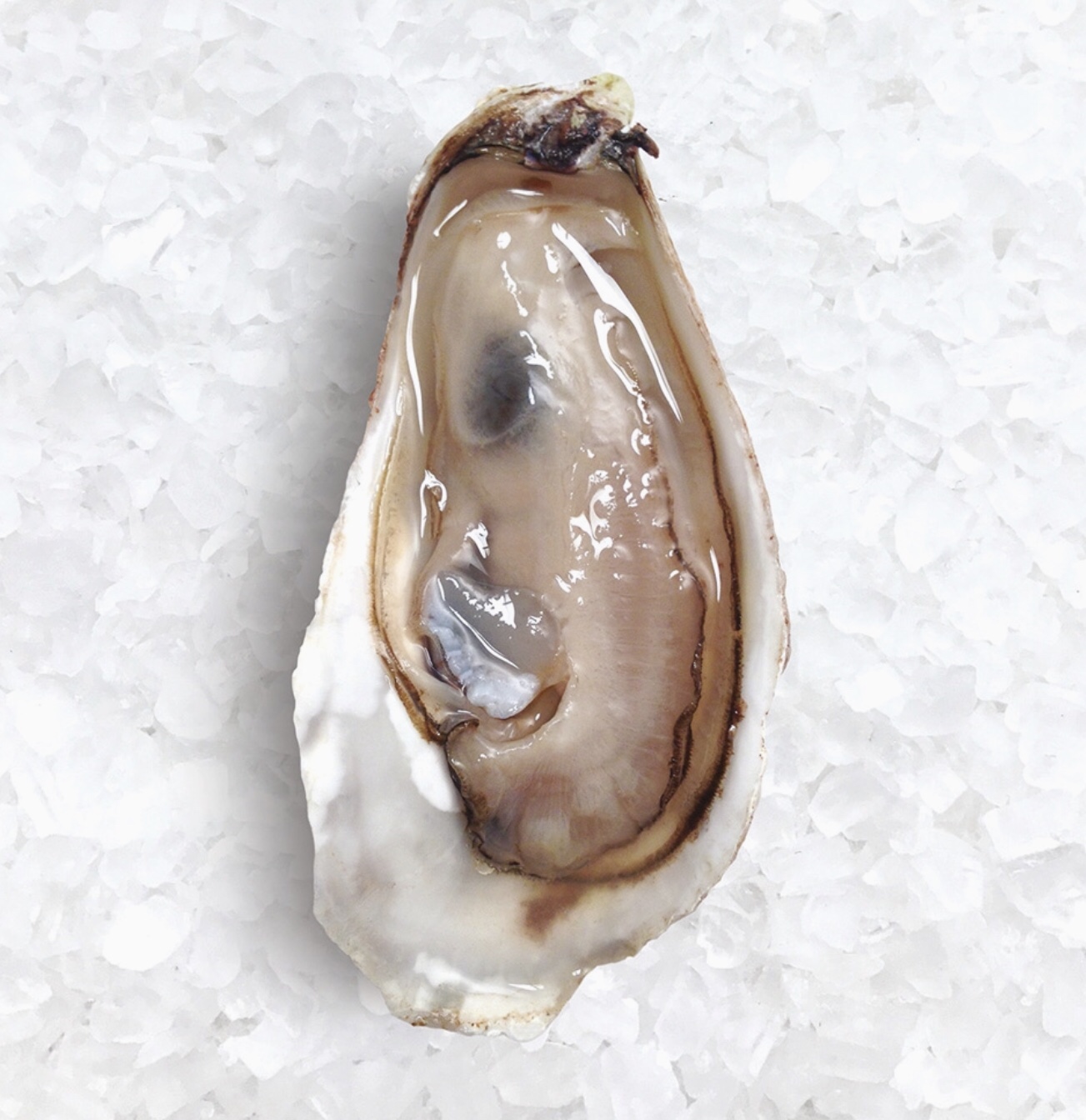
Stingray Oyster

Scientific Name: Crassostrea Virginica

Stingrays are so named for the bay oyster’s chief predator.

The chocolate colored shell is definitely slurp friendly. A simple seagrass salt scent drifts over the liquor.

This classic Chesapeake Bay oyster has decidedly plump and sweet meat with a solid brininess. The finish is slightly metallic that floats on the taste buds.

Try with hot sauce and a Pilsner, perhaps Siracha sauce.