In a bowl cream together with an electric or hand beater the cream cheese, lemon zest, juice, sea salt and pepper to a whipped cream consistency. Fold in the capers, onion and chives.
Spread each slice of bread with a generous amount of the cream cheese mixture, distributing evenly, then the smoked salmon and rocket. Sandwich bread together, cut off the crusts and then cut into triangles.
Tip: I like to use dark rye for this recipe, but sourdough is a good alternative.
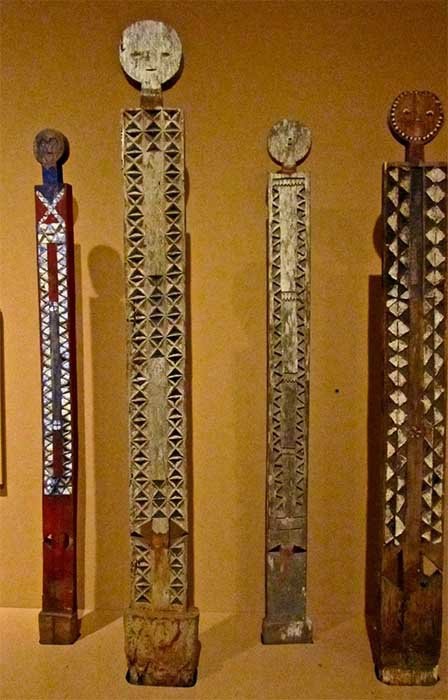
During the 1980s, Coastal Kenya experienced the largest heist of ancestral artifacts in history. Over 300 wooden Vigango statues were taken from the sacred grounds of several Mijikenda tribes. These 4-foot wooden statues were stolen and sold to western tourists and international art collectors. Since then, the Vigango statues have been discovered in private art collections and museums throughout Europe and the United States.
A majority of those Vigango pieces in circulation were sold by art dealer Ernie Wolfe III, who was accused by the New York Times in 2006 of being a prime suspect to the sale of stolen Vigango statues. Although hundreds of the statues which he sold remained in circulation, Wolfe III mentioned making efforts to stop further sales of newer Vigango statues. Much work has been made by American anthropologists Linda Giles, Monica Udvardy, and John B. Mitsanze to repatriate the looted statues back to Kenya.
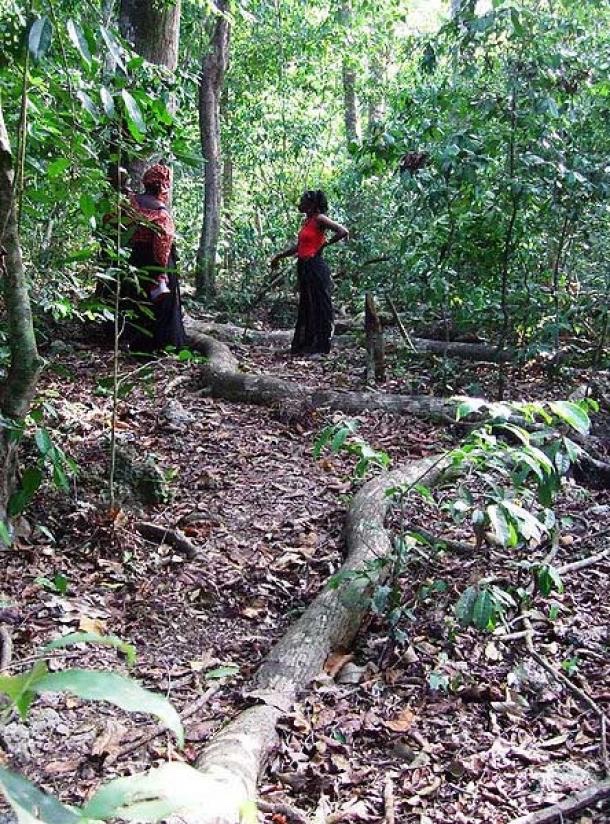
The Mijikenda culture consists of nine tribes related to the Bantu ethnic groups of Kenya. Other Kenyans have derogatorily referred to the Mijikenda people either as the ‘Nyika’ or ‘Nika,’ meaning ‘bush people.’ This prejudice may be why their sacred statues may have been targets for looting, along with the pressures of crushing poverty. There are over 30 sacred Kaya forests that are used for prayer by the Mijikenda.
Vigango statues are created from the wood these sacred forests provide. The wood is resistant to termites and very dense. The statues stand 4 feet (1.22 meters) tall and have unique carved triangle etchings that symbolize abstract forms of identity that once bestowed the deceased Mijikenda elder they represent.
The purpose of the Vigango’s creation is to incarnate the spirits of dead male Gohu elders who held significant respect and immense responsibility within the Mijikenda tribal community. It is the secretive Gohu society of men who are responsible for the construction of Vigango statues.
It is customary for a family to commission a member of the Gohu to create a Vigango statue of their respected male elder a week after death. The sculptures appear two dimensional in their depiction of revered elders of significance, but in their simplicity, a plethora of complex identities are shaped with each individual Vigango statue. This ritual is often followed by a festive meal and a family gathering.
These statues also act as liaisons of communication for living community members to ask advice from wise elder spirit ancestors. The Vigango statues were said to aid in advice regarding plague, famine, and drought. Because of their essential role in the Mijikenda tribal community, Gohu are usually placed in the center of their town or near the current chief’s homestead. However, it is believed that Vigango’s advice can only be heard by those related to the people who have passed.
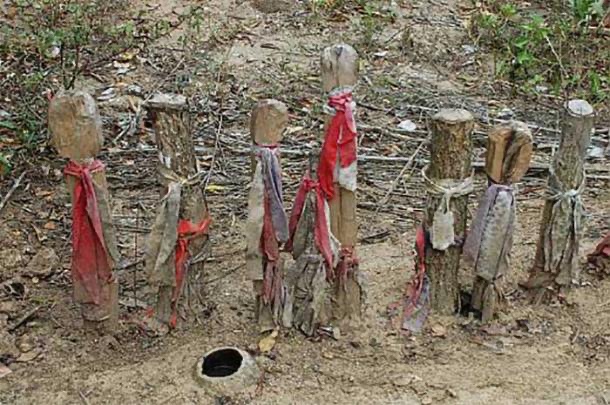
Ernie Wolfe III mentioned that the statues are sometimes left behind when a village relocates to another fertile region. Once the village has settled, it is up to the tribe to erect smaller statues carrying no carvings, known as Vibaos, to take the place, power, and spiritual connectivity that make the abandoned Vigango statues powerless. If this ritual is not performed, the spirits of the elders, along with their enchanted magic, remain alone and isolated in the region no longer inhabited by their people.
But the belief of deactivated Vigango statues being replaced by Vibao may be subject to scrutiny due to the controversy of Wolfe III’s own collection. In another account mentioned by the New York Times, the anthropologist Udvardy believes that Wolfe III had misinterpreted the situation and that Vigango are to forever remain in the land they were erected.
Whichever is the truth, the fact remains that the theft and displacement of these powerful spirit vessels result in their wrath towards whoever steals, purchases, and acquires them. To carry a Vigango statue is both a blessing and a curse. And those who are cursed suffer the most.
Apparently oats were originally a weed found in wheat and barley crops that eventually became a crop on its own. The Greeks and Romans of classical times regarded oats as coarse and used them mostly as animal fodder. The Romans called it avena, and considered them only fit to feed barbarians.
Their neighbors, the Celtic and Germanic peoples, took an entirely different view and used oats extensively. In the northern and upland regions of Europe, oats are the only cereal which will ripen in the cold wet climate. Oats were first cultivated around 1000 B.C.E. in Central Europe. The first record of the cultivation of oats in England is a location called athyll (“on oat hill”) in Anglo Saxon records from 779 CE. There is a record of the bishop of Worcester’s oat lands mentioned in a boundary charter dated 984 CE. Ground oats mixed with milk, cream or water was a very common meal for working people. It was not until the fifteenth century that flour made from oats was first referred to as oatmeal.
1 1/2 cups oatmeal
3 cups all purpose flour
1 cup brown sugar
1/2 cup molasses
1/2 cup golden syrup
3 teaspoons ground ginger
1/2 cup (1 stick) butter or lard
1 teaspoon allspice
1/8 teaspoon mace
1/8 teaspoon nutmeg
3 teaspoons cinnamon
2 teaspoon baking powder
1/2 teaspoon salt
1 egg
1 cup milk
Preheat oven to 350 F (180 C).
Soak the oats in the milk in a small bowl for a half hour.
Whisk together the rest of the dry ingredients in a larger bowl. Stir the brown sugar and the egg together in another large bowl. In a small saucepan over low heat, melt the butter and stir in the molasses and golden syrup. Mix the butter/syrup mixture to the brown sugar mixture. Stir in the dry ingredients until just blended. Place in a greased 9 X 11 inch pan. Bake for about 45 minutes, or until the cake starts to come away from the sides of the pan. A toothpick inserted into the middle should come out clean and the cake should spring back when touched.
Alternatively you can roll the batter into small balls, roll them in oatmeal, and bake them on a cookie sheet until brown.
The ancient Roman festival of Lupercalia (celebrated to avert evil spirits and purify the city, releasing health and fertility) has been one of the earliest records of the term Valentine’s Day. But the holiday isn’t what you would imagine.
The event, which was held February 13 to February 15, began with the traditional sacrifice of an unlucky goat and dog.
A group of priests called the Luperci then cut off a piece of the skin of the two animals, touched it to their foreheads and then struck it against every woman nearby. The thinking, it was said, is that the women hoped it would help make them more fertile.
By the end of the 5th century, Pope Gelasius I had seen enough — he replaced Lupercalia with St. Valentine’s Day.
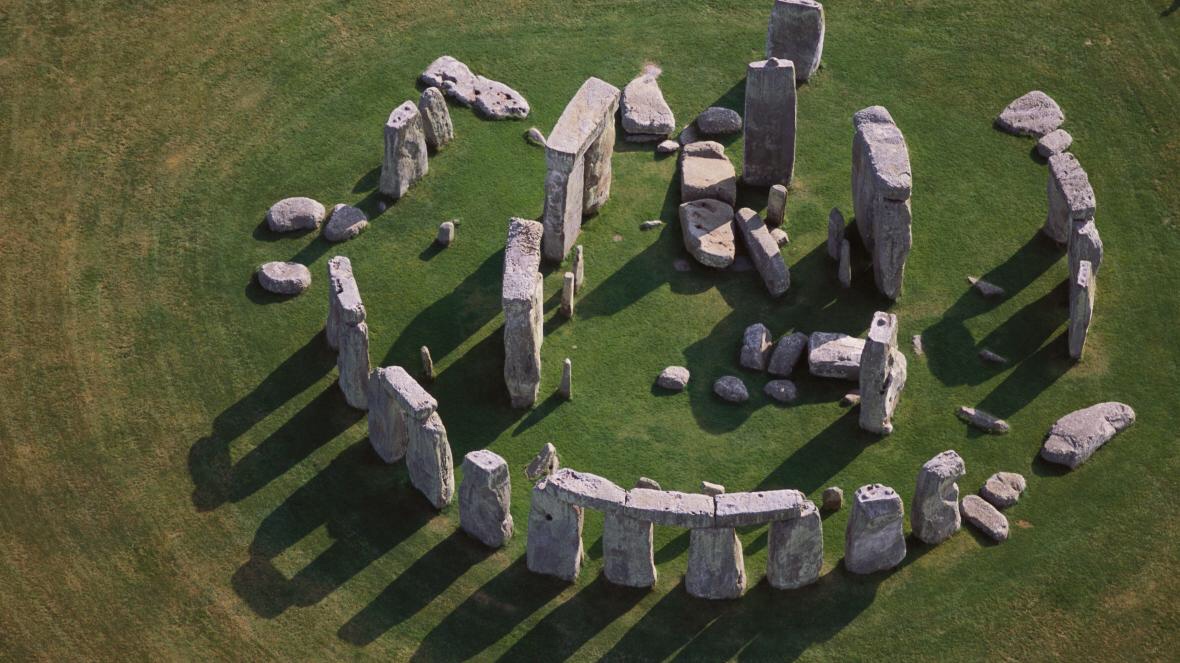
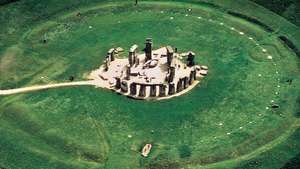
The discovery of a dismantled stone circle—close to Stonehenge’s bluestone quarries in west Wales—raises the possibility that a 900-year-old legend about Stonehenge being built from an earlier stone circle contains a grain of truth. Radiocarbon and OSL dating of Waun Mawn indicate construction c. 3000 BC, shortly before the initial construction of Stonehenge. The identical diameters of Waun Mawn and the enclosing ditch of Stonehenge, and their orientations on the midsummer solstice sunrise, suggest that at least part of the Waun Mawn circle was brought from west Wales to Salisbury Plain. This interpretation complements recent isotope work that supports a hypothesis of migration of both people and animals from Wales to Stonehenge.
In the oldest story of Stonehenge’s origins, the History of the Kings of Britain (c. AD 1136), Geoffrey of Monmouth describes how the monument was built using stones from the Giants’ Dance stone circle in Ireland. Located on legendary Mount Killaraus, the circle was dismantled by Merlin and shipped to Amesbury on Salisbury Plain by a force of 15,000 men, who had defeated the Irish and captured the stones. According to the legend, Stonehenge was built to commemorate the death of Britons who were treacherously killed by Saxons during peace talks at Amesbury. Merlin wanted the stones of the Giants’ Dance for their magical, healing properties.
This 900-year-old legend is fantasy: the Saxons arrived not in prehistory, but only 700 years before Geoffrey’s own time, and none of Stonehenge’s stones came from Ireland. Yet the fact that Stonehenge’s ‘bluestones’ derive from Wales—far to the west of Salisbury Plain—has led to speculation that there may be some truth in Geoffrey’s pseudo-history. Moreover, at the time Geoffrey was writing, this region of south-west Wales was considered Irish territory. One possibility is that the bluestones did indeed derive from a stone circle in west Wales, which was dismantled and re-erected as Stonehenge. A similar conclusion was reached a century ago by geologist Herbert Thomas, who established that the spotted dolerite bluestones at Stonehenge originated in the Preseli Hills of west Wales, where, he suspected, they had originally formed a “venerated stone-circle”
The Rök Stone is one of Sweden’s most interesting rune stones. A man called Varin erected it in honour of his dead son’s memory in the 9th century. The stone stands beside Röks Church on the plains of the province of Östergötland. Its complicated web of stories continues to baffle scholars.
The Rök Stone stands two and a half metres above ground and around one metre beneath ground. The boulder of pale grey, fine-grained granite probably originates close to where it was found. The surface is strewn with runes; there are around 280 on the front and 450 on the back side. The stone engraver composed the placement of his text so brilliantly that a person standing upright can read the meandering runes. The stone is now protected by a pyramid-shaped roof in the outdoor museum that was established in 1991.
Varin’s contemporaries must have perceived the Rök Stone as a literary and artistic masterpiece. A rune stone carver with a distinct sense of form and ornament has created the decorative text. He also appears to have been a learned poet, familiar with mythic tales and conceptions of the period. It seems like he wanted to put the reader’s acumen and education on trial. Nowadays, scholars agree about how to read the Rök Stone, but not on how to interpret it. The stone consists of convoluted legends, obscure myths and various epics, as well as accounts of Varin’s own family history.
The monumental size and rich ornamentation of the Rök Stone suggests that the man called Varin belonged to an influential family. Furthermore, the appearance of Thor, a pagan God, in the latter part of the text, could be an effort to give a divine legitimacy to Varin and his family. In that sense, the stone served as a memorial of a lost son, as well as a status symbol for the family.
“I have read somewhere of an old Chinese curse: ‘May you be born in an interesting time!’ This is a VERY interesting time: there are no models for ANYTHING that is going on. It is a period of free fall into the future, and each has to make his or her own way. The old models are not working; the new have not yet appeared. In fact, it is we who are even now shaping the new in the shaping of our interesting lives. And that is the whole sense (in mythological terms) of the present challenge: we are the ‘ancestors’ of an age to come, the unwitting generators of its supporting myths,the mythic models that will inspire its lives.”
Detail of miniatures of cats catching mice, mice stealing eucharistic wafers, and (below), an ancestor of Keyboard Cat: a later marginal doodle of a cat playing a stringed instrument; from a bestiary, England (Salisbury?), 2nd quarter of the 13th century.
Detail of a miniature of a nun spinning thread, as her pet cat plays with the spindle; from the Maastricht Hours, the Netherlands (Liège), 1st quarter of the 14th century.
Now this is the weirdest one by far. (The story, of course, is bogus.):
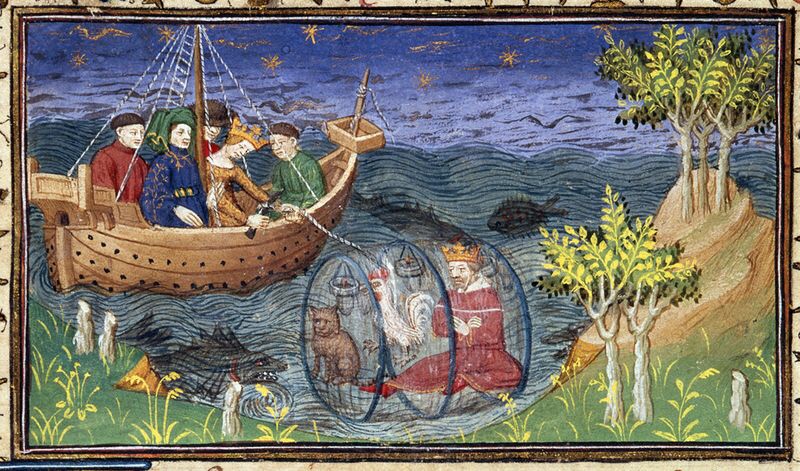
Alexander the Great, whose fictional explorations of the natural world were retold throughout the Middle Ages, included a cat, along with the cock and the dog, as his companions in a proto-submarine. Here, the animal was not merely a pet, but a natural rebreather, purifying the air so Alexander would not stifle in the enclosed space. The dog was more unfortunate, chosen as an emergency escape mechanism: water, medieval readers were assured, would expell the impurity of a dog’s dead carcasse. If Alexander encountered danger, he had only to kill the dog, which would be expelled to the surface, bringing Alexander with it. As for the cock – everyone knows how valuable they are for telling time with their crows, a useful function underwater, out of sight of the sky.
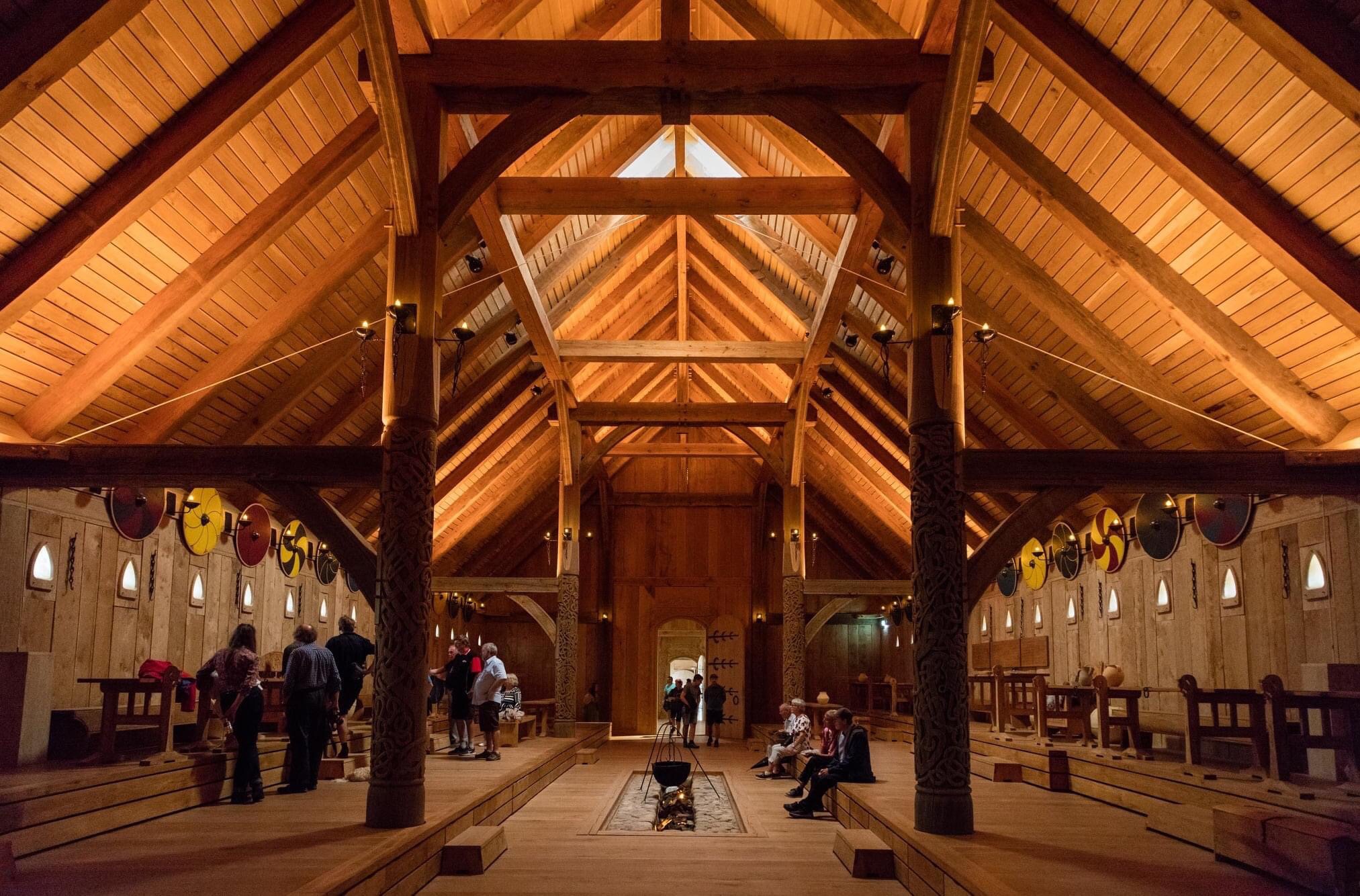
A majority of the written sources we do have are from Iceland. Vikings discovered Iceland in the middle of the 9th century. This discovery led to a land rush as many families were eager to carve out a new life in this austere place of stark beauty. Many of these settlers were escaping Harald Fairhair and other despotic kings who were nation-building in Scandinavia. These pioneer families were fiercely independent and wanted to preserve their way of life and culture without becoming the serfs of greedy lords.
Consequently, many of the Vikings who settled Iceland were from western Norway. Other Vikings came to Iceland indirectly, by way of the Hebrides, Orkney, Ireland, or the Faroe Islands, with Celts from those lands making up portions of their households.
The Vikings set up a democracy in Iceland, with a firm sense of law based on honor and restitution. In the year 1000, the Icelanders voted to accept Christianity as the public religion, while allowing people to practice whatever religion they chose in private. This decision was made for the sake of peace and to keep up with the changing times. But this peculiar conversion would have another effect as well: while Viking descendants in Christianized Scandinavia, Normandy, England, and elsewhere actively distanced themselves from their pagan past, the Icelanders were much more comfortable with that part of their heritage. This, combined with natural isolation and a conservative disposition, led to Iceland remaining a bastion of Old Norse culture.
Even today, a thousand years later, the modern Icelandic language is very similar to Old Norse. Though some word meanings and pronunciation have naturally shifted, Icelandic college students can read the Medieval manuscripts without much difficulty. This retention of language is a tremendous testament to the cultural preservation that occurred in that island nation.
In the middle of the 13th century – more than 150 years after the last Vikings sailed the seas or stood in battle – Iceland was undergoing a violent political crisis. This crisis of politics became a crisis of identity, and perhaps because of this, there was a strong intellectual impulse to record the remnants of their ancient heritage. For the first time, Viking lore was set down in writing for future generations to read.
This creative impulse expressed itself in two forms: The first was the Eddas – the collected poetry and myths of the Old Norse gods, goddesses, and heroes. But the second impulse may have been the more remarkable: the Icelanders set down the stories of their ancestors – ordinary men and women. These sagas were a unique accomplishment in medieval literature. Even today, the sagas are recognized as one of the world’s great literary achievements and a forerunner of the modern novel.
Even in the Viking Age, poets from Iceland were considered among the best. But after their time, their descendants expanded the Norse oral tradition into a vibrant literary culture. To this day, Icelanders read more books and even write more books per capita than any other nation in the world.
At the dawn of time, Odin and his two brothers killed the giant Ymir and created the world from his body. As usual, a god’s motivations are difficult to determine. Did Odin simply need Ymir dead for the sake of creation? Or did the Alfather reason that if Ymir continued to spawn giants that any order in the universe would become impossible? In any case, as the three gods tore the massive giant to pieces, a vast deluge of blood burst forth. This blood became all the world’s oceans, and the torrent swept away every giant – except for one family who escaped in a wooden ark. This giant was named Bergelmir, and all the later giants were descended from him.
Odin and his brothers made the land from Ymir’s corpse, with his teeth and broken bones forming the stones and the mountains, the great dome of his skull forming the sky, and even his thoughts forming the clouds – thin and wispy or dark and brooding. They called this world Midgard, and they encircled it with a mighty barrier made from Ymir’s eyelashes. They also made their own realm, Asgard. Asgard and Midgard (along with several other of the Nine Worlds) became “innangard,” a place of protection where the gods ruled. Beyond, were places the giants ruled – Jotunheim, Hel, and the other realms that formed “utangard” or, as both Utgard and utangard would be translated, “beyond the enclosure.”
Cast out into the darkness of Utgard, the Jötnar remembered a time when they ruled. Either out of a need for revenge or because – as the Eddic Poem says – they really were “born of venom and thus fierce and cruel,” the giants dream of a time when they will overcome Asgard and Midgard.
The time for them to unite and march against the gods will come in Ragnarok. In the meantime, many giants try their luck raiding the territory of the gods. The bravest of them sometimes appear in Asgard, with a challenge or a trick for the Aesir gods, or they come to terrify us mortals in Midgard. When the Vikings and other Nordic/Germanic peoples took shelter from howling storms, they knew it was Odin leading the gods in “the Wild Hunt” against the giants. When they saw thunder’s flash and the pound of lightning, they knew Thor was smiting giants with his mighty hammer, Mjolnir.
Sometimes, the gods and giants live in an uneasy peace. Not only did gods and giants often form marriages, liaisons, and alliances, but there were times when giants were even able to show some sympathy with the gods. For example, when the most beloved god, Baldr, died because of Loki’s treachery, even the giants wept. Peace never lasted long, though. Whether because giants would make incursions into Asgard, or because Odin or Thor would venture into Jotunheim on their adventures, the hostility between giants and gods was always kept alive.
This enmity and ages-long struggle will come to fruition at Ragnarok. There the gods and giants will destroy each other. Like the opposing forces of creation and chaos they seem to be, they will cancel each other out, and oblivion will resume before the universe is – perhaps – born anew.










 Mark Bere Peterson’s Counterculture, Urban Legends, Paganism & Witchcraft