Communities of Hate

The attack on the US Capitol and our democracy remind us of the ever-present dangers of hatred and propaganda. Join USHMM for a discussion about how, 75 years after the Holocaust, white supremacist and other hate groups continue to exploit racism, conspiracy theories, and antisemitic lies.

Speakers:

Arie Kruglanski, Holocaust Survivor, Terrorism Expert, and Psychology Professor, University of Maryland

Patricia Heberer Rice, Senior Historian, United States Holocaust Memorial Museum

Moderator:
Edna Friedberg, Historian, United States Holocaust Memorial Museum

Holocaust Best Friend Reunion

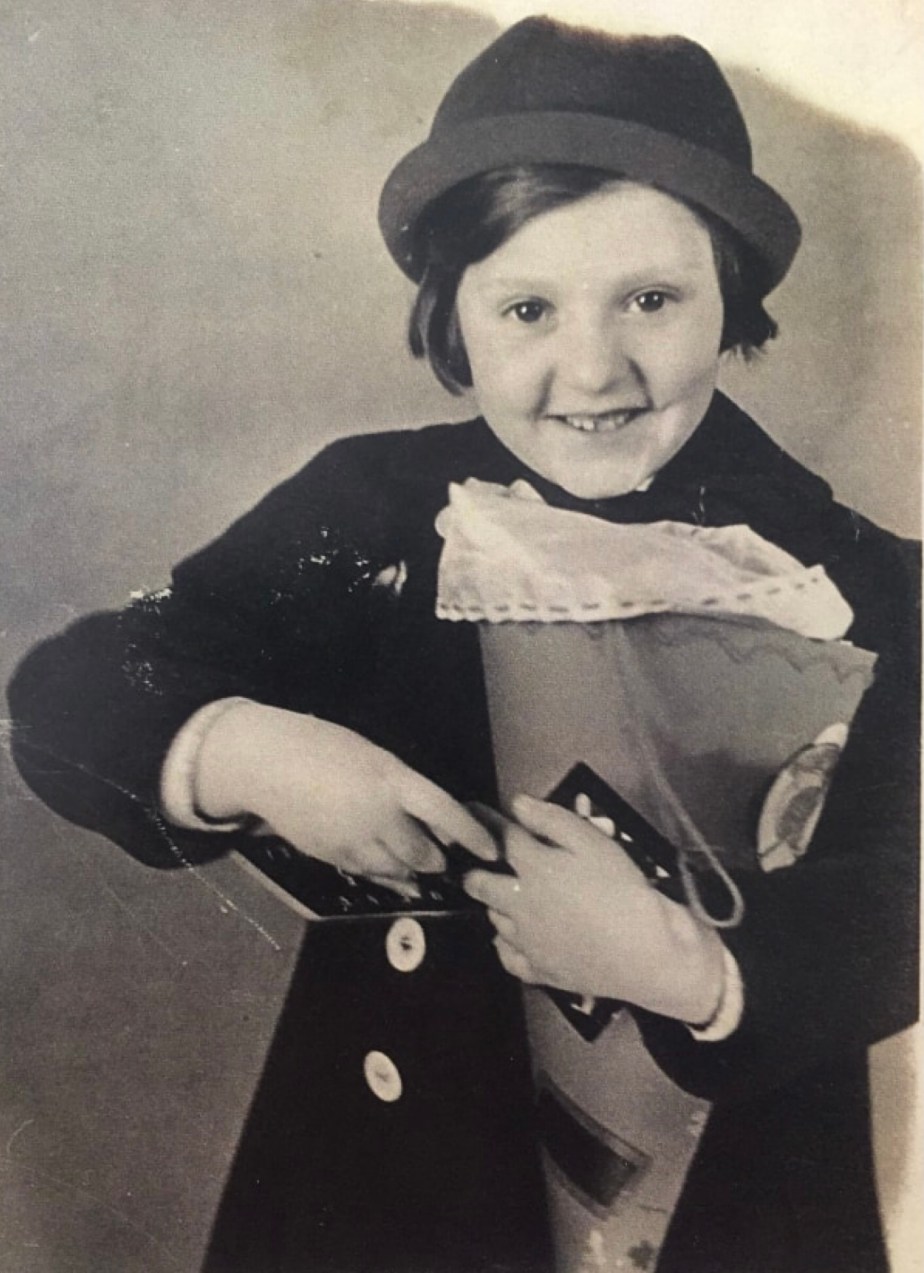
The Washington Post has a heartwarming story about two women who were best friends as children in 1938 Germany, when Kristallnacht took place and the Holocaust descended. They fled Germany separately, and, after searching for each other for decades, finally found each other. One lives in New Jersey, the other in Chile.

Every Sunday, Betty Grebenschikoff and Ana María Wahrenberg have a scheduled phone call. They often lose track of time talking, as best friends tend to do.

The weekly calls are only a recent ritual. In fact, just four months ago, both women believed the other had died in the Holocaust.

“For 82 years, I thought my best friend from Germany was dead,” Grebenschikoff said. “I’d been looking for her for all those years, and I never found her.”

That’s right: 82 years! Betty Grebenschikoff and Ana María Wahrenberg are now 91 years old, and they searched for each other for a lifetime. And they found each other, thanks to Stephen Spielberg, but I’ll let you read about that for yourself. It was the merest chance. Now they talk every Sunday in a video call:

When the women heard the other was still alive, they were shocked and delighted in equal measure.

“It was such a miracle,” said Grebenschikoff, who called the unlikely reunion “bashert,” Yiddish for “destiny.”

Grebenschikoff joined the Zoom call on Nov. 19 from her home in St. Petersburg, Fla., while Wahrenberg signed on from Santiago. Right away, they started chatting in German, their shared language.

“It was like no time had passed,” Grebenschikoff said. “Of course, 82 years makes a difference, but more or less, we just picked up where we left off.”

The story will make you tear up:

https://www.washingtonpost.com/lifestyle/2021/03/09/holocaust-best-friends-reunion/

The Arctic Henge (Raufarhöfn, Iceland)

The Arctic Henge (Raufarhöfn, Iceland)

Located in one of Iceland’s most remote northern villages, the Arctic Henge is a colossal piece of stone construction that, when finished, will make Stonehenge look like amateur hour.

Started in 1996, the Arctic Henge project is a monument not only to the country’s nordic roots, but also to some of the neo-pagan beliefs that have arisen in certain areas. The piece was inspired directly from the eddic poem Völuspá (Prophecy of the Seeress), taking from it the concept of 72 dwarves who represent the seasons in the world of the poem, among other symbolic queues. In the Arctic Henge, 72 small blocks, each inscribed with a specific dwarven name will eventually circle four larger stone monuments, which in turn will surround a central balanced column of massive basalt blocks. Each aspect of the deliberate layout corresponds to some aspect of ancient Norse belief and when each piece of the monument is installed, visitors will be able to “capture the midnight sun” by viewing it through the various formations at different vantage points depending on the season.

At current, only the imposing central tri-column and one of the four larger gates have been constructed, along with a smattering of the smaller stones, but it is still a work in progress. When it is complete, the Arctic Henge could easily become the premiere site for Paganism in the entire world and millennia from now it might seem as mysterious as Stonehenge seems to us today.

Source: Atlas Obscura

Herbs And Planets

This list is taken from the 16th century herbalist Nicholas Culpepper’s, “Compleat Herbal,” held in esteem by a number of alchemists old and modern.

SUN: angelica, bay, chamomile, celandine, eyebright, juniper, marigold, rosemary, rue, saffron, St. John’s wort, sundew, walnut

MOON: chickweed, cleavers, watercress, cucumber, lettuce, water-lily, moonwort, wallflower, willow

MERCURY: wild carrot, caraway, dill, hazelnut, horehound, lavender, lily, licorice, marjoram, oats, parsley, parsnip, savory, honeysuckle, valerian

VENUS: burdock, columbine, coltsfoot, daisy, eringo, featherfew, figwort, goldenrod, marshmallow, mint, mother-wort, mugwort, catnip, pennyroyal, plantain, periwinkle, poppy, purslane, primrose, strawberry, yarrow

MARS: all-heal, barberry, basil, garlic, gentian, hawthorn, hops, nettle, onion, radish, rhubarb, tobacco, wormwood

JUPITER: Melissa, bilberry, borage, chervil, cinquefoil, dandelion, dock, endive, hyssop, house-leek, melilot, oak, roses

SATURN: amaranths, barley, corn, beet, comfrey, dodder, elm, fumitory, horsetail, holly, ivy, mullein, nightshade, shepherd’s-purse, blackthorn, wood, wintergreen, yew

Nicolaus Copernicus‘s book “On the Revolutions of the Heavenly Spheres” is added to the Index of Forbidden Books

Today in Science:

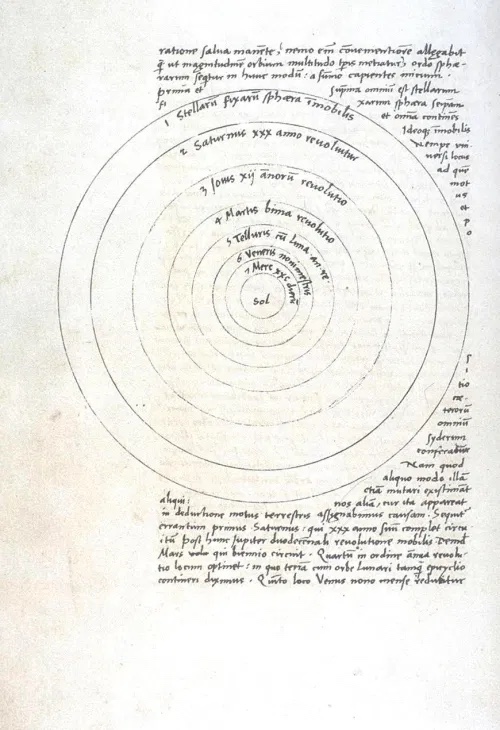
1616 – Nicolaus Copernicus‘s book On the Revolutions of the Heavenly Spheres is added to the Index of Forbidden Books 73 years after it was first published.

Here’s Copernicus’s heliocentric model in the book’s manuscript. Note the Sun in the center with seven planets around it. The Index Librorum Prohibitorum was finally abolished as church law in 1965

Hollow at La Meauffe (La Meauffe, Normandy, France)

Hollow at La Meauffe (La Meauffe, Normandy, France)

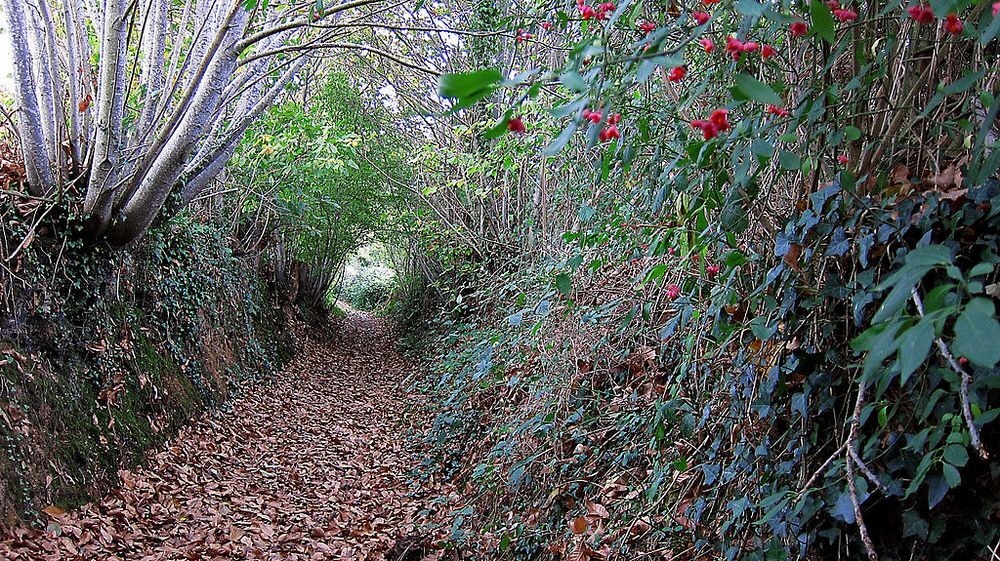
Holloways, which appear like deep trenches dragged into the earth, are centuries-old thoroughfares worn down by the traffic of time. In Europe, most of these sunken lanes go back to Roman times, or as early as the Iron Age.

These deep-recessed roads were naturally tunneled into the soft ground by years of footsteps, cart wheels, and animal hooves. Water flowing through the embankments like a gully further molded the paths into rounded ditches that have sunk as much as 20 feet lower than the land on either side. In some cases, trees rise up from the banks flanking the narrow path and reach toward each other to form a canopy over the road, making the holloway look like a tunnel running through the thick greenery.

Holloways are especially common in the bocage, or “hedgerow,” landscape around Normandy, where the countryside is divided into small fields enclosed by sunken lanes and high hedges. Like many sunken roads, the trench-like holloway in La Meauffe was used as a shelter during times of war. During World War II, the La Meauffe hollow was a defensive strongpoint for the German army, providing perfect cover from the advancing American troops. The limited visibility of the terrain caused the Americans to suffer heavy losses during the attack, leading US soldiers to call the road in La Meauffe “Death Valley Road.”

Many who walk through holloways don’t realize they are retracing ancient steps.