Vourdalak

In western sources the Vourdalak is a vampire from Russian mythology. It is said that this vampire is a beautiful and evil woman. The vampire was able to lure young men to do its bidding and drink from.

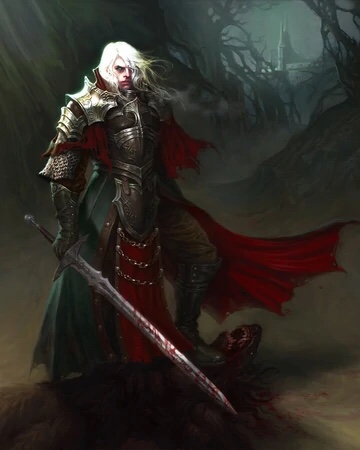
In actuality a Vourdalak is a vampire in the Slavic folklore mythology. Some Western sources define it as a type of “Russian vampire” that must consume the blood of its loved ones and convert its whole family. This notion is based apparently on Alexey K. Tolstoy’s novella The Family of the Vourdalak, telling the story of one such (actually, Serbian) family.

In Russia the common name for vampire (or wurdulac) is “upyr” (Russian: упырь). Nowadays the three terms are regarded as synonymous, but in 19th century they were seen as separate, although similar entities. The Russian upyr was said to be a former witch, werewolf or a particularly nasty sinner who’d been excommunicated from the church. In Ukraine the upyrs were also feared as the vampires who could bring about droughts and epidemics.

In Russian language the word “wurdulac” (Russian: вурдалак) first appeared in early 19th century, and became common due to Alexander Pushkin’s 1836 poem of the same name, part of the Songs of the Western Slavs cycle. It is the corrupt form of the West Slavic word “volkodlak” (Russian: волкодлак), meaning literally “wolf-fur” or “wolf-hide” (i.e., it denotes someone “wearing” a wolf’s skin; a werewolf).

Zmeu

The Zmeu is from Moldavia. It is a vampire that can take the form of a flame and enter the room of a young woman or widow. Once it enters the room of the sleeping woman, the flame becomes a man and seduces them.

The Zmeu can have legs, arms, and appear completely normal. It’s main goal is to seduce and marry women. This vampiric creature has magical and destructive powers; he can fly and shapeshift. He also has supernatural strength.

Veshtitza

The Veshtitza is said to an old woman who is possessed by an evil spirit. The soul leaves her body at night and wanders around until it enters the body of a hen or a black moth. When in the body of the animal, the Veshtitza flies around until she finds a home where there is a sleeping baby or young child.

The Veshtitza’s favorite food is a young heart.

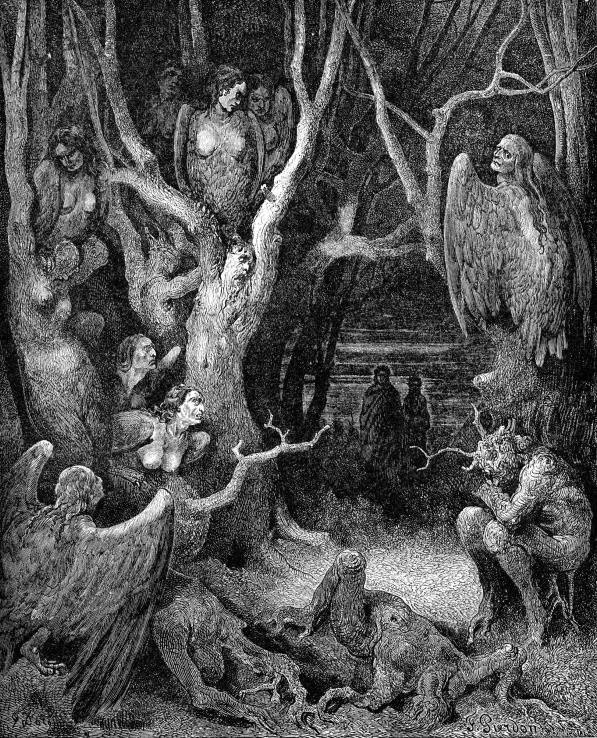
Sometimes, all of the Vestitza would flock together and join in the branches of a tree and hold a meeting while snacking on what they’d gathered earlier in the night. Sometimes old women who have traits of a witch may join in the meetings.

Nothingness in Existential Philosophy & Norse Mythology Concept of Ginnungagap

Nothingness in Existential Philosophy & Norse Mythology Concept of Ginnungagap

Several modern philosophers associated with existentialism, a movement that takes our experience of existence as the starting point of its philosophizing, have spoken of a similar schema using the more prosaic and impersonal language of philosophy and psychology. While the writings of luminaries such as Søren Kierkegaard, Martin Heidegger, and Jean-Paul Sartre differ considerably on these points, a fascination with negation and anxiety is a central focus of their work. In existentialist parlance, “nothingness” is that which negates oneself, one’s values, and/or one’s worldview – one’s “personal cosmos.” 

The ultimate nothingness is death, because it negates one absolutely (at least in the modern worldview – see Death and the Afterlife for Norse perspective on death), but any condition over which one cannot triumph is a hostile absence into which one’s yearnings, strivings, and beliefs vanish. This negation is the root of anxiety (or “angst” or “Being-toward-death”), the fear of what we might not be able to overcome, that which stands every chance of “getting us” in the end. This is one of the fundamental facts of life with which everyone who strives to live deliberately and authentically must grapple. In Heidegger’s words, “To be a particular being means to be immersed in nothingness.”[5] While these philosophers don’t necessarily identify nothingness with a physical void as the Norse did, the principle remains the same.

This primordial, annihilating chaos is ever-present; wherever there is darkness, wherever there is silence, wherever any wish or belief is negated, there is Ginnungagap.

Sources: Poetic Edda, Norsemythology.org

Incubus

Incubus creatures are ancient in religion, history, and fiction. The earliest stories of an incubus is from Mesopotamia, where Gilgamesh’s father listed the creature as Lilu. A Lilu disturbed the sleep of women and seduced them.

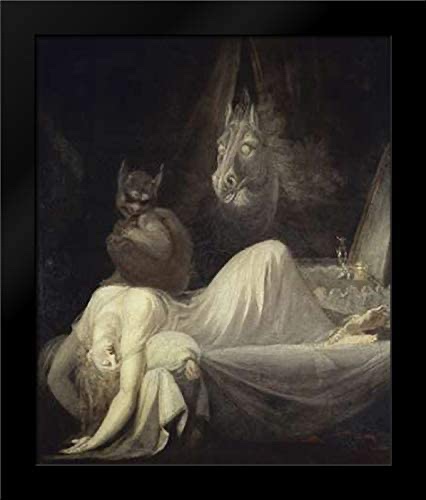
An incubus is a male demon who lies on women sleepers in order to have sex with them. Incubus try to seduce women in order to father children. If a child is produced it’s called a cambion; it appears to be stillborn, as there isn’t a pulse or visible breathing. Around the age of 7, the child starts to behave like a human child, but it often displays evil tendencies. The child is beautiful, intelligent, and very persuasive.

Unlike a typical vampire, an incubus doesn’t drain its victims of blood or energy, but exhausts them to death with intercourse. The victims become worn out and helpless and often die of asphyxiation.

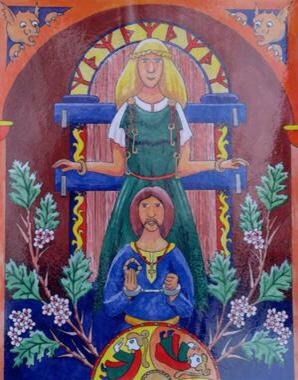
Frigga’s Handmaidens

Frigga’s Handmaidens:

Eir

She is known as a healer. That said, Eir’s name translates roughly to the word “mercy,” and in addition to being one of Frigga’s handmaidens, she is listed among Odin’s Valkyries. This has led some modern heathens to speculate that, in addition to her healing skills, she was the source of “mercy on the battlefield,” which, depending on the circumstances, could mean a clean death for those already dying from their wounds.

Fulla

Not much is known about Fulla. She is called a virgin and goes about with her hair unbound and flowing. She wears a gold band around her head. She carries Frigga’s casket, a small chest, and also cares for Frigga’s shoes. She is considered someone with whom Frigga shares her secrets. Fulla may be the Volla listed in the Second Meresburg Charm, Frigga’s sister, or, potentially, Frigga herself.

Gefjon

Gefjon has four sons, whom she changed into oxen in order to carve land for herself out of Denmark; folklore has it that Zealand is Gefjon’s property. Her name means “giver,” and this has caused her to be confused with Freyja, whose byname, Gefn, means the same thing. However, as Frigga’s handmaiden, she protects maidens and unmarried women. This, taken along with the myth about Zealand, is enough evidence to suggest that she is a goddess in her own right.

Lofn

Lofn is the handmaiden who clears the way for permission to be granted for marriages, particularly those marriages which would otherwise be seen as forbidden.

Sága

Sága is an interesting character. Her hall, Sökkvabekk, refers to sunken benches, the implication being a bog or fen. Frigga’s hall is Fensalir, which also involves a fen. Frigga is married to Odin; Sága is known to sit with Odin in her hall and drink mead with him. In fact, there are so many similarities between Sága and Frigga that many scholars contend that they are one and the same, and that Sága is one of Frigga’s bynames. The Prose Edda mentions her as one of Frigga’s handmaidens.

Sjofn

Sjofn helps turn the minds of men and women to love.

Snotra

Snotra is known to be wise and courteous.

Syn

Syn is known as the handmaiden who bars the doors to the hall and guards against those who are forbidden to enter. It is also said that she can stand in assembly as a party for the defense, in cases that involve her.

Var

Var is most concerned with hearing the oaths people make, particularly the marriage oath.

Vor

Vor is also known to be wise, but she asks questions, and nothing can be concealed from her. Vor is the last of Frigga’s handmaidens that we have record of.

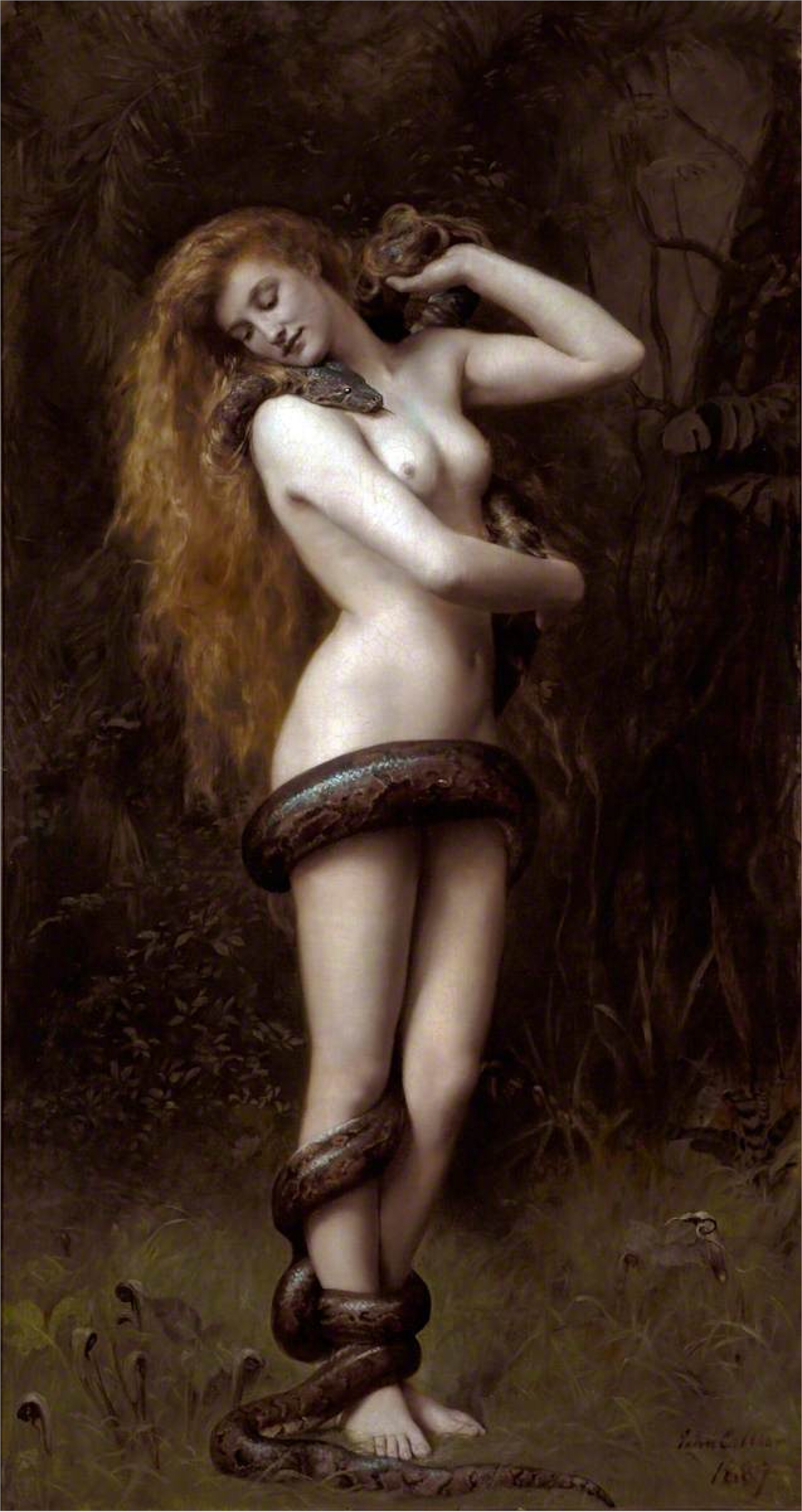
Lilith

Lilith appears in early Hebraic writings and stories. She is a winged demon, with the body of a woman, and owl-like talons for feet.

It is said that Lilith was the first wife of Adam, but she believed herself an equal to him and refused to be submissive. For this, she was banished from God’s presence into the demon realm.

When Lilith moved to the demon realm, she began stealing babies and small children and devoured them. It’s also said that Lilith was like a Succubus, seducing men to steal their sperm; the men never survived their encounter with Lilith.

Some stories even claimed that Lilith would drink the blood of her victims and used the sperm to conceive her offspring.

Other stories claimed that when God banished Cain (first born son of Adam and Eve) after killing his brother, Lilith and Cain procreated demonic offspring.

Lilith’s offspring were damned to become demons, which is how she obtained her title- “Mother of Demons.” This title was changed to “Mother of Vampires” later in legends.

The new title was obtained because Lilith’s offspring were all destroyed by God, so she vowed to herself to feed on all of Adam’s children (IE humans).

Lamashtu

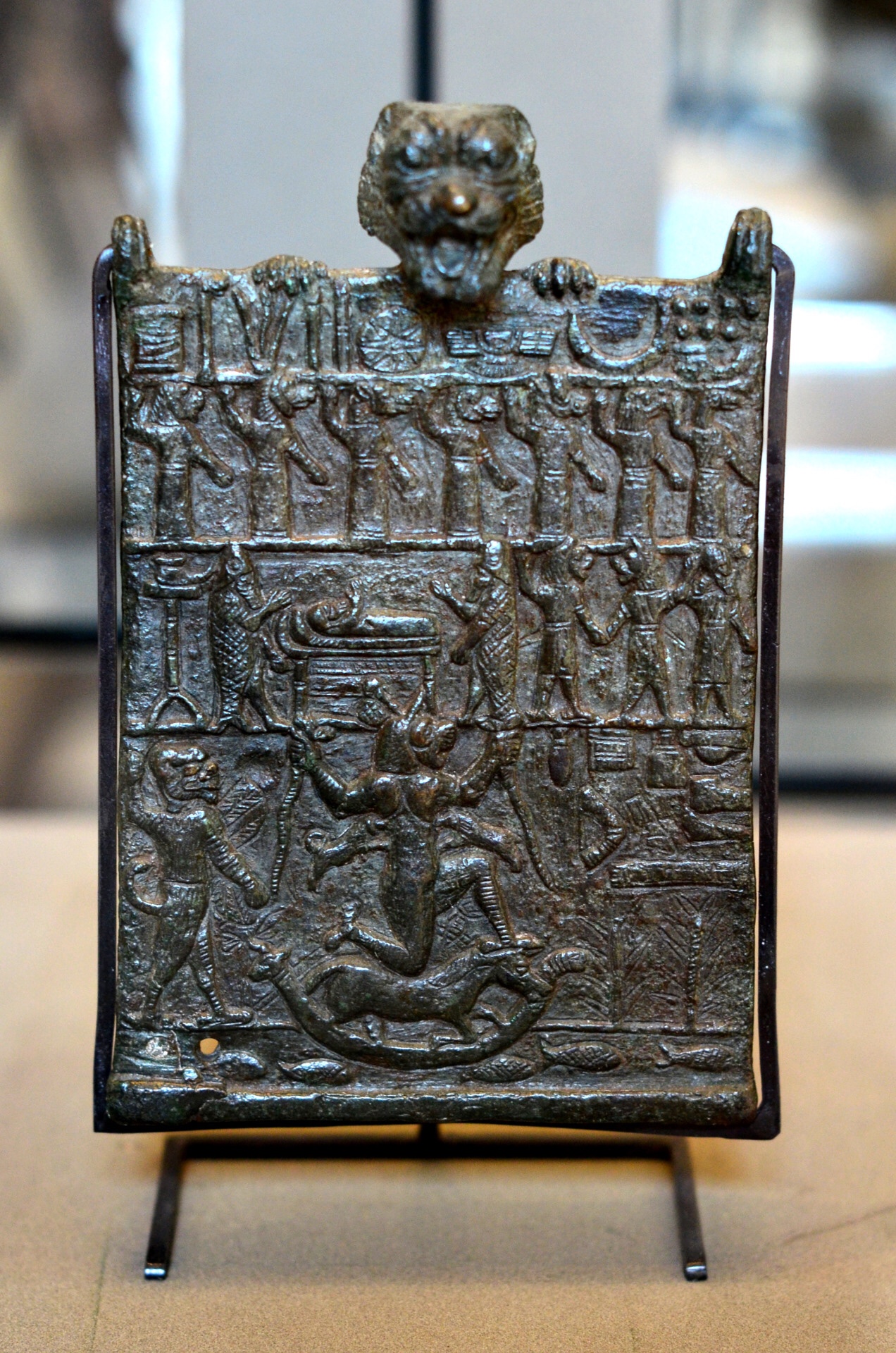
Lamashtu (also referred to as Lamastu or Dimme) was a demon goddess in Sumeria and Acadia.

Lamashtu was often described to have a hairy body, the head of a lion, donkey teeth and ears, long fingers and fingernails, and sharp bird-like talons for feet. She was often seen standing or kneeling on a donkey while nursing a pig and a dog and holding snakes.

It is said that Lamashtu crept into homes at night to kill babies in their cribs or in the womb, becoming the cause for sudden infant death syndrome and miscarriages.

In Mesopotamian mythology, she menaced with women during childbirth and kidnapped babies while breastfeeding. It’s said that she would allow the babies to nurse on her and suckle her toxic milk, causing the baby to die.

Lamashtu was also the cause of many deaths and evil deeds among humans.

• Slaughtered mothers.

• Dined on the flesh and blood of men.

• Poisoned water with diseases.

• Killed plants.

• Caused tetanus and fever.

• Caused sterility in adults.

• Evoked nightmares.

Dhampir

A dhampir (dhampyre, dhamphir, dhampyr) is the child of a vampire and human, as told in Balkan folklore.

It was believed that male vampires returned to have intercourse with his living wife or with another woman that he had an attraction to when he was living. In some legions, male vampires would deflower virgin girls.

According to Albanian legend, a dhampir has untamed dark or black hair and a lack of a shadow. In Bulgarian lore, a dhampir may be “very dirty,” have a soft body, no nails or bones, a deep mark on the back like a tail, pronounced nose, a large nose and larger than normal eyes and teeth.

A dhampir has similar powers to a vampire, but he doesn’t have the typical weaknesses. The dhampir’s skills may include:

• Sense a supernatural creature is within a specified distance

• Develop visions that provide guidance as well as intimacy with the vampire

• Acute sense of sight and hearing

• Regenerating healing abilities

• Walk in sunlight

• Eat like a human

• Procreate and pass powers to offspring

• Control animals

• Achieve a mental edge that borders on psychosis

• Destroy vampires

Dhampirs are often quite stubborn, driven and charismatic. Drinking blood at least once a week can enhance the dhampir’s powers.

Many dhampirs tend to die at birth, but those who live to adulthood will often reject their vampiric heritage. They must train hard to increase their speed, stamina and strength, but will often hunt vampires and other mythical beings.

A dhampir may kill a vampire by shooting it with a bullet, transfixing it with a hawthorn stake or performing a ceremony that involves touching crowns of lead into the vampire’s grave. If the dhampir cannot kill the vampire, he can command it to leave the area.

Dhampirs can be hard to kill, but a witch can cast a spell that causes aneurysms that cause the blood vessels to explode. Decapitation and removing the hear can also kill a dhampir.

Draugr

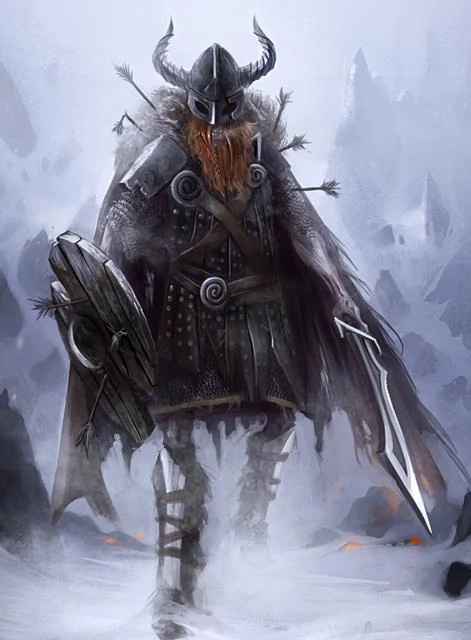
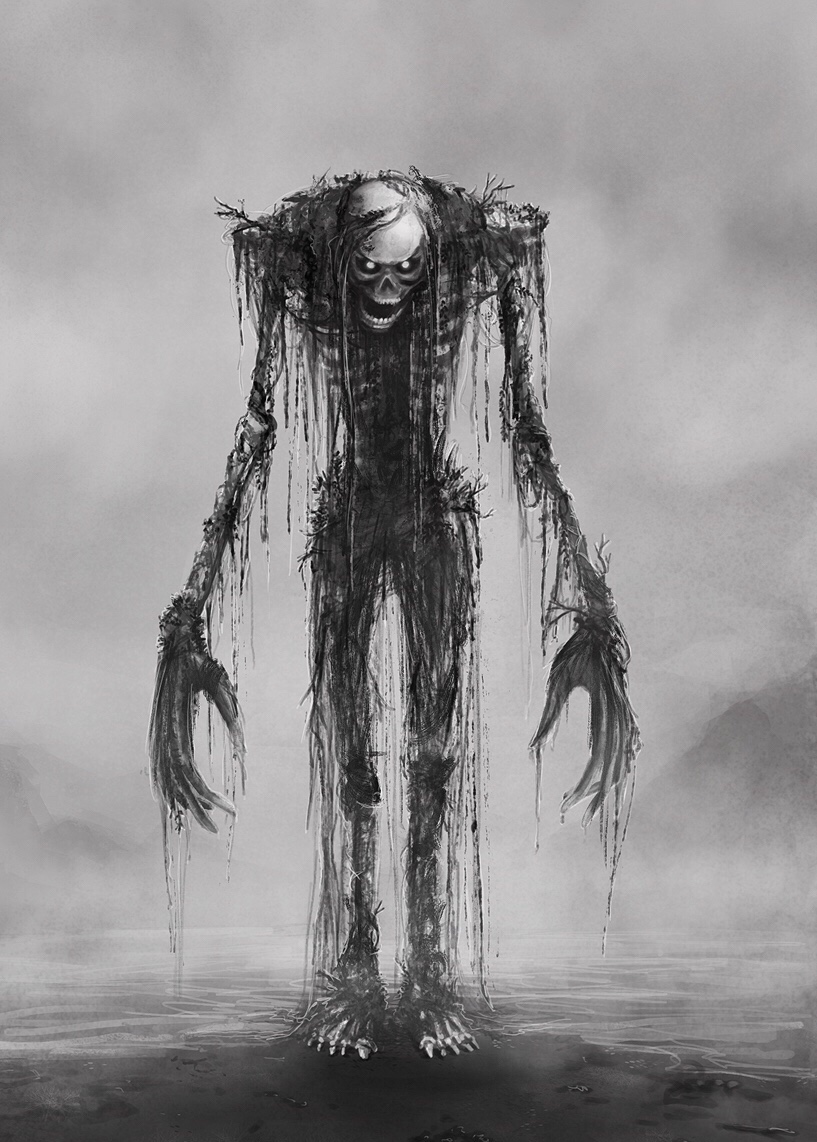
The draugr (also called an aptrgangr) literally means “one who walks after death. There are many Norse myths and tales about the draugr and its creation.

The person may become a draugr if he has unfinished business after death, or if he is infected by another draugr. Some believed that anyone who was mean, nasty or greedy could become a draugr after dying. Others believed that a draugr arises because he felt he was wronged in life.

A corpse can be identified as a draugr if it is found in an upright or sitting position. If seen walking around, a draugr will have several distinctive characteristics.

• A pale, deathly skin tone

• Superhuman strength

• Stench of decay

• Large, bulky body

A draugr was said to be able to shape-shift, control the weather and see into the future. He would rise from the grave as a wisp of smoke and float through rock. Most are active at night, but there isn’t any proof that they are sensitive to sunlight.

Some myths about the draugr claim that the spirit may have some form of intelligence and ability to communicate.

The draugr would slay his victims, devour the flesh and drink the blood. After drinking the blood and consuming the flesh, it was thought the draugr would grow larger.

A draugr could be destroyed by beheading or burning. If the spirit is burnt, the ashes need to be poured into the ocean.

There are different methods of preventing a draugr.

• Place a pair of open, iron scissors placed on the chest of a recently deceased.

• Hide straw or twigs inside the clothes of the deceased.

• Tie the big toes together.

• Drive needles through the soles of the feet to prevent the deceased from being able to walk.

• When lowering the coffin, lift and lower it three times to confuse the draugr’s sense of direction.

Denmark spread the belief that a corpse could only rise and return from the dead by walking through the door it entered. Norse culture adopted the same belief; they would prevent the return of a deceased by surrounding the body with people and carry the deceased feet-first through a door. The door was then bricked up so that the draugr could not enter it.