
This gargantuan hyper-nova explosion, with a mass of 70 quadrillion Earths, created the youngest black hole formed in the Milky Way galaxy, only 1,000 years old.
#MilkyWay #Astronomy

This gargantuan hyper-nova explosion, with a mass of 70 quadrillion Earths, created the youngest black hole formed in the Milky Way galaxy, only 1,000 years old.
#MilkyWay #Astronomy

Lying 5,000 light-years away, the Jellyfish Nebula is a galactic supernova remnant, a star that could have exploded as many as 3,000 years ago.
#Astronomy #JellyfishNebula
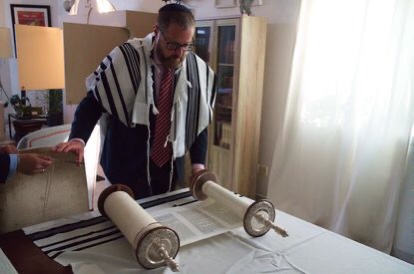
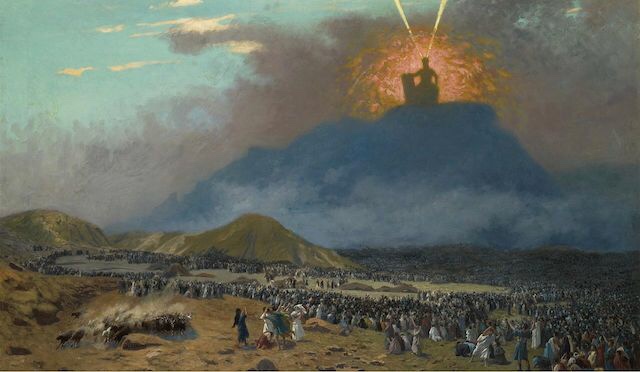

Traditionally, the Torah has been seen either as a document that was entirely revealed to Moses by God on Mount Sinai (along with the whole of the Oral Torah, i.e. the Mishnah and other works of Rabbinic literature which build upon the written Torah) or that Moses completed the Torah during the trek through the wilderness (including what was revealed on Mount Sinai). Historians and literary critics, noting historical inaccuracies and duplications that indicate a composite text have suggested that the Torah includes sources from the period of King David and King Solomon (around 1000 BCE), from the seventh century BCE during the reign of King Josiah, and from the sixth century BCE during the Babylonian exile.
For Jews, the concept of “Torah ” is much broader than the books themselves, the delimited concept of the Torah. “Torah” can refer to all of traditional Jewish learning, but “the Torah” usually refers to the Torah she’bi’ktav, the written Torah, also known as the chumash (the five volumes or Pentateuch, sometimes referred to as the Five Books of Moses).
The Torah, Prophets (Nevi’im) and the Writings (Ketuvim) collectively make up The Hebrew Bible (what Christians refer to as the Old Testament). The Bible is often referred to by the Hebrew acronym TaNaKh (usually spelled Tanakh, or Tanach ). Numerous editions and translations of the Bible and the Chumash (the text of the Torah) can be purchased online. However, you can also read (and search) the entire Bible (along with many other major Jewish texts) in Hebrew and English translation free of charge on Sefaria.
Readings from the Torah, which are divided into 54 weekly Torah portions are the centerpiece of the Sabbath morning service. During the Torah service, the Torah scroll is taken out and the weekly portion chanted or read aloud. The Torah scroll, also known as a sefer Torah, is hand-written on parchment according to numerous specifications by a sofer (scribe), a specially trained individual.
The Torah’s stories, laws and poetry stand at the center of Jewish culture. They chronicle God’s creation of the world, the selection and growth of the family of Abraham and Sarah in relationship to God in the land of Canaan, the exile and redemption from Egypt of that “family-become-nation” known as Israel, and their travels through the desert until they return to the land of Canaan. Along the way, Israel enters into a covenanted relationship with God, and God reveals many of the rules for governing a just society and for establishing appropriate worship.
The English names for each of the Torah’s five book are actually Greek, and like the Rabbinic names for the books, they describe the contents. The common names for the books come from a significant word in the beginning verses of the book. The following are the names of the five books and a brief summary of each:
Genesis (“Origins”)/Bereishit (“In the Beginning”)
Genesis tells the story of creation, Noah and the flood, and the selection of Abraham and Sarah and their family as the bearers of God’s covenant. Stories of sibling conflict and the long narratives of Jacob and his favorite son Joseph conclude with the family dwelling in Egypt.
Exodus (“The Road Out”)/Shemot (“Names”)
Exodus tells of how the family of Jacob grew and then was enslaved in Egypt. The baby Moses, born of Israelites but adopted by Pharaoh, becomes God’s prophet who, after bringing 10 plagues down upon Egypt, leads the Israelites through the Red Sea to freedom and to the revelation at Mount Sinai. The story of the Israelites worshipping the golden calf, which follows soon after the revelation at Mount Sinai, is almost obscured by lengthy materials on the building of a sanctuary (tabernacle) in the wilderness.
Leviticus (“Laws of the Levites”)/Vayikra (“And God Called”)
Leviticus deals mostly with laws of Israelite sacrificial worship. Related rules include the basis for Jewish dietary laws (kashrut) and issues of purity and impurity. The holiness code, which describes a sanctified communal life, is a highlight of the book.
Numbers (“The Census”)/Bamidbar (“In the Wilderness”)
Numbers begins with a census of the Israelites and the tribe of Levi. A group of Israelites spy out the land of Canaan; their discouraging report sends them back into the desert for an additional 38 years, during which the Israelites continue to behave badly, rebelling against the authority of Moses and his brother Aaron, and having illicit relations with Moabite women.
Deuteronomy (“Second Law”)/Devarim (“Words”)
Deuteronomy is Moses’ final message to the people of Israel before they cross over the Jordan River into Israel. Moses reminds the people of how God has redeemed the people from Egypt and of the details of the covenant between Israel and God. In stark language, Moses describes the rewards for observance of the laws of the covenant and the punishment for disobedience. Finally, Moses passes along his authority to Joshua who will lead the people into the land.
Sources: Essential Judaism, Unearthing the Bible, myjewishlearning.com, Chabad.org

It’s legendary jazz singer Billie Holiday‘s birthday today (1915-1959). Her exceptional vocals expressed deep emotions, turning pain into beauty; and she has been described as the ‘greatest jazz vocalist of our times‘, but rather tragically her touring career was often marred by racist attacks.
#BillieHoliday

Today in history —> French philosopher Charles Fourier was born on this day in 1772. Although he was considered a radical in his time for his philosophy of utopian socialism, many of his ideas have now become mainstream. For instance, Fourier was a fervent believer in gender equality and is credited with coining the term “feminism” in 1837.
#FrenchPhilosophers #CharlesFourier #Feminism



“In Jewish religious thought Genesis is not regarded as meant for a literal reading, and Jewish tradition has not usually read it so.”
~ Steven Katz, founding director of the Elie Wiesel Center for Judaic Studies
In the Middle Ages, Saadia Gaon argued that a biblical passage should not be interpreted literally if that made a passage mean something contrary to the senses or reason (or, as we would say, science; Emunot ve-Deot, chapter 7). Maimonides applied this principle to theories about creation. He held that if the eternity of the universe (what we would call the Steady State theory) could be proven by logic (science) then the biblical passages speaking about creation at a point in time could and should be interpreted figuratively in a way that is compatible with the eternity of the universe.
It is only because the eternity of the universe has not been proven that he interpreted the verses about creation at a point in time literally, but he still insisted that the creation story as a whole was written metaphorically.
To Saadia and Maimonides, belief in the truth of the Torah does not require a denial of science (“reason,” “logic”) when the two seem to conflict. These philosophers imply that questions of science should be left to scientists and scientific method. In fact, Maimonides quotes a passage in the Talmud in which Jewish scholars abandoned an astronomical theory of their own in favor of a theory of gentile scholars (Pesahim 94b).
Maimonides approved of their action, saying that “speculative matters everyone treats according to the results of his own study, and everyone accepts that which appears to him established by proof.” To him, clearly, Science is a matter of speculation and is not the field in which the Torah seeks to be decisive.
In more recent times Rabbi Abraham Isaac Kook held that scientific ideas which seem to conflict with the Torah need not necessarily be opposed, but can serve as stimuli to delve more deeply into the Torah and discover more profound meaning in it.
The approach of these thinkers is one that Fritz Rothschild has described as a guiding principle of Jewish biblical exegesis:
“The view that the Torah contains God’s message to man has led to ever new interpretations, since it constantly forced believing readers of the Torah to reconcile the words of the sacred text with whatever they held to be true on the basis of their own experience, the canons of logic, contemporary science, and their moral insights…. The traditionalist will always feel called upon to interpret the text so that it reflects not ancient error but the highest standards of trustworthy knowledge and insight of his own time.” (Rothschild, “Truth and Metaphor in the Torah”)
This approach urges us to probe more deeply into the biblical accounts of creation and to search for the intention of the Torah’s compilers in presenting these accounts. By compilers I mean those who gathered all the sources and books together and produced the Torah in the form in which it was canonized in classical Judaism. In critical terms these are the redactors of the Torah; in Franz Rosenzweig’s terms, rabboteinu (our rabbis).
Whatever the intention of the individual accounts of creation may have been, it is clear from the Torah as a whole that its compilers were not overly concerned with the details of the creation story in the first chapter of Genesis. They incorporated several accounts of creation in the Torah even though no two accounts agree in detail with Genesis 1 or with each other. Genesis 1 describes the creation of the world in six days. The second account of creation is the story of Adam and Eve in the Garden of Eden (Genesis 2).
Several other accounts are found in poetic form in Psalms, Proverbs, and Job. Genesis 1 says that man was the last living creature created; Genesis 2 says that he was the first. Genesis 1 speaks of the prehistoric waters in purely naturalistic terms and says that God merely commanded them to gather in a single spot so that dry land could appear.
But in poetic passages the ancient waters are personified as rebellious sea monsters which threatened to swamp the dry land, until God subdued them and created the seashore as a boundary which they were prohibited from crossing.
The most notable difference between Genesis and all the other accounts is that none of the others mentions the idea that the world was created in six days. This idea–which is the centerpiece of the whole creationist movement–was apparently not considered important enough in the Torah to be repeated in other accounts of creation.
The fact that so many differing accounts were all accepted in the Torah shows that its compilers were not concerned about these details. They undoubtedly assumed that the differences could be reconciled, but they left this task to the ingenuity of exegetes. This virtually assured that different reconciliations would be proposed and some of the passages would have to be interpreted non-literally.
What the Torah as a whole insists on is not these details, but only what the stories have in common. In other words, these stories are regarded as poetic statements of certain basic truths, not as literally scientific accounts of how the universe developed.
What matters in Judaism are the concepts shared by all these stories: that the world was created by God, that He planned it carefully and designed it to be hospitable to man. These are the very conclusions to which astronomy now points. The other details of the biblical accounts should not be taken literally, but metaphorically or poetically.
To give just one example: the six days of creation culminating in the Sabbath on the seventh day symbolize how God guided the development of the world stage by stage according to a well-thought-out plan. The process is described as taking place over a period of seven days because seven was regarded in the ancient world as the number of perfection and seven days were regarded as the ideal length of a process. The unit of “seven days” is more a statement about the perfection of the process than a chronological statistic.
Thus a literal reading of the Torah, on which “creation science” implicitly insists, misses the point of the Torah itself, which seems uninterested in literal interpretation. Like poetry and certain kinds of prose, which sometimes speak in metaphors and symbols, the Torah as a whole does not intend these stories to be taken literally.
Literalism is not only misleading but is also a disservice to the cause of the Torah itself. It forces the Torah to compete as science, and in such a competition it cannot win. In a scientific age such as ours the Torah will never be accepted as science by educated people.
What is more, attempting to secure acceptance for it as science is hardly worthwhile, for this would divert attention away from the Torah’s religious message to details which from a religious point of view are trivial.
The religious message is precisely the realm in which science cannot compete, and those devoted to the cause of the Torah would do far better service to their cause by stressing its unique religious message. To the religious person it makes little difference whether the world was created in six days or several billion years.
What counts is the deeper message of the biblical account of creation: The world was made by a wise Creator who seeks man’s welfare, who created the world carefully with man’s benefit in mind, who created man with Godlike qualities and commanded him to administer the world wisely.
Though we observe the Sabbath every seven days, it is this deeper message which we celebrate each week. The current views of modern science deepen our understanding of this message and renew our confidence in it.
Sources: Essential Judaism, Conservative Judaism Journal, myjewishlearning.com, Chabad.org


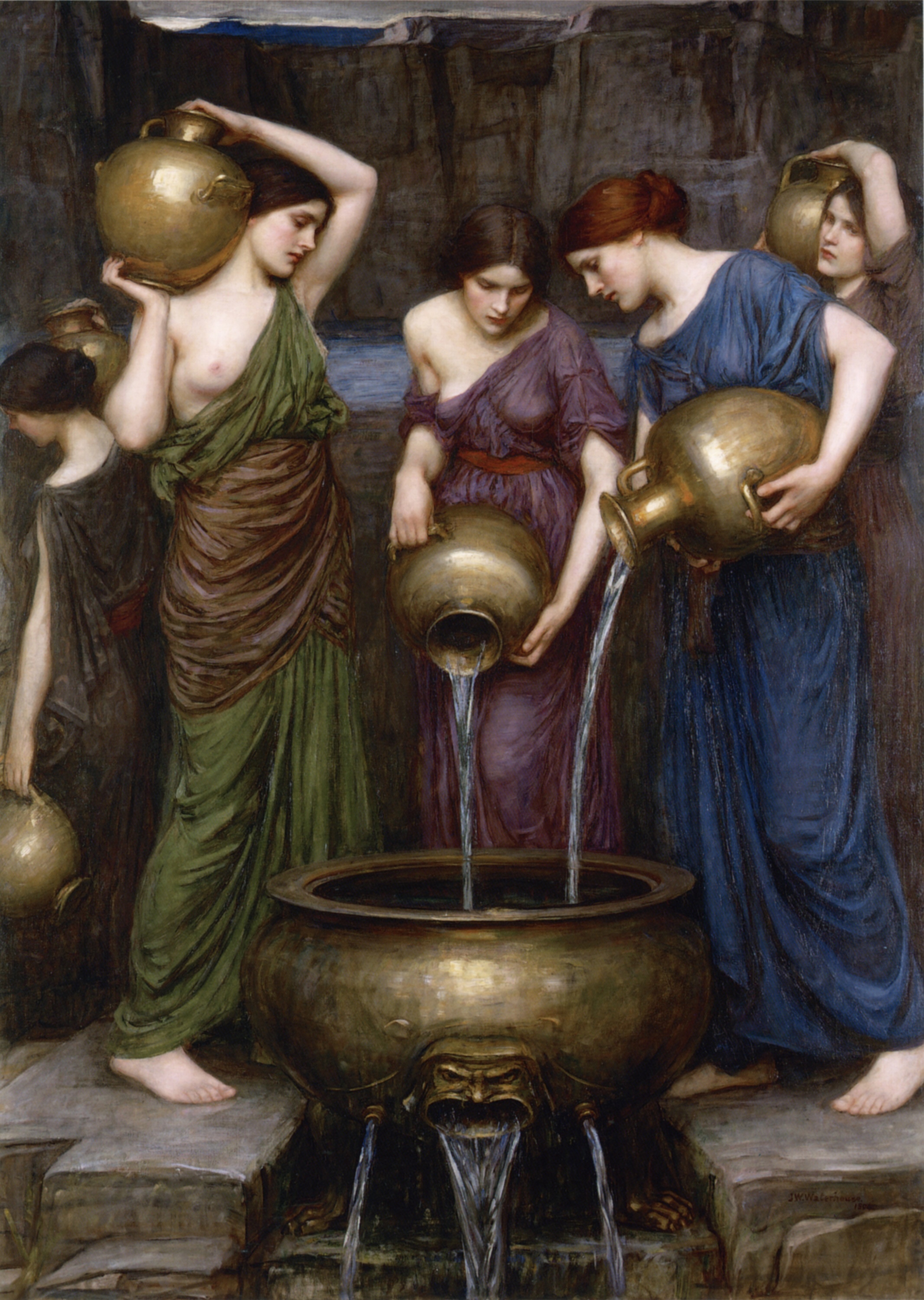
Fand – In Celtic myth Fand is a faery queen, who was once married to the sea god Manannan. After he left her she was preyed upon by three Fomorian warriors in a battle for control of the Irish Sea. Her only hope in winning the battle was to send for the hero Cuchulainn who would only agree to come, if she would marry him. She reluctantly acquiesced to his wishes, though when she met him, she fell as deeply in love with him as he was with her. Manannan knew that the relationship between the human world and the world of the faery could not continue without in eventually destroying the faeries. He erased the memory of one from the other by drawing his magical mantle between the two lovers.
Fand was also a minor sea goddess who made her home both in the Otherworld and on the Islands of Man. With her sister, Liban, she was one of the twin goddesses of health and earthly pleasures. She was also known as “Pearl of Beauty”. Some scholars believe she was a native Manx deity who was absorbed in the Irish mythology.


In western sources the Vourdalak is a vampire from Russian mythology. It is said that this vampire is a beautiful and evil woman. The vampire was able to lure young men to do its bidding and drink from.
In actuality a Vourdalak is a vampire in the Slavic folklore mythology. Some Western sources define it as a type of “Russian vampire” that must consume the blood of its loved ones and convert its whole family. This notion is based apparently on Alexey K. Tolstoy’s novella The Family of the Vourdalak, telling the story of one such (actually, Serbian) family.
In Russia the common name for vampire (or wurdulac) is “upyr” (Russian: упырь). Nowadays the three terms are regarded as synonymous, but in 19th century they were seen as separate, although similar entities. The Russian upyr was said to be a former witch, werewolf or a particularly nasty sinner who’d been excommunicated from the church. In Ukraine the upyrs were also feared as the vampires who could bring about droughts and epidemics.
In Russian language the word “wurdulac” (Russian: вурдалак) first appeared in early 19th century, and became common due to Alexander Pushkin’s 1836 poem of the same name, part of the Songs of the Western Slavs cycle. It is the corrupt form of the West Slavic word “volkodlak” (Russian: волкодлак), meaning literally “wolf-fur” or “wolf-hide” (i.e., it denotes someone “wearing” a wolf’s skin; a werewolf).

New Zealand has just opened up a bit for travel. Prime Minister Jacinda Ardern announced that both Australia and New Zealand are in a “bubble,” and people will be able to travel between the two countries without mandatory quarantining in hotels. (Both countries have very low infection rates.) The Kiwis, of course, are celebrating this with their typical wry humor: here’s a NZ travel ad.
#Travel #NewZealand

The Conservative movement is the second largest of the three main religious denominations within American Judaism, claiming 18 percent of American Jews, according to a 2013 study by the Pew Research Center. Historically it has occupied a sort of middle ground between Reform and Orthodox, maintaining (unlike Reform) that Jewish law remains binding on modern Jews, but affording far greater leeway than Orthodoxy in adapting those laws to reflect modern realities.
• The movement tolerates a range of religious practice in its commitment to halachic pluralism — the idea that multiple (and opposing) opinions concerning the requirements of Jewish law can be considered equally legitimate.
• Most (but not all) Conservative synagogues are egalitarian on gender issues, and the movement has endorsed religious rulings both in favor of and opposed to same-sex marriage.
• While its rabbis are not permitted to officiate at interfaith weddings, the movement has in recent years made a greater effort to welcome interfaith couples and families into its congregations. One of its mottos has been “Tradition and Change.”
• In the mid-20th century, the Conservative movement was the dominant stream of American Judaism. In some years in the 1950s, the movement was adding 100 new affiliate congregations annually. But by the end of the century, the movement was in serious decline, with some fretting openly that Conservative Judaism was on the road to oblivion.
The movement began as an effort to “conserve” traditional Judaism in the face of the liberalizing tendencies of Reform leaders in the late 19th century. One critical moment of division is often said to be the Reform movement’s famous 1883 “trefa banquet,” when non-kosher foods were served at a dinner honoring the first rabbis ordained through the Reform seminary Hebrew Union College. The Jewish Theological Seminary of America, which would become the flagship institution of the Conservative movement, was founded in 1886 — one year after Reform adopted its Pittsburgh Platform of 1885, which explicitly rejected Jewish practices it viewed as inconsistent with modern ideas.
The movement has been defined by its official commitment to Jewish law (halacha ), even as it has staked out positions that entail substantial departures from what was long considered normative Jewish practice. In 1983, the movement began ordaining women rabbis, which prompted some JTS faculty to quit the school in protest. In 1998, the movement’s updated prayer book, Sim Shalom, contained an alternative Amidah text that included the names of the matriarchs, Sarah, Rebecca, Rachel and Leah alongside the names of the patriarchs. Some of the God language in the book replaced gendered language such as “King” and “Father” with more gender-neutral terms, like Sovereign and Guardian.
One of the movement’s most significant — some would say fateful — innovations was the 1950 ruling permitting worshippers to drive to synagogue (but nowhere else) on Shabbat. Amid the rapid suburbanization of postwar America, this change enabled many to attend synagogue who would otherwise be unable to get there on the Jewish Sabbath, when driving is traditionally prohibited. However, some critics would later point to this shift as undermining the movement’s stated commitment to Jewish law.
In the 21st century, the movement’s long-term viability has continued to be drawn into question. The percentage of Jewish households that identified as Conservative dropped by 10 points — from 43 to 33 percent — between 1990 and 2000, according to surveys of the American Jewish population conducted in those years. By 2013, a Pew survey found only 18 percent of American Jews identified as Conservative, roughly half the number that called themselves Reform. The movement’s synagogue umbrella group, the United Synagogue for Conservative Judaism, also experienced a significant drop-off in affiliated congregations.
The decline is attributed to various factors, chief among them intermarriage. A majority of intermarried Jews who were raised Conservative no longer identify as such as adults, according to sociologist Steven M. Cohen. At least some of those Jews have gravitated toward the Reform movement, which has traditionally been more welcoming of intermarried couples. Others have pointed to the movement’s liberalization over the years, which has turned off more traditionally minded Jews, as well as to the rise of independent minyans, which have attracted many graduates of Conservative day schools and summer camps. Still others have fingered geographic mobility as the culprit — the relocation of American Jews from areas where the Conservative movement historically had a strong presence (the northeast and the Midwest), to areas where Reform congregations predominated (the South and the West).
But according to Cohen, there remain some encouraging signs for the movement in recent studies showing that among those who do identify as Conservative, metrics of Jewish engagement remain strong. “What Conservative institutions like camps and day schools have been doing is working to build a core group with relatively high levels of Jewish observance, engagement and literacy,” Cohen wrote in a 2015 op-ed for JTA. “If they keep doing so, the evidence suggests that while the overall number of Conservative Jews may still decline, this dedicated core will continue to sustain what was once America’s largest Jewish denomination.”
By 2017, a Pew survey found only 14 percent of American Jews identified as Conservative, roughly half the number (28 percent) that called themselves Reform. To understand that in a broader context thirty-seven percent identified as “just Jewish” with no formal affiliation with any of the big three denominations (big four if you consider reconstructionist).
Sources: Essential Judaism, myjewishlearning.com, Chabad.org
 Mark Bere Peterson’s Counterculture, Urban Legends, Paganism & Witchcraft