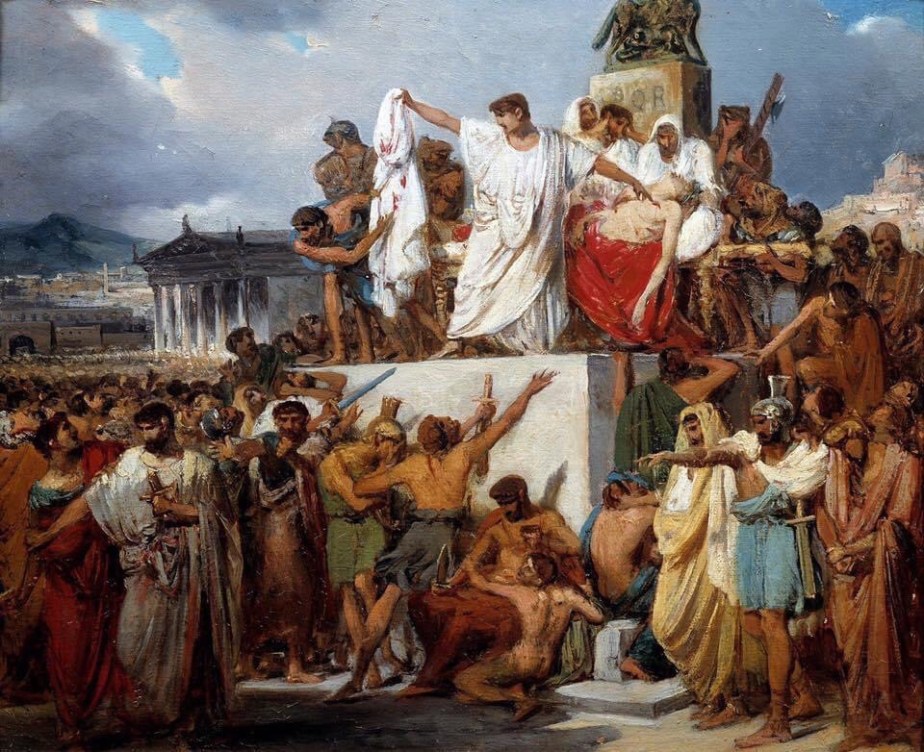
Today in History –> On this day in history in 44 B.C., Julius Caesar, the”dictator for life”of the Roman Empire, was murdered by his own senators at a meeting in a hall next to Pompey’s Theatre. The conspiracy against Caesar encompassed as many as sixty noblemen, including Caesar’s own protege, Marcus Brutus…
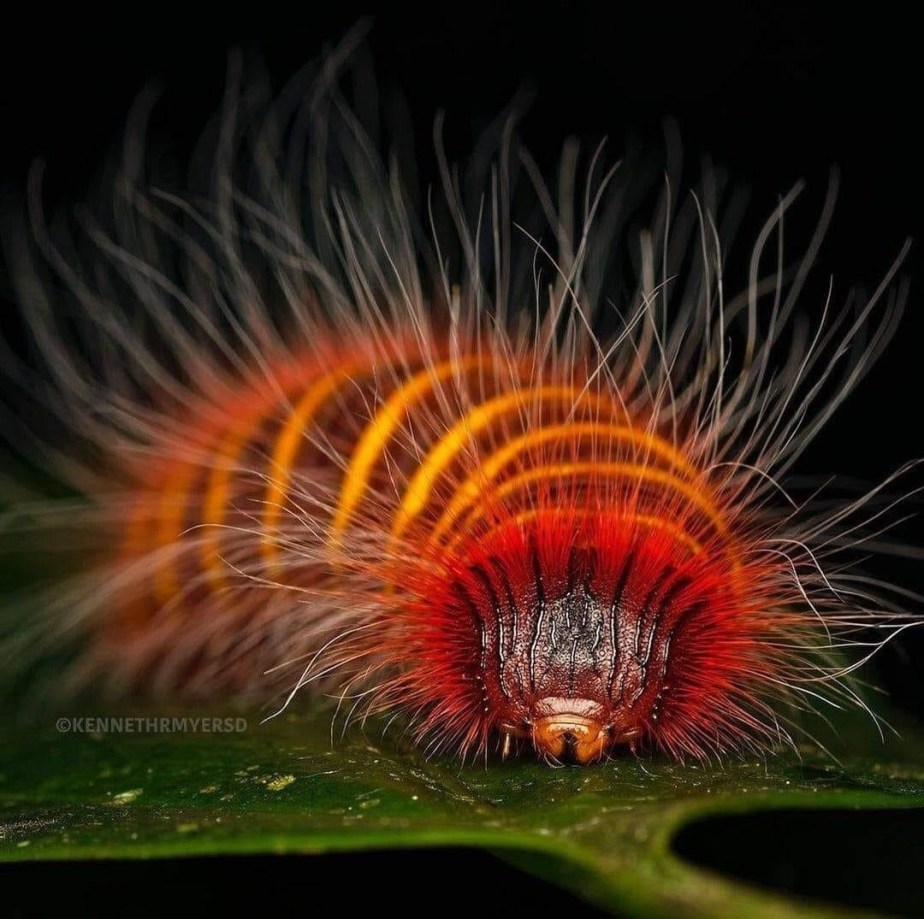
Firetip (Pyrrhopyge thericles): Often known as the “Red Hot Cat” this caterpillar is of a Black winged Butterfly species from South America. The black body and wings are often with a bronze-green or deep blue lustre, spotted red on the head and abdomen. The larvae are haired on the body, shaggily on the head, brown or reddish with yellow, zebra-like stripes. They live on different trees, notably on guava pear-trees.
The attack on the US Capitol and our democracy remind us of the ever-present dangers of hatred and propaganda. Join USHMM for a discussion about how, 75 years after the Holocaust, white supremacist and other hate groups continue to exploit racism, conspiracy theories, and antisemitic lies.
Speakers:
Arie Kruglanski, Holocaust Survivor, Terrorism Expert, and Psychology Professor, University of Maryland
Patricia Heberer Rice, Senior Historian, United States Holocaust Memorial Museum
Moderator:
Edna Friedberg, Historian, United States Holocaust Memorial Museum
“She looked up over her knitting and met the third stroke and it seemed to her like her own eyes meeting her own eyes, searching as she could alone search into her mind and her heart, purifying out of existence that lie, any lie. She praised herself in praising the light, without vanity, for she was stern, she was searching, she was beautiful like that light.”
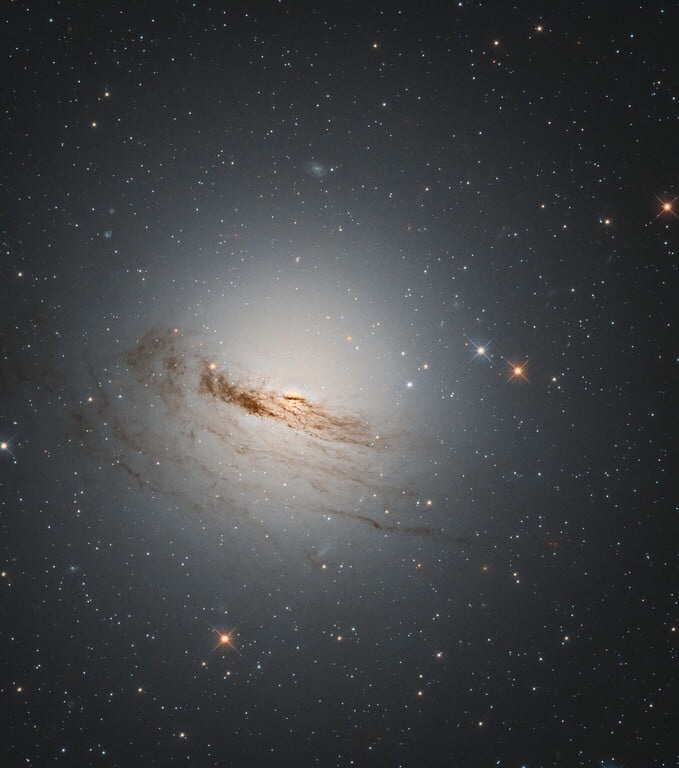
The Hubble Space Telescope has captured a image of a lenticular galaxy called NGC 1947. A lenticular galaxy is one that is neither a spiral galaxy, like our Milky Way, nor an elliptical galaxy, but somewhere in between the two. It has a large disk in the middle but unlike other spiral galaxies, it does not have spiral arms reaching out from its center.
This galaxy wasn’t always this way, however. At a point in its past, it did have spiral arms. You can see the evidence of these arms in the swirls of dust which still surround it, as the European Space Agency writes: “the faint remnants of the galaxy’s spiral arms can still be made out in the stretched thin threads of dark gas encircling it.”
Another difference between lenticular galaxies like NGC 1947 and other kinds of galaxy is the rate of star formation. Galaxies like the Milky Way continue to form new stars, especially in their spiral arms, as clouds of dust and gas clump together and are eventually bound by gravitational forces. In lenticular galaxies, however, there is very little star formation. These galaxies have used up most of their interstellar matter so there is not enough material for the formation of many new stars.
This means that the average age of stars in NGC 1947 is getting older, and the galaxy is fading over time. To see the galaxy for yourself, you’d need to be located in the southern hemisphere as it is further south than the celestial equator.
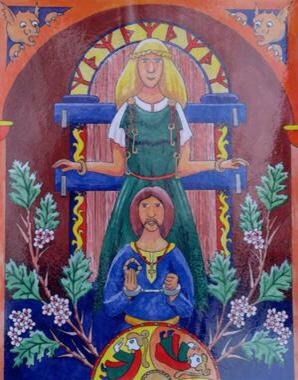
She is known as a healer. That said, Eir’s name translates roughly to the word “mercy,” and in addition to being one of Frigga’s handmaidens, she is listed among Odin’s Valkyries. This has led some modern heathens to speculate that, in addition to her healing skills, she was the source of “mercy on the battlefield,” which, depending on the circumstances, could mean a clean death for those already dying from their wounds.
Fulla
Not much is known about Fulla. She is called a virgin and goes about with her hair unbound and flowing. She wears a gold band around her head. She carries Frigga’s casket, a small chest, and also cares for Frigga’s shoes. She is considered someone with whom Frigga shares her secrets. Fulla may be the Volla listed in the Second Meresburg Charm, Frigga’s sister, or, potentially, Frigga herself.
Gefjon
Gefjon has four sons, whom she changed into oxen in order to carve land for herself out of Denmark; folklore has it that Zealand is Gefjon’s property. Her name means “giver,” and this has caused her to be confused with Freyja, whose byname, Gefn, means the same thing. However, as Frigga’s handmaiden, she protects maidens and unmarried women. This, taken along with the myth about Zealand, is enough evidence to suggest that she is a goddess in her own right.
Lofn
Lofn is the handmaiden who clears the way for permission to be granted for marriages, particularly those marriages which would otherwise be seen as forbidden.
Sága
Sága is an interesting character. Her hall, Sökkvabekk, refers to sunken benches, the implication being a bog or fen. Frigga’s hall is Fensalir, which also involves a fen. Frigga is married to Odin; Sága is known to sit with Odin in her hall and drink mead with him. In fact, there are so many similarities between Sága and Frigga that many scholars contend that they are one and the same, and that Sága is one of Frigga’s bynames. The Prose Edda mentions her as one of Frigga’s handmaidens.
Sjofn
Sjofn helps turn the minds of men and women to love.
Snotra
Snotra is known to be wise and courteous.
Syn
Syn is known as the handmaiden who bars the doors to the hall and guards against those who are forbidden to enter. It is also said that she can stand in assembly as a party for the defense, in cases that involve her.
Var
Var is most concerned with hearing the oaths people make, particularly the marriage oath.
Vor
Vor is also known to be wise, but she asks questions, and nothing can be concealed from her. Vor is the last of Frigga’s handmaidens that we have record of.
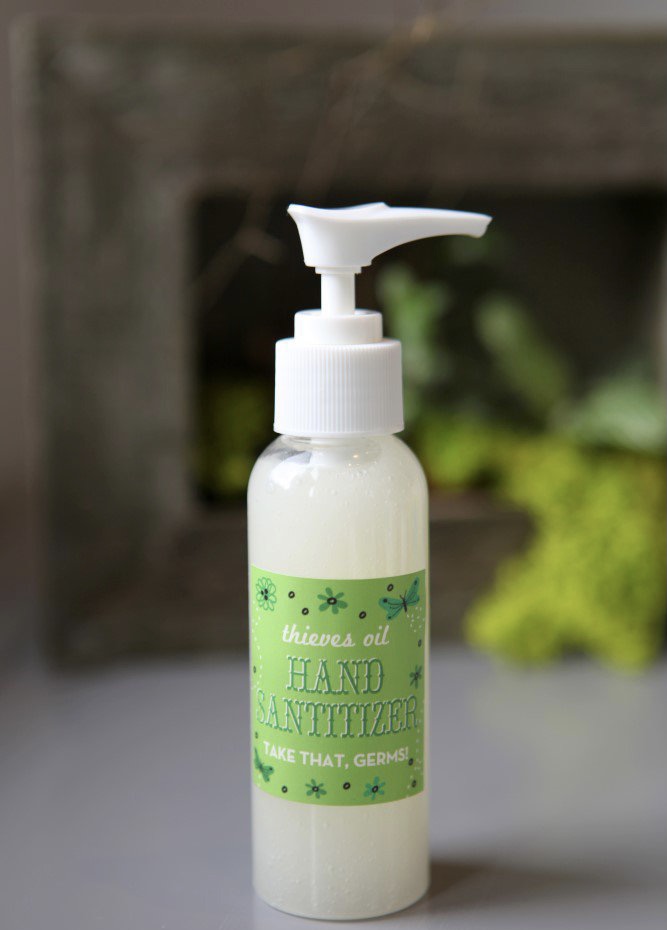
This natural hand sanitizer combines antimicrobial herbs to kill the bugs that cause infection. It can be used when out and about without the need for water.
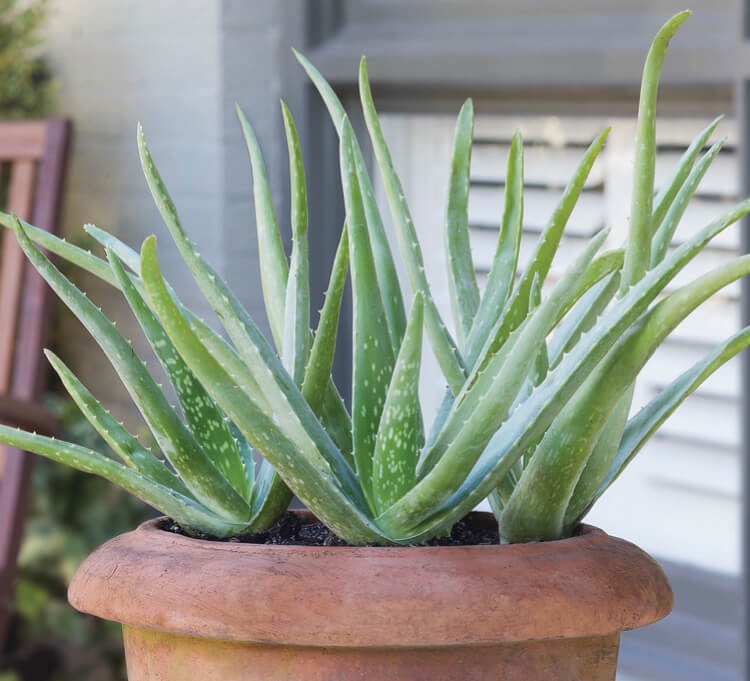
½ cup aloe vera gel
2 tsp. herbal-infused oil
1 tsp. thyme tincture
10 drops of lavender essential oil
10 drops of eucalyptus essential oil
Put the aloe vera gel into a small mixing bowl, then slowly add the infused oil, whisking together thoroughly.
Add the tincture and essential oils and whisk again.
Pour into pump or squeeze bottles, seal, label and date. Use as needed.
A short poem for women’s History month by Sylvia Plath:
Mad Girl’s Love Song
I shut my eyes and all the world drops dead; I lift my lids and all is born again. (I think I made you up inside my head.)
The stars go waltzing out in blue and red, And arbitrary blackness gallops in: I shut my eyes and all the world drops dead.
I dreamed that you bewitched me into bed And sung me moon-struck, kissed me quite insane. (I think I made you up inside my head.)
God topples from the sky, hell’s fires fade: Exit seraphim and Satan’s men: I shut my eyes and all the world drops dead.
I fancied you’d return the way you said, But I grow old and I forget your name. (I think I made you up inside my head.)
I should have loved a thunderbird instead; At least when spring comes they roar back again. I shut my eyes and all the world drops dead. (I think I made you up inside my head.) ~ Sylvia Plath.
Scientists know that the atmospheres of planets change over time — Mars, for example, is gradually losing its atmosphere as it evaporates into space. The examples we know of suggested this was a one-way process, where an atmosphere developed and then was subsequently lost. But now, researchers using the Hubble Space Telescope have discovered a very odd planet that seems to be re-growing its atmosphere after having lost it in the past. This is the first time such a thing has been observed.
Planet GJ 1132 b is several times the size of Earth, making it a type called a sub-Neptune, and it started out with a thick atmosphere of hydrogen and helium. But, being close to its hot, young star, this atmosphere was quickly lost and the planet was reduced to a core around the size of Earth. So far, so typical.
Where it gets weird is recent observations from Hubble which show the planet has a secondary atmosphere of hydrogen, hydrogen cyanide, methane, and ammonia. Researchers think that hydrogen from the original atmosphere was absorbed by the planet’s mantle, and is now being released once more by volcanic activity. The atmosphere seems to be replenishing itself even as hydrogen continues to be lost into space.
“It’s super exciting because we believe the atmosphere that we see now was regenerated, so it could be a secondary atmosphere,” said study co-author Raissa Estrela of NASA’s Jet Propulsion Laboratory (JPL) in a statement. “We first thought that these highly irradiated planets could be pretty boring because we believed that they lost their atmospheres. But we looked at existing observations of this planet with Hubble and said, ‘Oh no, there is an atmosphere there.’”
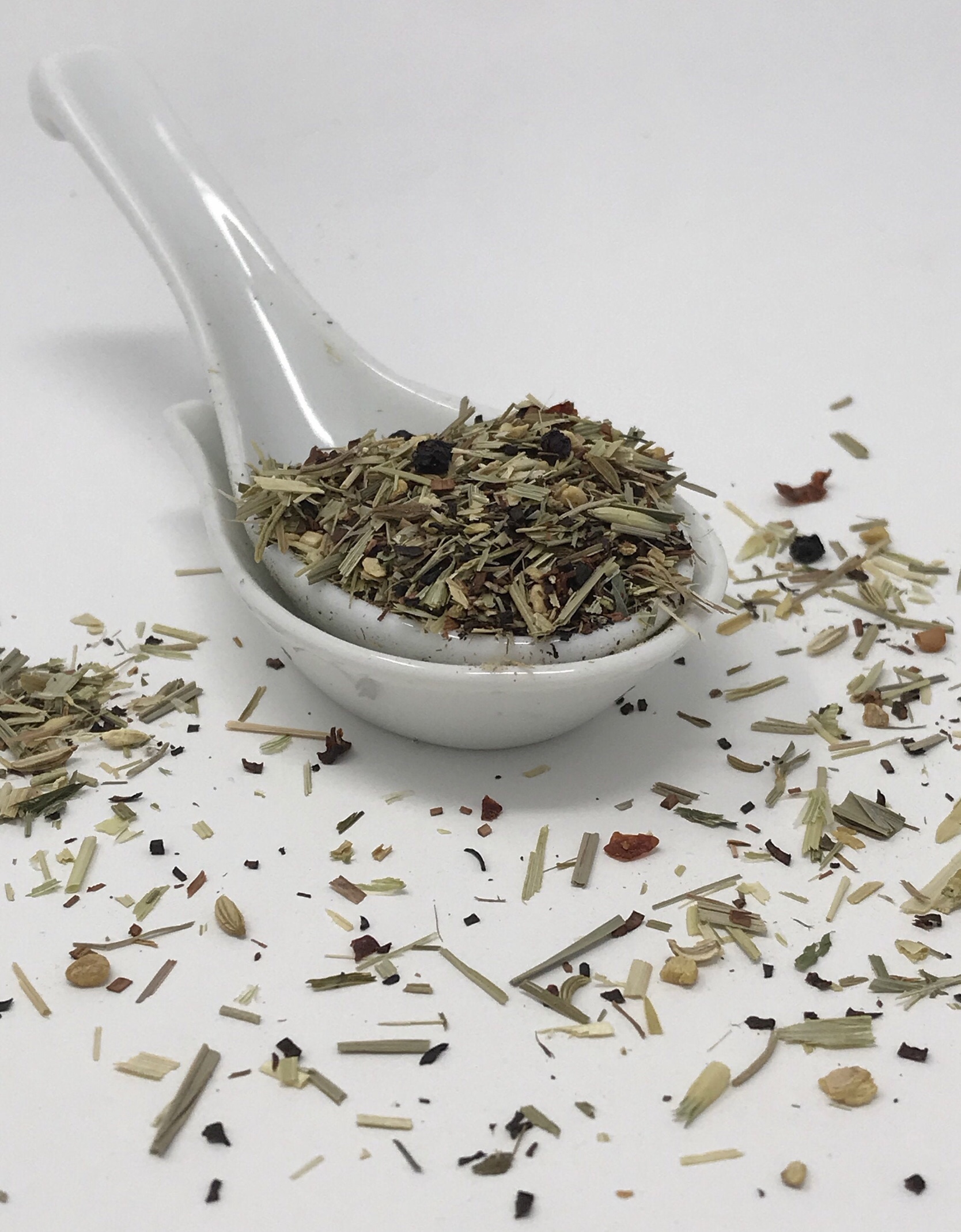
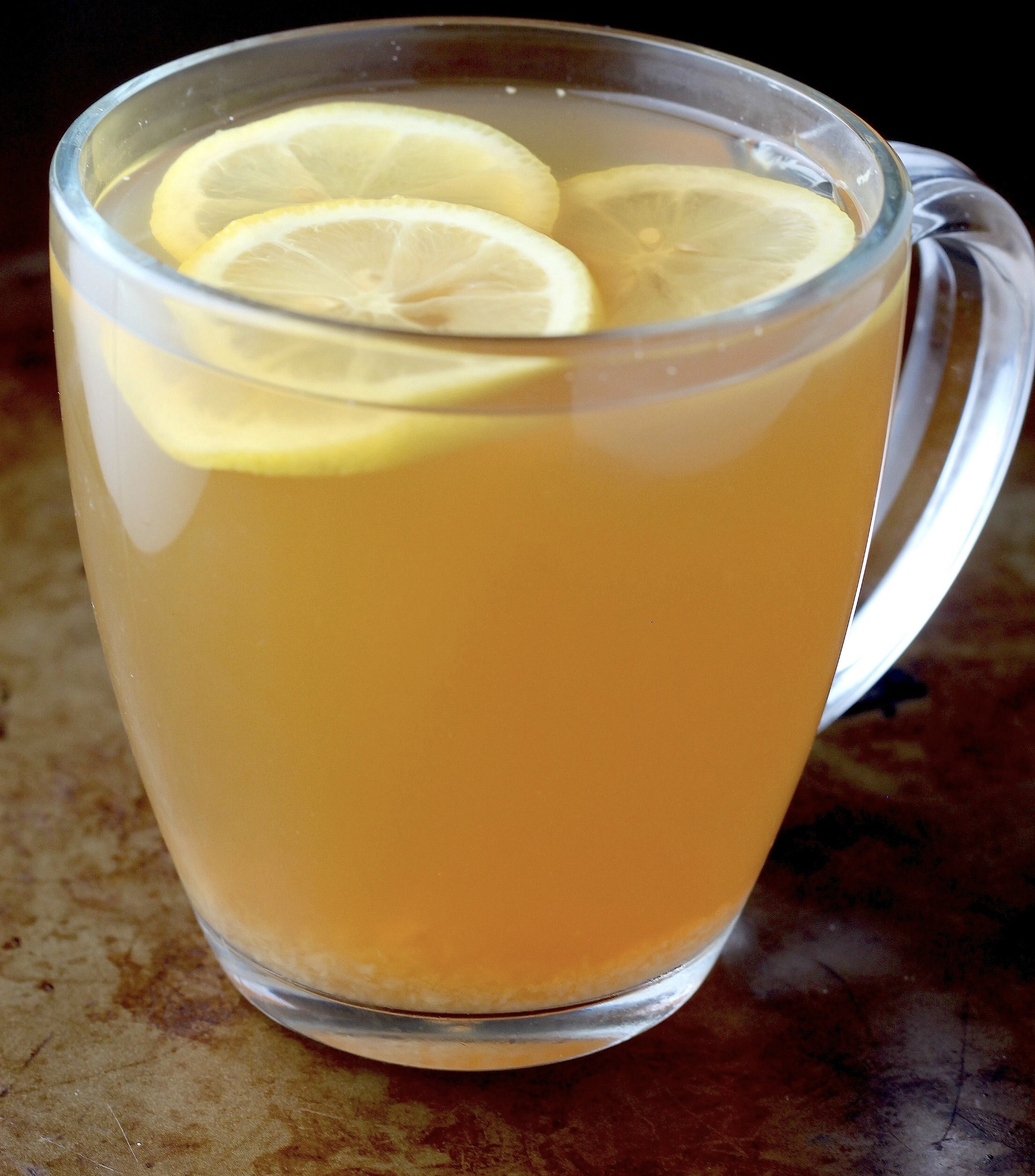
If you love the effects of ginger on your immunity and digestion, this tea is a must add to your catalogue of teas. In addition to the ginger, Gingerade contains the nutritive herbs of milky oats, fennel, and honeybush, which create a delicious blend. Rosemary, known as the herb of remembrance, supports the mind and memory. Lemongrass, with its delicate citrus scent, brightens the mind and uplifts mood.
3 parts milky oats
2 parts ginger
2 parts honeybush
1 part lemongrass
1 part rose hips
1 part fennel
1 part dried berries (e.g., elderberry, blackberry, blueberry)
0.5 part rosemary
1 drop lemon essential oil, or fresh lemon zest to taste
Hot Infusion: Pour 1.5 cups hot water over 2 tablespoons tea. Steep for 10 to 15 minutes.
Cold Infusion: Combine 2 cups cold water and 1 to 2 tablespoons tea in a lidded jar. Shake the jar to make sure all the tea is saturated. Place in the refrigerator or a cool place for at least 2 hours.










 Mark Bere Peterson’s Counterculture, Urban Legends, Paganism & Witchcraft