The Satyrs

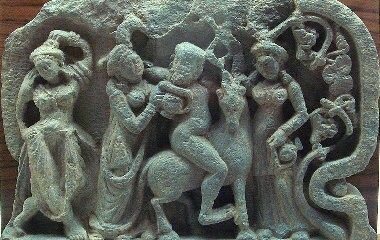
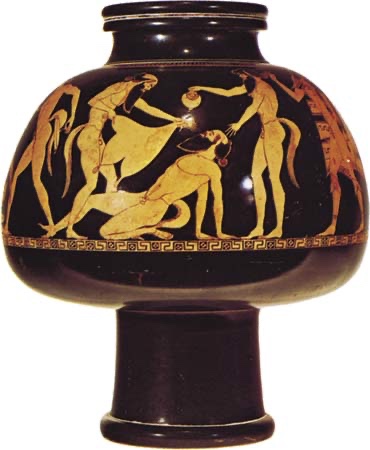
Satyrs were male hybrid creatures who were part horse and part human. They stood and walked upright, unlike the quadruped, half-horse Centaurs to whom they were akin, and in their original, traditional form, they had horses’ tails, long hair and beards, horses’ ears, bulbous foreheads, and snub noses. Artistic representations also showed them sometimes with the legs and hooves of a horse as well as with enlarged, erect penises. It was only in the Hellenistic Period (after 323 BCE, the death of Alexander the Great) that Satyrs, in an assimilation to the rustic god Pan, took on a goatlike appearance, having shorter tails and sprouting horns.

Satyrs, who in earliest times were indistinguishable from Silens, were woodland spirits or daemons that lived in the wild, being found in mountains, forests, and caves alongside Nymphs with whom they cavorted and whom these lusty creatures amorously pursued. Lustfulness, enthusiasm for wine, and a propensity for mischief were characteristic of them. Silens, on the other hand, came to be viewed as elderly Satyrs.

Alongside Nymphs, both Satyrs and Silens formed the typical entourage of the shape-shifting god Dionysus. The best-known Satyr in Classical mythology was also the most tragic of them. This was Marsyas, who had found the flute cast aside by the goddess Athena, and, when he discovered that he had a talent for playing the instrument, he made the terrible mistake of challenging Apollo to a music contest. As a consequence of his pridefulness, he was flayed alive. Another Satyr, his name unknown, pursued the Danaid Amymone, but was driven off by Poseidon, who then took up in the pursuit of the maiden himself.

Source: Classical Mythology A – Z

Alukah

Alukah

The word, Alukah, literally means “horse-leech,” which is a type of leech that has many teeth and feed on the throats of animals. But, some Biblical Scholars believe ‘Alukah’ can also mean “blood-lusting monster.”

Alukah is a Hebrew vampire that was first referenced in Proverbs 30:15 in the Bible. Solomon refers to a female demon named “Alukah” in a riddle he tells in Proverbs. The riddle involves Alukah’s ability to curse a womb bearing seed.

Historically, Alukah has been closely associated with Lilith. Some believe that Alukah is the direct descendant of Lilith, whereas others think that the name Alukah may merely be another title for Lilith.

The most detailed description of Alukah appears in Sefer Chasidim, where the creature is said to be a living human being that can shape-change into a wolf. Alukah can fly by releasing her long hair. Alukah would eventually die if she is prevented from feeding on blood for a long enough time.

To prevent a vampire from becoming a demon, she needs to be buried with her mouth stuffed with earth.

Vampires vary throughout Jewish traditions in history. Sometimes they are demonic spirits and other times they are described as a type of witch.

Wolfsbane or Monkshood (aconitum napullus)

Wolfsbane or Monkshood (aconitum napullus)

One of the most beautiful and also oldest and most deadliest of poisons. The principal alkaloids are aconite and aconitine; of these aconitine is thought to be the key toxin and one of the most toxic plant compounds known. Ingestion of even a small amount results in severe gastrointestinal upset, but it is the effect on the heart, where it causes slowing of the heart rate, which is often the cause of death. The poison may be administered by absorption through broken skin or open wounds and there are reports of florists being unwell after working with the flowers.

Its distinctive taste makes it unpleasant to eat so accidental poisoning is extremely rare but not unknown. The taste is described as initially very bitter followed by a burning sensation and, then, a numbing of the mouth. All parts of the plant are extremely poisonous if eaten and may cause systematic poisoning if handled.

Magical propensities for invisibility and protection from evil. Excellent for redirecting predators.

Lymph Cleansing Tea

This tea is nourishing to the body and cleansing to the lymph glands. Use for painful breasts and skin problems.

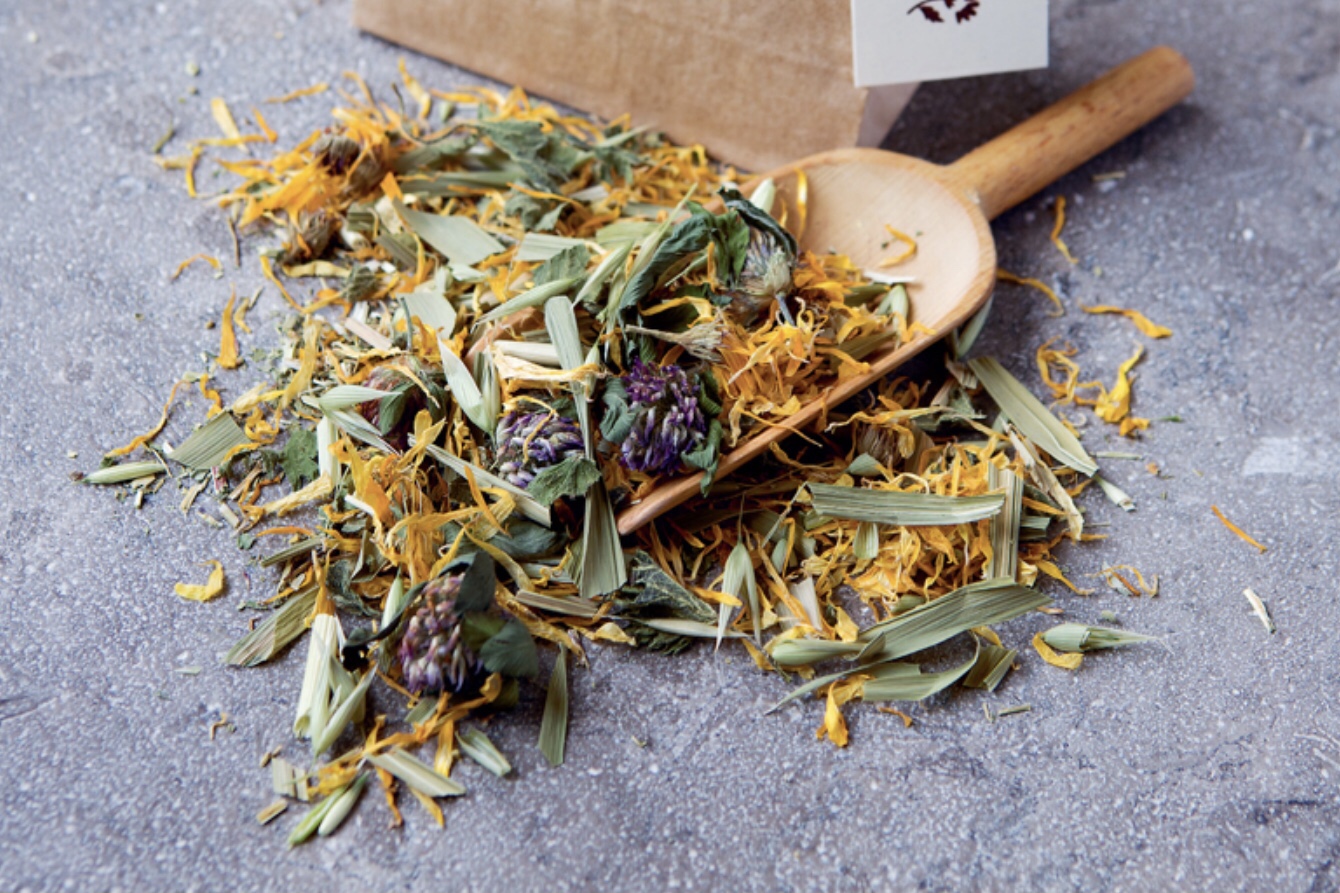
1part dried red clover flowers

1 part dried cleavers *

1 part dried calendula flowers

1 part dried oat straw

1 part dried nettle leaves

Mix all the dried herbs together in a sterilised jar, then seal, label and date.

To use, place 1 teaspoon of the dried herb mix in one cup (250ml) of boiling water and leave to infuse for 15 minutes, then strain and drink.

Take up to three times a day, as and when required.

Shelf Life: The dried herb mix will keep in a cool, dark place for up to 1 year.

* Common Names: hitchhickers, cleavers, clivers, bedstraw, goosegrass, catchweed, stickyweed, sticky bob, stickybud, stickyback, robin-run-the-hedge, sticky willy, sticky willow, stickyjack, stickeljack, grip grass, sticky grass, bobby buttons, whippysticks and velcroplant

The Astronomical Clock of Besançon Cathedral (Besançon, Franche-Comté, France)

Besançon Cathedral, located in the center of France’s 19th-century clock-making capital, is home to a 19-foot-tall (5.8 m) clock with 30,000 pieces. It is one of the most complicated horological devices ever made. Installed in 1860, the clock shows the local time in 17 places around the world, as well as the time and height of the tides in eight French ports, a perpetual calendar with leap-year cycles, and the times of sunrise and sunset.

The many dials of what may be the most complicated horological device ever constructed.

Nicolaus Copernicus‘s book “On the Revolutions of the Heavenly Spheres” is added to the Index of Forbidden Books

Today in Science:

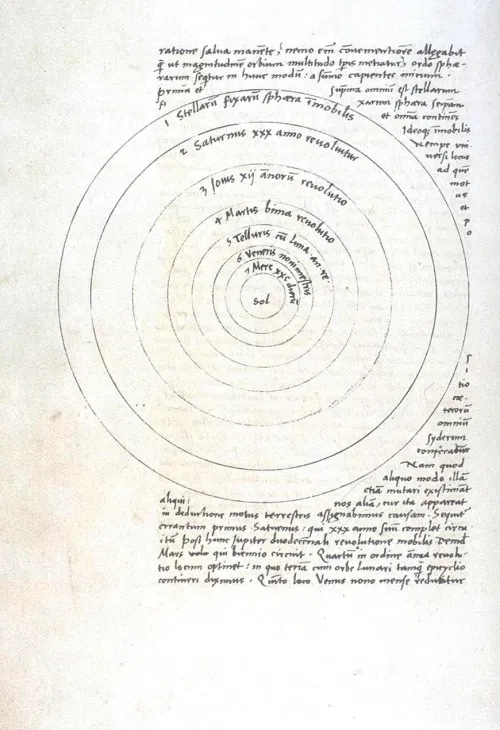
1616 – Nicolaus Copernicus‘s book On the Revolutions of the Heavenly Spheres is added to the Index of Forbidden Books 73 years after it was first published.

Here’s Copernicus’s heliocentric model in the book’s manuscript. Note the Sun in the center with seven planets around it. The Index Librorum Prohibitorum was finally abolished as church law in 1965

Validation in Dialectical Behavioral Therapy (DBT)

This is the main dialectic in DBT: balancing pushing clients to make changes in life while at the same time accepting the way they are and the life they’re leading, as well as encouraging them to accept themselves. If the therapist pushes too hard for change and doesn’t focus enough on acceptance, the client will feel invalidated and will be unable to work effectively in therapy. But too much acceptance and not enough push for change will create a sense of hopelessness, which will also result in an inability to work effectively in therapy.

Linehan (1997) outlines six different levels of validation:

Listening and observing: The therapist actively tries to understand what the client is saying, feeling, and doing, demonstrating genuine interest in her and actively working to get to know her. This entails paying close attention to both verbal and nonverbal communication and remaining fully present.

Accurate reflection: The therapist accurately and nonjudgmentally reflects back the feelings, thoughts, behaviors, and so on expressed by the client. At this level, the therapist is sufficiently in tune with the client to identify her perspective accurately.

Articulating the unverbalized: The therapist communicates to the client that she understands the client’s experiences and responses that haven’t been stated directly. In other words, the therapist interprets the client’s behavior to determine what the client feels or thinks based on her knowledge of events. The therapist picks up on emotions and thoughts the client hasn’t expressed through observation and speculation based on her knowledge of the client. This type of validation can be very powerful because, while clients often observe themselves accurately, they can also invalidate themselves and discount their own perceptions because of the mistrust fostered in them by their environment.

Validating in terms of sufficient (but not necessarily valid) causes: The therapist validates client behavior in relation to its causes, communicating to the client that her feelings, thoughts, and behaviors make sense in the context of her current and past life experience and her physiology (e.g., biological illness). This level of validation goes against the belief of many clients that they should be different in some way (for example, “I should be able to manage my emotions better”)”

Validating as reasonable in the moment: The therapist communicates that the client’s behavior is understandable and effective given the current situation, typical biological functioning, and life goals. It’s important for the therapist to find something in the response that’s valid, even if it’s only a small part of the response (for example, letting a client know that it’s understandable she would resort to cutting herself because it provides temporary relief, even though it doesn’t help her reach her long-term goals).

Treating the person as valid—radical genuineness: The therapist sees the client as she is, acknowledging her difficulties and challenges, as well as her strengths and inherent wisdom. The therapist responds to her as an equal, deserving of respect, rather than seeing her as just a client or patient, or, worse, as a disorder. Linehan (1997) points out that level 6 validation involves acting in ways that assume the individual is capable, but that this must come from the therapist’s genuine self, and that at this level, almost any response by the therapist can be validating: “The key is in what message the therapist’s behavior communicates and how accurate the message is”

Sources: DBT Made Simple

Hollow at La Meauffe (La Meauffe, Normandy, France)

Hollow at La Meauffe (La Meauffe, Normandy, France)

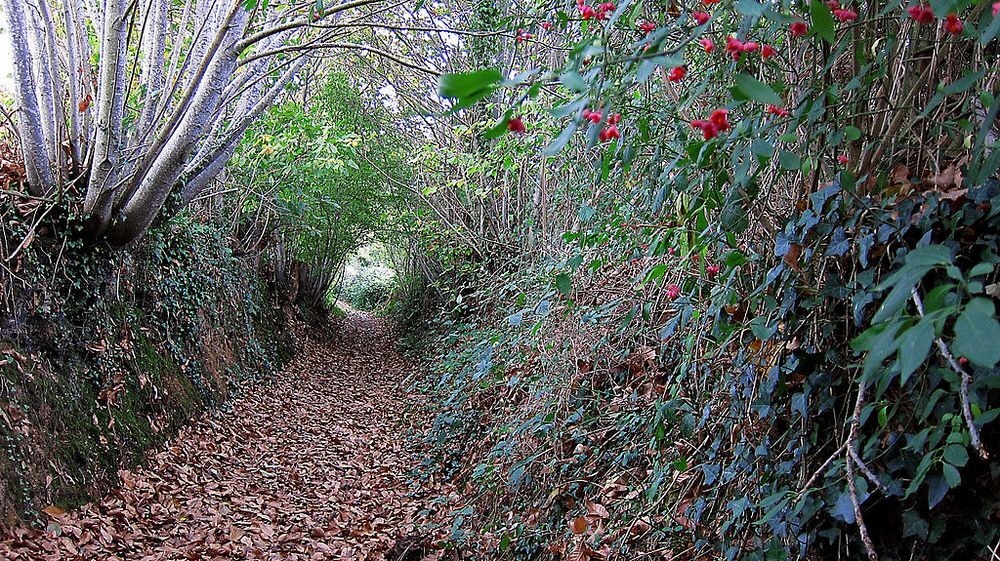
Holloways, which appear like deep trenches dragged into the earth, are centuries-old thoroughfares worn down by the traffic of time. In Europe, most of these sunken lanes go back to Roman times, or as early as the Iron Age.

These deep-recessed roads were naturally tunneled into the soft ground by years of footsteps, cart wheels, and animal hooves. Water flowing through the embankments like a gully further molded the paths into rounded ditches that have sunk as much as 20 feet lower than the land on either side. In some cases, trees rise up from the banks flanking the narrow path and reach toward each other to form a canopy over the road, making the holloway look like a tunnel running through the thick greenery.

Holloways are especially common in the bocage, or “hedgerow,” landscape around Normandy, where the countryside is divided into small fields enclosed by sunken lanes and high hedges. Like many sunken roads, the trench-like holloway in La Meauffe was used as a shelter during times of war. During World War II, the La Meauffe hollow was a defensive strongpoint for the German army, providing perfect cover from the advancing American troops. The limited visibility of the terrain caused the Americans to suffer heavy losses during the attack, leading US soldiers to call the road in La Meauffe “Death Valley Road.”

Many who walk through holloways don’t realize they are retracing ancient steps.

Mandrake (mandragora officinarum)

A stemless perennial with a fleshy taproot and broadly ovate leaves; small white to blue-white, bell-shaped flowers are borne at ground level in spring, followed by aromatic yellow fruits. One of the most written about plants in history with whole books devoted to its properties and its ability to scream when pulled from the ground. It is a relative of deadly nightshade so contains the tropane alkaloids, notably hyoscine and atropine; the effects are hallucinogenic, narcotic, emetic and purgative similar to deadly nightshade and henbane. Mandrake root is supposed to look like the male form (having two legs, a body and often a hairy top) and, under the Doctrine of Signatures, its use ‘would give a man that power which men are always willing to spend a lot of money to get!’ Its high price was maintained, in part, by the difficulty of harvesting it.

Magical propensities for magical uses include protection; prosperity; fertility; exorcising evil. Carry to attract love. Wear to preserve health.

Sources: By Wolfsbane and Mandrake Root

The Rotting Body of René de Chalon (Bar-Le-Duc, Lorraine, France)

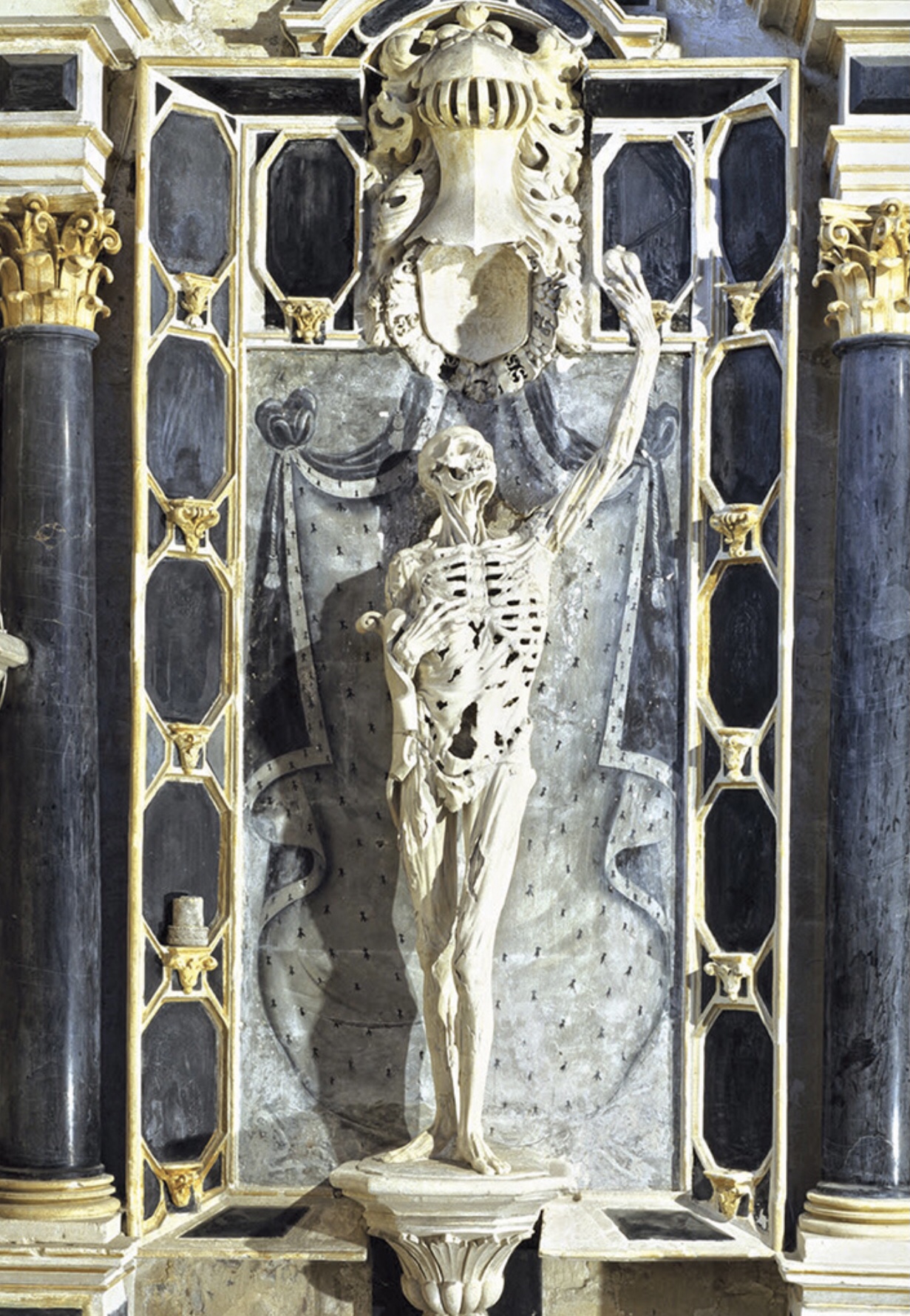
Saint-Étienne church, in the city of Bar-le-Duc, is home to a statue of a rotting corpse. Visible musculature and skin hang in flaps over the hollow carcass. The exposed skull looks toward a raised left hand, which once held the dried heart of René de Chalon, the 16th-century prince the statue depicts. (The heart is believed to have gone missing sometime around the French Revolution.)

The life-size sculpture by Ligier Richier is part of the “transi” Renaissance art form—stone sculptures of rotting bodies that served as a reminder of temporary flesh and eternal afterlife.

The postmortem statue of René de Chalon once held the man’s own dried heart.