White Stocks (Fonds Blances) & Fumets

White Stocks (Fonds Blancs)

  • Clean and degorge bones.
  • Blanch and drain bones.
  • Cover bones with cold water.
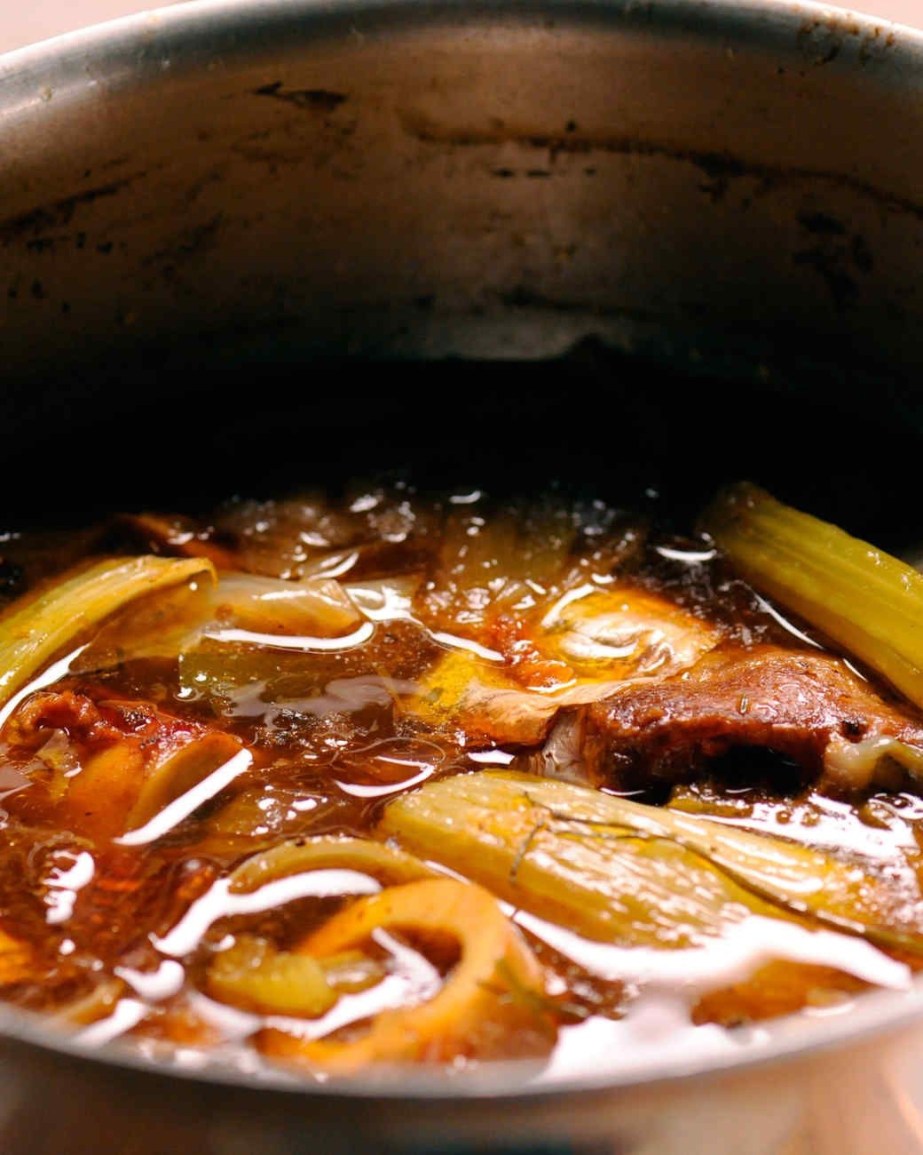
  • Bring to a simmer and skim.
  • Add mirepoix and bouquet garni.
  • Simmer and skim frequently.
    • Chicken Stock: 2 hours.
    • Veal Stock: 4-6 hours.
  • Drain through fine chinois.
  • Discard solids.

Fumets

  • Cleand and degorge bones.
  • Sweat vegetables.
  • Add bones and continue to sweat.
  • Cover with cold water.
  • Add bouquet garni.
  • Simmer and skim frequently for 30 minutes.
  • Drain through fine chinois.
  • Discard solids.

White Veal Stock (Fond de Veau Blanc)

  • Blanched Veal bones.
  • Carrots.
  • Onions.
  • Leeks.
  • Celery.
  • Bouquet Garni.

White Chicken Stock (Fond de Volaille Blanc)

  • Blanched chicken bones.
  • Carrots.
  • Onions.
  • Leeks.
  • Celery.
  • Bouquet Garni.

Fish Stock (Fumet de Poisson)

  • Fish bones.
  • Onions.
  • Leeks.
  • Bouquet garni.

French Stocks (Fonds)

Fonds, or stocks, are the starting point for many sauces, it’s critical that stock quality be the absolute best possible (in flavor and color), especially when reduced.

Brown stock—made with browned beef or veal bones and classic vegetable aromatics (classically, onion, leek, carrots, and celery).

White veal stock—prepared with veal bones and classic vegetable aromatics, but the bones and vegetables are not browned.

Chicken stock—made with skin-on chicken meat, chicken bones, and classic vegetable aromatics.

Vegetable stock—typically made with classic vegetable aromatics and sometimes leftover bits of other mild vegetables, such as mushrooms.

Fumet—fish stock made with fish bones, heads, tails, and classic vegetable aromatics, except the carrots.

Court-bouillon—a quickly cooked broth prepared with classic vegetable aromatics that serves as a poaching liquid for meat or fish.

Demi-glace—any kind of stock—white or brown, typically using veal, chicken, pork, or beef—reduced down to a glaze (about 20 percent of its original volume) and later reconstituted in various sauces.

Glace de crustace—or crustacean stock, made with crustacean shells, such as shrimp, crab, lobster, or crayfish that is cooked with classic vegetable aromatics and cooked down to a glaze (about 20 percent of its original volume).

Guidelines For Stock Preparation

Guidelines for Stock Preparation 

  • Use the highest quality ingredients.
  • Trim excess fat from meat and bones.
  • Always blanch Beef and Veal bones when making White stocks.
  • Never blanch fish bones when making a fumet, wash only.
  • Begin cooking process with cold water.
  • The higher the ratio of solids to liquids, more intense the flavor.
  • Simmer stocks slowly and uncovered.
  • Never allow a stock to boil, it will become cloudy.
  • Do not stir from the bottom, it will become cloudy.
  • Skim and degrease frequently, always use a clean ladel
  • Taste throughout the cooking process.
  • Stop the cooking process when the ingredients have released their maximum flavor.
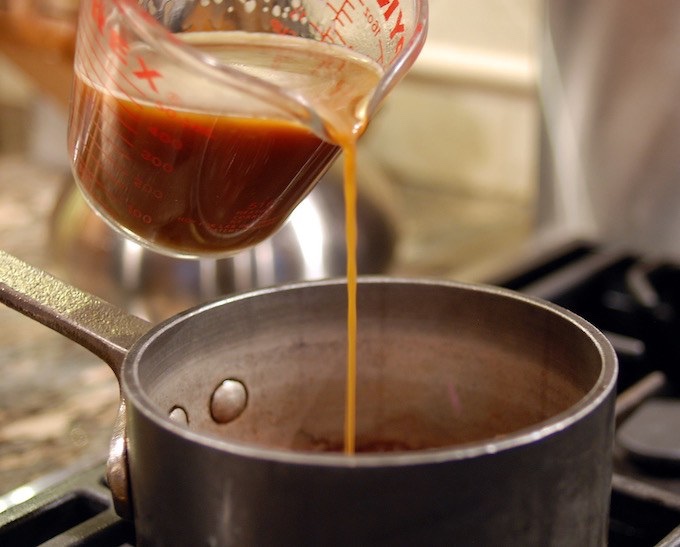
  • Stocks should be poured out carefully through a chinois.
  • Stocks should be cooled quickly in an ice bath.
  • A properly prepared stock will be bright and clear.

Stocks and Sauces Terminology

Bouquet Garni: Fresh thyme, parsley stems, bay leaf, a few peppercorns tied together in leek greens.

Deglaze ( Déglacer): To loosen sucs from the bottom of a roasting pan using liquid: water, stock, vinegar, wine or juice.

Dégorger: To soak bones to remove blood to help produce a clearer, cleaner stock.

Degrease (Dégraisser): To remove grease from the top of a stock or sauce with a ladle or metal spoon.

Mirepoix: Equal parts of onions and carrots uniformly Cut, or 50% onions, 25% carrots, 25% celery or equal parts onions, carrots and celery.

Moisten (Mouiller): To Add water to bones and aromatics to produce a stock.

Mother Sauce (Sauce Mères): Group Of basic sauces of the Classical French repertoire.

Mount, to (Monter): Swirl in butter or other emulsifying agent to enrich the flavor and texture, gives a glossy finish.

Pass (Passer): To strain or pass a stock through a chinois.

Plug (Tamponner): To dot the top of a sauce with butter to prevent the formation of a film.

Reduce (Réduir): To boil a stock or sauce until the volume is reduced.

Remoisten (Remouillage): To Add water to cooked bones to extract their maximum flavor.

Roast (Rôtir): To cook in direct, radiant heat in the dry atmosphere of a preheated oven.

Simmer (Frémir): To cook gently so bubbles just break the surface.

Skim (écumer): To remove coagulated blood and impurities from a stock through skimming them off the top with a ladle or skimmer.

Sucs: Caramelized proteins that form on the bottom of a pan as ingredients are browned.

Sweat (Suer): To cook vegetables in a small amount of fat so that the ingredients cook in their own juices without taking on any color.

Winnow (Vanner): To stir a stock or sauce, either while it is cooking or in an ice bath, to facilitate cooking or cooling.

The Gorgons

The Gorgons were three monstrous sisters whose lair was in the territory of Libya. Their names were Stheno, Euryale, and Medusa, and they were said to be the offspring of the sea deity Phorcys and his sister Ceto. According to an alternate tradition, they sprang from the earth goddess Gaia, who produced them to be her allies in the battle between the gods and Giants. Of the Gorgon sisters only Medusa was mortal, and for that reason Perseus was sent to fetch her head. According to mythographer Apollodorus, the Gorgons had serpents as hair, large tusks like a boar’s, hands of bronze, and golden wings. Indeed, they were so hideous in appearance that they turned to stone all who looked upon them directly.

Cerberus

Cerberus, whom Homer calls “the hound of Hades,” was one of the brood of monsters, which include the Hydra of Lerna and the Chimaera, spawned by Typhon and the half maiden, half serpent Echidna. He was variously described as having as many as fifty or one hundred heads and as few as three. The mythographer Apollodorus writes that Cerberus, the three-headed dog, had the tail of a dragon and snakes’ heads growing from his back. For the poet Hesiod, Cerberus was an eater of raw flesh and had a bark like clashing bronze.

Cerberus’s duty was to allow the deceased to enter the House of Hades but to block the living from entering and the dead from leaving. On the instruction of the Sibyl of Cumae, the living hero Aeneas secured passage into Hades by throwing Cerberus a drugged honey cake. The best-known myth involving Cerberus is the tale of Hercules’s twelfth and final Labor (or by some accounts, the tenth): Hercules was ordered to bring Cerberus up from the Underworld, a task that he accomplished by overpowering the beast without the use of weapons. As the poet Ovid writes, upon reaching the realm of the living, the distressed hound raged, foam from its mouth falling upon the earth to produce the poisonous plant aconite, which the sorceress Medea used in attempting to kill the hero Theseus.

Cooking Method: Dans un Blanc

Definition: Cooking in a water, flour, oil, lemon, salt solution for ingredients that easily discolor such as artichokes, salsify, offal and Veal.

  • 2 Quarts, 4 ounces (2 liters)
  • 2 tablespoons (30 milliliters) canola oil
  • 1 tablespoon (15 milliliters) fresh lemon juice
  • 3/4 ounce (21 grams) all-purpose flour
  • 1/3 ounce (10 grams) coarse salt

In this example we are cooking four artichokes or 2 pounds of salsify, offal or Veal.

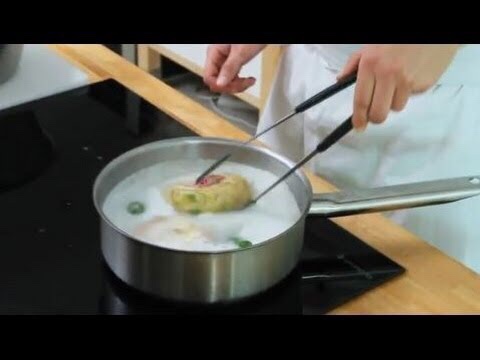
Combine water, oil, lemon juice in a saucepan over medium heat.  Whisk in flour and salt.  Add ingredient to be cooked.  Over high heat bring to a boil. Lower heat slightly. Cook at low boil for 30 minutes.  Remove from heat.  Allow item to stand in liquid one hour.

Pommes Rissolées


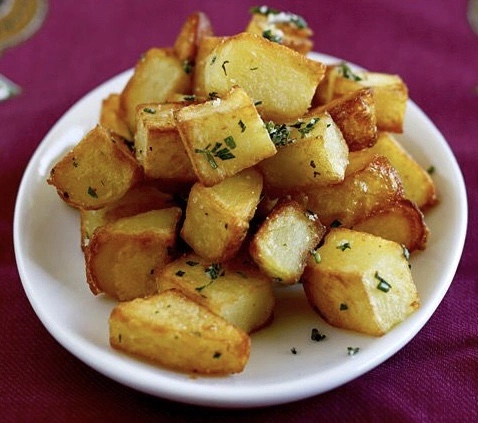
Pommes Rissolées: Shaped potatoes are blanched, then sautéed and finally roasted.

  • Tourneed:
    • Cocotte: 5 x 1.5 cm (2 x 5/8 inches)
    • Chateau: 7.5 x 3 cm (3 x 1 3/16 inches)
  • Diced:
    • Parmentier: 1.5 to 1.8 cm (5/8 to 3/4 inches)
    • Vert Pres: 5 to 7 cm (3/16 to 1/4 inches)
  • Balls:
    • Olive: elongated ball
    • Noisette: round ball
    • Parisienne: small ball

Instructions 

  • Place shaped potatoes in a pan just large enough to hold them in a single layer.  Add just enough water to cover.
  • Bring to a boil.
  • Drain.  Do not shock in ice water.
  • Dry on paper towels in a single layer.
  • In a pan large enough to hold potatoes in a single layer add fat and place over medium high heat.
  • When fat is very hot, but not smoking add potatoes.
  • Raise the heat and sauté potatoes. When light brown drain off fat and set aside.
  • Preheat oven to 400 degrees when ready to serve.
  • Add butter to pan and toss to coat.
  • Place pan in oven.
  • Roast, shaking pan from time to time.
  • Remove.  Drain off excess fat.  Salt.
  • Serve immediately.


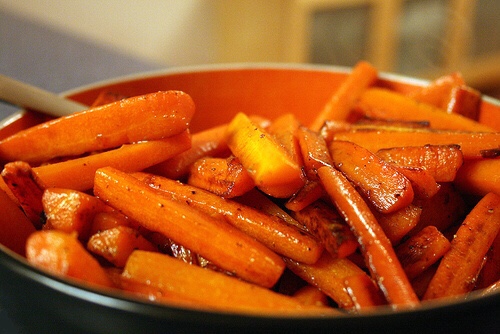
Glacer: Glazing Vegetables

Similar to A l’etuve, but a small amount of sugar is added.

  • Glacer à blanc: lightly glazed with butter
  • Glacer à Brun: sugar allowed to caramelize.

Instructions 

  • Cook one vegetable at a time.
  • Place vegetables in a saucepan in a single layer.  Add water as for A l’etuve, Butter, salt and a pinch of sugar.
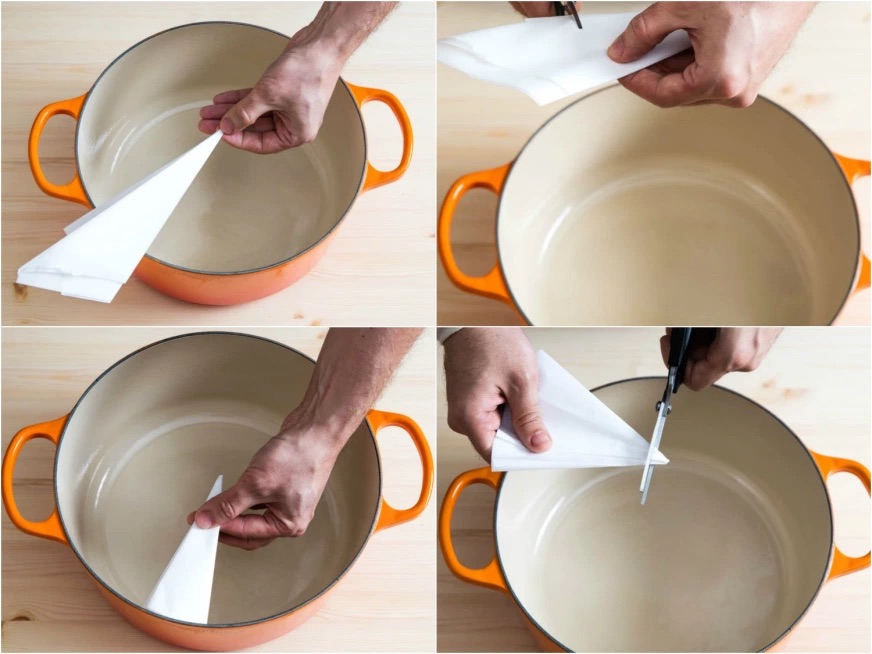
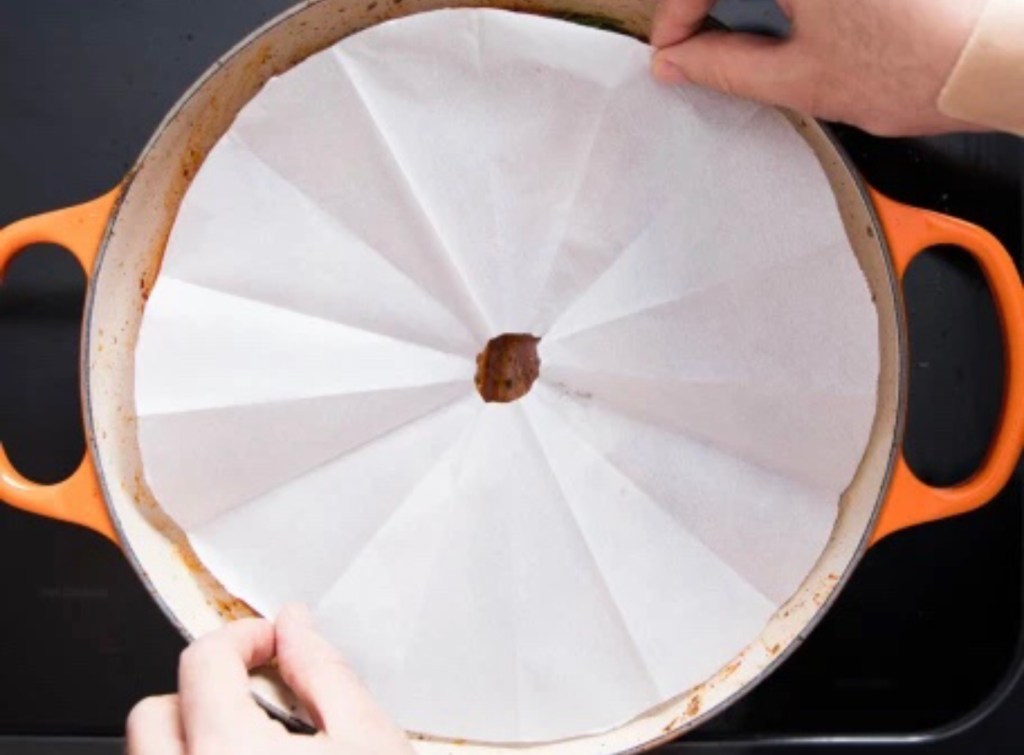
  • Cut parchment paper to fit pan with a center hole.
  • Over high heat bring to a boil.
  • Reduce heat to a gentle simmer.
  • Simmer until all liquid has evaporated.
  • If vegetables are almost tender remove parchment to allow evaporation.
  • For Glacer à Brun allow sugar to cook until it caramelizes on vegetables, turning then a golden brown.

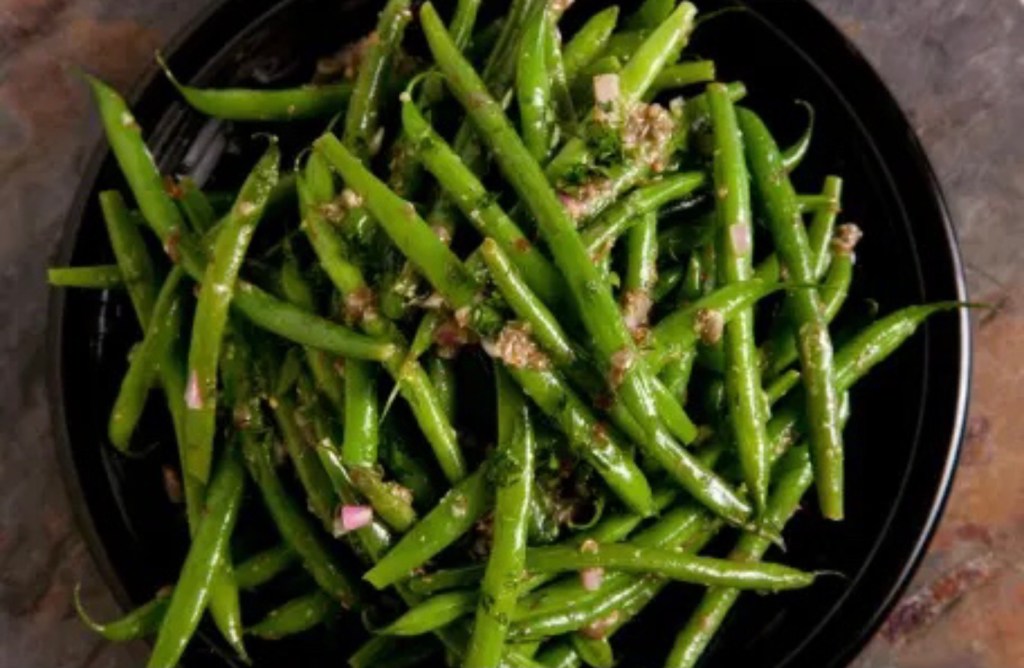
Vegetable Cooking: A l’etuvé

Definition: Slowly cooks raw vegetables in a covered pan with their own juices, just a touch of fat and salt. Just enough liquid, water or Stock is added to allow the vegetable to exude their own moisture.

  • Place cleaned and cut vegetables in a pan large enough to hold in a single layer.
  • Add the required liquid to come halfway up the vegetable, this may be as little as a couple of tablespoons.
  • Add the desired fat and salt.
  • Fold a piece of parchment paper into a cone by making four folds inward.  Cut off the tip.  Cut cone to fit size of pan.
  • Over high heat bring to a boil.
  • Lower heat to a simmer.
  • If water evaporates too quickly, lower temperature.
  • Cook until vegetables are tender.
  • Taste and adjust salt and pepper.
  • Serve.