
Were you just put on anti-psychotics for the first time and wondering what it’s like? Do you want to hear about side effects? Do you want advice on the balance between side effects and drug therapy? I highly recommend this video:
Author: Myschizlife
The Ceiling Spins
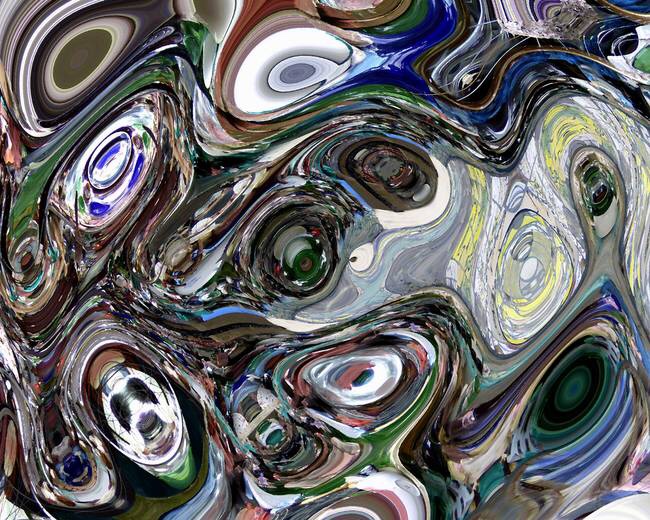
The ceiling spins,
The walls twist and melt,
The floor swallows me whole,
A gasp,
A tear,
A scream,
Blood oozes through my veins,
Sweat trickles upon my brow,
Legs lurch holding me erect,
A cry,
A pant,
A swallow,
I blink in the glow of the moonlight,
I shudder in reaction to my reality,
Moments of reason, moments of exasperation.
Evolutionary Ethics: Thoughts upon reading “The Moral Landscape” By Sam Harris
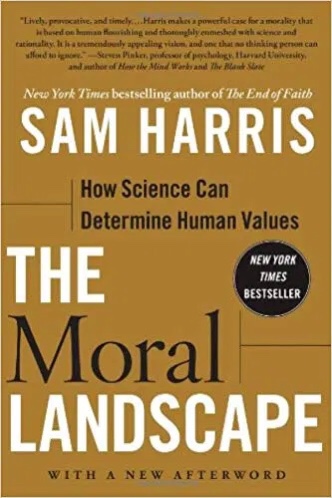
Evolutionary Ethics: Thoughts upon reading “The Moral Landscape” By Sam Harris (Originally Written 7/2011)
I find myself back in intensive care today having rushed to the ER throwing up blood. I have an endoscopy scheduled to see if they can find the bleed. I haven’t been here in Jacksonville long, but I have every faith that Mayo will discover what is wrong with me. There are a lot of medical questions I should be dominated with, but I’ll either survive this hospital stay or I won’t. There is nothing I can do about it so I am very calm. Instead my mind in preoccupied with morality. I just finished reading The Moral Landscape by Sam Harris and the questions he posits is morality defined and developed by religion or by science and specifically evolution is consuming me. It’s an interesting question and while he is firmly on the side of science, so many of my friends and family would argue the opposing point of view.
I’ve been on a religious search for meaning most of my adult life having tried on Christianity, Judaism, and finally Buddhism. Buddhist thought has carried a lot of weight with me for several years as I have an uneven practice. I will meditate and study for months on end and then nothing for a few months. As I lie here in the ICU though the desire to be able to pray to a loving God beseeches me. I can understand the comfort Christians receive
from such practices. The questions though with Christianity are too many and complex for me to find comfort. I’ve read the bible cover to cover three times, the first time back in college and the doctrine in not foreign to me in the least. The quote by an unattributed author keeps ringing in my head of the difference between philosophy and religion, “Philosophy is questions that may never be answered. Religion is answers that may never be questioned.”
Epicurus was an Ancient Greek philosopher who lived from 341–270 BC. He taught that pleasure and pain are measures of what is good and evil; death is the end of both body and soul and should therefore not be feared; the gods neither reward nor punish humans; the universe is infinite and eternal; and events in the world are ultimately based on the motions and interactions of atoms moving in empty space. Most of his writings have been lost, but among those saved was this question, “Is God willing to prevent evil, but not able? Then he is not omnipotent. Is he able, but not willing? Then he is malevolent. Is he both able and willing? Then whence cometh evil? Is he neither able nor willing? Then why call him God?”
Is there a universal morality which governs all of humanity upon which judgement can be placed as opposed to the predominantly liberal idea of cultural moral relativity? I argue yes and it is not tied to any religion, as a matter of fact religion confounds the matter and it is only through science and evolutionary theory that one might comprehend the overreaching standard of morality and how liberals, as well as conservatives, complicate this problem by allowing moral relativity to flourish. The desire not to judge other cultures and be a victim of ethnocentrism has taken on a life of its own in this politically correct world. This belief that there is no higher moral authority due to the fact that there are multiple faiths and each of those adherents believe they are living a moral life or promises of happiness and bliss in the next life. In Western culture for instance it is easy to judge Islam and their subjugation of women, gays, and infidels based on Judeo-Christian doctrine. I shall argue that it is a moral imperative to vanquish fundamentalism in all religions.
First to understand this argument there requires some understanding of some working definitions via the Oxford dictionary. Morality, principles concerning the distinction between right and wrong or good and bad behavior. Ethics, Moral principles that govern a person’s behavior or the conducting of an activity. Welfare, The health, happiness, and fortunes of a person or group. The absolute morality I am arguing is based upon the idea of that which increases the general welfare of humanity, or more simply for the greater good of society, as a whole is a moral framework. This is a human morality and not one simply for one ethnic, religious, or cultural group. You could argue for instance that slavery did indeed increase the welfare of the ancient Romans, but by all modern evaluations this is not seen as moral. For those of the Judeo-Christian faith for instance find the Old Testament of the bible is ripe with examples of God not only condoning, but embracing slavery. If God is indeed omnipotent and omniscient his condoning of slavery should be just as moral today as it was when the bible was first written. There are very few however who would argue that slavery is ethically right in this modern day.
Fundamentalists of virtually all faiths view their religious texts as the literal words of God. The prevalence of young earth creationists in Western civilization who believe the world is only approximately 6,000 years old is an example of this despite the overwhelming evidence to the contrary. The rallying cry of this demographic seems to be, “I’m not a scientist. Science and evolution is only a possible theory.” This issue stems from the ignorance of understanding the difference between the concept of a scientific theory and the common use of the word theory. According to a Gallup poll in 2014, 4 in 10 Americans believe God created the world within the last 10,000 years. Approximately 50% of Americans believe in evolution over millions of years, with the vast majority believing God guided this process. Only 19% of Americans believe in a non-God guided natural selection view of evolution. Of course this is at odds with scientific consensus which dictates the humans or those of Homo genus emerged of earth some 2.5 million years ago. When I refer to evolution I will be referring to the unguided naturalistic theory of evolution.
The forced subjugation of women in Islam and requiring them to wear a burqa by Western standards is seen as immoral. The cultural apologists will argue that you can not judge one culture by your own standards. I agree with this up to a point, you can not ethically judge Islamic law based upon your Judeo-Christian standards as intrinsically they are all flawed as morality has changed in the past thousands of years since biblical law was written. If you can not apply religious standards to morality to determine an absolute it is obvious the morality is a relative concept based upon the culture? No. Through evolution, adaptation and science we can answer some of these questions about what is ethically permissible in a modern society and world at this moment in our evolutionary journey. Can we through evolutionary theory determine an exact moral code? No of course not, but we can theorize where our collective morality is headed. An example of this is the instance of slavery and racism in the United States. It is hard for anyone to reasonably argue that we haven’t morally evolved through the dismemberment of a slave based society, through lynchings in the not too distant past, to where we currently stand in the civil rights movement. Is this to say there is no racism? Of course not, but a great amount of progress has been made in the last one hundred and fifty years or so.
How can we derive our ethics from religion when the major religions of Judaism, Christianity and Islam condone and embrace such concepts we find morally abhorrent such as slavery, severe punishment or death of an adulteress, forced marriage of a rape victim, misogyny, homophobia, genocide, etc. Is the golden rule moral because of an ancient text or do we recognize it as moral because we brought that belief with us to the reading of the bible? I argue the later. The golden rule or the ethic of reciprocity is found cross-culturally in virtually every religion from ancient Egypt, Judaism, Islam, Buddhism, Hinduism, etc. The ethic of reciprocity can not be argued stems from a Judeo-Christian worldview or even that it was borrowed from Ancient Egypt since there are unaffiliated cultures which predate Judaism in this belief. My argument is that it is basic human nature or in another words the result of thousands of years of adaptation and evolution.
I realize this belief is bound to be met with fierce opposition, but this is my personal philosophy shared by others such as Sam Harris, Richard Dawkins, and many scientists, but far from all of them. A new philosophical worldview is always met with fierce opposition, such is this case. Examples of morality derived through evolution and adaptation is ripe throughout the animal world. An example of this is monkeys will starve themselves to prevent their cage mates from receiving painful shocks. JH Masserman reported such adaptation in 1964, (Masserman JH. Wechkin S, and Terris W. 1964. “Altruistic” behavior in rhesus monkeys. American Journal of Psychiatry 121: 584-585.), “In one experiment, 15 rhesus monkeys were trained to get food by pulling chains. Monkeys quickly learned that one chain delivered twice as much food than the other. But then the rules changed. If a monkey pulled the chain associated with the bigger reward, another “bystander” monkey received an electric shock. After seeing their conspecific get a shock, 10 of the monkeys switched their preferences to the chain associated with the lesser food reward. Two other monkeys stopped pulling either chain—preferring to starve rather than see another monkey in pain.” This study is far from the only example: mice show greater distress at the suffering of familiar mice than unfamiliar ones, and chimpanzees have a demonstrable sense of fairness when receiving food rewards.
Sam Harris argued when faced with this philosophical as well as scientific point of view scientific ignorance is ripe and intervenes, “There is an epidemic of scientific ignorance in the United States. This isn’t surprising, as very few scientific truths are self-evident, and many are deeply counterintuitive. It is by no means obvious that empty space has structure or that we share a common ancestor with both the housefly and the banana. It can be difficult to think like a scientist (even, we have begun to see, if one is a scientist). But it would seem that few things make thinking like a scientist more difficult than religion.” (The Moral Landscape, p. 176). If we examine this from a Judeo-Christian perspective we are faced many inconsistencies that require answers. It is not my role here to argue whether religious faith is faulty or not, that is between you and what you believe in. It is my belief that morality is defined independent of any particular religion through evolution and adaptation.
Anxiety Disorders

Experiencing occasional anxiety is a normal part of life. However, people with anxiety disorders frequently have intense, excessive and persistent worry and fear about everyday situations. Often, anxiety disorders involve repeated episodes of sudden feelings of intense anxiety and fear or terror that reach a peak within minutes (panic attacks).
Symptoms
Common anxiety signs and symptoms include:
• Feeling nervous, restless or tense
• Having a sense of impending danger, panic or doom
• Having an increased heart rate
• Breathing rapidly (hyperventilation)
• Sweating
• Trembling
• Feeling weak or tired
• Trouble concentrating or thinking about anything other than the present worry
• Having trouble sleeping
• Experiencing gastrointestinal (GI) problems
• Having difficulty controlling worry
• Having the urge to avoid things that trigger anxiety
Several types of anxiety disorders exist:
• Agoraphobia (ag-uh-ruh-FOE-be-uh) is a type of anxiety disorder in which you fear and often avoid places or situations that might cause you to panic and make you feel trapped, helpless or embarrassed.
• Anxiety disorder due to a medical condition includes symptoms of intense anxiety or panic that are directly caused by a physical health problem.
• Generalized anxiety disorder includes persistent and excessive anxiety and worry about activities or events — even ordinary, routine issues. The worry is out of proportion to the actual circumstance, is difficult to control and affects how you feel physically. It often occurs along with other anxiety disorders or depression.
• Panic disorder involves repeated episodes of sudden feelings of intense anxiety and fear or terror that reach a peak within minutes (panic attacks). You may have feelings of impending doom, shortness of breath, chest pain, or a rapid, fluttering or pounding heart (heart palpitations). These panic attacks may lead to worrying about them happening again or avoiding situations in which they’ve occurred.
• Selective mutism is a consistent failure of children to speak in certain situations, such as school, even when they can speak in other situations, such as at home with close family members. This can interfere with school, work and social functioning.
• Separation anxiety disorder is a childhood disorder characterized by anxiety that’s excessive for the child’s developmental level and related to separation from parents or others who have parental roles.
• Social anxiety disorder (social phobia) involves high levels of anxiety, fear and avoidance of social situations due to feelings of embarrassment, self-consciousness and concern about being judged or viewed negatively by others.
• Specific phobias are characterized by major anxiety when you’re exposed to a specific object or situation and a desire to avoid it. Phobias provoke panic attacks in some people.
• Substance-induced anxiety disorder is characterized by symptoms of intense anxiety or panic that are a direct result of misusing drugs, taking medications, being exposed to a toxic substance or withdrawal from drugs.
• Other specified anxiety disorder and unspecified anxiety disorder are terms for anxiety or phobias that don’t meet the exact criteria for any other anxiety disorders but are significant enough to be distressing and disruptive.
Shards of My Soul

You left the broken shards of my soul,
Scattered in the dirt, in the filth,
I did not ask for the gift you bestowed upon me,
“Fuck You,” my lover, my sweet rapist.
The revulsion your memory conjures up,
Consumes me with a need to wretch,
The callousness of your existence,
“Fuck You,” my lover, my sweet rapist.
The trickle of my blood down the length of the blade,
The knife you hold to my quaking throat,
The heat of your body behind me,
“Fuck You,” my lover, my sweet rapist.
I gasp staring up at you my mouth slightly agape,
I know what you desire, what you require of me,
A shiver, I slowly nod closing my eyes,
“Fuck You,” my lover, my sweet rapist.
I bite my lower lip my body jerking in revulsion,
Your cruel commands echo in my mind,
I indolently open my mouth and swallow,
“Fuck You,” my lover, my sweet molester.
“Ugh,” I groan through a kick in my ribs,
Painfully I crawl back to my hands and knees,
My head jerked back by my hair so I smell your breath,
“Fuck You,” my lover, my sweet rapist.
I know what you need as you kick my knees apart,
I won’t succumb that easily,
What you will not have offered, you shall take by force,
“Fuck You,” my lover, my sweet rapist.
I bite my tongue, my mouth filling with blood,
The ravishing of my body has begun in earnest,
The blood trickles down my chin as tears swell,
“Fuck You,” my lover, my sweet rapist.
The burning inside me makes my stomach churn,
My eyes clenched shut in revulsion,
The flames inside me grow as they burn,
“Fuck You,” my lover, my sweet rapist.
Your grunts sound rapidly in earnest,
What you have needed these long hours is almost here,
Your sharp slaps of my ribcage loudly echo,
“Thank You,” my lover, my sweet…
In Response

Her words seep through my skin
Fermenting in my mind
Bringing forth the juxtaposition
Of culture and reality
As I slowly fade into the story
I melt from my own existence
And become a voice in
A world not my own
As I regain consciousness
I still hold a piece of my experience
From the words that flowed
Through her lips
The crisscrossing melding of two cultures
Fades into my perceptions
Carrying with it thoughts and ideas
A moment of realization
To carry with me
And become a part of what I want to be.
Trauma: The Next Morning, Every Morning

I inhale the stench of an eternal wait,
A breath, a gasp, a momentary lapse,
My eyes burn, my fingers bleed,
Scratching at my lack of patience,
I sigh, a tear trickles down my cheek,
A silent scream in the middle of the night,
Echoes through the darkness of my mind.
I’m consumed by the violation of my body,
The corruption of my soul,
Blood seeps from my eyes where tears once stood,
Involuntarily I wince as my body,
Wracked by the repeated violations,
Struggles to fight against my mind,
The disease of my own conception.
I stare transfixed upon the glistening mirror,
My clothes crumpled about my ankles,
The hollow eyes scrutinize my own,
The purple swelling and welts of my neck,
Coerce my eyes lower, down my bruised and battered torso,
My fingers trace over the blackish-purple festering welt,
Running down my throbbing ribcage.
My eyes linger over my aching waist,
Pleading me to stop, that I look away,
The stinging of my thighs makes me shudder,
Deep bruises traverse the muscles,
A yellowish fluid courses beneath my battered wounds,
Begging for release from my body,
Which holds it captive to my mind’s secrets.
I am engrossed as my body slowly turns in the mirror,
The lesions crisscross my stinging inner thighs,
My ass throbs as if a cruel joke,
Blood trickles down my thighs,
Reminding me of my past transgressions,
Conjuring visions of all that has been done,
My memories fashioned out of my past, my life.
The world around me swirls and contorts,
Reality drips down through my consciousness,
A gasp, a nightmare, a corruption of my mind.
Obsessive-Compulsive Disorder (OCD): Symptoms

Obsessive-compulsive disorder (OCD) features a pattern of unwanted thoughts and fears (obsessions) that lead you to do repetitive behaviors (compulsions). These obsessions and compulsions interfere with daily activities and cause significant distress.
You may try to ignore or stop your obsessions, but that only increases your distress and anxiety. Ultimately, you feel driven to perform compulsive acts to try to ease your stress. Despite efforts to ignore or get rid of bothersome thoughts or urges, they keep coming back. This leads to more ritualistic behavior — the vicious cycle of OCD.
Obsessive-Compulsive Disorder often centers around certain themes — for example, an excessive fear of getting contaminated by germs. To ease your contamination fears, you may compulsively wash your hands until they’re sore and chapped.
If you have Obsessive-Compulsive Disorder you may be ashamed and embarrassed about the condition, but treatment can be effective.
Symptoms
Obsessive-compulsive disorder usually includes both obsessions and compulsions. But it’s also possible to have only obsession symptoms or only compulsion symptoms. You may or may not realize that your obsessions and compulsions are excessive or unreasonable, but they take up a great deal of time and interfere with your daily routine and social, school or work functioning.
Obsession symptoms
obsessions are repeated, persistent and unwanted thoughts, urges or images that are intrusive and cause distress or anxiety. You might try to ignore them or get rid of them by performing a compulsive behavior or ritual. These obsessions typically intrude when you’re trying to think of or do other things.
Obsessions often have themes to them, such as:
• Fear of contamination or dirt
• Doubting and having difficulty tolerating uncertainty
• Needing things orderly and symmetrical
• Aggressive or horrific thoughts about losing control and harming yourself or others
• Unwanted thoughts, including aggression, or sexual or religious subjects
Examples of obsession signs and symptoms include:
• Fear of being contaminated by touching objects others have touched
• Doubts that you’ve locked the door or turned off the stove
• Intense stress when objects aren’t orderly or facing a certain way
• Images of driving your car into a crowd of people
• Thoughts about shouting obscenities or acting inappropriately in public
• Unpleasant sexual images
• Avoidance of situations that can trigger obsessions, such as shaking hands
Compulsion symptoms
compulsions are repetitive behaviors that you feel driven to perform. These repetitive behaviors or mental acts are meant to reduce anxiety related to your obsessions or prevent something bad from happening. However, engaging in the compulsions brings no pleasure and may offer only a temporary relief from anxiety.
You may make up rules or rituals to follow that help control your anxiety when you’re having obsessive thoughts. These compulsions are excessive and often are not realistically related to the problem they’re intended to fix.
As with obsessions, compulsions typically have themes, such as:
• Washing and cleaning
• Checking
• Counting
• Orderliness
• Following a strict routine
• Demanding reassurance
Examples of compulsion signs and symptoms include:
• Hand-washing until your skin becomes raw
• Checking doors repeatedly to make sure they’re locked
• Checking the stove repeatedly to make sure it’s off
• Counting in certain patterns
• Silently repeating a prayer, word or phrase
• Arranging your canned goods to face the same way
Flashbacks

My heart races, my palms sweat,
A sigh, a gasp, a moment stollen in silence,
Memories of a dark night long past.
My body quakes, my heart breaks,
Ripping me from my tranquil slumber,
I scratch at the fragments of my reality.
My ashen face soaked in tears,
Your arms pull me into a warm embrace,
Your caresses begin to calm my torment.
“Sweetie I’m here,” you whisper,
Your hand runs through my soaked hair,
The softness of your lips upon my cheek.
The tears are flowing easily now,
Your strokes attempt to calm, to comfort me,
The visions of that night endlessly haunt me.
“You’re safe here with me,” you whisper,
I look up gazing into your caring eyes,
A forced smile crosses my face.
Visions of my eternal nightmare plague me,
Sweetly you wipe the tears from my eyes,
Your lips gently press into my own.
Inhaling your breath awakens my senses,
My arms reach up, slipping around you,
Harder your kiss penetrates my nightmare.
A hand caresses my cheek as your lips part,
A taste of you upon my lips,
I know I am safe with you, my dear love.
Safe at last from the eternal nightmare,
Sheltered within your arms,
Our souls entwined in the intimacy of a kiss.
You my love, you have made all the difference,
A world of sorrow, of self imposed isolation,
Broken down, shared with you my true love.
A Day In My Life: My Most Common Delusions
A Day In My Life: My Most Common Delusions
Having delusions is one of the most feared and fear mongered symptoms of Schizophrenia and Schizoaffective Disorder. Some people believe God is speaking to them directly or through a TV or through the radio. Some people believe they have supernatural powers or is a chosen one to lead a religious or secular special mission. There is an incredible variety in the delusions which may afflict people. When properly medicated many people have these delusions completely disappear and then there are some that don’t.
I am one of those that always has my delusions in varying degree no matter what medication cocktail I have tried. Thankfully when medicated I know they are delusions and not part of reality, although everything around me, my feelings, my thoughts tell me they are true. Sometimes it’s a vicious fight between the part of me grounded in reality and the part that isn’t. The level of stress and anxiety I am going through largely determines which part of me will win the fight.
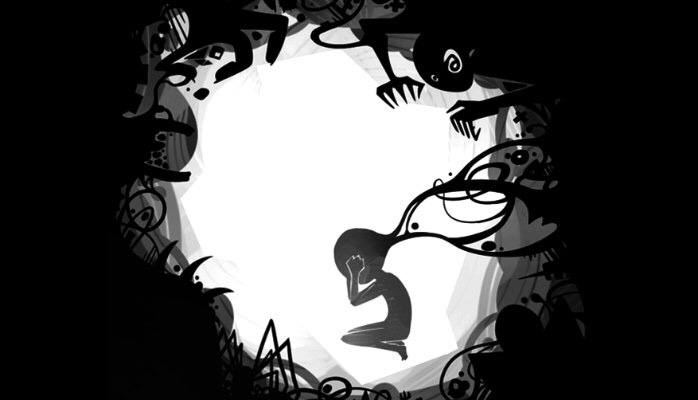
Thankfully I rarely have delusions like those I previously referenced. My delusions can be summed up as thought broadcasting and thought insertion which drives my paranoia. Thought broadcasting is when I believe that other people can hear or read my thoughts. Whereas thought insertion is when I have thoughts that feel foreign to me and seem as if they have been inserted by an outside person. I rarely have both at the same time, but when I do it is crippling. Having either of these delusions can lead me to isolating from society, my support structure, my friends and family, and even the people I believe are controlling or spying on my thoughts. It’s not often, but the more I am unable to separate reality from what I’m feeling the more paranoid I become.
As much as my medication cocktail helps me survive everyday life and be a functioning member of society it never fully eradicates either my delusions or auditory hallucinations. I find myself reality testing when I’m dealing with thought broadcasting by thinking nod your head if you can read my thoughts. Of course nobody ever does which only feeds my paranoia that they don’t want me to know. When my meds aren’t working I’ve narrowly escaped going inpatient in a mental hospital on multiple occasions. I have had several partial hospitalizations though where I spend my days at the hospital, but am allowed to sleep at home.

