Dokyo Etan (道鏡慧端) – Japanese Death Poem

Dokyo, also known as Shoju Ronin, lived most of his life in a hut and refused to join the large monasteries. He saw in zazen, Zen meditation, the essence of the Zen way and used to deal harshly with believers who sought him out to hear so-called Zen doctrine. He would occasionally even draw his sword on them and drive them away, in keeping perhaps with his samurai origin. He is said to have once pushed the Zen master Hakuin from the pulpit when the latter rose to speak, whereupon Hakuin fainted from the force of the blow. For as long as Hakuin dwelt with him, Dokyo showed him no preference, and made him beg from door to door for his portion of rice like the other monks.

Dokyo wrote his last words while seated in the upright Zen position. Then he put down his brush, hummed “an ancient song” to himself, suddenly laughed out loud, and died.

Died on the sixth day of the tenth month, 1721 at the age of eighty.

Here in the shadow of death it is hard
To utter the final word.
I’ll only say, then,
“Without saying.”
Nothing more,
Nothing more.

Sources: Japanese Death Poems

Matcha Crème Brûlée

2 cups heavy whipping cream
⅔ cup granulated sugar, plus more for sprinkling
5 teaspoons matcha powder
1 cup soy milk
6 large egg yolks

Preheat the oven to 325° F. In a small saucepan set over medium heat, whisk together 1 cup of the heavy whiping cream, ⅓ cup of the sugar, and the matcha powder; stir until the matcha and sugar are well blended. Add the remaining heavy whipping cream and the soy milk and bring the mixture to a simmer. Remove from the heat.

In a separate bowl, whisk together the egg yolks and the remaining sugar.

Whisking constantly, gradually pour the hot milk mixture into the yolk mixture. Strain through a fine mesh sieve.

Place 6 small (7 to 10 ounce) ramekins in a high-sided baking pan and divide the custard between them. Fill the baking dish with boiling water to reach most of the way up the sides of the ramekins. Carefully transfer the pan to the oven and bake for 40 to 50 minutes, or until the custard is set (it should still jigglewhen shaken).

Remove the ramekins from the water bath and chill in the refrigerator for at least 2 hours to set.

Before serving, remove the ramekins from the refrigerator and sprinkle each surface with a layer of sugar. Using a butane kitchen torch, melt the sugar until golden-brown all over.

Antoine de Saint-Exupéry

Today in Literary History —> Today we remember French writer and aviator, Antoine de Saint-Exupéry, who passed away in an avitation accident on this day in 1944. Best remembered for his Le Petit Prince, Saint-Exupéry became a laureate of several of France’s highest literary awards and also won the U.S. National Book Award. Today his Le Petit Prince is among the most translated books in the world.

Anxiety vs. Anxiety Disorders

In a nutshell, anxiety becomes an anxiety disorder when the anxiety that you are experiencing is greater than what you might expect in a given situation, and when it begins to interfere with some aspect of your life. For example, if your anxiety prevents you from forming desired relationships with people or meeting your responsibilities at work or school, this may be a sign that normal anxiety has shifted to a disorder of anxiety. In addition, if you find that you are engaging in unhealthy behaviors in an attempt to avoid or reduce your anxiety (such as drinking or using drugs), there is a good chance that you have a problem with anxiety.

There are six main anxiety disorders:

Specific Phobia
The first anxiety disorder is specific phobia. In this disorder, people experience such intense fear (even to the point of having a panic attack) when they come into contact with certain objects or situations that they take steps to avoid these objects or situations. Common specific phobias include acrophobia (fear of heights), odontophobia (fear of dentists), arachnophobia (fear of spiders), ophidiophobia (fear of snakes), and claustrophobia (fear of enclosed spaces).

Social Anxiety Disorder
Social anxiety disorder (also called “social phobia”) is another anxiety disorder, in which a person experiences intense fear and anxiety in social situations due to a fear of negative evaluation (for example, being judged). And, just as with specific phobia, this intense fear often results in the avoidance of these social situations. The most common type of situation that people fear in social anxiety disorder is public speaking; however, there are other situations that people with social anxiety disorder may also fear, such as eating in front of people, urinating in public restrooms, or writing in front of people

Panic Disorder
A person with panic disorder experiences frequent, out-­of-­the-blue panic attacks, as well as worry about the meaning or outcome of those panic attacks. For example, people with panic disorder might fear that a panic attack is a sign that they are dying or going crazy. As a result of these panic attacks, people with panic disorder often try to avoid activities or situations that might bring on symptoms of arousal, such as exercise or eating heavy meals. In extreme cases, people with panic disorder may fear leaving home, because it is the only place where they feel safe. If this happens, a person may be diagnosed with panic disorder with agoraphobia.

Obsessive-­Compulsive Disorder
This disorder has received a fair amount of attention in the media recently. In obsessive-­compulsive disorder (OCD), a person experiences intense, intrusive, and repetitive troublesome thoughts and ideas that might be viewed as strange and that are not about real-­life problems. These out-­of-­the-­ordinary thoughts and ideas are called obsessions. For example, people with this disorder may have persistent fears that they are going to accidentally poison their children, catch a disease, or harm someone else. As a result of these obsessions, people with OCD then engage in repetitive behaviors (or compulsions) to reduce the anxiety associated with those obsessions, such as excessive hand washing, ordering, checking, or performing mental rituals (such as counting).

Generalized Anxiety Disorder
Generalized anxiety disorder (GAD) is characterized by excessive, persistent, and uncontrollable worry about many different concerns. Sometimes people confuse GAD with OCD because both include the experience of repetitive thoughts. However, worry is different from obsession, because the worry in GAD is about real-­life or daily concerns, such as finances, work, and relationships. Worry in GAD is actually viewed as an attempt to avoid or distract a person from more-­upsetting and anxiety-­provoking thoughts and feelings

Post-­Traumatic Stress Disorder
Finally, post-­traumatic stress disorder (PTSD) is unique among the anxiety disorders, because it is the only one that requires people to have experienced some type of traumatic event before they can be diagnosed with it. PTSD is diagnosed when a person experiences a set of symptoms more than thirty days after exposure to a traumatic event. The symptoms of PTSD include intrusive thoughts and memories about the traumatic event (for example, flashbacks or feeling as if the event were happening all over again), avoidance of reminders of the traumatic event, difficulties experiencing positive emotions, feeling detached from others, and hyperarousal and hypervigilance (or always feeling on guard). If someone experiences these symptoms within one month after a traumatic event, we call the disorder acute stress disorder.

Sources: The Dialectical Behavior Therapy Skills Workbook for Anxiety

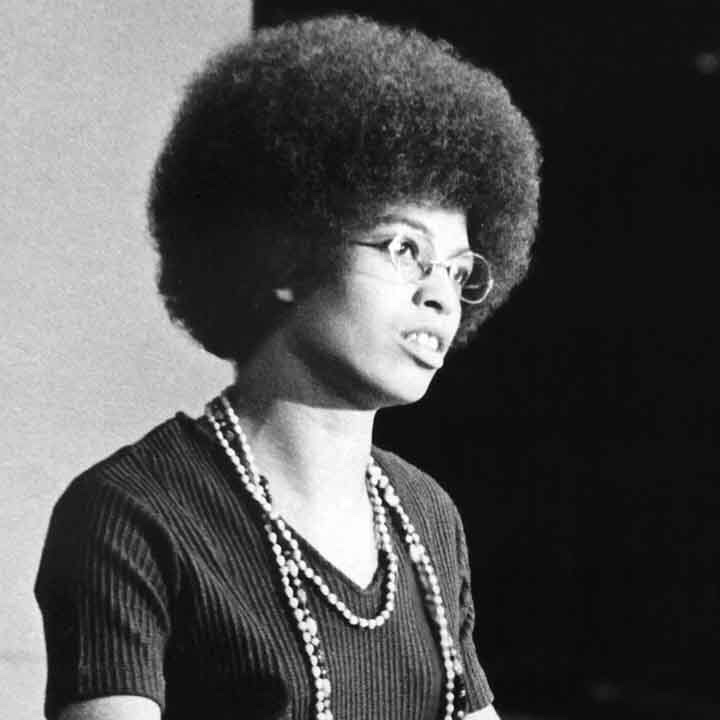
Angela Davis

As an activist, scholar, and professor, Angela Davis rose to prominence in the 1960s for her work in the black civil rights movement, especially in the Black Panther Party and the black communist group Che-Lumumba Club. Davis’s activism was driven by her background. She was born in Birmingham, Alabama, in 1944, grew up in an area exposed to anti-black bombings during the 1950s, and attended a segregated elementary school.

Davis was fired from her teaching post at University of California, Los Angeles (UCLA) in 1970 for her links to communism, but won her job back. That same year, she was implicated in the supply of guns to a black prisoner who died trying to escape. She was released from prison in 1972, and continues to lecture on women’s rights, race, and criminal justice.

Key works
1974 Angela Davis: An Autobiography
1983 Women, Race, & Class
1989 Women, Culture, & Politics

Sources: The Feminism Book (DK)

Ecofeminism

French feminist Françoise d’Eaubonne coined the term “ecofeminism” in 1974 for a new branch of feminism that focused on ecology, the study of the interactions between organisms and their environment. It holds that the domination and degradation of nature and the exploitation and oppression of women have significant connections.

Several environmental disasters in the US—most notably the 1979 near meltdown at the Three Mile Island nuclear power plant in Pennsylvania—brought 600 women together in 1980 for “Women and Life on Earth,” the first ecofeminist conference. Held in Massachusetts during the spring equinox, the conference explored the links between feminism, militarization, healing, and ecology. Ecofeminism was defined as a “women-identified movement” that sees Earth’s devastation and the threat of nuclear annihilation as feminist concerns because they are underpinned by the same “masculinist mentality” that oppresses women. Ecofeminism holds that women have a special role to play in protecting the environment and campaigning against damage to the planet.

As ecofeminism developed, it began to splinter into different approaches, one of which is sometimes described as cultural ecofeminism. This strand is rooted in spirituality, goddess worship, and nature-based religions. Its adherents, including American writer and activist Starhawk (Miriam Simos), argue that women have an intrinsic kinship with the natural environment, and, as instinctive carers, should be at the forefront of its protection. Other feminists criticize this approach for reinforcing gender stereotypes, claiming women’s moral superiority, and taking little account of class, race, or the economic exploitation of resources.

Sources: The Feminism Book (DK)

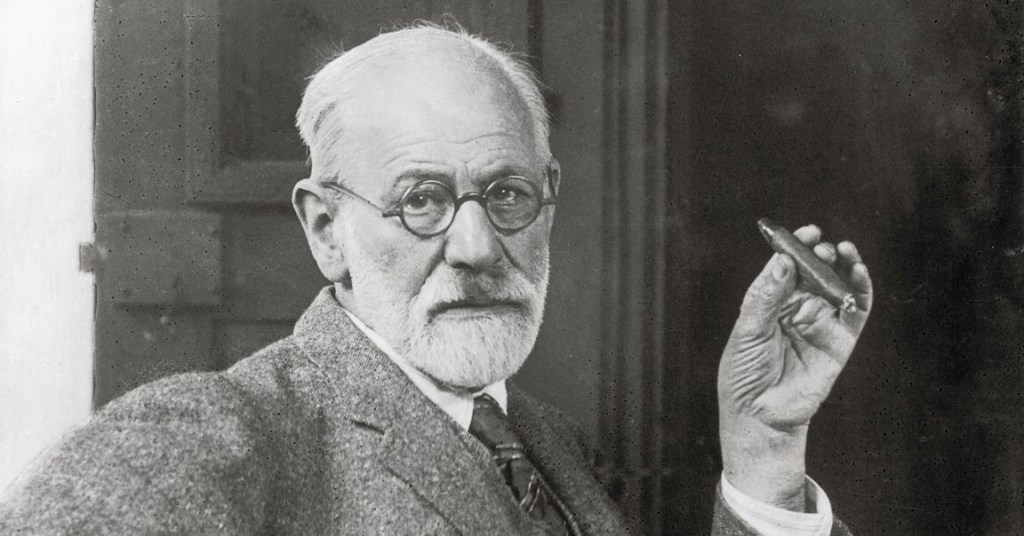
Sigmund Freud and Psychoanalysis

Born Sigismund Schlomo Freud in Freiberg, Moravia, Freud was openly his mother’s favorite child; she called him “Golden Siggie.” When Freud was four years old, the family moved to Vienna and Sigismund became Sigmund. Sigmund completed a medical degree and in 1886 he opened a medical practice specializing in neurology, and married Martha Bernays. Eventually, he developed the “talking cure” that was to become an entirely new psychological approach: psychoanalysis.

In 1908, Freud established the Psychoanalytic Society, which ensured the future of his school of thought. During World War II, the Nazis publicly burned his work, and Freud moved to London. He died by assisted suicide, after enduring mouth cancer.

Key works
1900 The Interpretation of Dreams
1904 The Psychopathology of Everyday Life
1905 Three Essays on the Theory of Sexuality
1930 Civilization and Its Discontents”

Doyo no Ushi no Hi

Japanese Cultural Spotlight:

【Doyo no Ushi no Hi – The Ox day in midsummer】

In the traditional calendar, Doyo no Ushi no Hi occurs around the hottest period of the year. The humidity is also high at this time in mid-July. This is a time to take special care of one’s health by eating nourishing food, and folklore has it that grilled eel flavored with a sweet and salty teriyaki sauce will fit the bill.

When the fragrance of this delicacy wafts from small kaba-yaki outlets, you may see people lined up to buy. The custom of eating eel in mid-summer began in the 18th century, promoted by merchants eager to sell the day’s catch.